


According to Dr. Hoang Viet Ha, Director of Asia Vietnam, artificial intelligence (AI) is increasingly prominent in socioeconomic life, becoming part of the digital infrastructure. In major cities, AI-integrated camera systems analyze real-time traffic. In healthcare, this technology assists with diagnostic image interpretation and patient data management. In finance and manufacturing, AI participates in data analysis, demand forecasting, and optimizing operational processes.
However, when deployed at the application level, challenges extend beyond model building to integration, continuous monitoring, and optimization within complex systems. This necessitates a workforce with strong technical skills, a deep understanding of data, technology infrastructure, and the specific application context of each field.
Dr. Viet Ha emphasized that the demand for AI and data science professionals in Vietnam is rapidly increasing. According to a report by the Ministry of Information and Communications, by 2030, Vietnam will require 700,000 to 1 million digital technology professionals, with AI and big data being among the most severely undersupplied areas.
"Meanwhile, many current training programs still lean towards theory and model techniques, failing to keep pace with real business requirements," he added, discussing the gap between education and practical application. "This disparity often causes AI projects to face difficulties during operation."
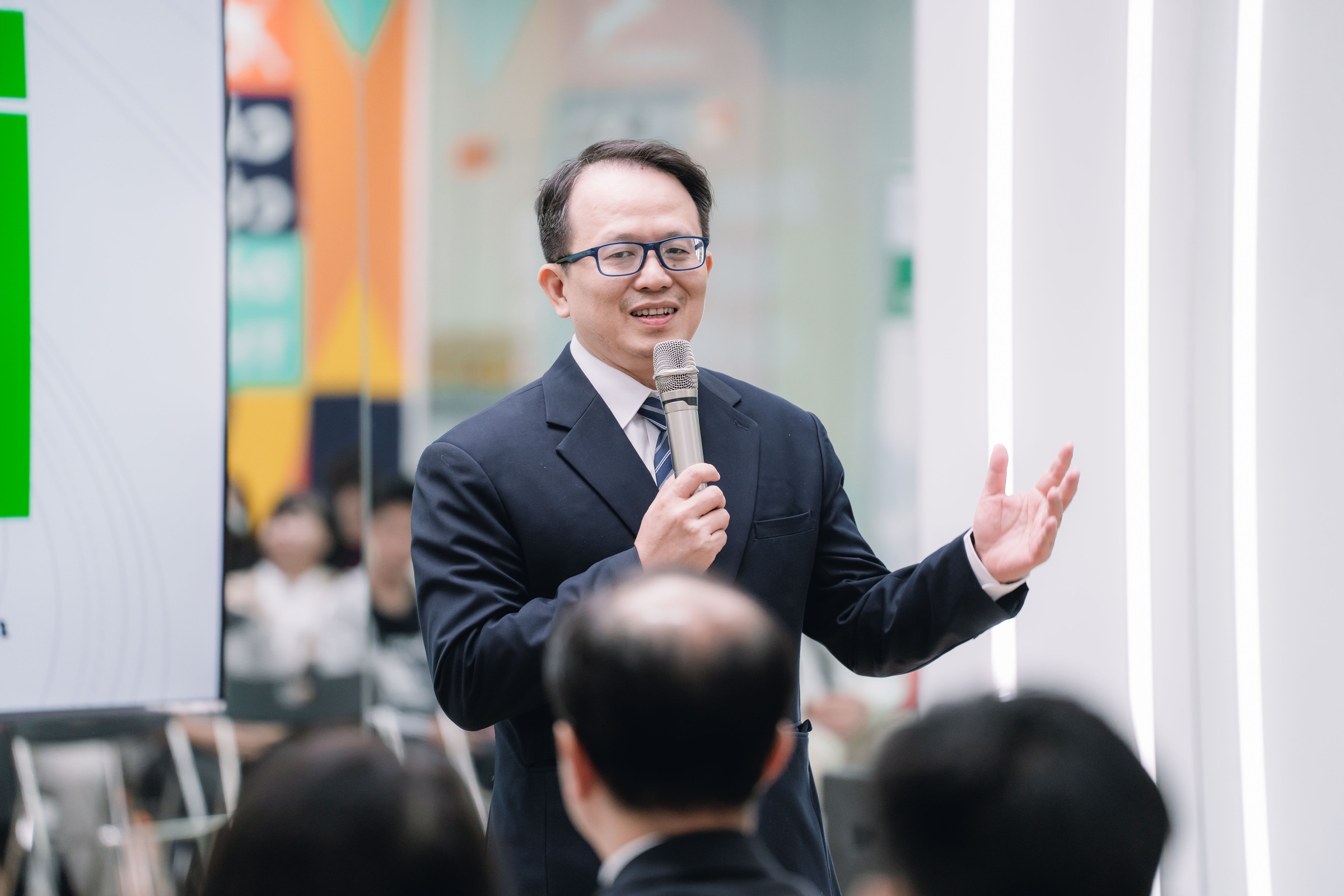 |
Dr. Hoang Viet Ha - Director of Asia Vietnam. *Photo: Asia Vietnam*
Addressing this challenge, Asia Vietnam, a joint program between FPT University, FPT Corporation, and Asia University (Taiwan, China), has launched an artificial intelligence program that integrates technology foundations, data, applications, and interdisciplinary thinking. This approach helps students view AI as a problem-solving tool within specific societal contexts.
According to Dr. Hoang Viet Ha, interdisciplinary training enables students to master technological knowledge and understand how AI is deployed in practice. "Encouraging students to apply AI across various fields during their studies helps develop systems thinking and adaptability for the work environment," he stated.
The program is designed with three tracks: core AI technology, AI applications, and AI in smart business models, aiming to meet the diverse workforce needs of the labor market. He noted that this approach aligns with the global trend of applied and interdisciplinary AI education at many universities. The model aims to prepare professionals capable of working in complex AI systems, where technology, data, and operational expertise are tightly integrated.
The curriculum also emphasizes combining academic foundations with project-based learning, group assignments, and simulated business problems. Direct engagement with real data and scenarios helps learners quickly identify challenges when AI is put into operation.
Furthermore, the domestic-international training model allows students to build their academic foundation in Vietnam before accessing the educational and research environment in Taiwan. The program integrates AI throughout its teaching, research, and operations via experience rooms, robotics laboratories, and smart factories. This enables learners to directly observe and participate in how technology operates in real-world settings.
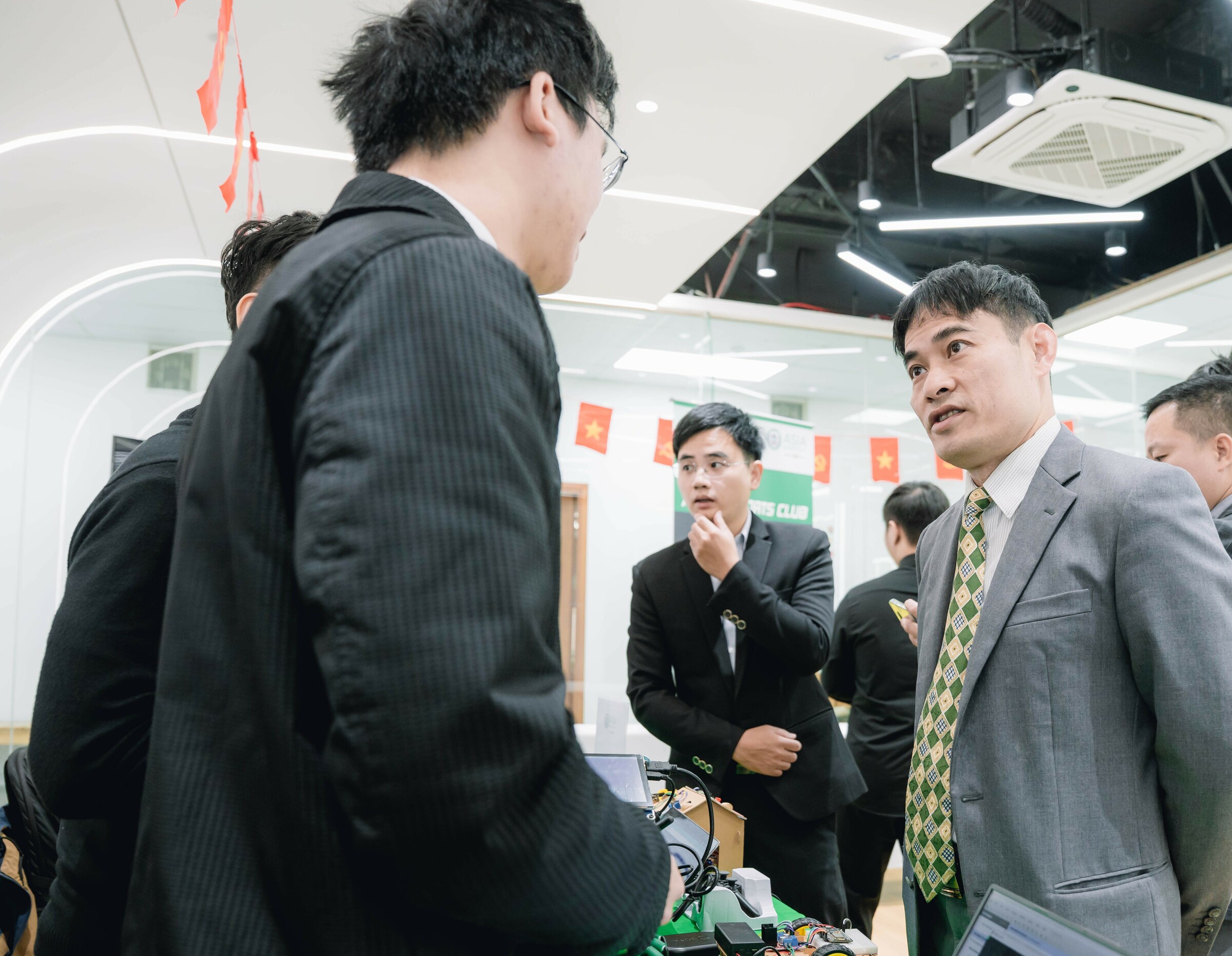 |
Professor Hsu Ching-Hsien (right), Dean of the College of Information Technology and Electrical Engineering (Asia University), sharing practical experience with students. *Photo: Asia Vietnam*
Alongside their studies, students have opportunities to access internships and employment programs within FPT Corporation's technology ecosystem, as well as Asia University's network of technology partners and international research institutes. This exposure allows them to engage with real-world AI challenges in business and research settings early on.
Sharing his learning experience, Hoang Minh Thong, an artificial intelligence student at Asia Vietnam, stated that the program provides access to an international learning environment where AI is taught not only theoretically but also applied directly in practical projects.
Beyond the curriculum, application-oriented AI training requires substantial technology infrastructure, large datasets, and a faculty with practical deployment experience. Dr. Viet Ha observed that without proper investment, training programs risk remaining mere simulations, failing to fully reflect the challenges of operating AI in enterprises.
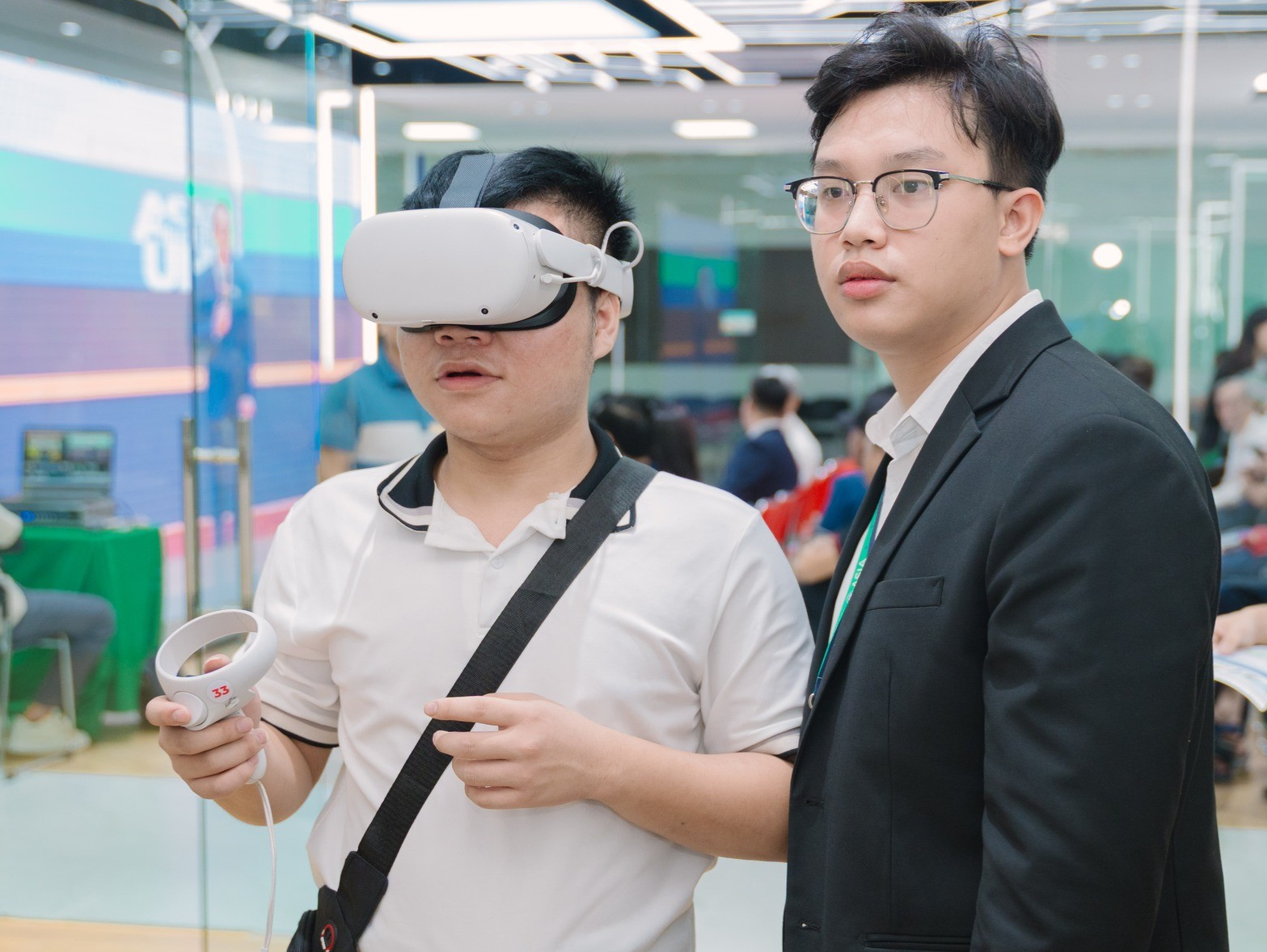 |
Students experiencing technology at Asia Vietnam. *Photo: Asia Vietnam*
As AI increasingly becomes infrastructure for the digital economy, any nation that develops a workforce capable of transitioning technology from laboratories into real-world operational systems will gain a long-term competitive advantage.
"Therefore, the shift in AI training is not just a matter for educational institutions, but a strategic imperative for the entire economy," he emphasized.
Nhat Le


