 |
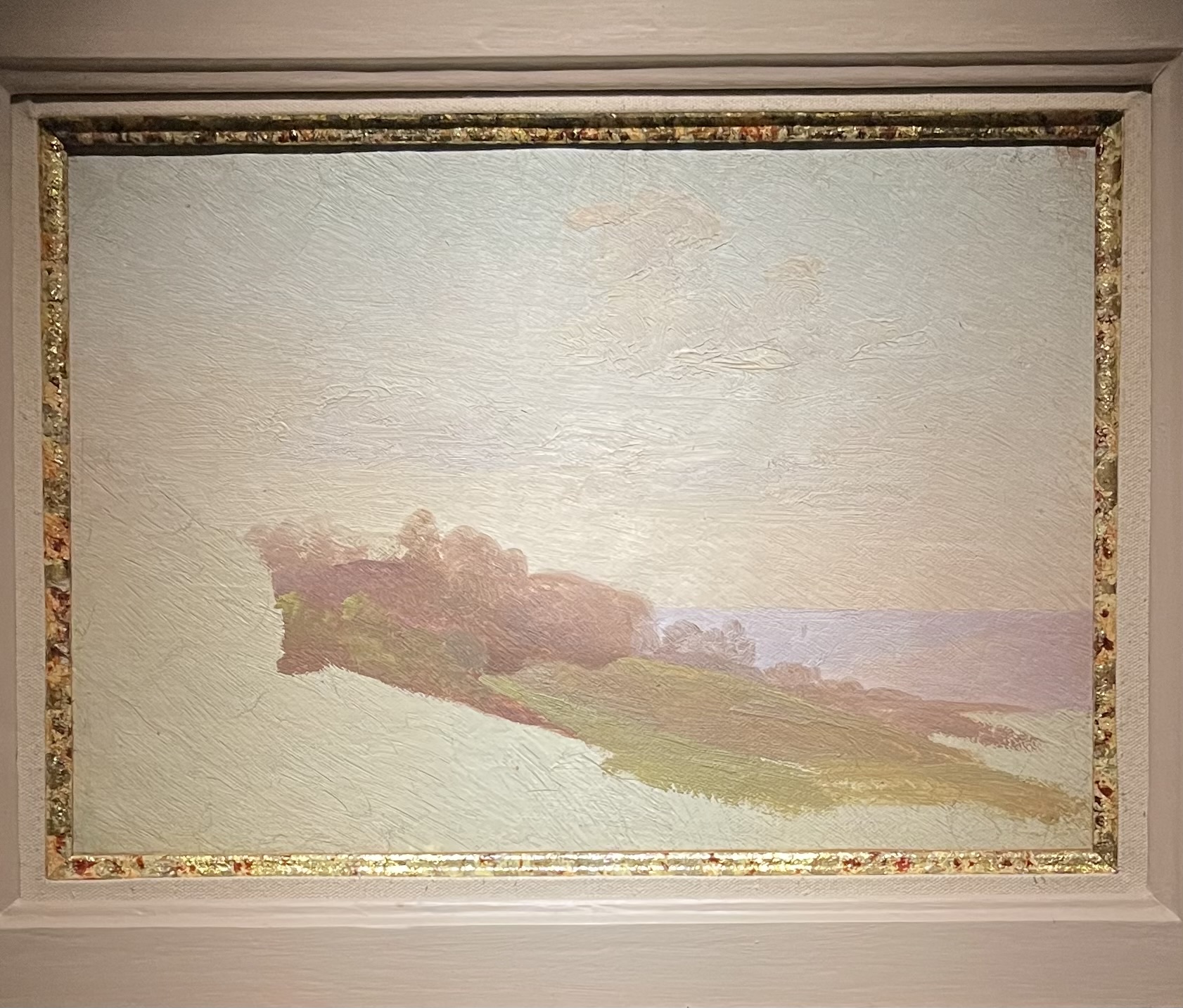
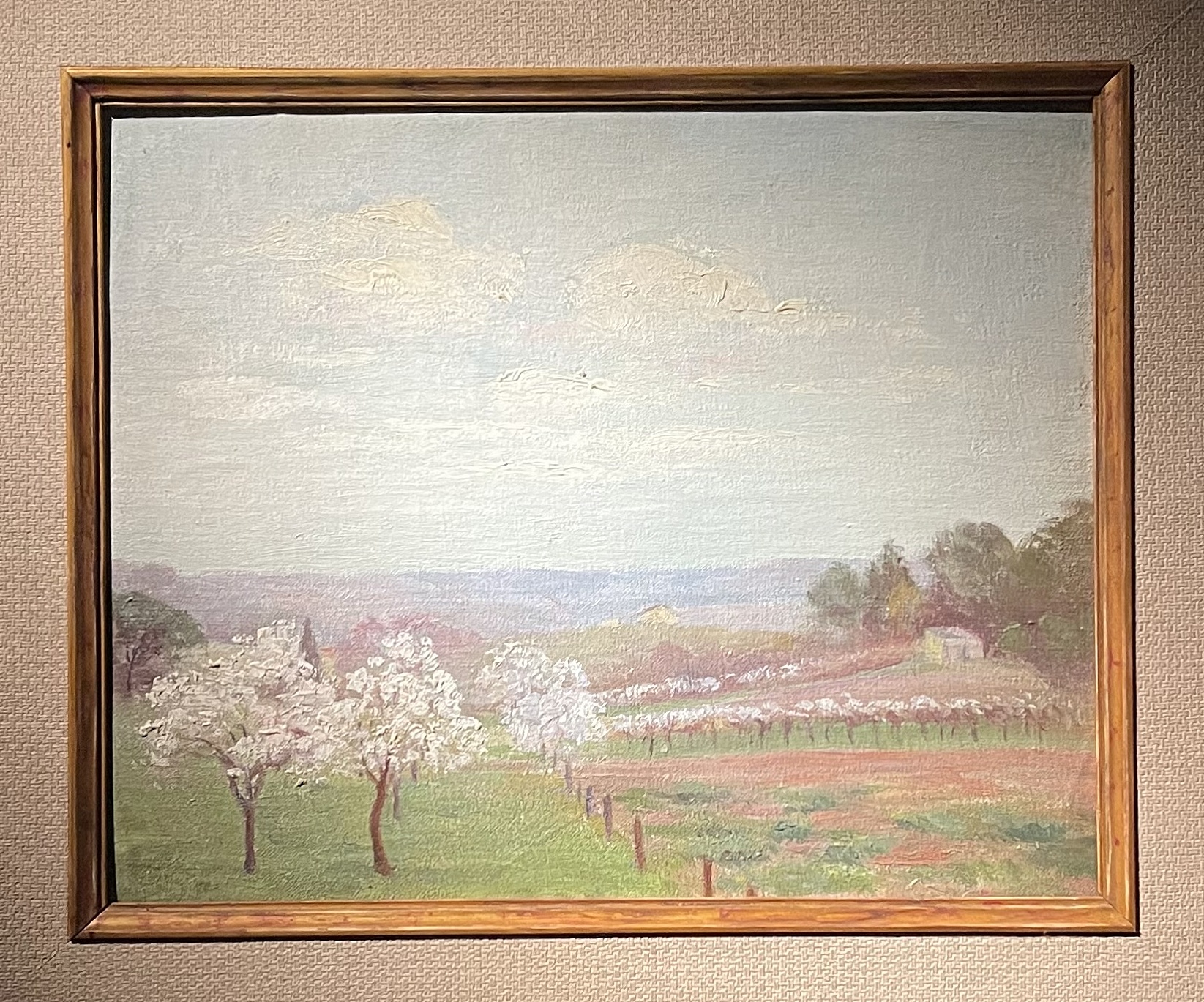
In "Apple Orchard in Bloom" (around 1910), Emperor Ham Nghi depicted a fruit orchard in full bloom. The white of the apple blossoms blends with the hues of the clouds and the clear blue sky. |
An exhibition titled "Sky, Mountain, Water" is showcasing 20 paintings by Emperor Ham Nghi, marking the first time his works have been presented in Hanoi. The exhibition runs from 24/4 to 10/5 at Thai Hoc House, Van Mieu Quoc Tu Giam. These oil paintings, depicting natural landscapes, were created by the emperor during his exile and originate from 10 private collections. They have been authenticated, preserved, and restored by leading experts. Art researcher Ace Le and Doctor Amandine Dabat, a 5th-generation descendant of Emperor Ham Nghi, co-curated the event. The organizers clarified that this is a non-commercial exhibition, meaning no transactions will occur. Previously, the exhibition was held at Kien Trung Palace in the Hue Citadel in late 3/2025.
Emperor Ham Nghi (1871-1944), born Nguyen Phuc Minh with the courtesy name Ung Lich, ascended the throne in 1884 at the age of 13, becoming the eighth emperor of the Nguyen dynasty. After the fall of the imperial capital Hue in 1885, he and Ton That Thuyet left the city and issued the Can Vuong edict, calling for resistance against French colonialism. In 1888, he was captured and exiled by the French to Alger, the capital of Algeria.
 |
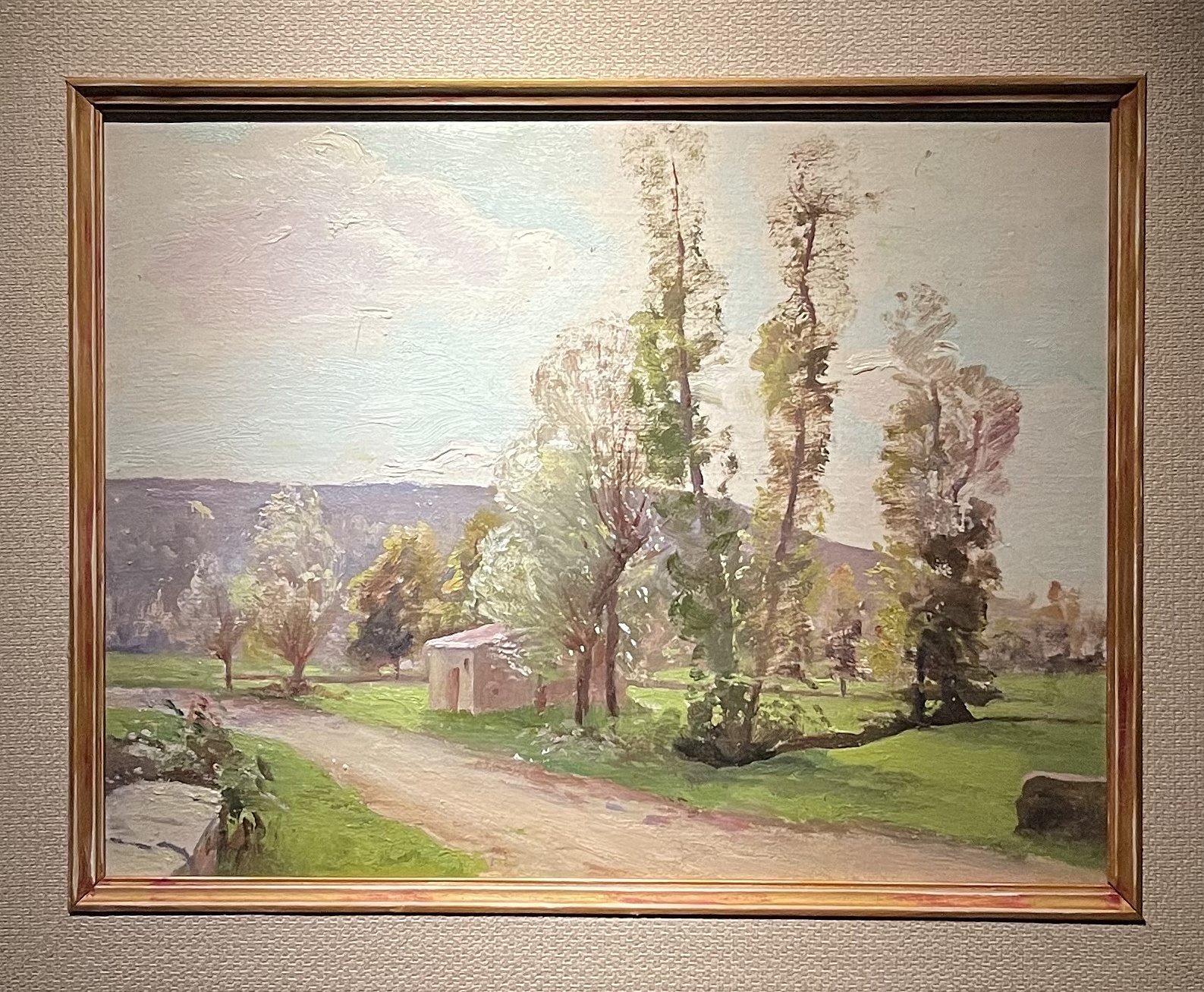
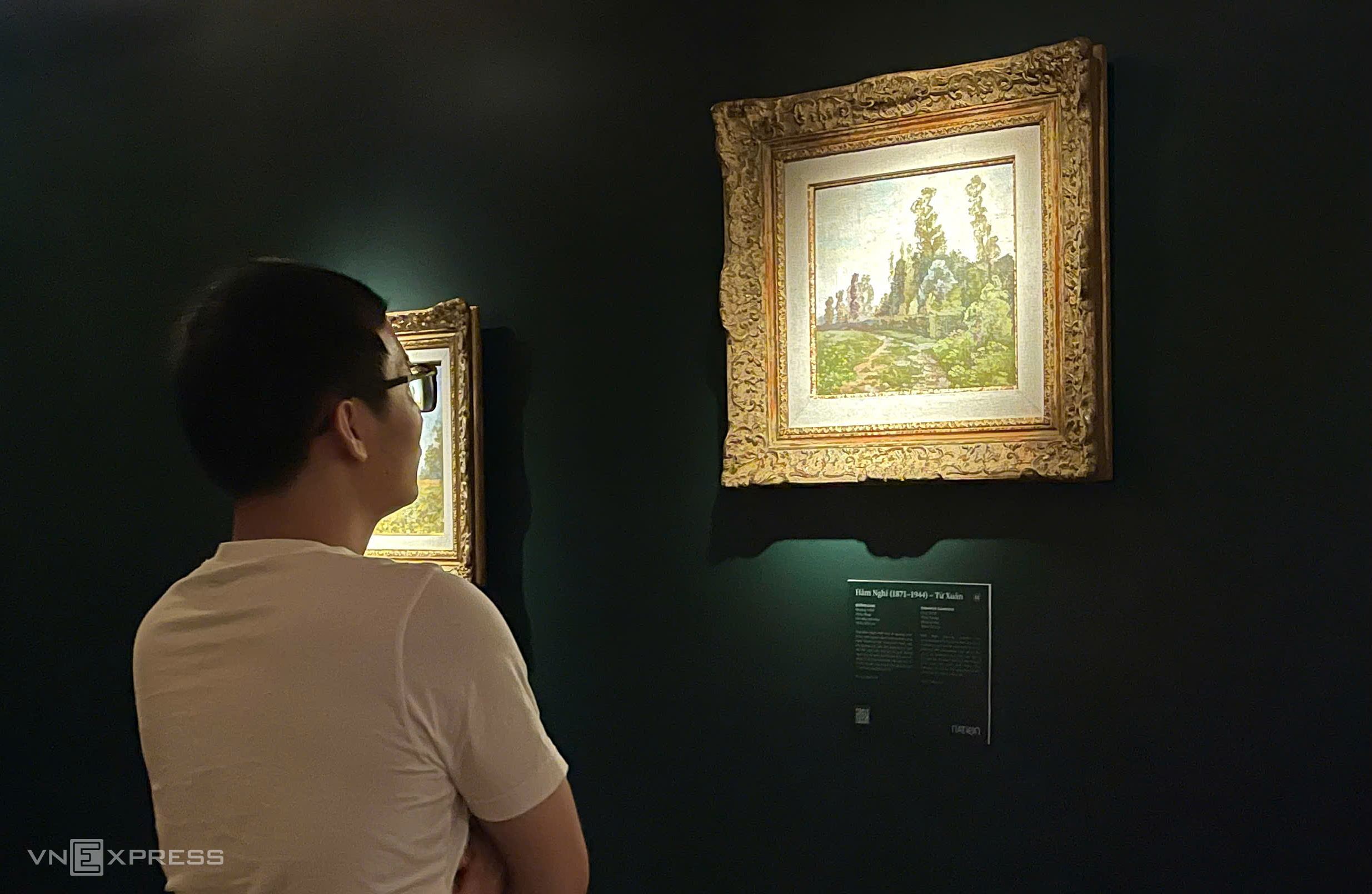
The artwork "Spring Path" (around 1910) portrays a rural trail. In this painting, the emperor "plays" with the contrast between the green of the grassland and the sunlight reflecting on the path. |
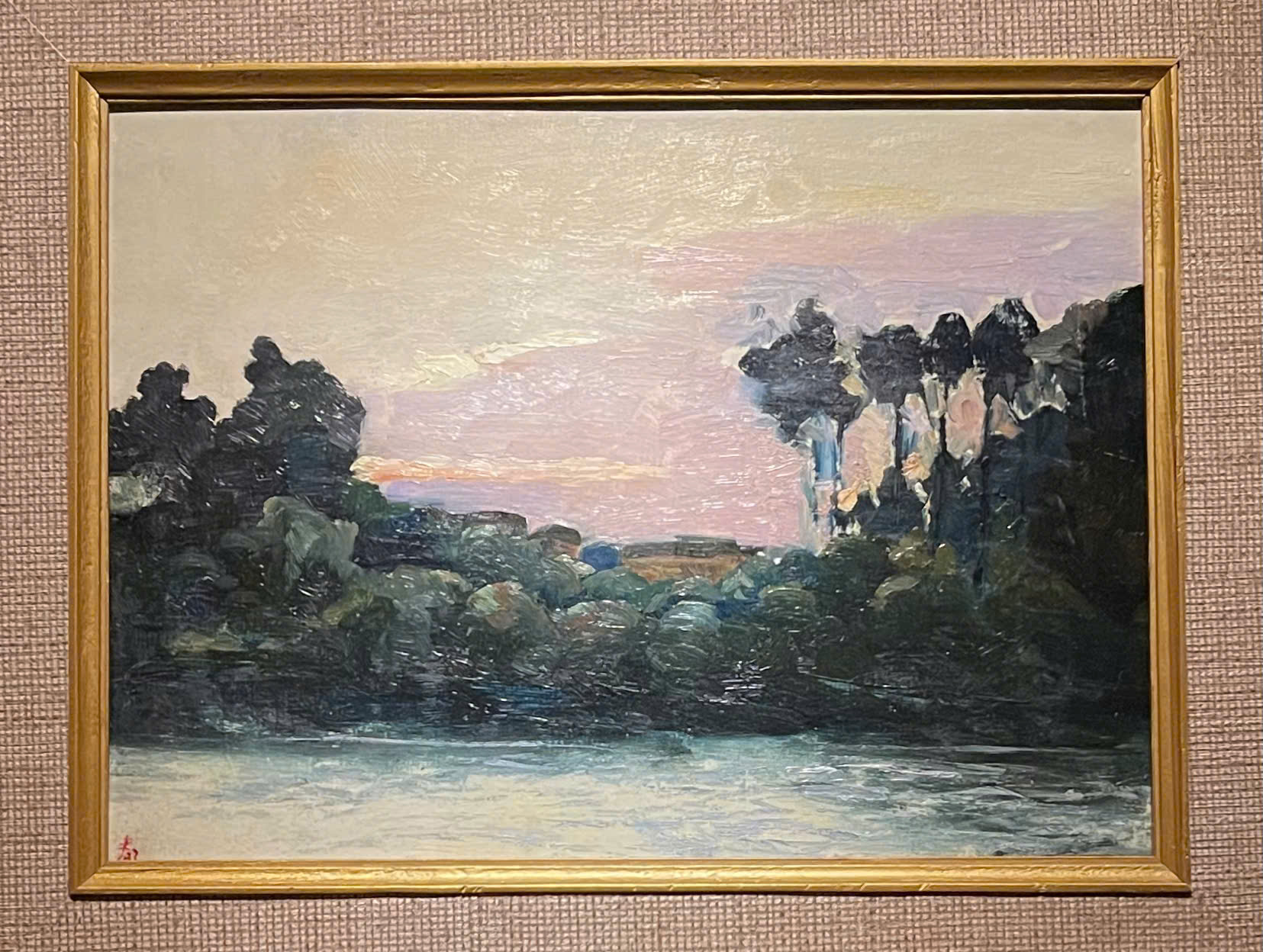
The emperor painted "Sketch of a Sunset" around 1910. His style reflects Impressionism, focusing on light effects and transient moments of natural scenery to convey his emotions.
During his exile, Emperor Ham Nghi's artistic talent blossomed. He viewed art as a personal pleasure, a way to forget the reality of his dethronement. According to Asian Art, he did not seek public recognition, rarely signed or dated his works, and never sold any of his paintings. He passed away in 1944 from stomach cancer.
 |
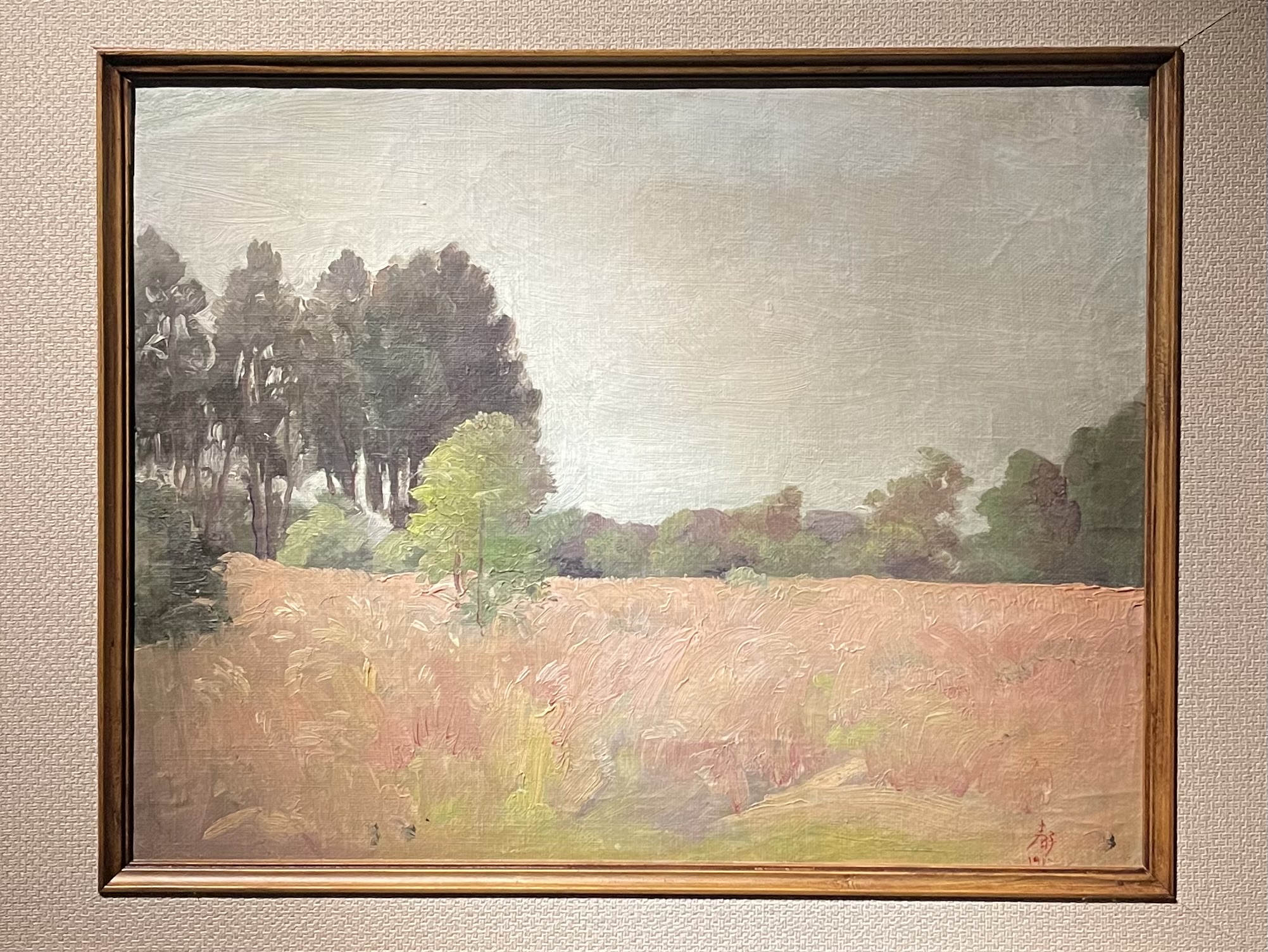
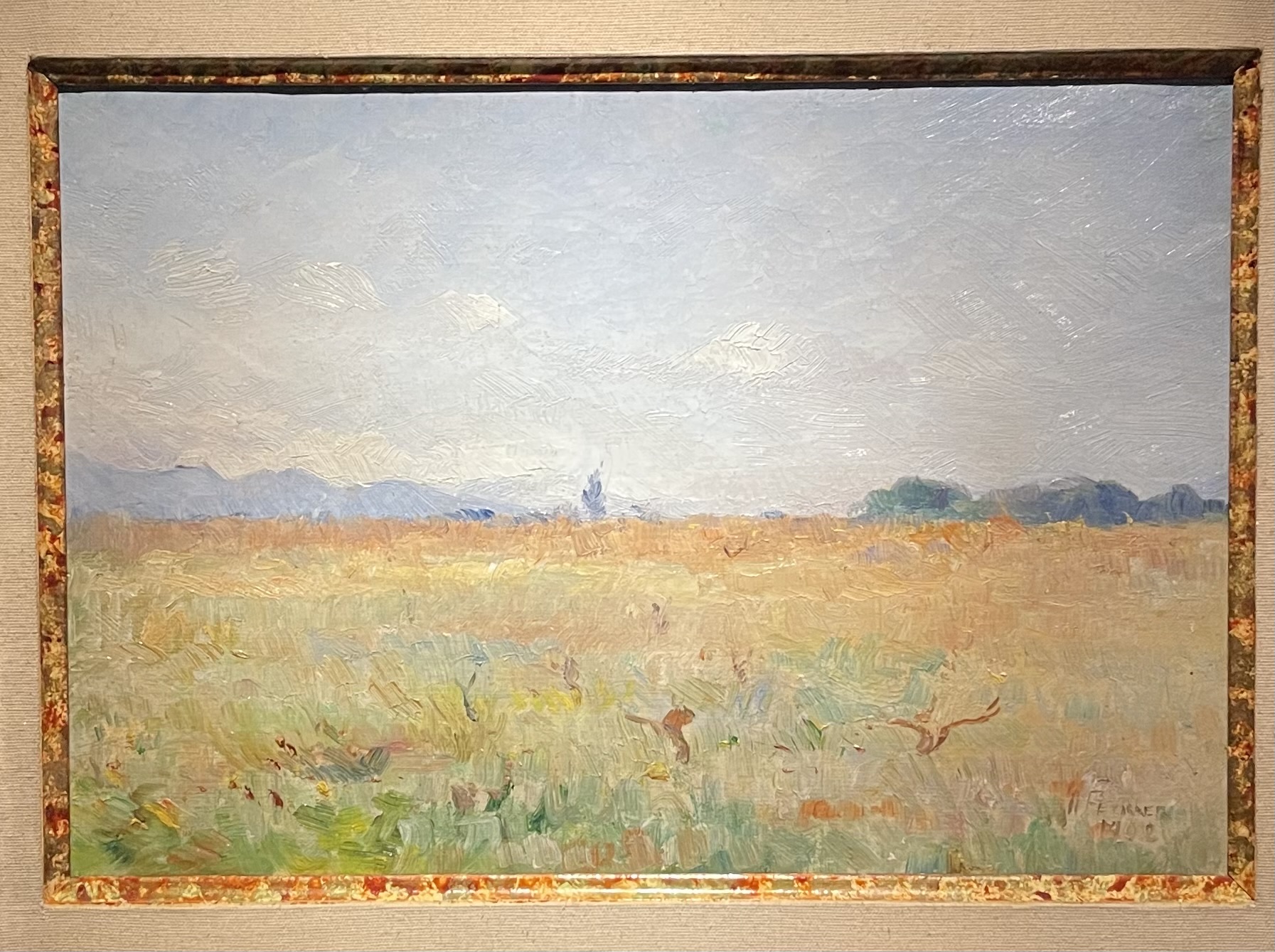
The painting "Wheat Field" was created by Emperor Ham Nghi in 1913. Across the field, the pink-brown color of the wheat ears spreads like a carpet. In the background, tall trees with darker tones create a clear separation from the cloudless sky. |
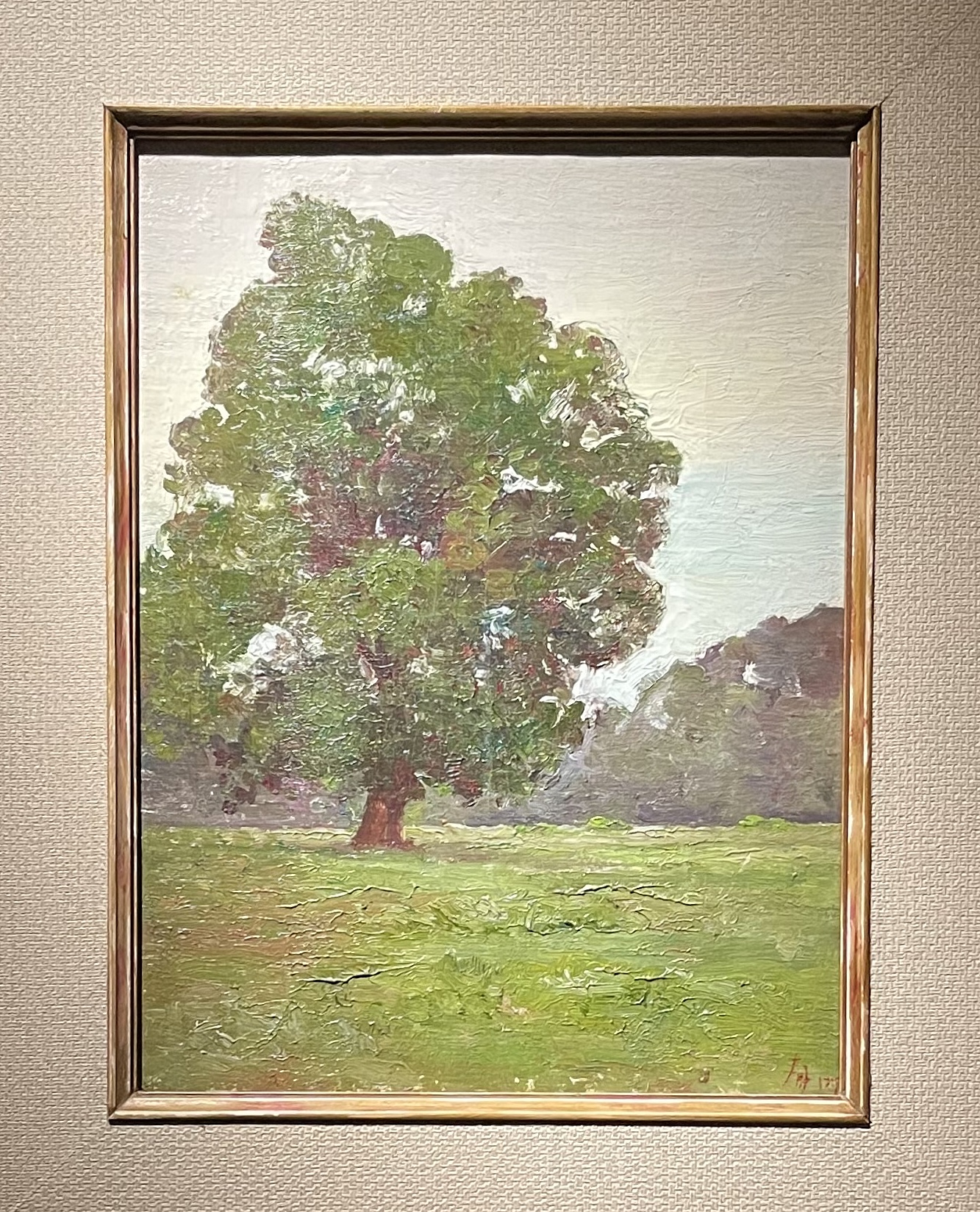
His painting "Sunrise on the Lake," created around 1910, exemplifies his preferred technique of contrasting light and dark between the sky and water. This method was often employed to depict subjects and their reflections. Another notable work, "The Ancient Oak" (1908), features a solitary oak tree, believed to symbolize the emperor's loneliness and longing during his exile. According to the organizers, two recurring motifs in Ham Nghi's works are roads and large trees. He rarely included human figures in his landscape paintings.
 |
"Algerian Landscape" (1902) is one of Emperor Ham Nghi's Impressionist works. He utilized the clear air and winter sun of Algeria. Vertical, interwoven brushstrokes create a sense of movement, guiding the viewer's gaze towards the horizon. |
 |
Visitors touring the exhibition. *Photo: Phuong Linh* |
 |
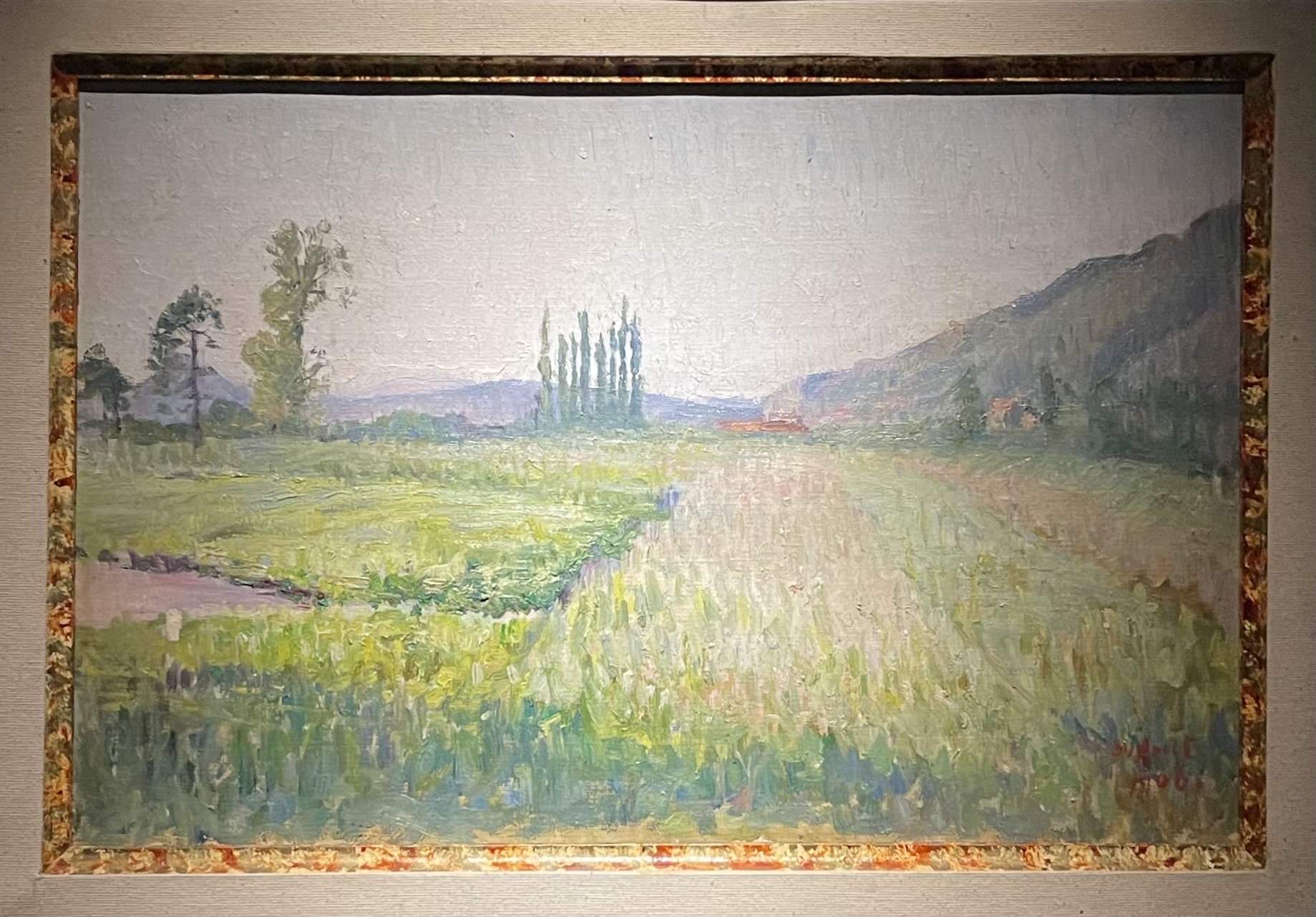 |
The painting "Landscape with Cypress" (1906) appeared in Doctor Amandine Dabat’s 2024 book, "Ham Nghi - Hoang de luu vong, nghe si o Alger" (Ham Nghi - The Exiled Emperor, Artist in Alger). In late 8/1906, Emperor Ham Nghi and his family vacationed in Menthon-Saint-Bernard, on the shores of Lake Annecy, France. In a letter, the emperor expressed his fondness for the cool, peaceful atmosphere of the lakeside scenery.
 |
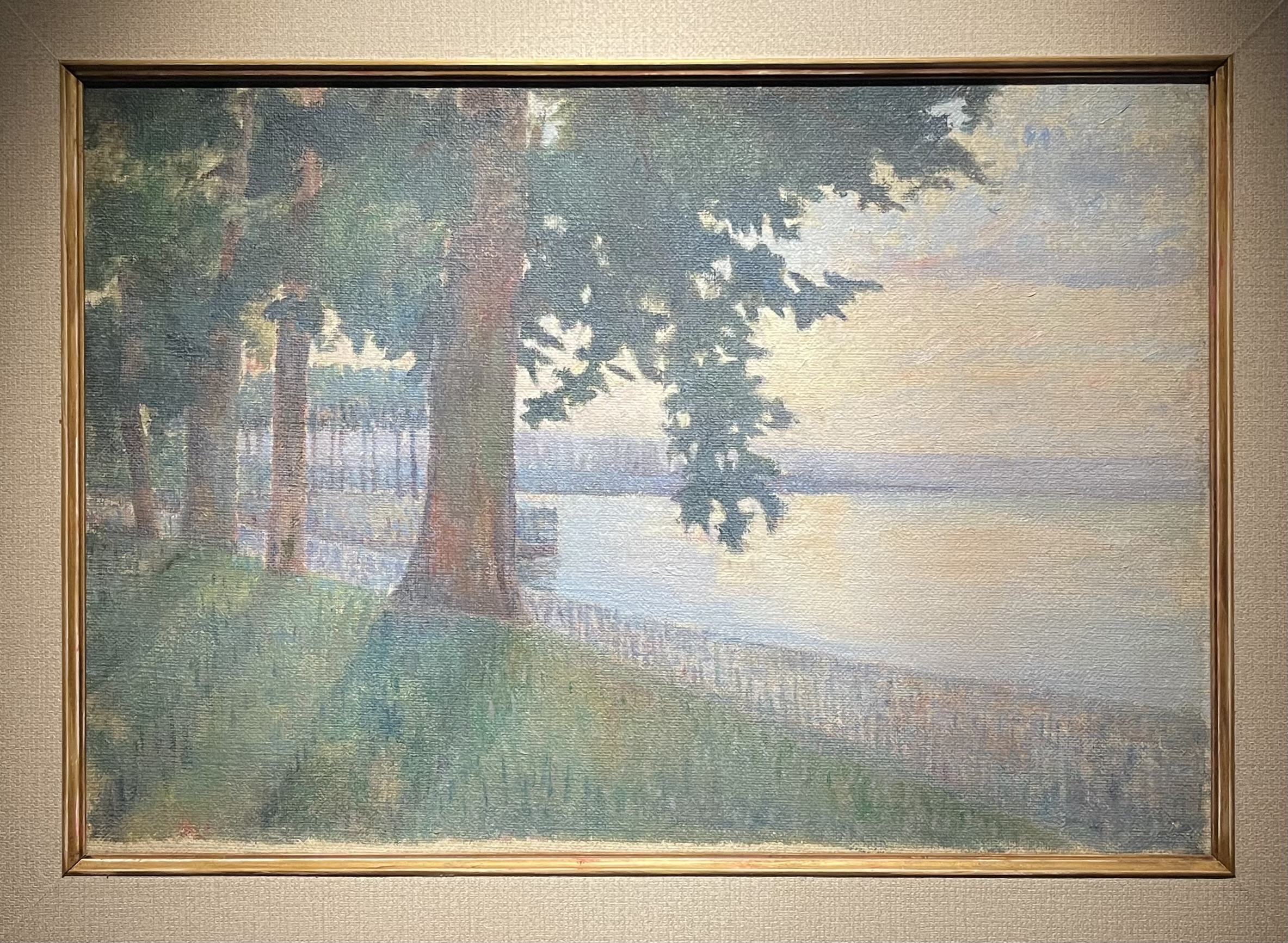 |
"Shady Lakeside (Lake Geneva)," created around 1920, is one of Emperor Ham Nghi's final works.
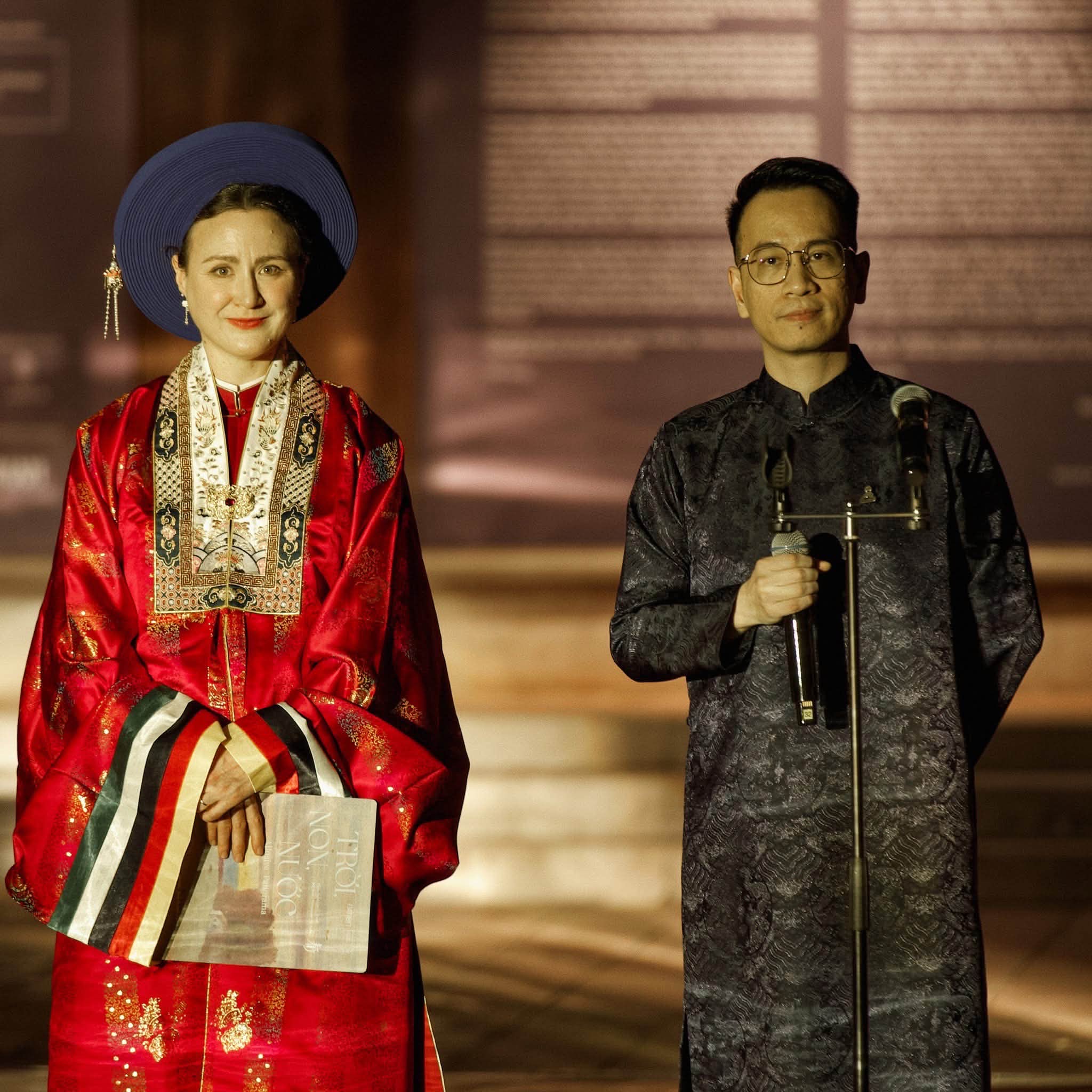 |
Doctor Amandine Dabat (left) and art researcher Ace Le at the exhibition's opening. *Photo: Organizers*
Doctor Amandine Dabat noted that despite Emperor Ham Nghi's exile and lack of opportunity to return to his homeland, he left a valuable artistic legacy. "Through these works, a part of his soul has returned home," the doctor stated.
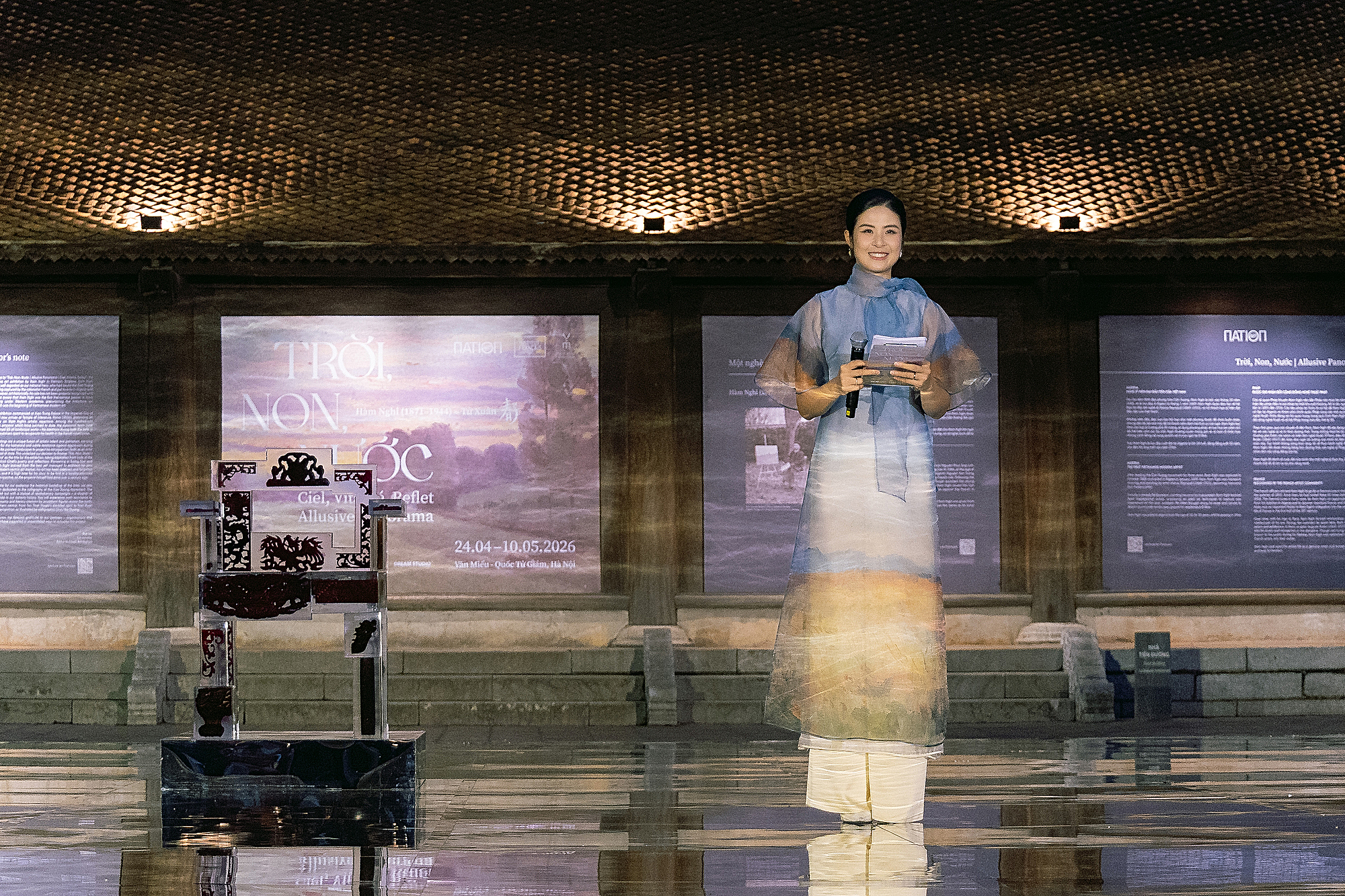 |
Miss Ngoc Han next to the sculptural installation "Throne - Water." *Photo: Provided by individual*
Miss Ngoc Han, dressed in an outfit inspired by the emperor's paintings, served as the event host. She expressed her emotion at accompanying Emperor Ham Nghi's "homecoming" through his artworks.
 |
Phuong Linh