In early February, zen master Ajahn Brahm visited Vietnam and held a talk at Ho Chi Minh City Book Street, attracting hundreds of attendees. Readers asked questions about stress reduction and overcoming adversity to find peace in a turbulent life. The zen master also shared insights into his inspirations and memories of writing. Many of his works have been translated into Vietnamese, recognized for his witty, accessible way of conveying Buddhist wisdom.
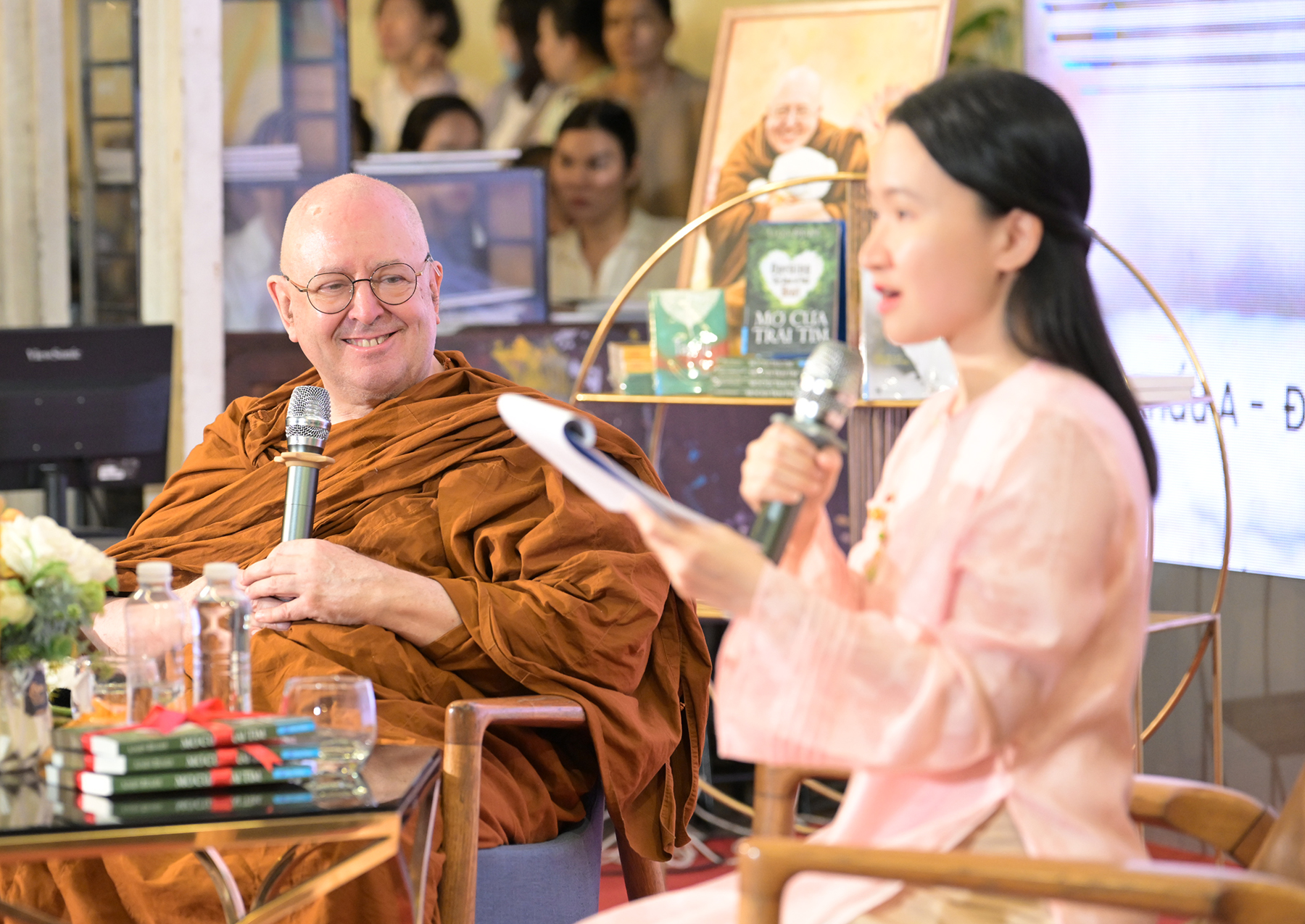 |
Zen master Ajahn Brahm at Ho Chi Minh City Book Street on 4/2. Photo: First News |
Open the Heart
Ajahn Brahm's debut book, Open the Heart, is also his most widely recognized work globally. The zen master explained that the title was inspired by a saying from his late father.
When Ajahn Brahm was 13-14 years old, while trying to park an old car, his father told him: "In the future, whatever you do, whether it makes me proud or not, the door of my home will always be open to welcome you." At the time, Ajahn Brahm did not fully grasp the meaning of the statement. After his father's passing, Ajahn Brahm often reflected, "I was truly fortunate to have such a wonderful father."
Open the Heart compiles stories on love, fear, suffering, anger, forgiveness, wisdom, and inner stillness. Drawing from real-life events, the zen master offers alternative perspectives that are more positive and less painful.
Ajahn Brahm does not present sermons but gently guides readers to shift their views on life's occurrences, thereby "opening the heart" to love oneself more and be more compassionate towards others.
 |
Ajahn Brahm's works translated into Vietnamese. |
Letting Go, Letting Be
This work is dedicated to those carrying heavy burdens, from work and family pressures to community responsibilities and personal matters. Over 70 stories are recounted by the zen master with cheerful details, interwoven with his experiences from before ordination to becoming the abbot of a Buddhist monastery in Australia.
Behind each story lies Buddhist philosophy on letting go, peace, compassion, and unconditional love, leading to inner stillness and tranquility.
Ajahn Brahm often tells stories in an easy-to-understand and humorous way. In the anecdote "You have the right to not feel happy", he mentions a girl who complained about being sad for no reason, finding no joy in life. Upon hearing this, the zen master drafted and printed a "License to Suffer", which stated:
"This license is granted to Mr./Ms. the right to be forever sad. Whether for no reason or any reason, you shall not be hindered by anyone in this right."
When she received the paper, the girl burst out laughing, and the zen master joked, "You've violated your license!" Ajahn Brahm believes that people cannot always be happy. Sometimes we are grumpy or uncomfortable, and that is entirely natural. When we allow ourselves to be irritable, that state will not last, and happiness will naturally return.
Happiness Comes from Disappearance
In this work, Ajahn Brahm shares experiences and reflections on mindfulness and non-self as taught by the Buddha. According to the author, "disappearance" is not about escaping life but rather the dissolution of the ego. When the ego subsides, the pains, comparisons, and anxieties associated with it also lighten. From this state, people can reach a deeper happiness, independent of external circumstances.
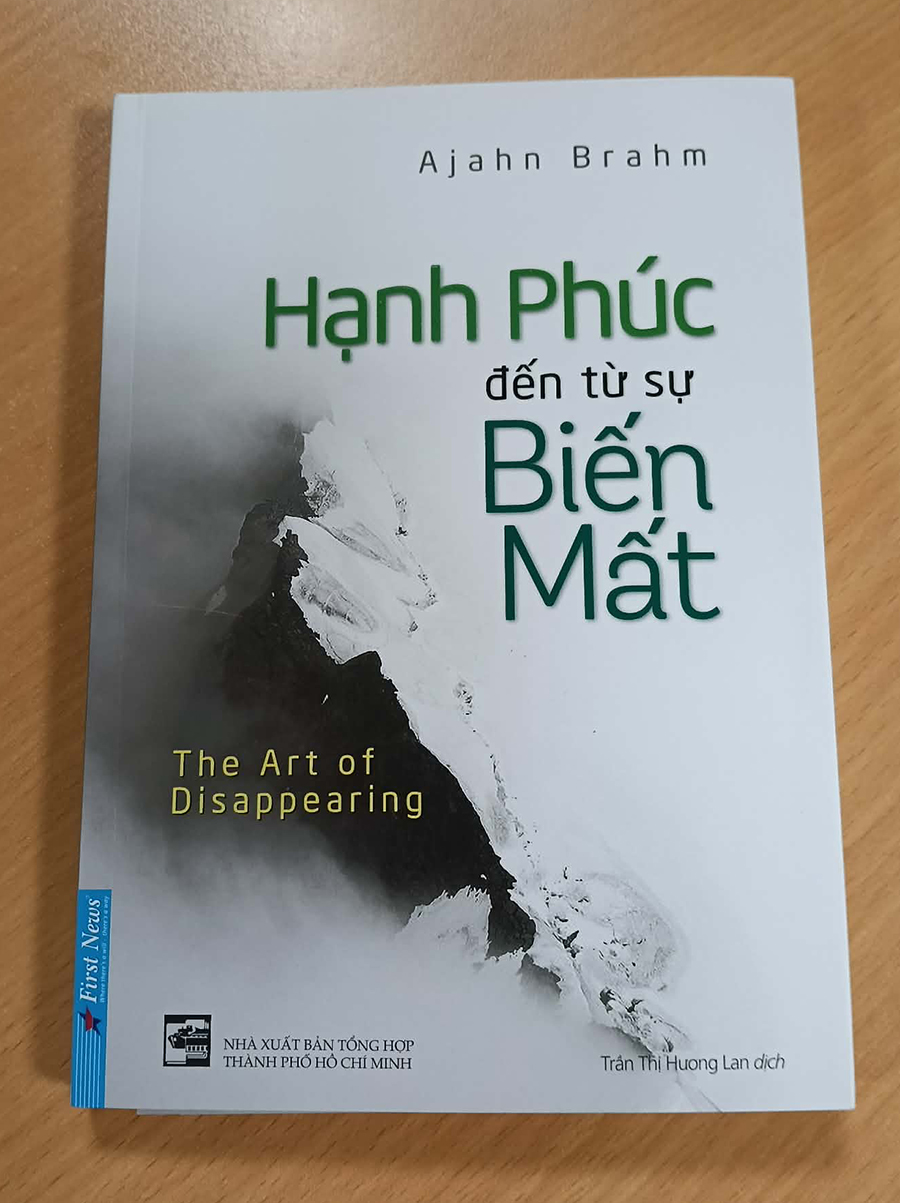 |
The work was released in Vietnamese in 2025. |
Loving-Kindness
This handbook-style book revolves around stories of compassion and unconditional love. Ajahn Brahm views loving-kindness not as an abstract concept or a complex meditation method, but as an attitude, beginning with gentleness towards oneself.
Through simple practical guidance, starting with the breath, the zen master points out that much suffering stems from being too harsh on oneself, constantly blaming, comparing, and striving for perfection. By cultivating loving-kindness, one gradually lets go of judgment, learns to accept imperfection, and expands love, leading to a more peaceful soul and naturally healed relationships.
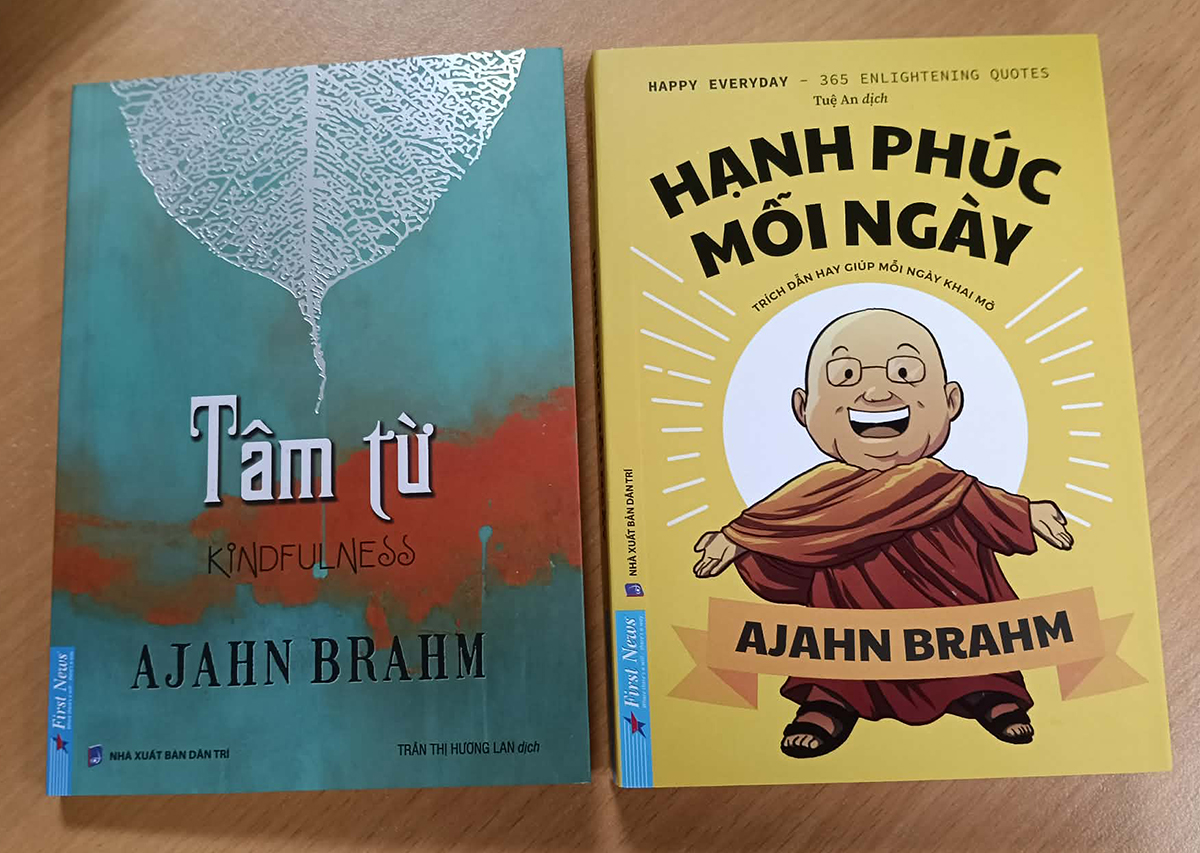 |
"Loving-Kindness" and "Happiness Every Day" are both presented in handbook format. |
Happiness Every Day
This work compiles 365 concise sayings from the author, serving as gentle reminders for each day of the year. Each saying is illustrated with humorous, everyday drawings.
When asked about his view on happiness, zen master Ajahn Brahm stated that it is neither a journey nor a destination, but rather the natural things around us. If happiness were a destination, people would only focus on achieving it. If it were a journey, we might sometimes struggle to find our way and ignore what's around us.
He said: "Any happiness is good, as long as it doesn't come at the expense of harming others. When you see a beautiful sunset, it harms no one; it's a free gift for hundreds, thousands, even millions of people. But we don't spend enough time pausing whenever happiness appears before us."
Ajahn Brahm, born in England in 1951, considered himself a Buddhist at 16 after encountering Buddhist books. In the late 1960s, he studied theoretical physics at Cambridge University. After graduating, he taught at a high school for one year before ordaining in Thailand.
In 1975, the monk traveled to Northeast Thailand, becoming a disciple of zen master Ajahn Chah at Wat Pa Pong temple. In late 1983, he co-founded Bodhinyana Monastery in Serpentine, Australia, and has served as the abbot of the monastery since 1995.
Nghinh Xuan