Designer Nguyen Hoang Tu recently unveiled his "Det Khuc" collection on 2/10, showcasing garments made from excess industrial fabric dyed using the traditional *cu nau* technique of the Black Thai people. The collection, presented through a fashion show, material exhibition, and interactive space at the Center for Art and Culture in Hang Buom, continues Tu's commitment to sustainable fashion.
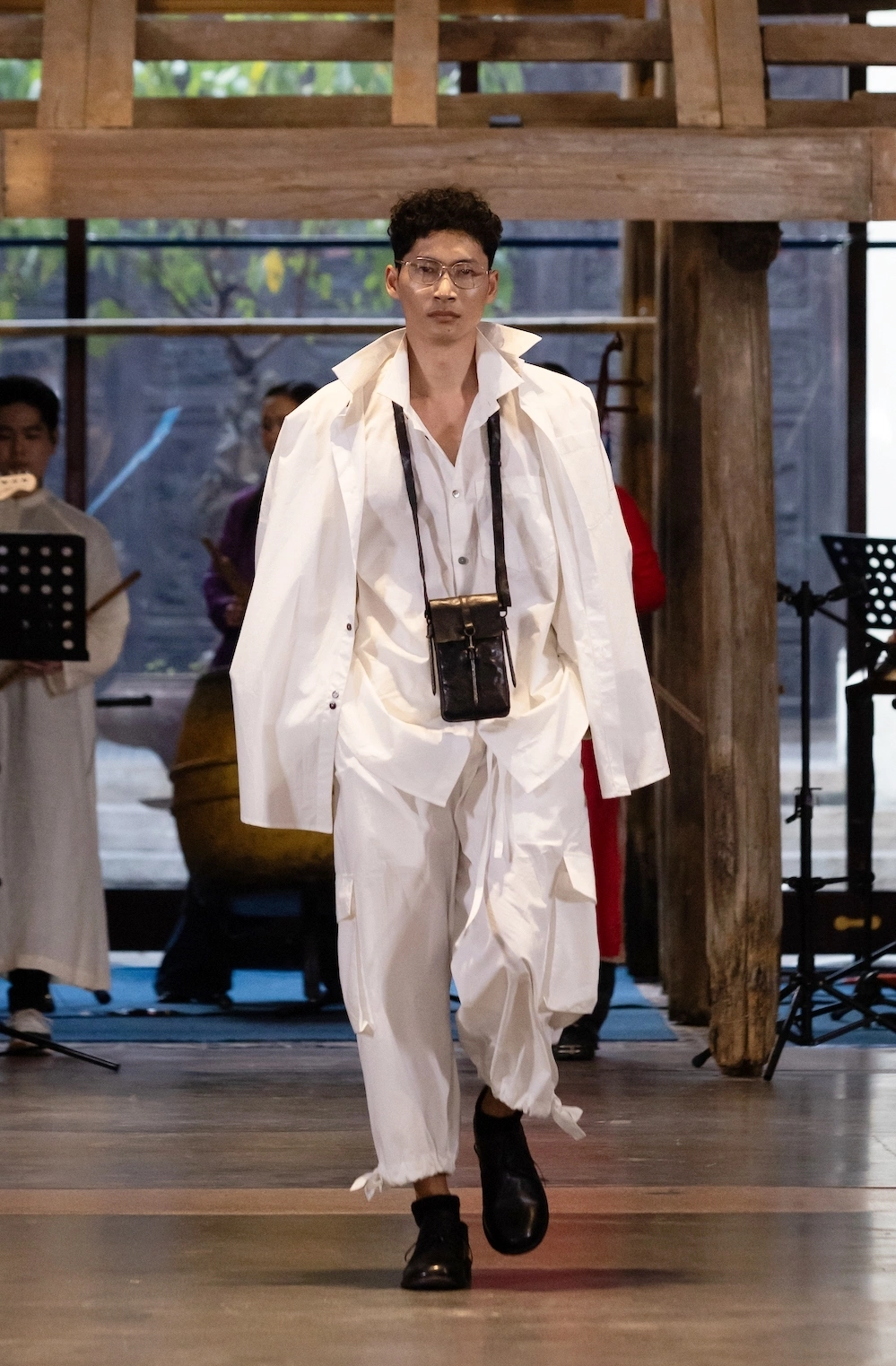 |
The Det Khuc collection debuted on 2/10 with a fashion show, material exhibition, and interactive space at the Center for Art and Culture in Hang Buom. |
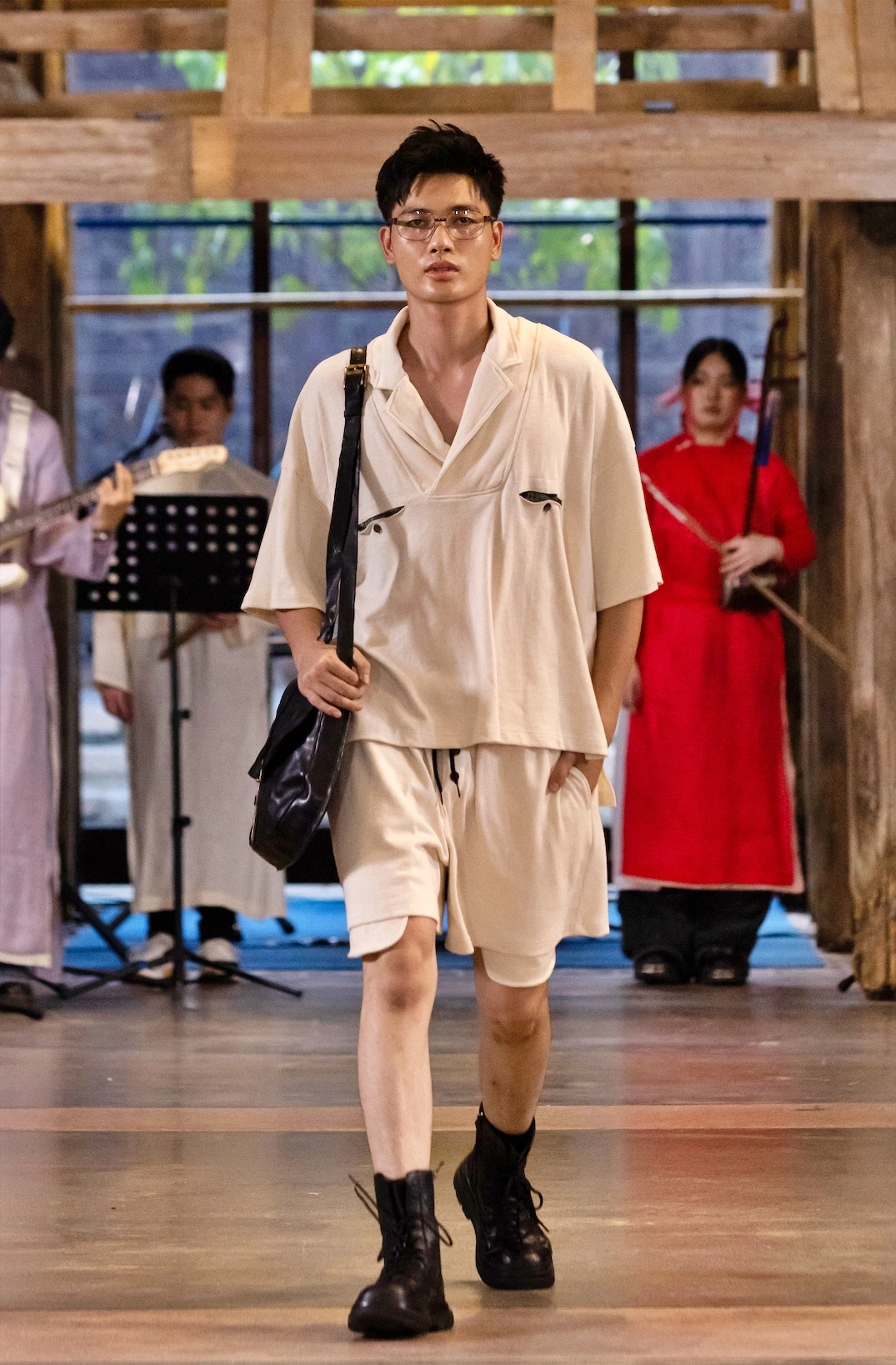 |
Following the sustainable fashion trend applied in previous seasons, the designs utilize leftover fabric remnants from industrial factories that were discarded or slated for destruction. |
Two-thirds of the show featured brown-toned designs with varying shades. Tu traveled to Pong village in Thanh Hoa, collaborating with the local Muong Ky dyeing workshop to research natural material processing methods. The fabric undergoes the *cu nau* dyeing process of the Black Thai people, becoming more supple due to the natural tannins in this root.
{"caption_all":"The show opened with a series of white and cream designs, evoking comfort and lightness. Most notably, a white vest suit with stiff padded shoulders and sharp lapels recalled 1980s suit styles. However, the wrinkled fabric and super wide-leg pants brought the overall aesthetic closer to the spirit of the 1990s.","caption_items":"[null,null,null]"}
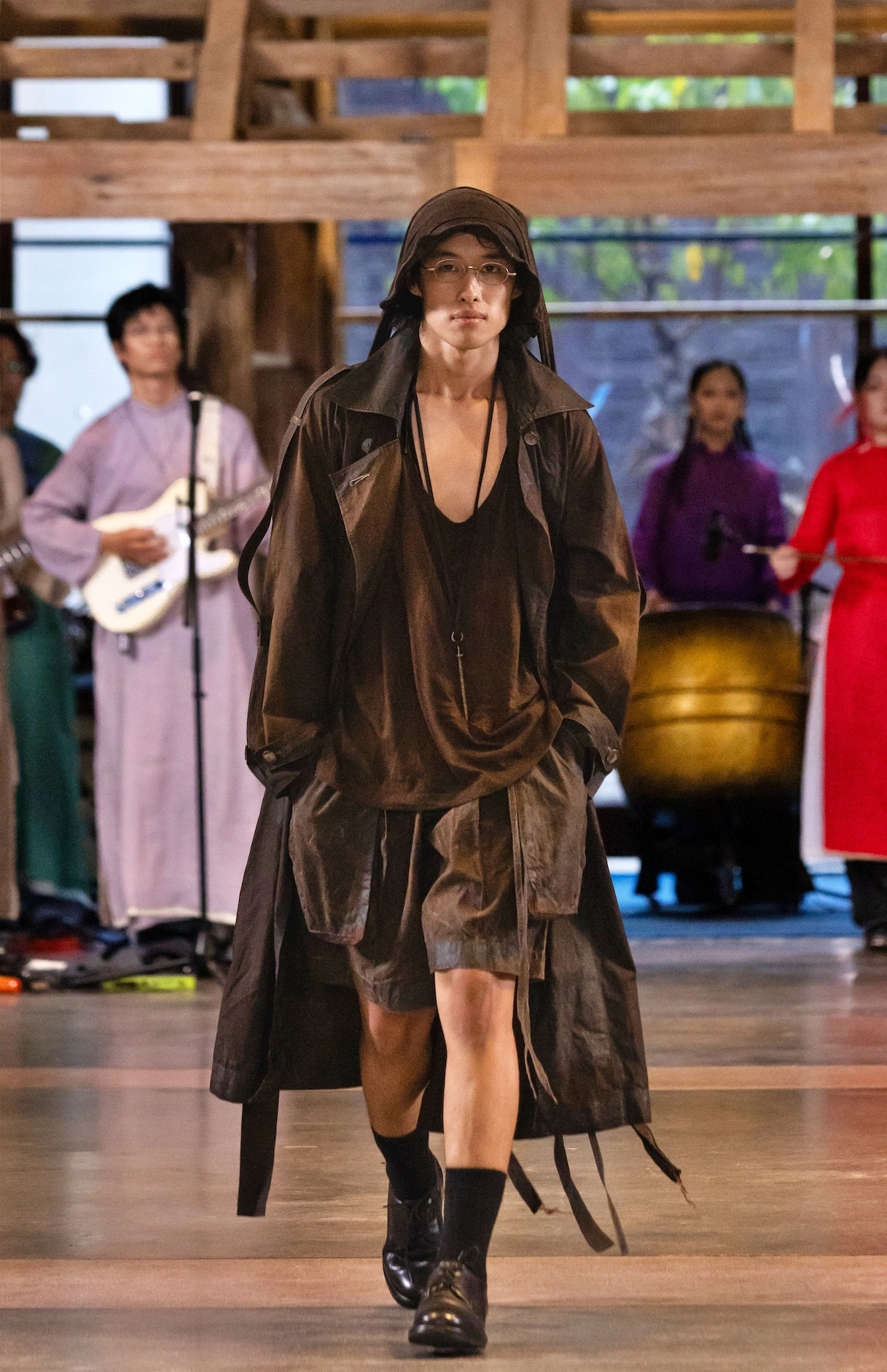 |
To create garments with earthy brown, earthy orange, or glossy black hues, the fabric undergoes an elaborate processing stage. The *cu nau* roots are peeled, then pounded or finely ground, thoroughly kneaded, and filtered to extract a reddish-brown sap. Next, artisans immerse the fabric in the *cu nau* liquid, pressing it evenly so the sap deeply penetrates each fiber for about 5-6 hours or 1-2 days, then wring it out and sun-dry it. Sunlight facilitates the oxidation reaction, ensuring the brown color adheres firmly and develops more beautifully. To achieve the desired depth of shade, artisans repeat the soaking and drying process from 5 to 25 times, for instance, to create light brown, dark brown, or by applying young mud to produce an aged brown tone. |
Two-thirds of the show featured brown-toned designs with varying shades. Nguyen Hoang Tu traveled to Pong village in Thanh Hoa, collaborating with the local Muong Ky dyeing workshop to research natural material processing methods. The fabric undergoes the *cu nau* dyeing process of the Black Thai people, becoming more supple due to the natural tannins in this root.
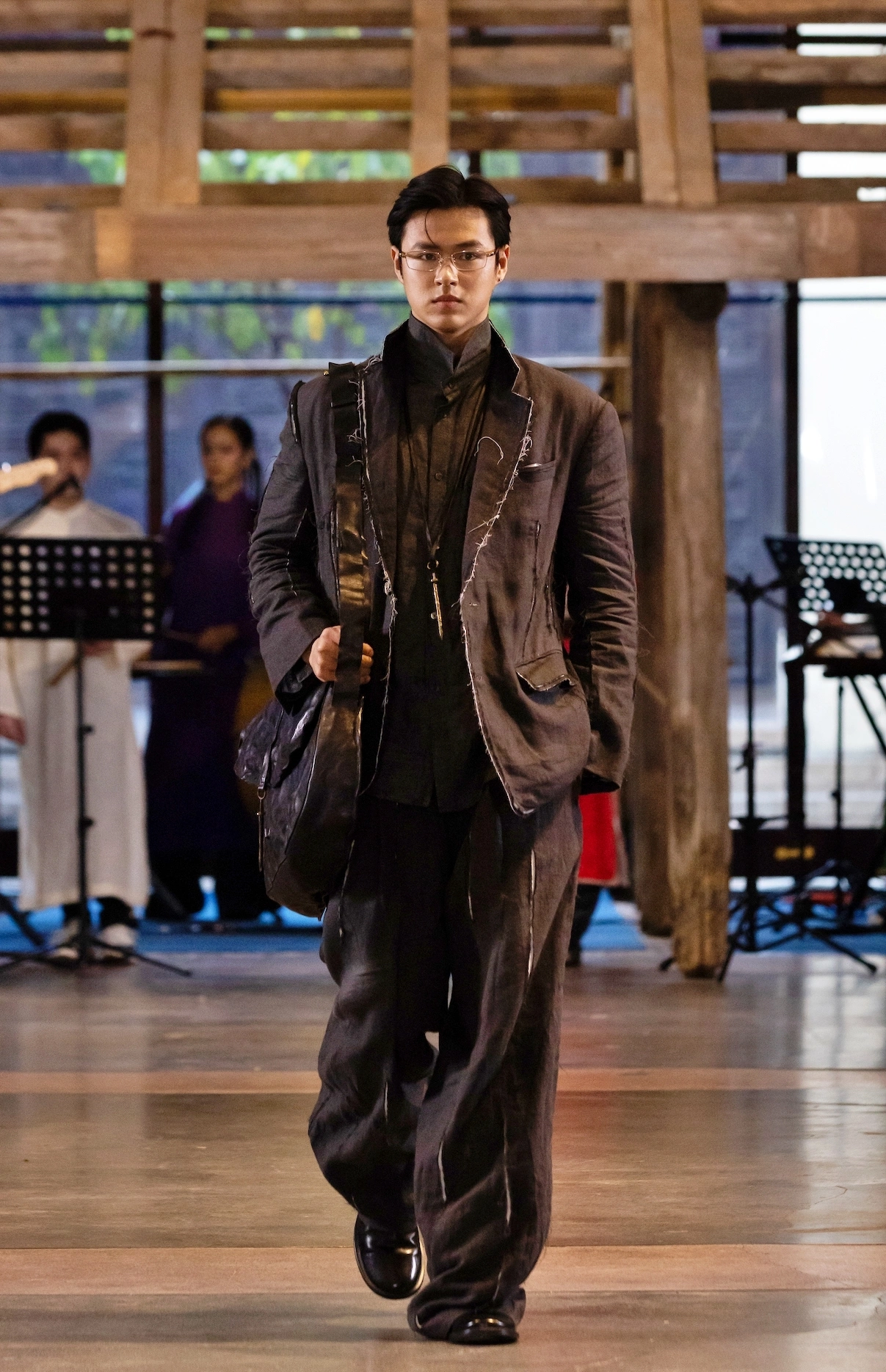 |
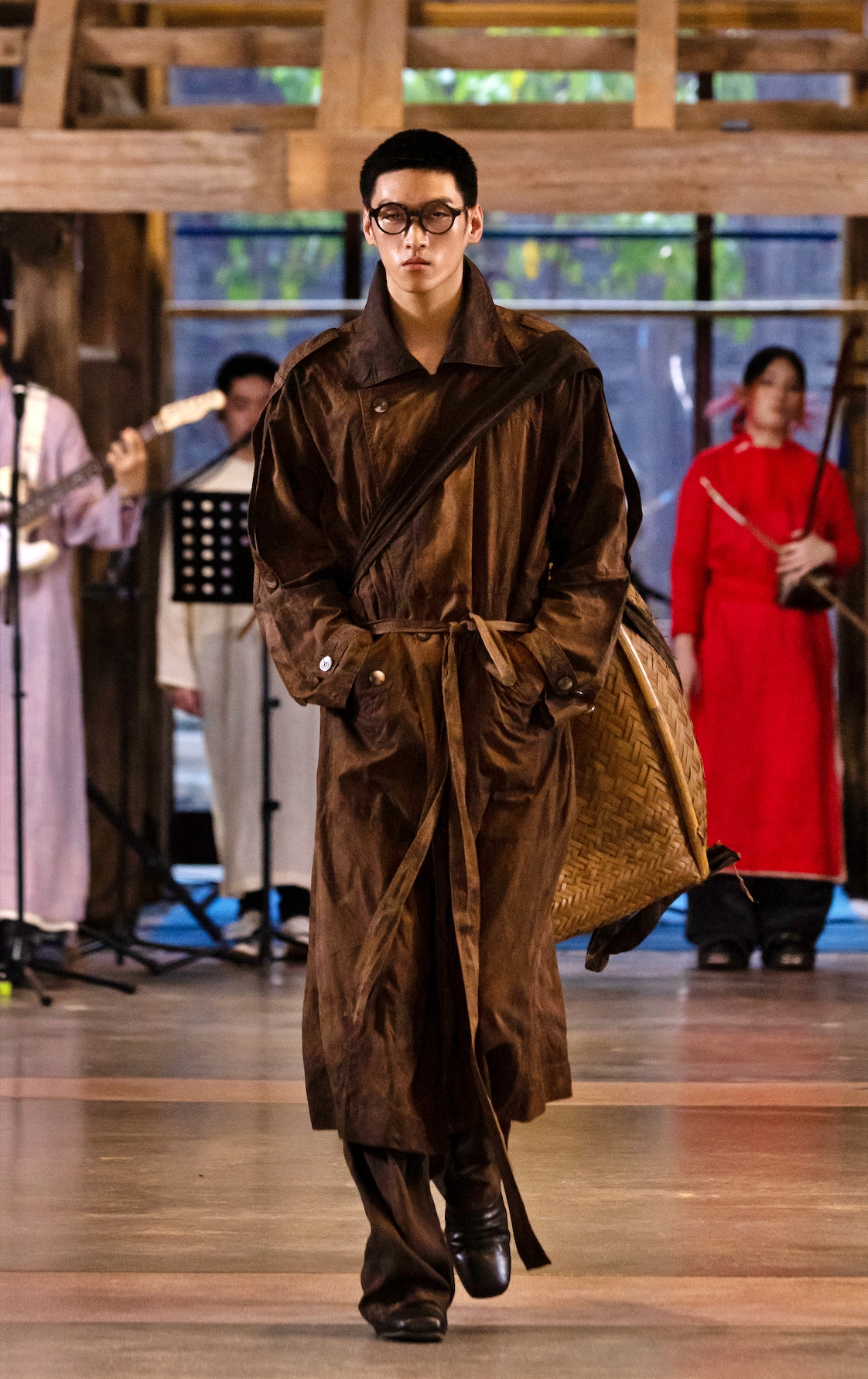
Trench coats – a perennial cold-weather trend – were promoted, paired with matching pants. Some outfits included accessories like handcrafted bamboo back baskets of ethnic minorities. |
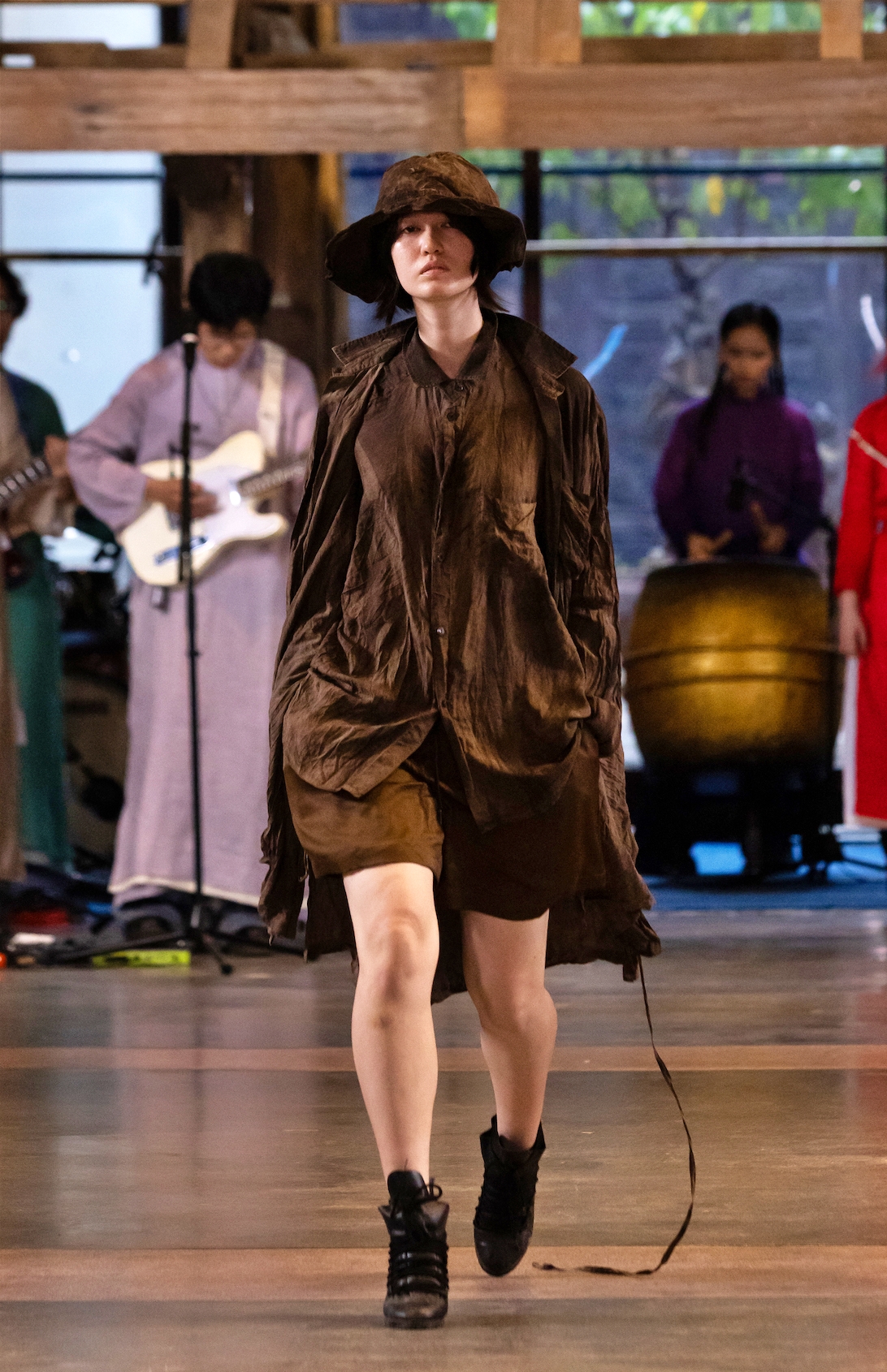
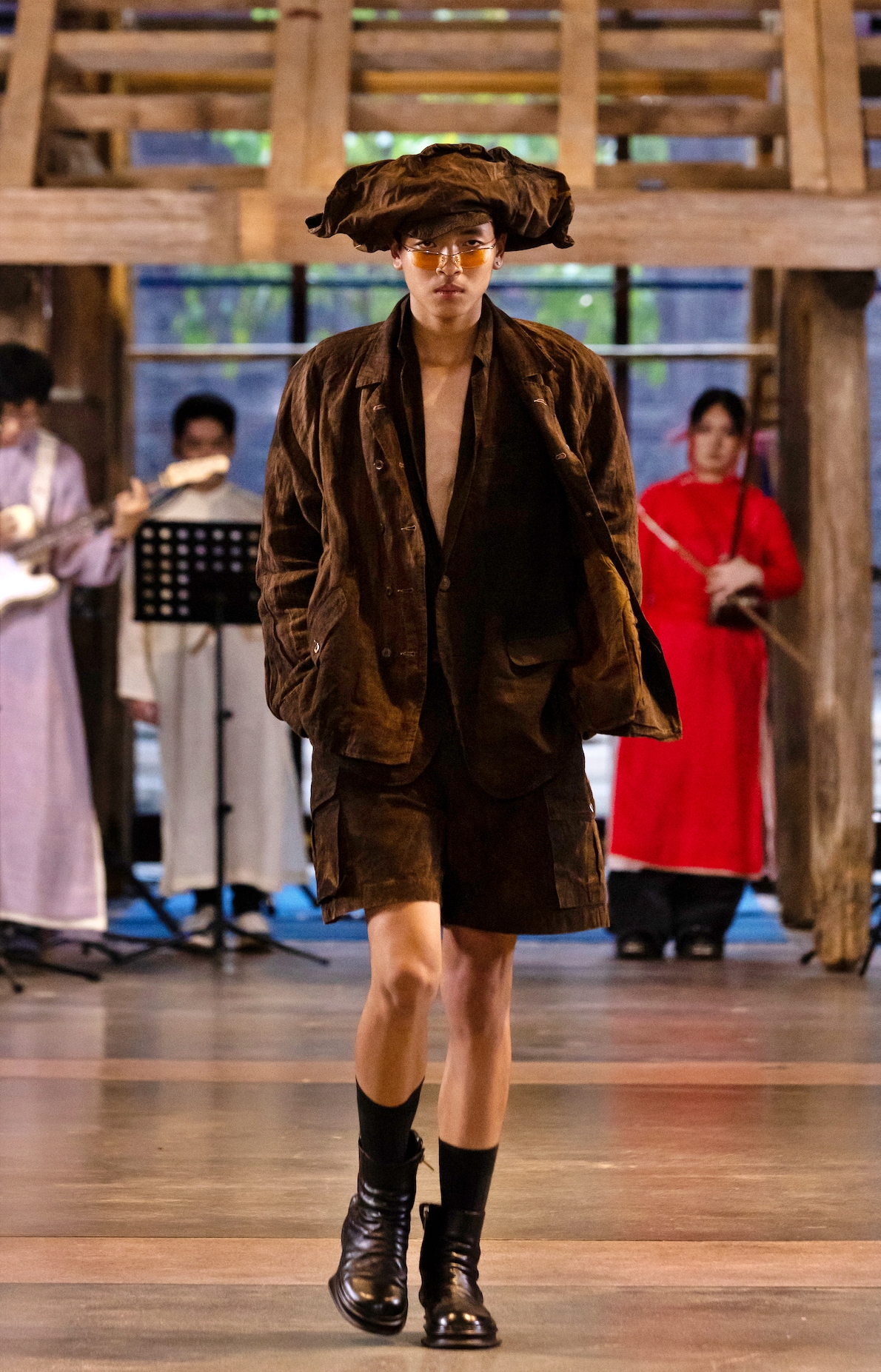
Nguyen Hoang Tu chose an uneven dyeing method, resulting in a distinct aesthetic. On jackets and pants, brown shades transition from earthy yellow to reddish brown, deepening at folds and areas of high stress. The wrinkled, dark, and mottled surface, resembling aged leather or waxed fabric, makes the garments eye-catching and adds depth. This technique creates unique, one-of-a-kind garments difficult to mass-produce.
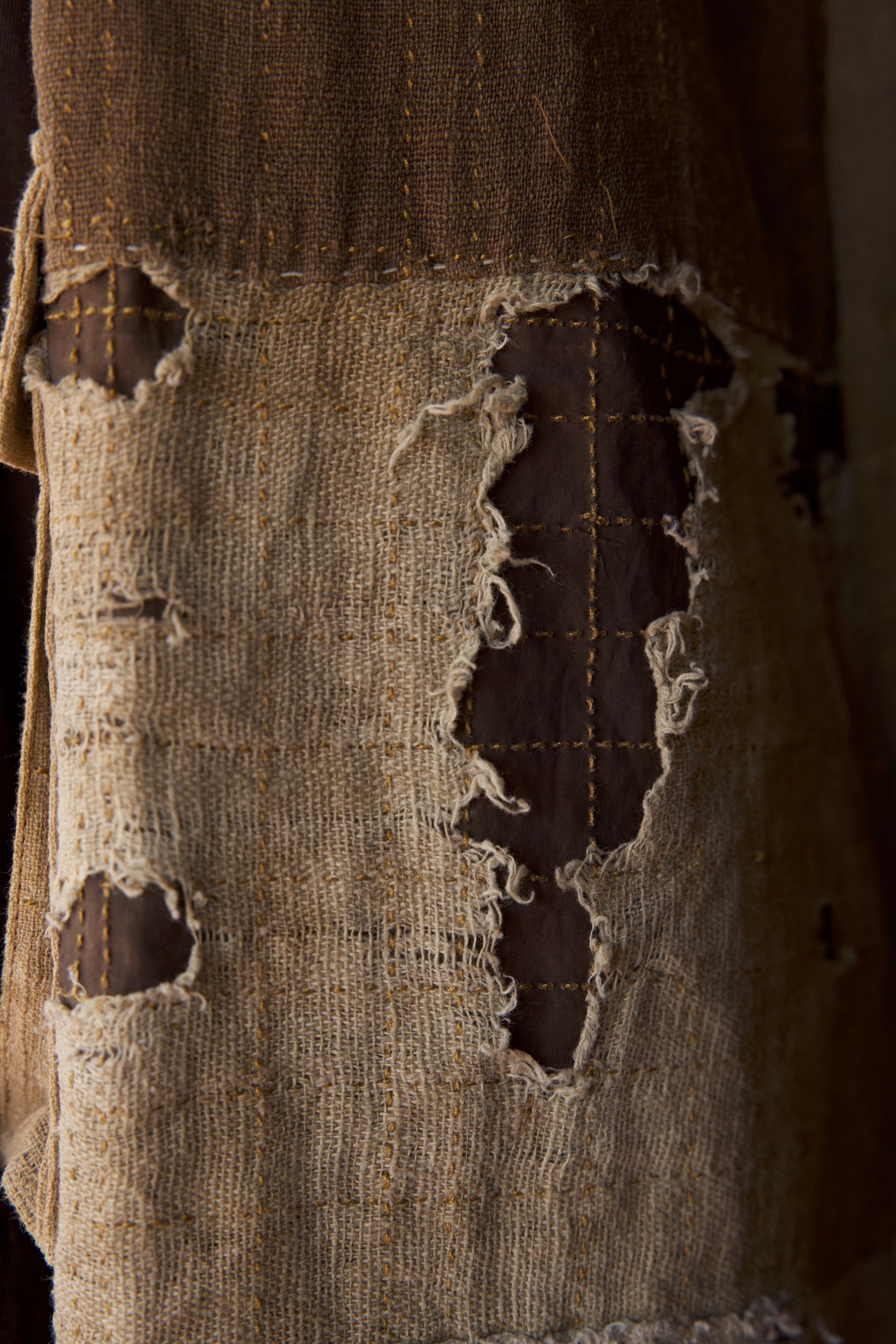
The processing technique is also evident in the loosely woven, deliberately torn raw fabric layers, revealing darker brown fabric underneath. Hand-stitched lines form a grid pattern, both reinforcing and decorating the designs.
 |
Hoods, wraps, hanging straps, and surfaces with an abraded effect, as if weathered by rain and wind, also created an apocalyptic aesthetic. |
{"caption_all":"The designs showcase a Japanese-style deconstructed aesthetic combined with nomadic influences and the spirit of Northern Vietnamese labor. Deconstruction, rooted in the Japanese Wabi-sabi philosophy, is a design approach that breaks conventional notions of the body and the perfection of Western clothing. This is evident in dropped shoulders, wide sleeves, visible mending stitches, straight-leg and baggy cargo pants, and straps and belts left to hang long to the floor instead of being neatly tied.
Many garments lean towards workwear, such as safari jackets with patch pockets and cargo pants. Several outfits paired shorts with long jackets – a popular combination for its youthful and easy-to-wear appeal.","caption_items":"[null,null,null,null]"}
The collection’s designs showcase a Japanese-style deconstructed aesthetic combined with nomadic influences and the spirit of Northern Vietnamese labor. This deconstruction, rooted in the Japanese Wabi-sabi philosophy, breaks conventional notions of the body and the perfection of Western clothing. This is evident in dropped shoulders, wide sleeves, visible mending stitches, straight-leg and baggy cargo pants, and straps and belts left to hang long to the floor instead of being neatly tied.
Many garments lean towards workwear, such as safari jackets with patch pockets and cargo pants. Several outfits paired shorts with long jackets, a popular combination for its youthful and easy-to-wear appeal.
 |
 |
 |
Nguyen Hoang Tu was born in 1990 into a family with a tradition of *ao dai* tailoring in TP HCM. After graduating from the Fashion Design program at Ho Chi Minh City University of Industry, he established his own brand in 2013, pursuing a minimalist style. His designs are rich in structure and geometry, delving into material surface treatment techniques and high-end craftsmanship. Over his 12-year career, he has created many collections, including Morphing, Sleepwalking, Balance, and Phoenix, with Purity (Pure) being the most prominent.
After the show, the designs were exhibited at the Rue Miche L'Edition art center in TP HCM.
Y Ly
Photos: Dinh