Released in late november, the film impressed audiences with its depiction of an old residential complex, the setting for the romance between Khang (Lien Binh Phat) and Ky Nam (Do thi Hai Yen). The sounds of daily life, combined with camera angles showcasing the space and close-ups capturing intimate moments of the characters, create a distinct atmosphere.
Director Leon Le considered the setting a crucial "character" in the film. Therefore, during the scriptwriting phase, the team planned how to realize the filming locations. Production designer La Quy Tung and the director spent two months scouting sites in Ho Chi Minh City, calculating options for building the film set.
The biggest challenges were time and budget. The team carefully considered interior design, camera movement capabilities, additional set construction, and feasibility. They also estimated costs for construction, repairs, prop transportation, and restoring the sites to their original condition.
The crew renovated a block of old houses in District 5, Ho Chi Minh City, incorporating specific details from the 1980s. The design, costume, and makeup teams referenced historical documents and family photos. They then experimented with various colors and materials to accurately recreate the spirit of that period. The film crew paid attention to small details like colors, lighting, and objects to ensure they matched the characters and the historical context.
They applied multiple layers of paint to achieve the correct tone on screen, and curtain materials were changed repeatedly to ensure optimal light absorption, color blending, and compatibility with the props. The apartment complex became a key element defining the film's mood, recreating the urban rhythm of the years before Doi Moi (Renovation). Within the apartment structure, each room reflected the personality of its inhabitant.
Ky Nam's kitchen revealed her lifestyle as a woman once renowned for her domestic skills, thus it could not be messy. Despite her poverty, earning a living by cooking monthly meals, she maintained tidiness. The color of the curtains and a few bouquets of flowers in the house were small details, but they served as emotional "anchors". A display corner of art objects showed Hao's elderly hobbies, while Luyen tending to her chickens suggested the context of many families trying to supplement their income during the subsidy period.
The apartment complex also symbolized Khang's "world" of memories, like the Little Prince stepping onto a strange planet in Antoine de Saint-Exupery's story. This space retained the essence of individual lives, reflecting longing, doubt, and spiritual salvation. Throughout the project, director Leon Le paid meticulous attention to every detail on set. Despite having a design team, he frequently checked props directly, adjusting the placement of objects, lighting, and overall arrangement.
Beyond the art design, the cinematography, led by director of photography Bob Nguyen, transformed the space into frames that fully conveyed the story. Filming with 35 mm film provided a classic color palette. This medium transported viewers back in time, where the city appeared with a simple beauty, serving as a backdrop for the harmony between the two main characters.
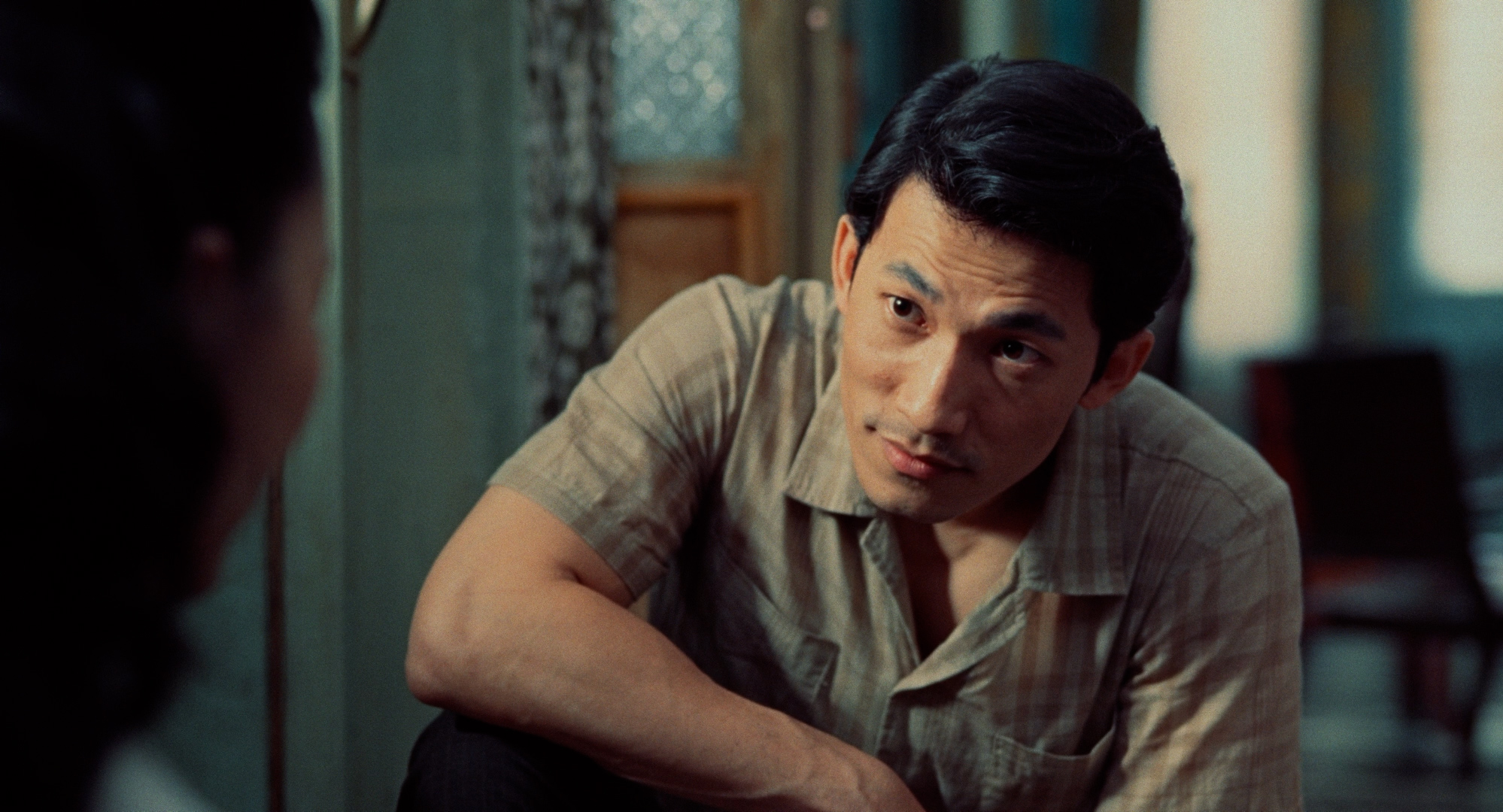 |
The 35 mm film tone in "Quan Ky Nam" created a warm, subdued color layer, highlighting the actors' eyes and facial features. Photo: Film crew provided |
Bob Nguyen shared that he had the idea to shoot with film while working on Song Lang (2018), but could not execute it due to budget limitations. When collaborating on Quan Ky Nam, he and the director decided to use this method, despite technical difficulties and transporting film from the United States. The crew could not rent a local film processing machine due to a lack of operating personnel and old machines not supporting direct on-set audio recording. Instead, he bought two cameras and, with the team, designed a film processing system, saving costs compared to sending it abroad.
Filming spanned 52 days, using over 300 rolls of film, with post-production lasting six months. The riskiest stage was the printing and processing, where nearly 1,000 frames had to be manually processed, with each scene checked before post-production and effects added. Some film rolls were scratched or faulty, requiring him to manually adjust each scene.
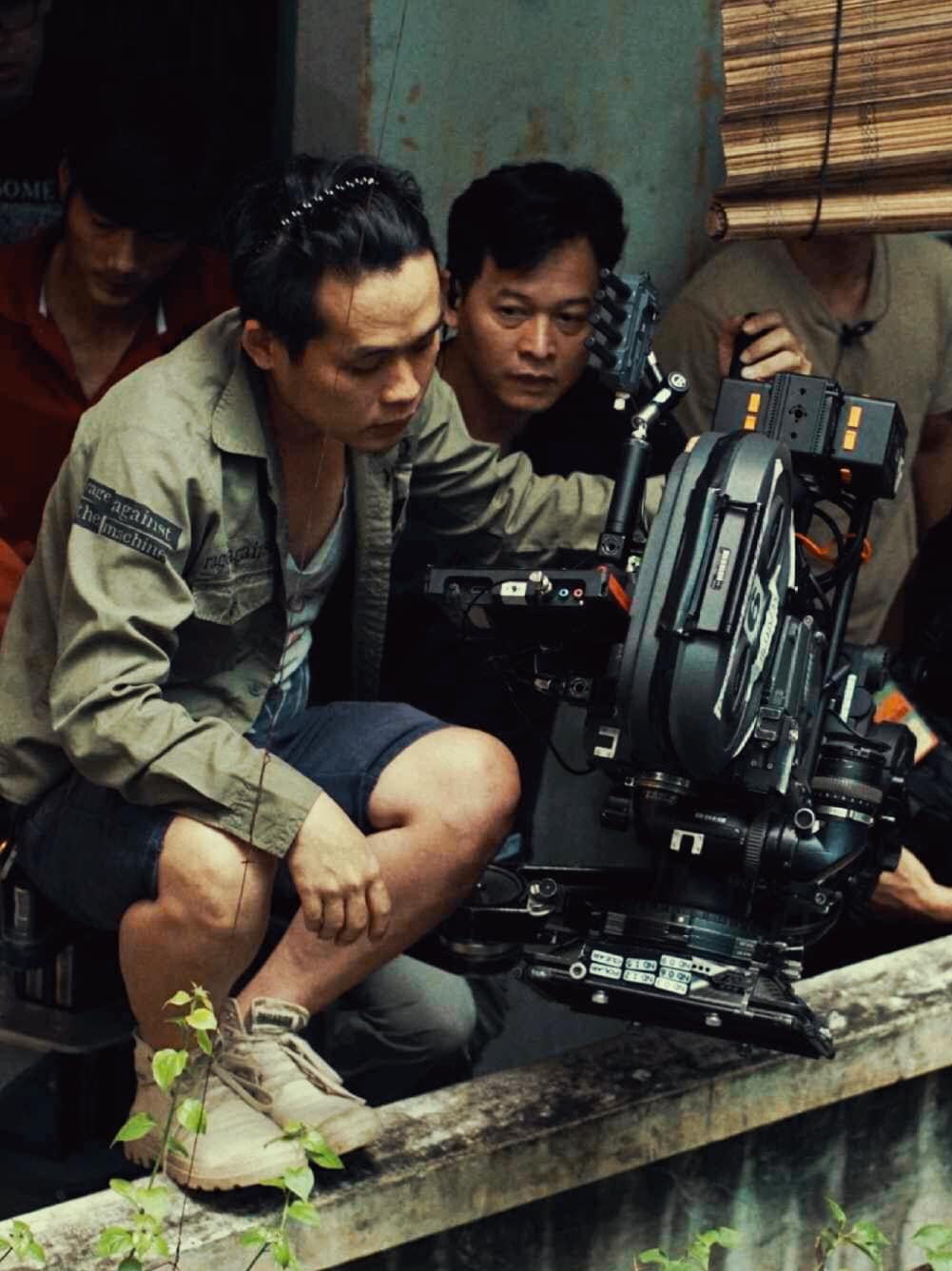 |
Director of photography Bob Nguyen (left) on the set of "Quan Ky Nam". Photo: Character provided |
Quan Ky Nam is a film project by director Leon Le, centering on Khang, who is translating "The Little Prince" by Antoine de Saint-Exupery. He meets Ky Nam, a middle-aged woman who cooks for local residents, and forms a bond with her.
In his second feature film, Leon Le continues to tell a story about memory, art, and human connection. From seemingly casual conversations to their encounters in the apartment complex, the emotional voids within the two characters are filled. They recognize their bond but maintain distance due to societal prejudices.
The supporting characters do not create drama but contribute to the cultural nuances and social behaviors within the community. There is an old man who often listens to pre-1975 music, a bullied mixed-race kitchen assistant, and a northern girl who develops feelings for Khang. Through these elements, the film touches upon social issues such as perspectives between southerners and northerners after reunification, the cautious psychology towards changing times, and families who suffered losses post-war.
Que Chi