Beyond her filmmaking career, director Nguyen Hoang Diep dedicates her passion to spreading a love for books. On her personal page and the Vi and Diep fanpage (established with writer Nguyen Khac Ngan Vi), she introduces good books. In a context where reading culture is shifting, she discusses the role of books, new reading methods, and related plans.
"What motivates you to frequently share about books on social media?"
"First, it's a habit, a characteristic of a social media user; I am stimulated to speak and share information more often."
For a while, I suddenly felt a responsibility to encourage everyone to read. Books are a relatively universal key that can balance many spiritual issues. Books are, of course, also linked to learning. And from the perspective of someone who knows nothing but learning, like me, this is the only path to personal growth and achieving life goals. Sharing becomes even more crucial today because reading seems to be getting harder, rarer. Sometimes, it's even mocked as an activity only for "bookworms."
My efforts in this area have fluctuated. Sometimes, when the "urge" of responsibility is strong, I post content frequently, getting caught up in the pressure of social media algorithms, just to attract attention. There have also been many times when I felt disheartened, especially when I wasted time reading low-quality books.
Of course, the ocean of knowledge is boundless. Reading doesn't mean becoming a Zen master or an all-knowing philosopher. Sometimes, reading is simply reading. It can be a brain exercise or purely a form of entertainment. However, because I prioritize deep reading, I am more stringent. I worry that readers might misunderstand the core message, leading to a distorted view of books. For example, many people get engrossed in "trashy works" and then hastily conclude that literature is useless and unnecessary to read.
Later, instead of posting broadly, I chose to write less and focus on personal experiences that I truly cherish or feel are beneficial to the community.
"What is your reading taste?"
"Before, my world consisted almost entirely of fictional literature. I used to assume books meant literature and spent most of my time and money collecting the most beautiful editions of this genre. It wasn't until much later, when Vietnam's publishing market developed, opening up a paradise of diverse books, that I realized my deficiency."
I particularly favor short stories and try to own collections by both domestic and international authors. Next, I enjoy artbooks and picture books. I love seeing everything stored within book pages and have a hobby of collecting rare volumes. Despite working in cinema, my professional bookshelf is quite small. This is partly because the domestic market for books in this field is still modest, not keeping pace with the industry's development.
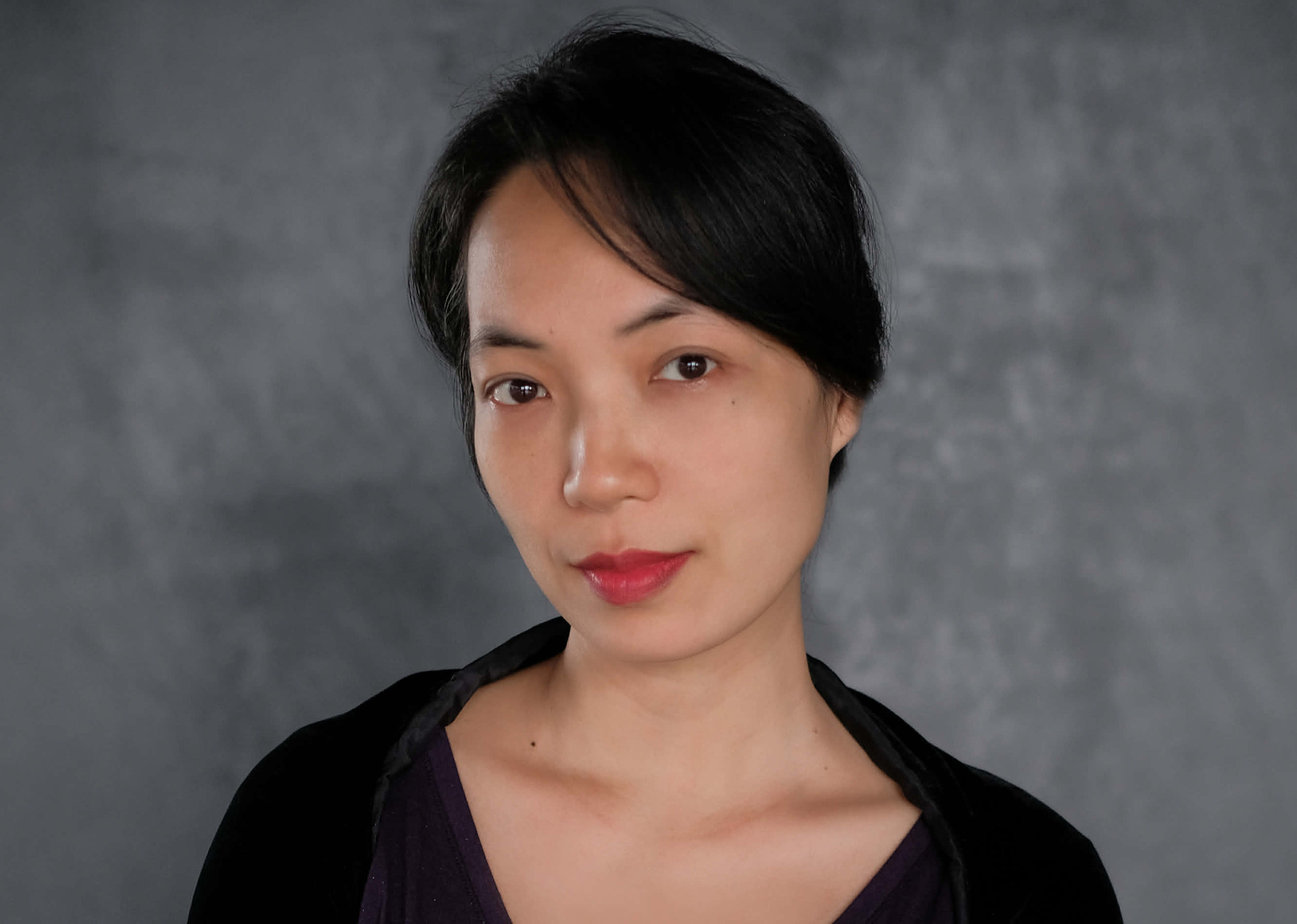 |
Director Nguyen Hoang Diep. Photo: Character provided |
"When did your love for books begin?"
"The love for reading among my 8x generation stemmed from scarcity – the country had just emerged from war, and economic development was still fragile. We devoured everything we could. We read from announcement sheets, ration stamps, newspaper clippings, even sticky rice wrappers and waste collected by junk dealers."
My early and extensive reading doesn't mean I stood above others; it simply reflects a society then consumed by a reading craze. Even the most playful children read. Literate people read to the illiterate. If there was anything special, it was that my family had a bit of means; my parents encouraged me and saved money for me to buy books.
"How do you maintain your reading habit while busy with other work?"
"Honestly, I don't consider reading a habit. I'm not disciplined enough to set daily practice times. Reading is a passion. It has diminished over time due to other interspersed pleasures. For example, I diligently sit down to write, draw, and design with AI."
Even so, I still spend a fair amount of time reading. On every business trip, books take up one-fifth of my suitcase. If I go for a month, I always bring three books and buy two more at my destination.
I am also not the type of person who stores things systematically. I read extensively and somewhat chaotically. My "greedy" nature sometimes leads me to fear missing out: I own three sets of classics like "Gone with the Wind" (Margaret Mitchell) because I worry about losing them, or I buy dozens of copies of a truly great book just to give to friends. I even willingly carry tens of kilograms of luggage from abroad just to bring back thick art books, even knowing the shipping costs can sometimes be more expensive than the books themselves.
Once, just because of an unknown Japanese word, when I went to Tokyo and Osaka, I rushed into bookstores, "sweeping" through them, using Google Translate to find authors I was familiar with, and then bought their books. Or I read all the works by Yan Lianke that had been translated into Vietnamese. After meeting the author and receiving an English translation of one of his books as a gift, I became even more captivated. Whenever I have friends in mainland China or Hong Kong, I ask them to buy his books for me.
"How does reading support your career as a film director?"
"My being is shaped by literature. To say this discipline merely supplements cinema would be unfair to literature. Cinema is not an adaptation or a copy of literary works, but the result of my mind and body having absorbed the 'afterglow' reflections from literature."
There are literary details that haunt me, like the slightly flabby arm of the woman by the swimming pool in Milan Kundera's "The Unbearable Lightness of Being," which I read around 1997. I never directly put such images into my films. What I inherit unconsciously is the immortality of feeling, image, and existentialism. It's like how a mother breathes and eats to transmit nutrients through the umbilical cord to nourish her child.
In my filmmaking career, I have often found myself in states of procrastination or creative stagnation. At such times, literature serves both as a refuge, uplifting my soul, and as a lullaby, allowing my wounds to fester longer because I've avoided them for too long. Thus, sometimes, my sudden organization of a literary event is also a way to expend energy, dedicating myself to the community, temporarily forgetting the difficulties I face.
"Are there any works you plan to adapt into film?"
"I always hold special admiration for writers. They are masters who have lived through countless human lives to distill short stories and novels. I intend to adapt some but haven't been able to due to various reasons like opportunity and the right timing in my career. But generally, the important thing is that I must be confident that my film will be an independent work, not merely an illustration for literature."
If possible, I would like to adapt the short story collection "Pho cu" (Nguyen Van Tho) and "Nguoi linh ken" (Tran Quoc Huan). I also love the works of Y Ban – always fierce and powerful to the extent that I tell myself, to transform them, one needs an inner strength like a 'brave warrior'."
"In your opinion, how can young people be further motivated to see reading as essential?"
"This is a difficult problem. In reality, many parents spend a lot of money on books, equipping their children with a store of knowledge instead of themselves. The buyer is not necessarily the reader."
In my view, to change this, parents must be the first to actively establish a habit of engaging with books. Children imitate the world they see, hear, and touch every day. Without the presence of reading in their surrounding life, children will hardly see it as an intrinsic need.
Additionally, I observe that people often only read when guided. We need people to point out and evoke the beauty of books that many find hard to discover.
"However, there is a view that reading should not be 'deified,' because today there are many faster ways to access information. What are your thoughts on this?"
"I believe these debates are necessary because they accurately reflect the dynamic reality of society. For people of the older generation like me, physical books are still the primary method of acquiring knowledge, but with Gen Z, I reconcile, empathize, and accept that they have different ways of reading."
Knowledge should never be rigid. Today, it can exist in many forms: podcasts, Kindle, games, or multimedia products. Whether one reads or not is less important than how information enters our minds.
"Having undertaken many projects to spread reading culture, which project are you most passionate about?"
"I have never considered what I do as a personal project. Rather, they are campaigns. For example, during the 'Se se chu' phase – aimed at preserving, commemorating, and spreading the artistic legacy of Xuan Quynh - Luu Quang Vu – I wanted to convey the message: Poetry and literature make people more beautiful. Or I set a goal to share one poem on social media every day, and established the O Kia library (the predecessor of the Vi and Diep fanpage)."
One of the highlights of this journey was when I included the visually impaired community in 'Se se chu.' Initially, I approached them with the mindset of finding a new direction for the project after 8 years dedicated to the majority community. But in the end, they taught me a lesson about 'reading the world'."
They helped me escape the idea that reading with one's eyes is the only and exclusive way to access knowledge. They yearned to read, to explore the world through sound and touch, accepting all possibilities and lacking the academic prejudice that avid readers often use to criticize or impose on those who read less. I suddenly became more tolerant of children deemed lazy readers, but who, in reality, simply have different ways of reading than mine.
This year, I will organize a Contemporary Performing Arts Festival for the visually impaired and vulnerable groups, where we will "read the world" together through the language of theater and music. This is not just about promoting reading culture, but also about showing respect for all forms of reception so that we can understand each other better.
Director Nguyen Hoang Diep, 44, is a prominent independent filmmaker in Vietnam. After her debut feature film "Dap canh giua khong trung" (Flapping in the Middle of Nowhere), which competed and achieved significant success at international film festivals such as Venice, Toronto, Fribourg, Busan, Bratislava, 3 Continentals, AFI, Haniff, she focused on producing and supporting young independent filmmakers domestically. She was awarded the French Order of Arts and Letters in 2016. Nguyen Hoang Diep is also the founder of O Kia Hanoi – a creative space dedicated to connecting art with life, and artists with the public.
Khanh Linh