On the evening of 20/11 in New York, Sotheby's hosted the Exquisite Corpus: Surrealist Treasures Evening Auction. Frida Kahlo's masterpiece, "The Dream" (The Bed), was among the most prominent paintings, selling for 47 million USD in just four minutes. The auction house did not disclose the buyer's identity.
Previously, experts had estimated the artwork would fetch between 40 and 60 million USD. According to ArtNews, the final price, including taxes and fees, rose to 54,7 million USD, establishing a new record for the most expensive painting by a female artist. This title was previously held by American artist Georgia O'Keeffe's (1887-1986) "Jimson Weed/White Flower No. 1" (1932), which sold for 44,4 million USD at a Sotheby's auction in 2014.
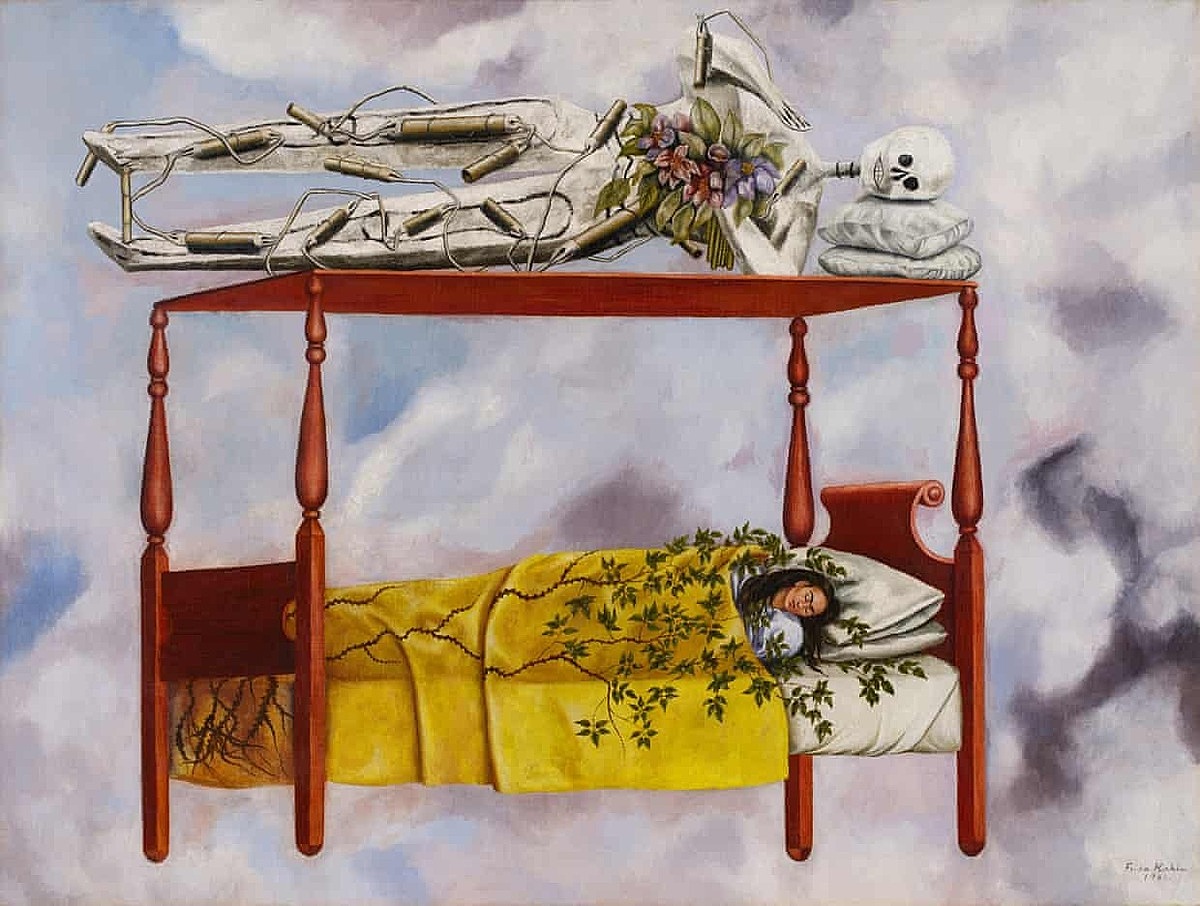 |
The artwork, originally titled "El sueño (La cama)" and translated as "The Dream (The Bed)", is now the most expensive painting in Frida Kahlo's legacy. *Photo: Sotheby's* |
This piece also became the most valuable Latin American artwork in history. It was previously owned by Brazilian collector Selma Ertegen for 45 years, who purchased it from Sotheby's for 51,000 USD in 1980, according to the New York Times. The painting was last publicly exhibited in the 1990s. Concerned that the masterpiece might disappear from public view again, some art historians have requested that the painting be included in upcoming exhibitions in New York, London, and Brussels.
Born in 1907, Frida Kahlo de Rivera is considered one of Mexico's greatest artists, renowned for her self-portraits. Her works are celebrated as indigenous cultural symbols, embodying femininity through depictions of women's experiences and forms. The second most expensive painting in Frida's legacy is "Diego y Yo" (Diego and I), which sold for 34,9 million USD in 2021.
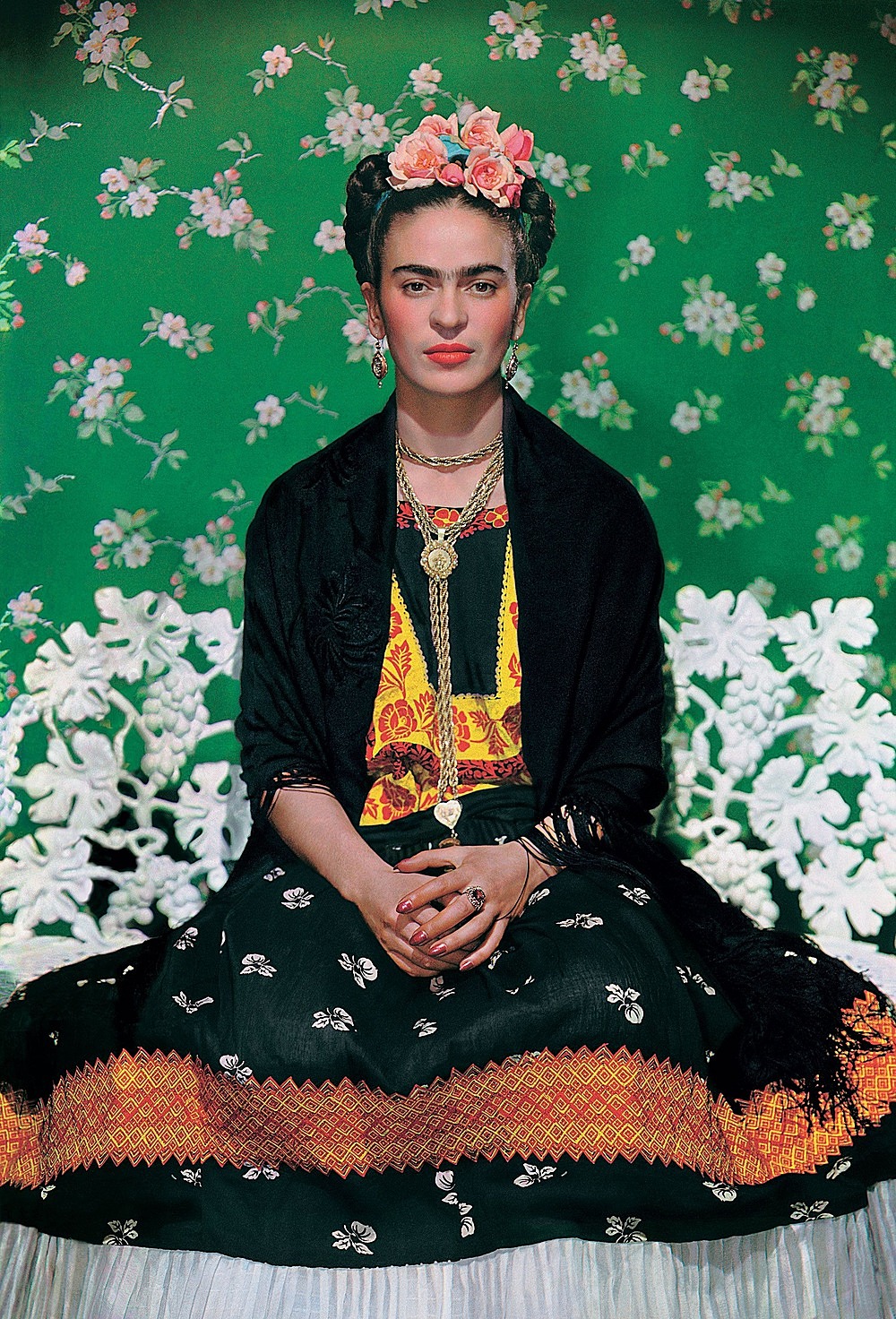 |
Portrait of artist Frida Kahlo (1907-1954). *Photo: V&A Museum* |
"The Dream", created in 1940, portrays the artist in a deep sleep. According to CNN, the bed is a recurring motif in Frida Kahlo's paintings, symbolizing her resilience throughout a life largely defined by illness. From childhood, Frida suffered from poor health, contracting polio at age six. At 18, she narrowly survived a bus accident, undergoing numerous surgeries on her spine and pelvis. She wore casts until her death in 1954 at age 47.
The traffic accident also left her bedridden for an extended period. During this time, Frida Kahlo began painting, viewing art as a bridge between worlds to explore the finite nature of human life. Although her style is often described as surrealist, the artist rejected this label. She once stated, "I never painted dreams. I painted my own reality."
Auction house experts described the artwork as offering "a haunting contemplation of the fragile boundary between sleep and death", suggesting the skeleton serves as a reminder of life's finitude. According to CNN, the period when she painted this work was also a time of significant upheaval in her life. It was the year she remarried artist Diego Rivera after their divorce, and also when her former lover, Russian revolutionary Leon Trotsky, was assassinated.
Anna Di Stasi, head of Latin American art at the auction house, observed that the painting brings together all of Frida Kahlo's characteristic hallmarks: self-portraiture, surreal imagery, psychological depth, and a profound sense of connection between the artist and the viewer.
"Frida Kahlo occupies a unique position in art history. There is a spiritual connection between viewers and her paintings; her works are both deeply personal and widely resonant", Ms. Stasi added.
By Trinh Lam (Sources: Guardian, CNN, ArtNews)