Doctor Clementine Collett, from the Minderoo Centre (MCTD) at the University of Cambridge, conducted a study surveying 258 novelists and 74 publishing industry professionals. The research focused on the impact of generative AI (GenAI) on British literature and proposed solutions to protect the rights of authors and the publishing industry.
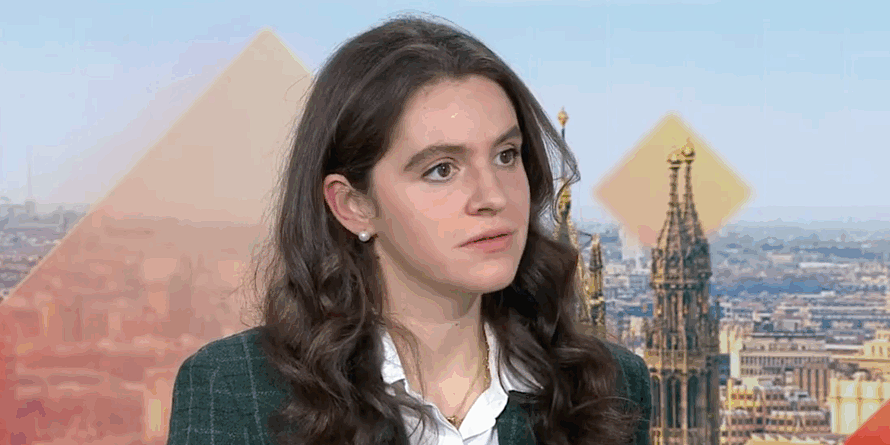 |
Doctor Clementine Collett. Photo: Sky News.
The survey revealed certain benefits of AI, with 20% of novelists using artificial intelligence for research during the creative process, and 8% utilizing the technology for manuscript editing. However, the majority believed that editing is a creative activity and AI should not be involved in this stage.
The study noted that since the advent of AI, copyright law has been disregarded. Many warned that the value of the novel genre is eroding. Concurrently, reader trust in authors is declining, as writers might face suspicion for using artificial intelligence in their creative work.
The opt-out policy, which allows writers to request that their works not be used for AI training, faced significant opposition because it shifts the responsibility of copyright protection onto authors themselves. A substantial 93% of respondents affirmed their refusal to allow artificial intelligence to use their works for training large language models (LLM).
According to the report, romantic novels are considered the most susceptible to replacement, followed by horror and detective books. The increasing release of AI writing tools by technology companies, offering idea generation, novel writing, or automated publishing, poses a risk of superficial works. These "instant" products, created in minutes, lack the human touch and subtlety of lived experience that only humans possess. Authors claim AI learns from existing patterns, resulting in formulaic, bland, and repetitive writing styles.
The report described a future literary landscape where human-authored works are seen as luxuries, while mass-produced AI novels are cheap or free. According to The Bookseller, writer Tracy Chevalier commented, "Publishers will prioritize AI-written books to save on royalty costs and time. Consequently, their prices will be lower than human-authored books, leading readers to choose AI books." Among the surveyed novelists, 51% believed they would soon be replaced by artificial intelligence.
Given rapid technological advancements, the literary community must adapt to survive, necessitating reforms and amendments to intellectual property laws to protect the rights of all involved parties. Many writers support an opt-in principle, requiring technology companies to be transparent about data used for AI training, only using content with owner permission, and providing fair compensation to authors. The proposed model suggests that representative organizations, such as writers' associations, should manage the licensing of AI's use of literary works on behalf of authors.
Against the backdrop of a declining reading culture among young people, with only one-third of children in the UK reporting they enjoy reading in their free time, many writers suggested that schools enhance writing activities without using AI and support the search for young authors. Representatives from some publishers, such as Bluemoose Books, also pledged to label human-authored works as "Organic Literature" to ensure quality and preserve the human element.
Doctor Clementine Collett's report emerged amidst numerous disputes between the writing industry and technology companies. Earlier this year, the Society of Authors (SoA) urged the government to hold Meta accountable for illegally using their books to train its Llama 3 AI model. Anthropic AI also faced a similar lawsuit and was ordered to pay 1,5 billion USD to authors who sued the start-up. In August, the independent publisher Faber labeled copies of Sarah Hall's novel, "Helm", as "human-authored". Mary Cannam, CEO of the company, stated that Faber's logo "will always represent books of human origin".
Chau Anh (according to The Bookseller)