 |
Provided by the subject |
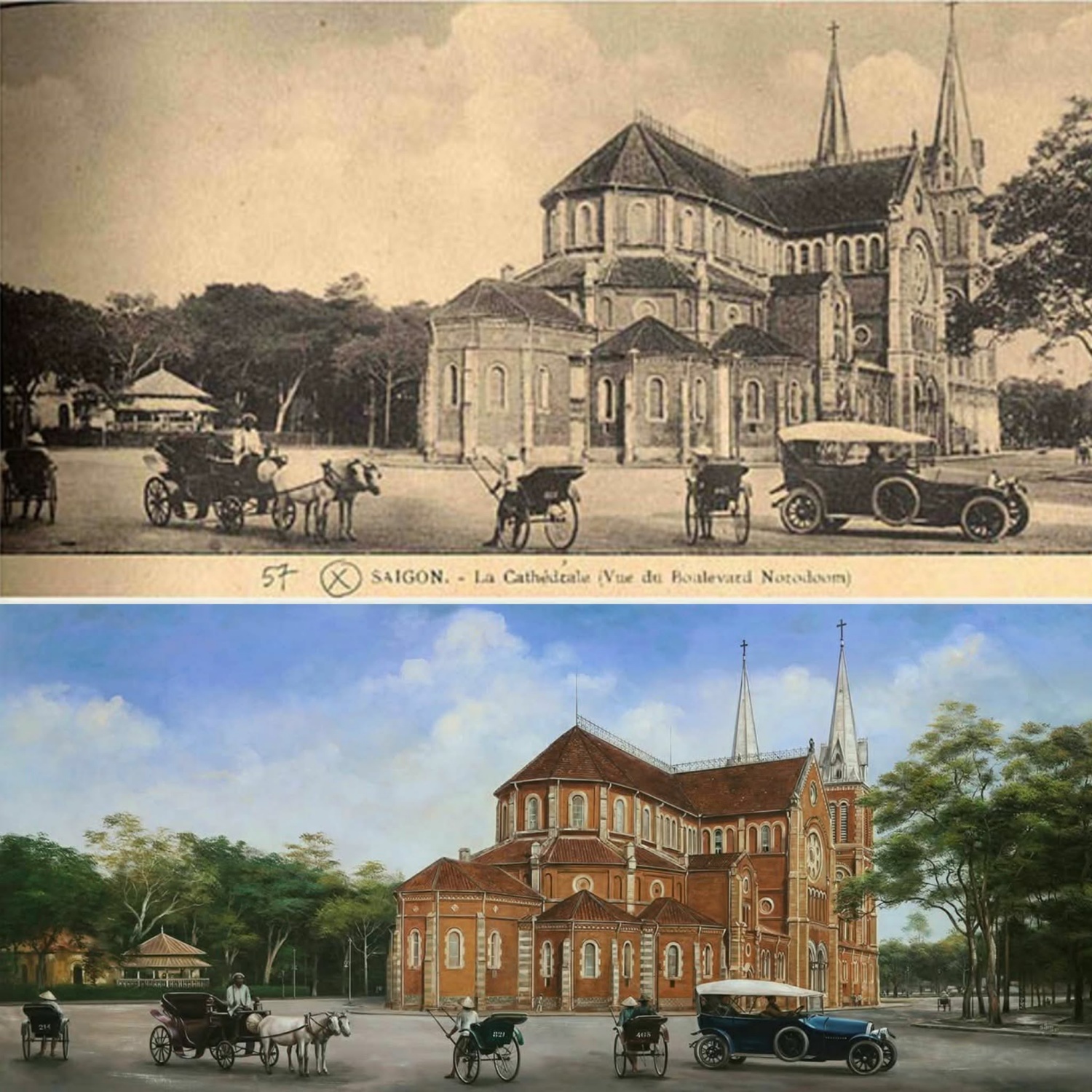
Notre Dame Cathedral in Saigon, bustling with traffic in the late 19th and early 20th century. Artist Le Sam, 53, created this oil painting on canvas from a black and white photograph. He stated that he has pursued the theme of historical life since 2018. Some of his works, shared on art appreciation community pages, have received praise for their vividness and nostalgic colors.
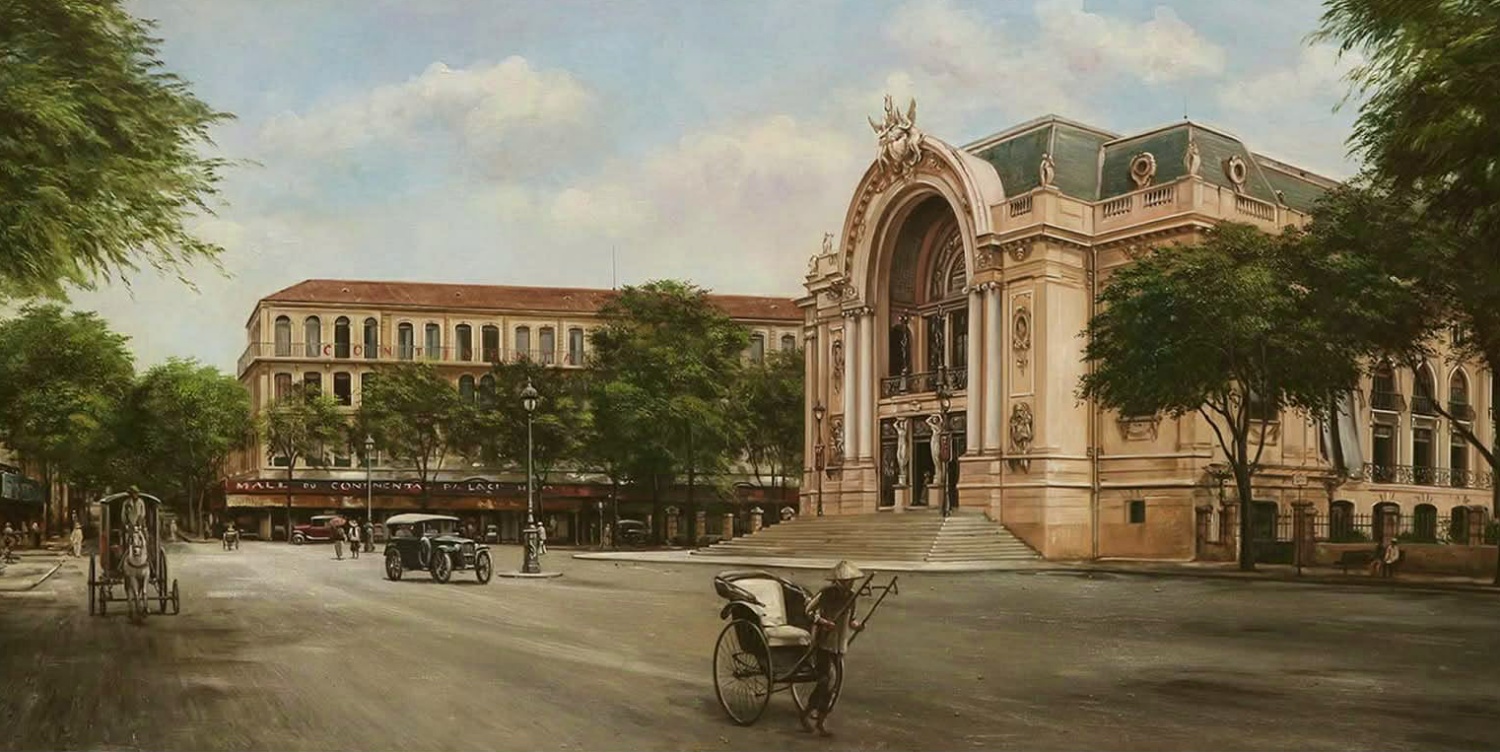 |
The area in front of the municipal theater. This structure, built in the "flamboyant" style (an architectural style with delicate and flowing decorative patterns resembling flames), was inaugurated in 1900.
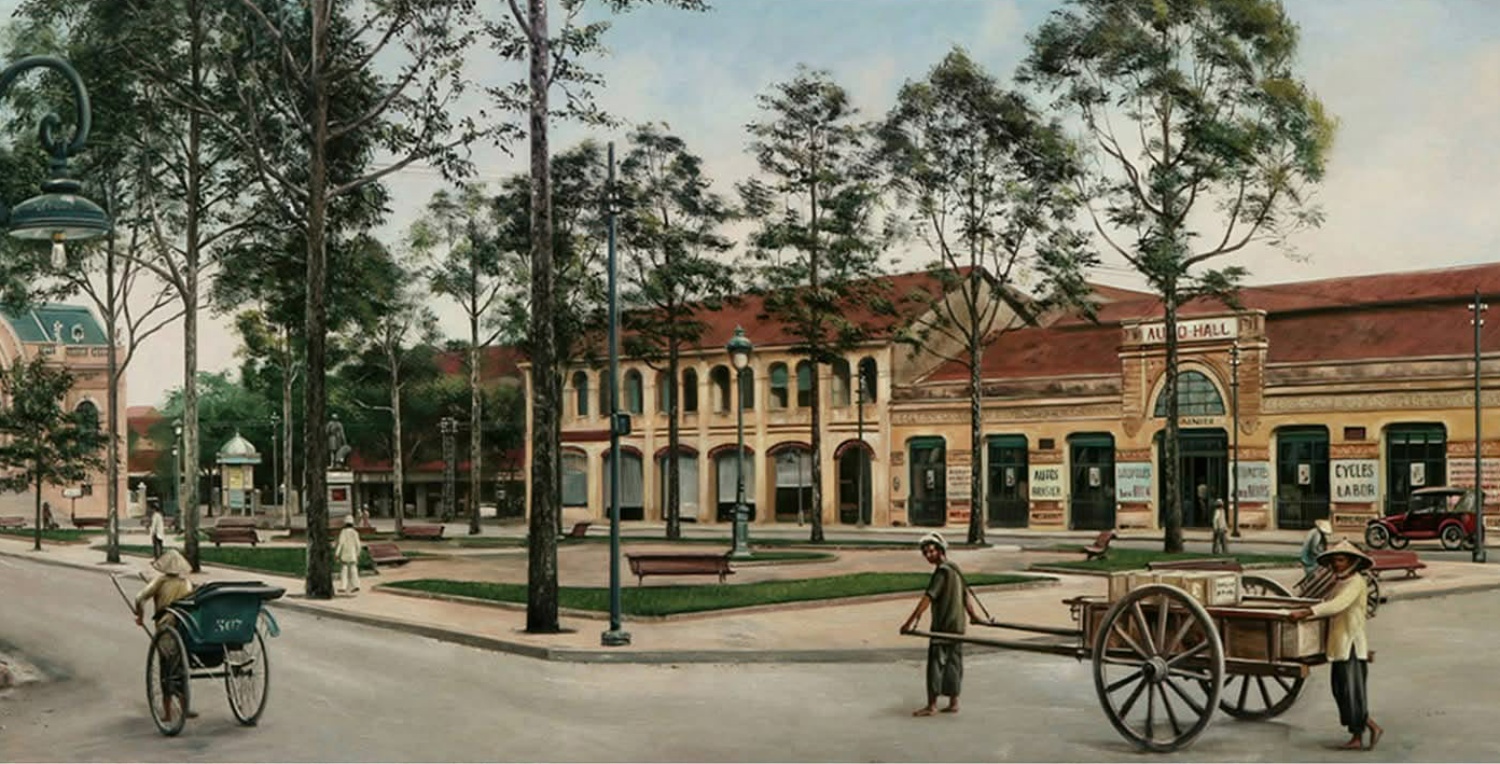 |
The park area in front of the theater is now the intersection of Le Loi and Nguyen Hue streets. The artist mentioned that each painting takes him an average of 40 hours to complete due to his focus on intricate details.
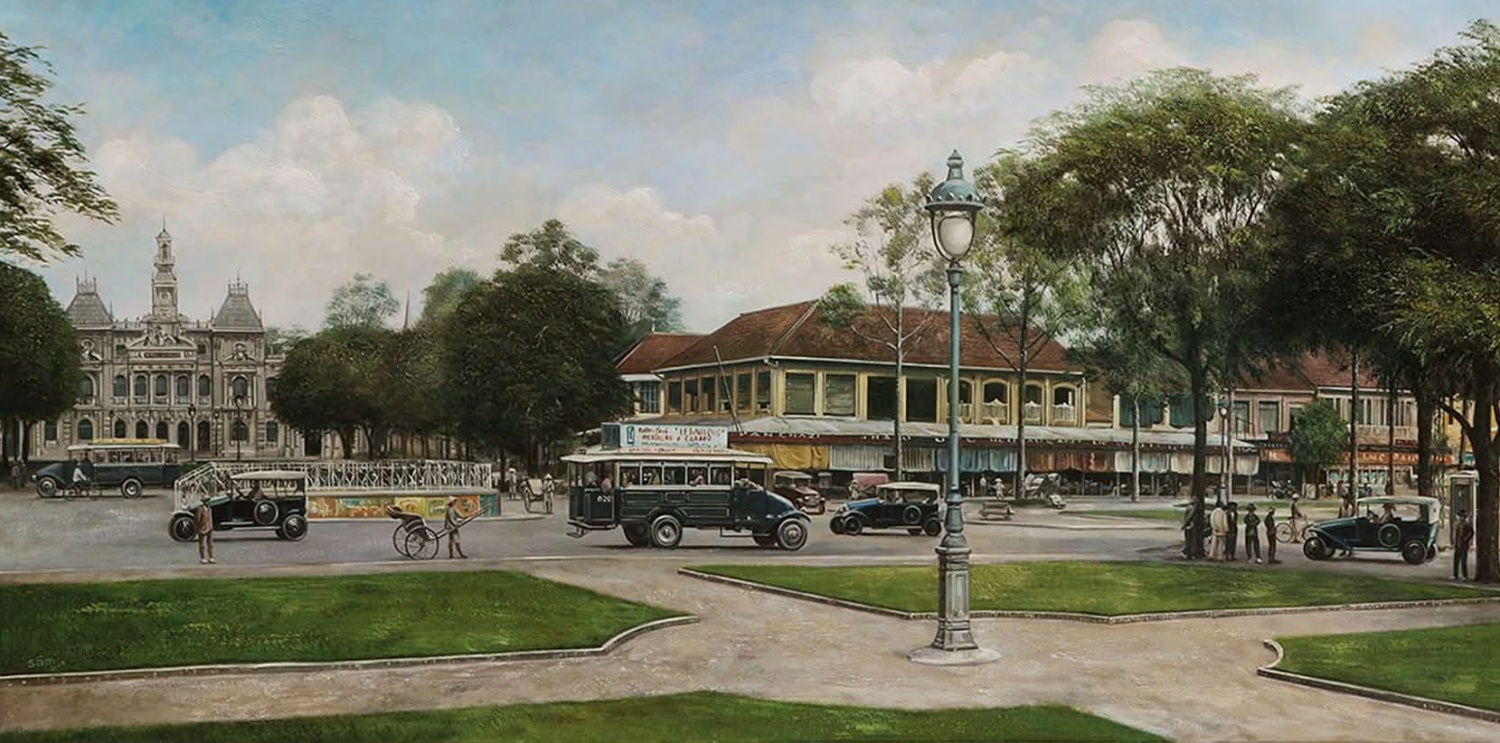 |
The bustling street in front of City Hall has now become Nguyen Hue pedestrian street. During the French colonial period, the building was known as Hotel de Ville in French, or Dinh Xa Tay in Vietnamese.
 |
Quai de Belgique (at the corner of Adran street) in 1921, is now Ho Tung Mau street in the center of Ho Chi Minh City.
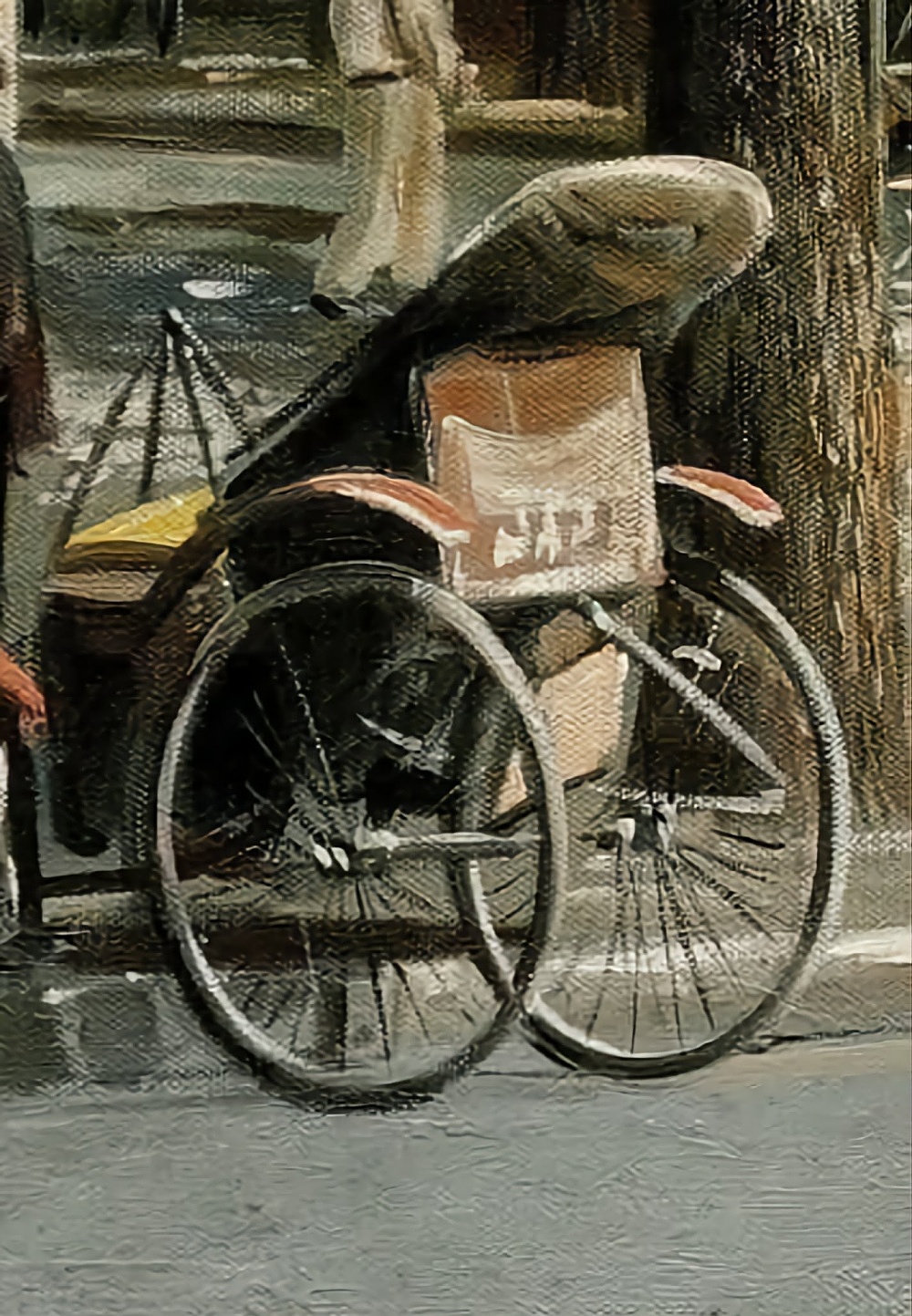 |
When painting landscapes, the artist focuses on minute details such as vehicles and human figures.
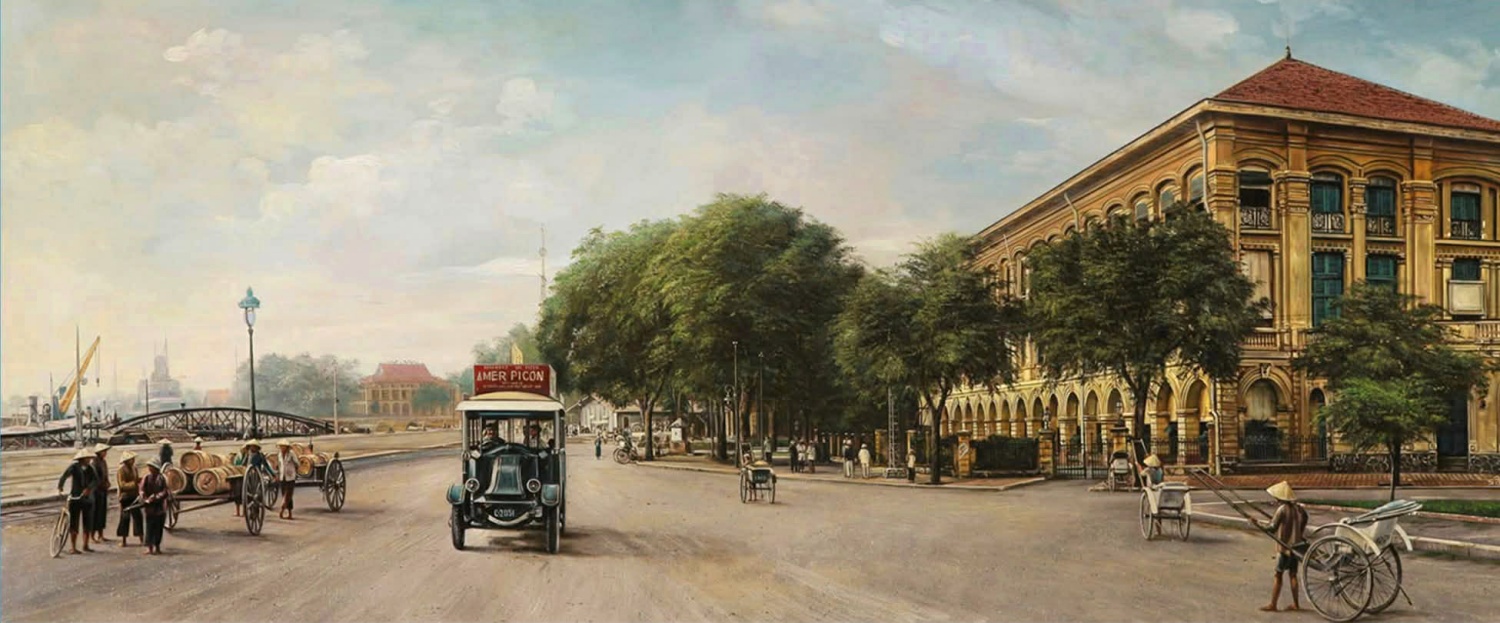 |
People moved about on Bach Dang Wharf in the early 20th century. At that time, the primary mode of transportation was the rickshaw, with approximately 400 available across Saigon.
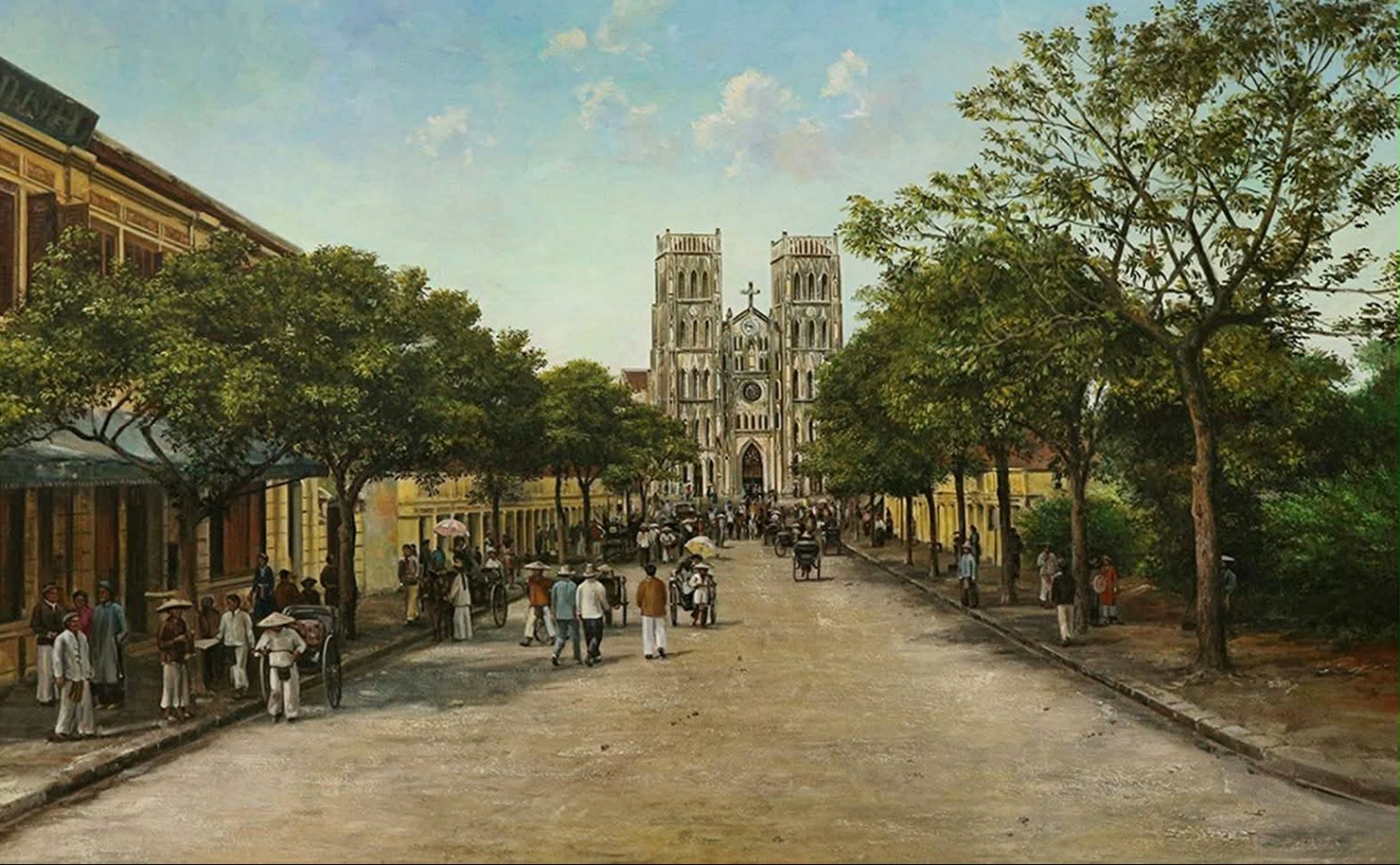 |
In addition to Saigon, the artist has painted many scenes of Hanoi, such as Nha Tho street in the early 20th century.
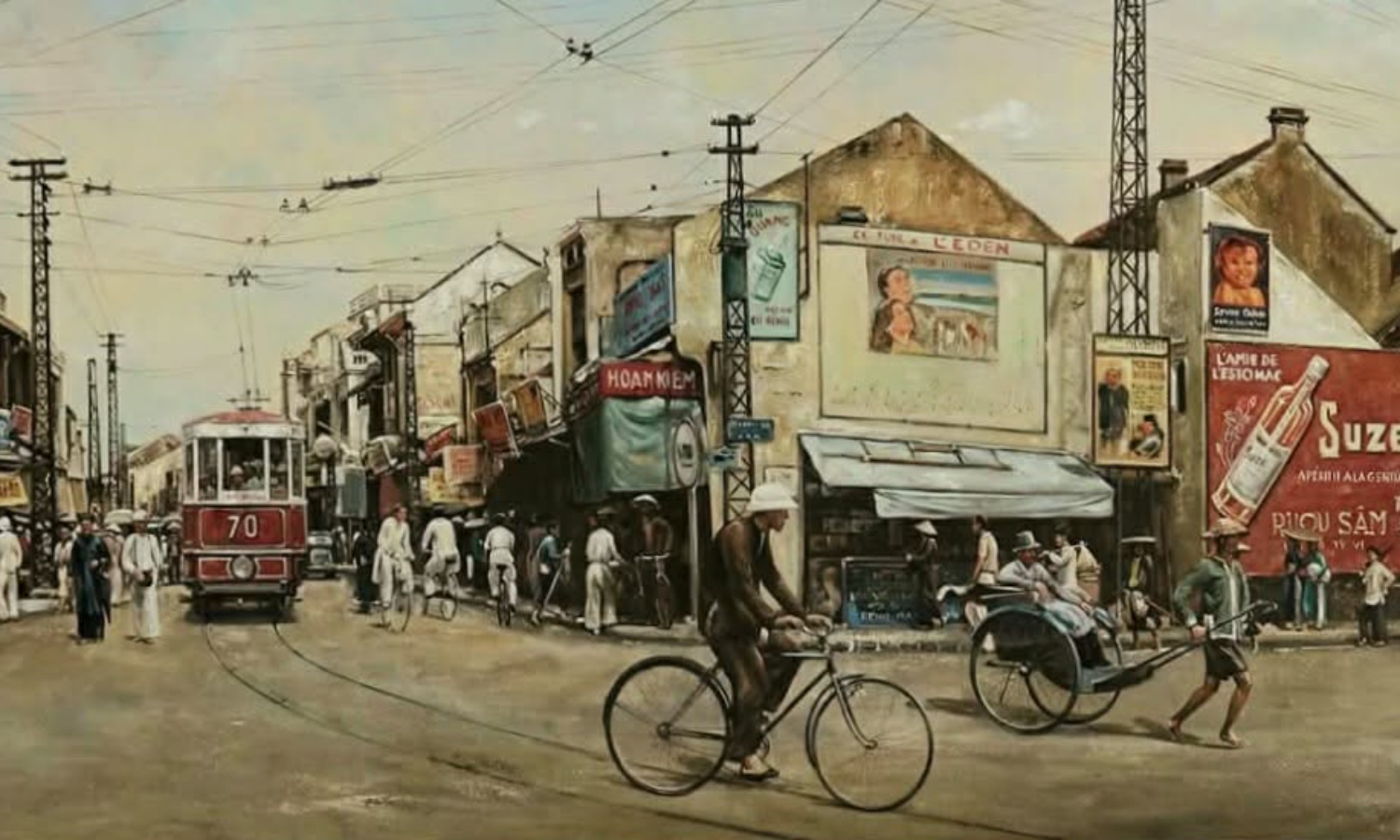 |
A section of a painting depicting an old tram scene, measuring 80 x 280 cm.
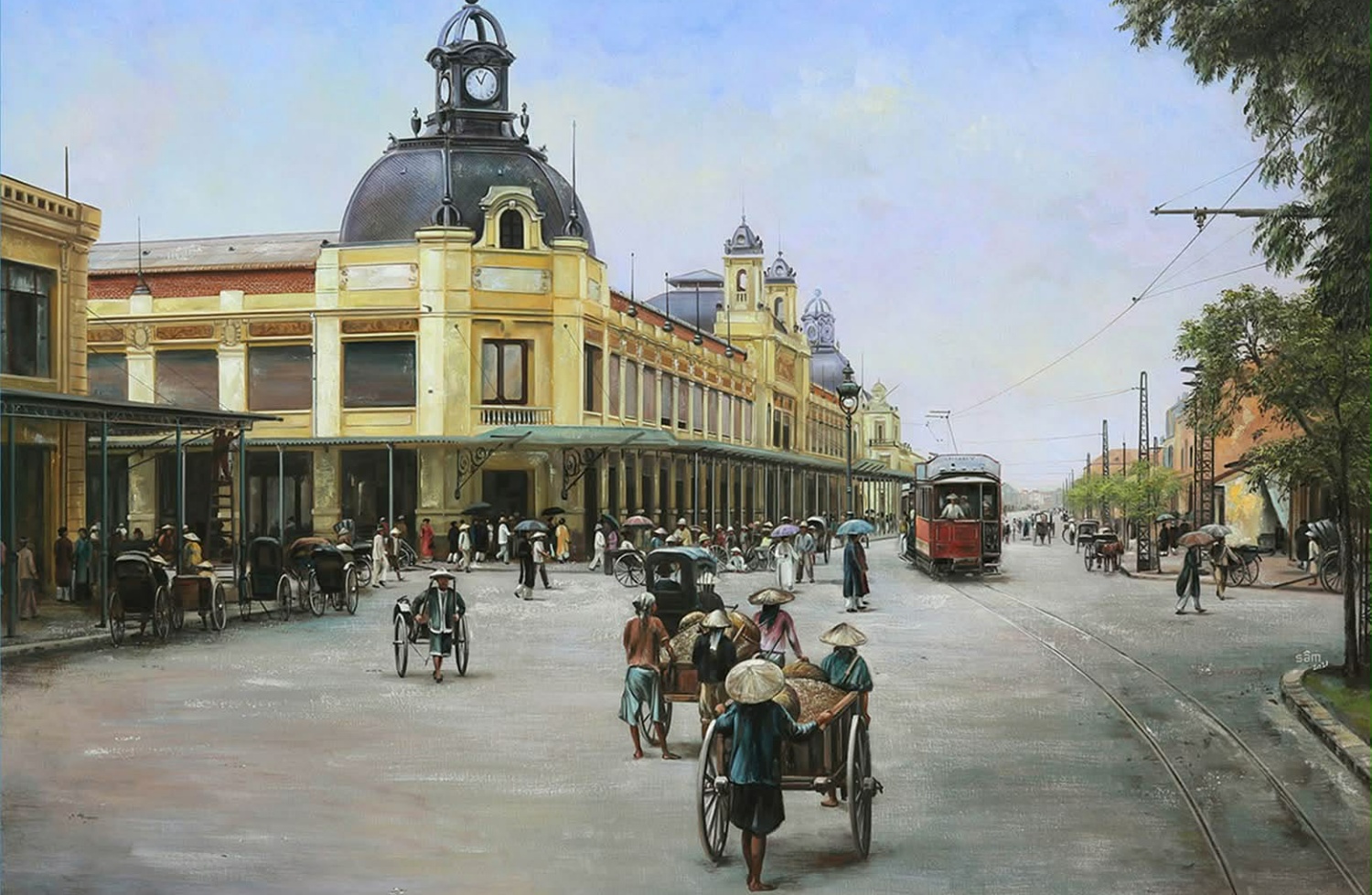 |
The building at the corner of Trang Tien street is now Trang Tien Plaza.
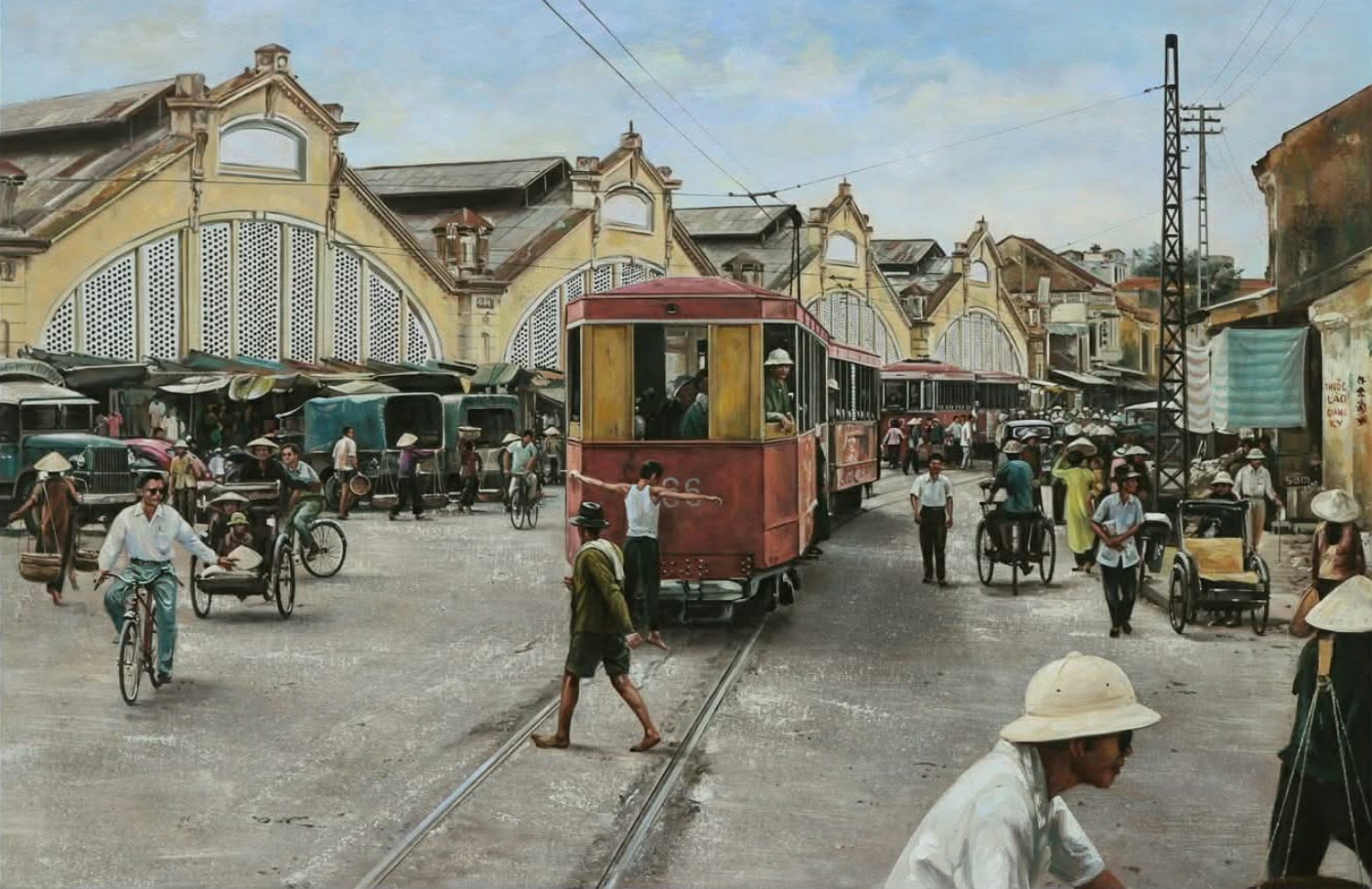 |
A view of Dong Xuan Market in Hanoi in the mid-20th century.
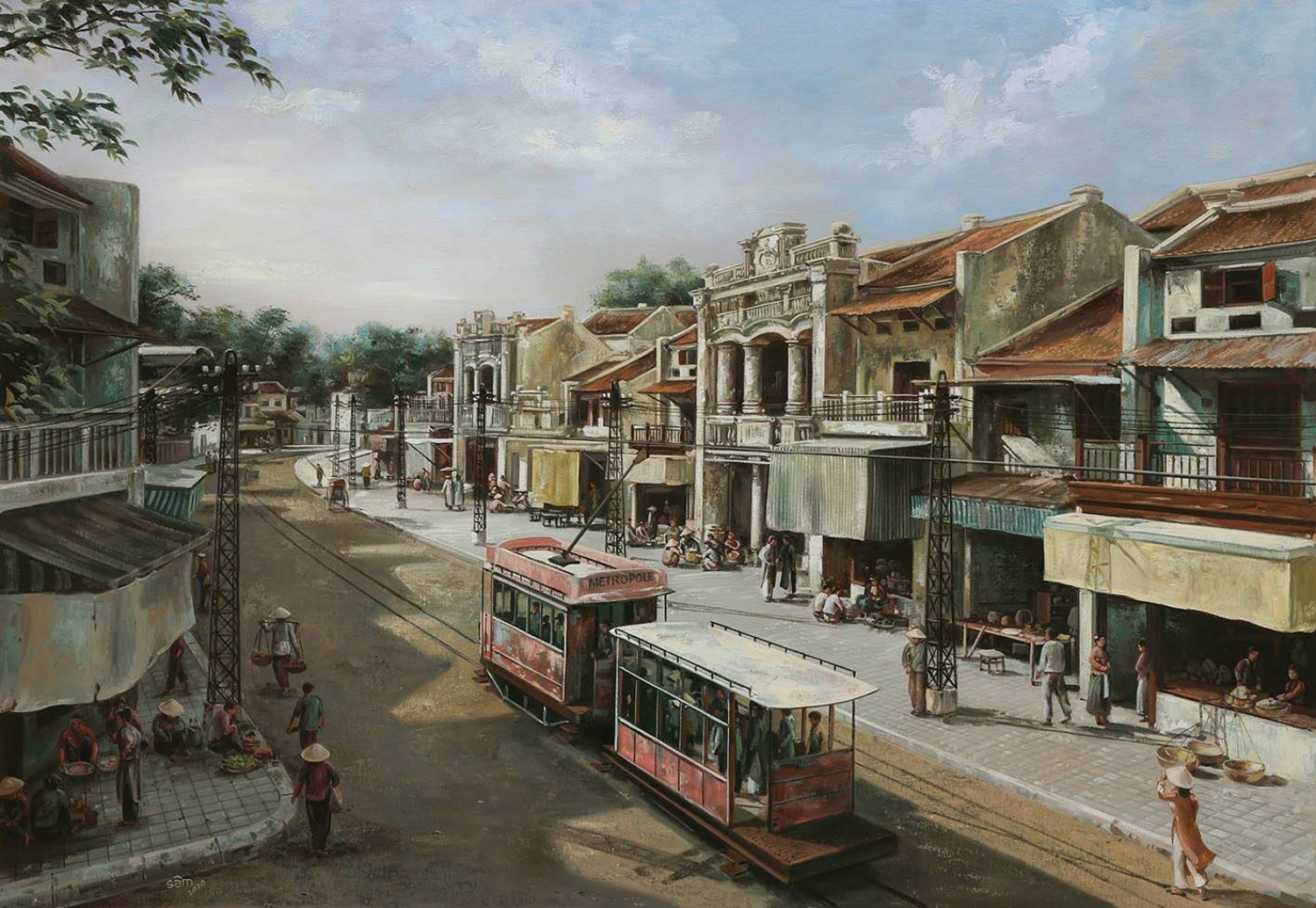 |
The antique charm of old Hanoi is evident in these paintings.
The artist, originally from the former Binh Dinh province, began studying painting in kindergarten. He started by drawing on floors and walls with chalk and charcoal, later receiving professional instruction from a teacher.
In 1997, Le Sam moved to Ho Chi Minh City, where he worked at an art gallery on Mac Dinh Chi street, District 1. There, he learned techniques from his teacher and colleagues, experimenting with various art movements. In 2020, he returned to Cam Ranh, Khanh Hoa, to open his own gallery and focus on his creations. Recently, he has garnered attention for a series of hyperrealistic still life paintings.
Mai Nhat
Photos: