 |
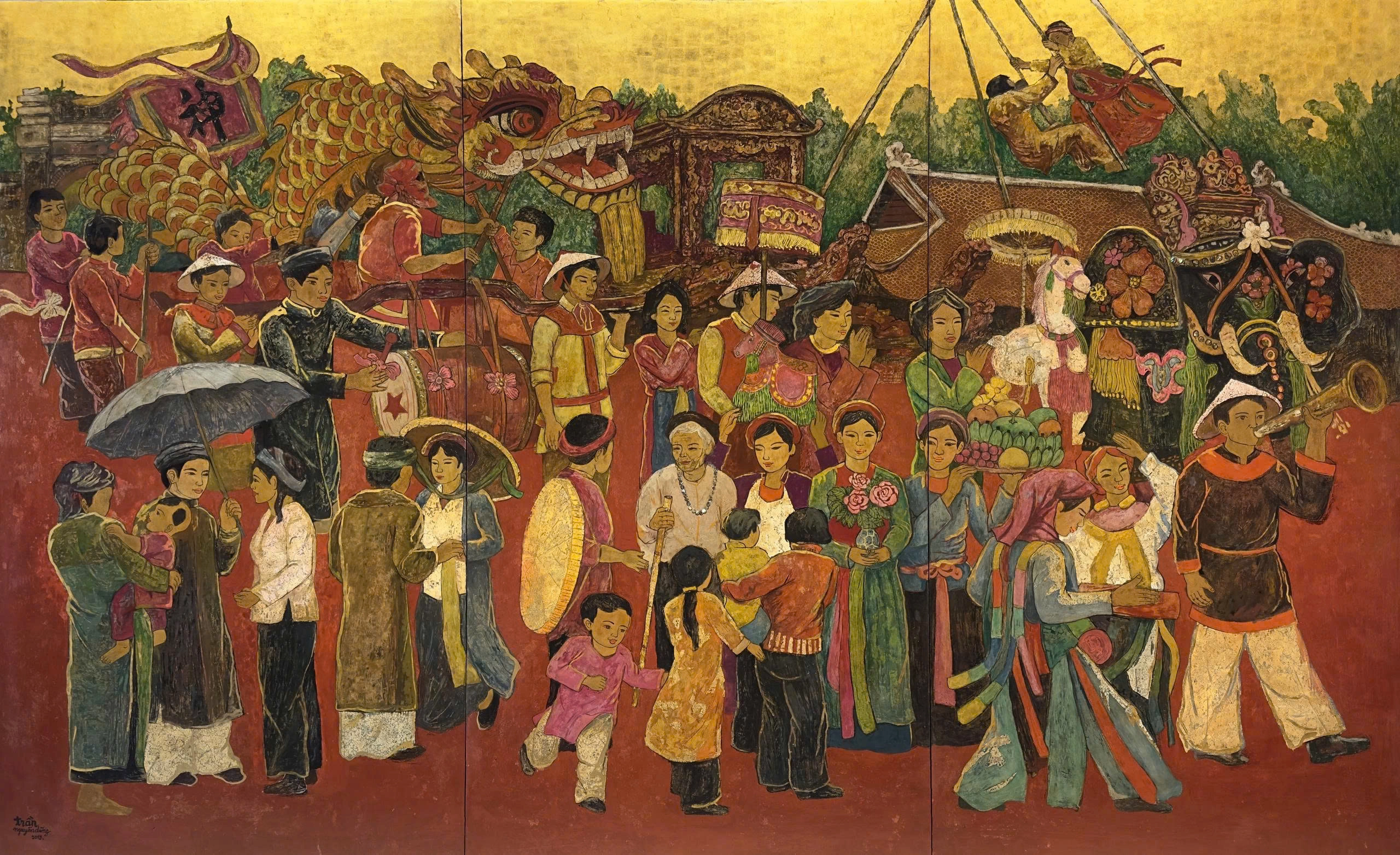
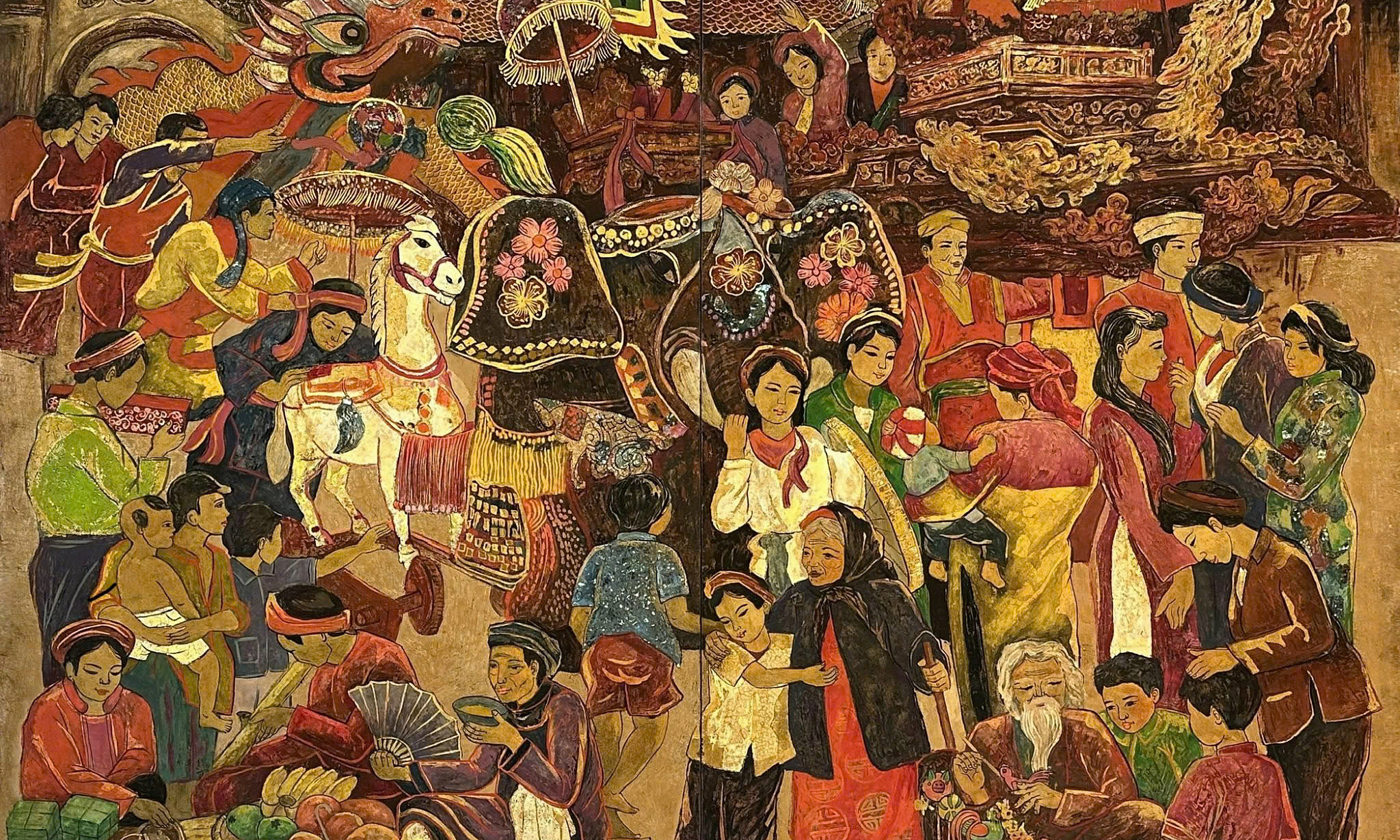
The "Festival Days" section opens with bustling scenes of old northern villages, filled with drum beats, vibrant spring attire, and lively crowds. This atmosphere is vividly portrayed in the work "Old Festival". |
Artist Tran Nguyen Dung's painting, "Lang Trieu Khuc Festival", is featured in the exhibition "Leisurely Days", held from 2-10/6 at the Vietnam Fine Arts Museum. This large lacquer painting, measuring 180x300 cm, holds a central position and immediately draws the attention of visitors entering the gallery.
The exhibition showcases approximately 60 of Tran Nguyen Dung's works, utilizing diverse materials. It is organized into three rooms, each dedicated to a prominent theme in his artistic career: "Festival Days", "Ha Noi Young Women", and "Unrushed Streets".
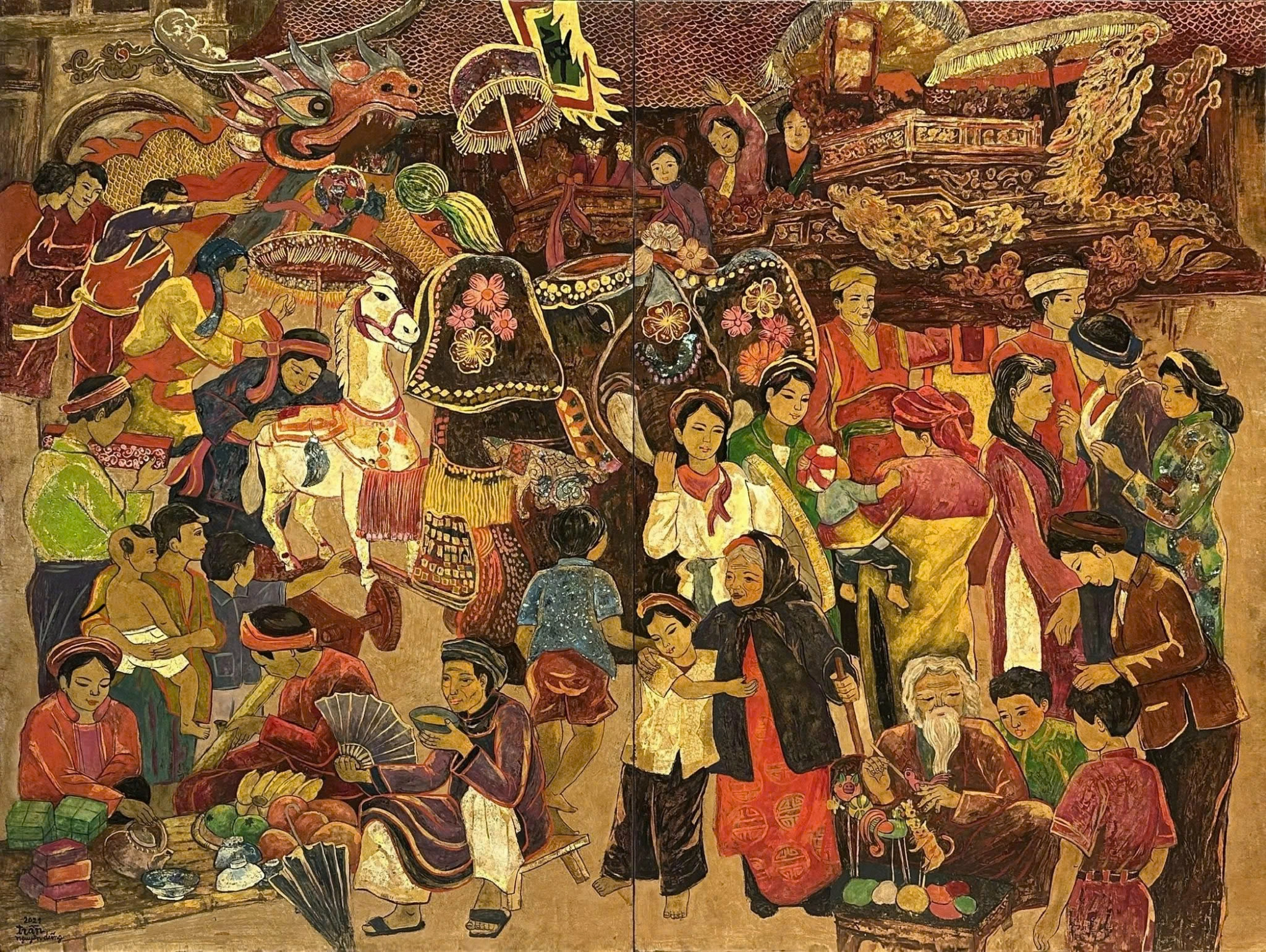 |
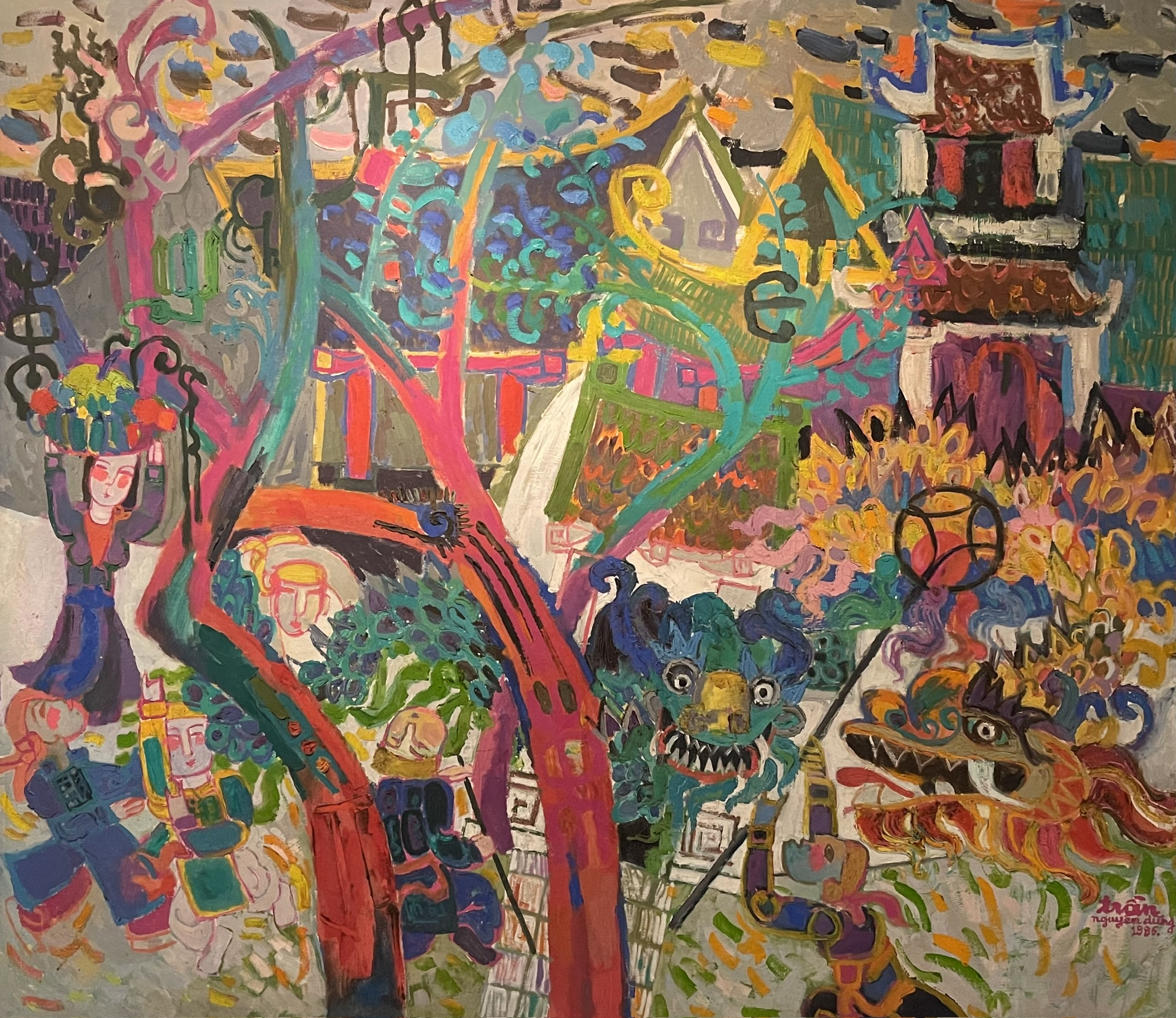
The painting "Dragon Dance 4" features many images rich in Vietnamese cultural identity. |
 |
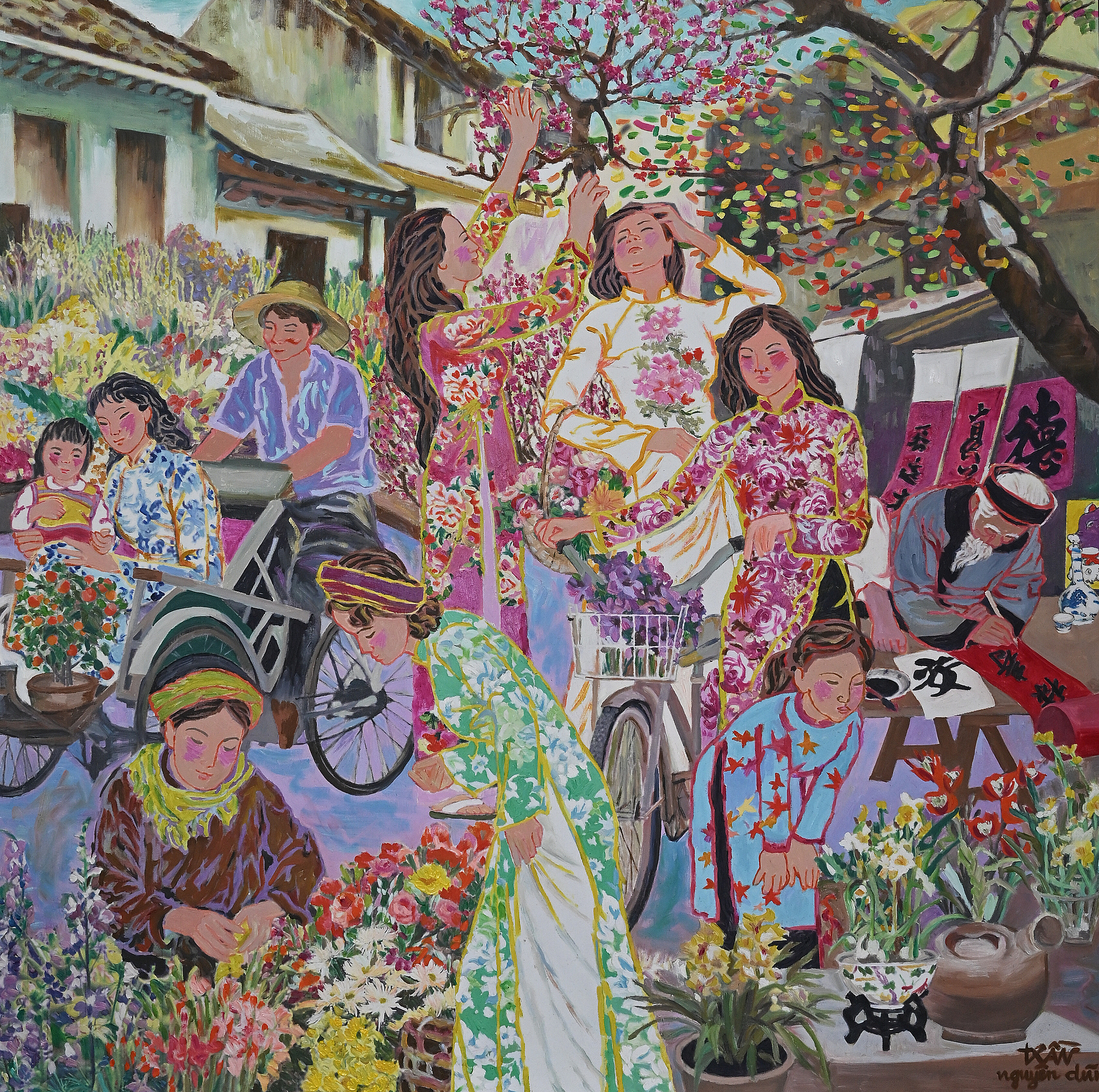
Transitioning from the vibrant colors of the festival, the exhibition space leads viewers to the "Ha Noi Young Women" room, embodying the "leisurely" spirit of the exhibition. In the painting "Tet Flower Market on Hang Luoc Street", the artist depicts elegant young women in ao dai, some admiring plants, others selecting fresh flowers, with a calligrapher giving out lucky characters during Tet in the distance. |
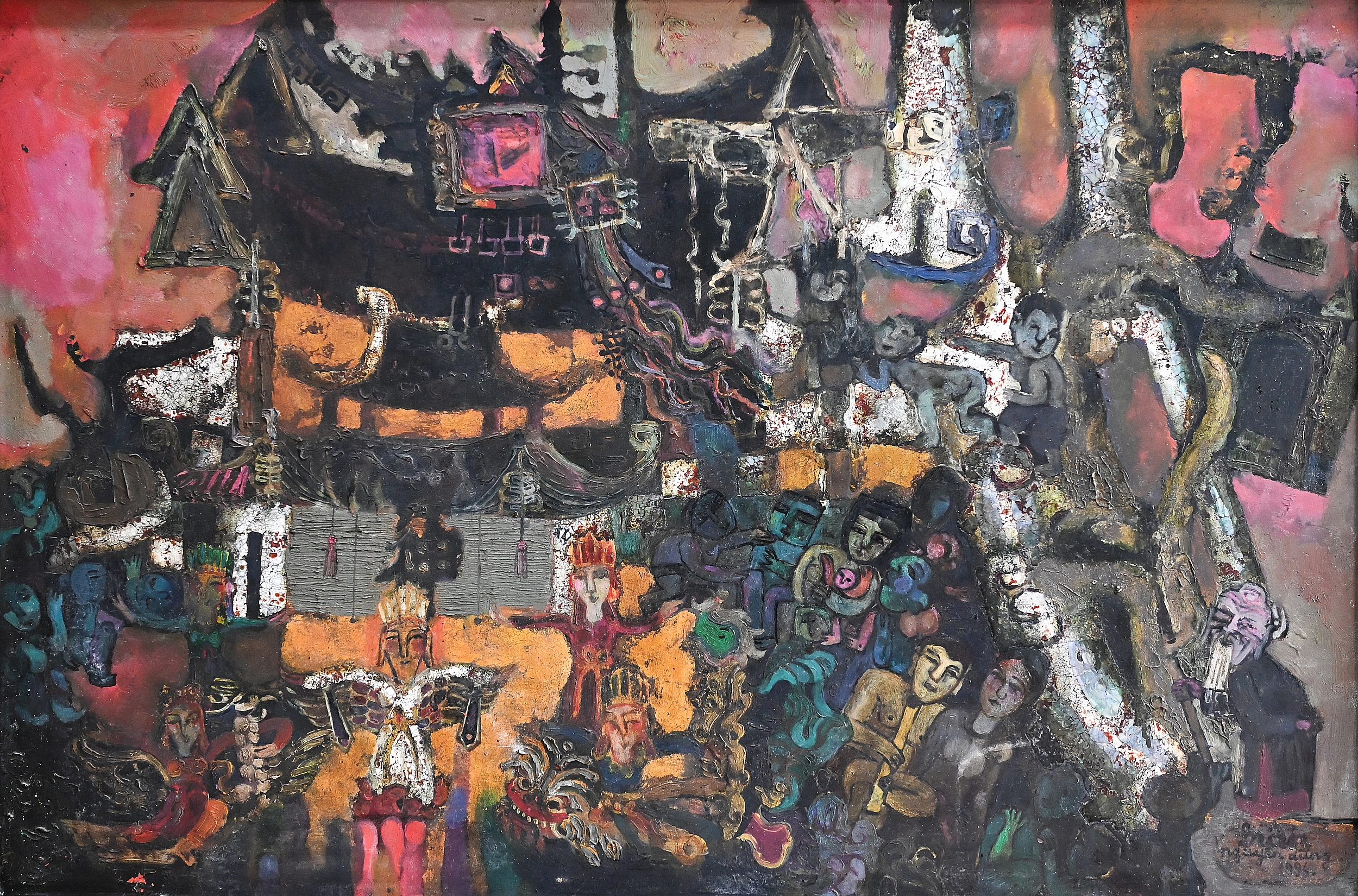
The lacquer painting "Thay Pagoda Water Puppetry".
The Thay Pagoda Festival is typically held at the Thay Pagoda national special relic from the third to seventh days of the third lunar month annually. Beyond religious rituals, the festival also features water puppetry, with performances depicting lion dances, dragon dances, rice husking, and rice pounding.
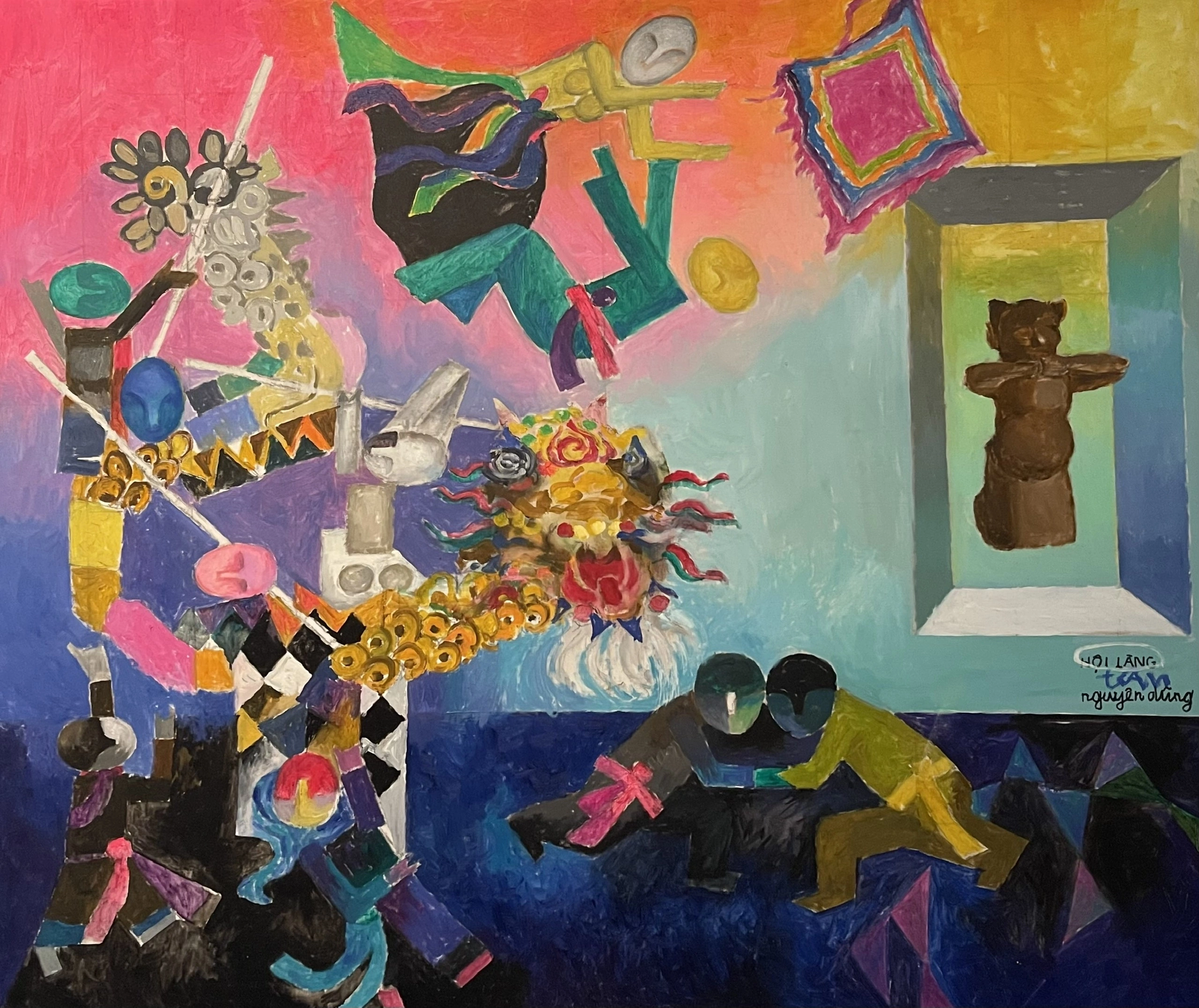 |
A selection of works at the "Leisurely Days" exhibition. Video: Phuong Linh |
The painting "Village Festival".
Phan Dai Thang, CEO and founder of Artnam Gallery, the exhibition organizer, noted that even amidst the lively scenes, each figure in the paintings maintains a personal space. Some lean by a vendor's stall, others admire flowers, or simply exist within the crowd. "These quiet moments make the artist's paintings vibrant yet not chaotic, lively yet still relaxed", Thang said.
 |
 |
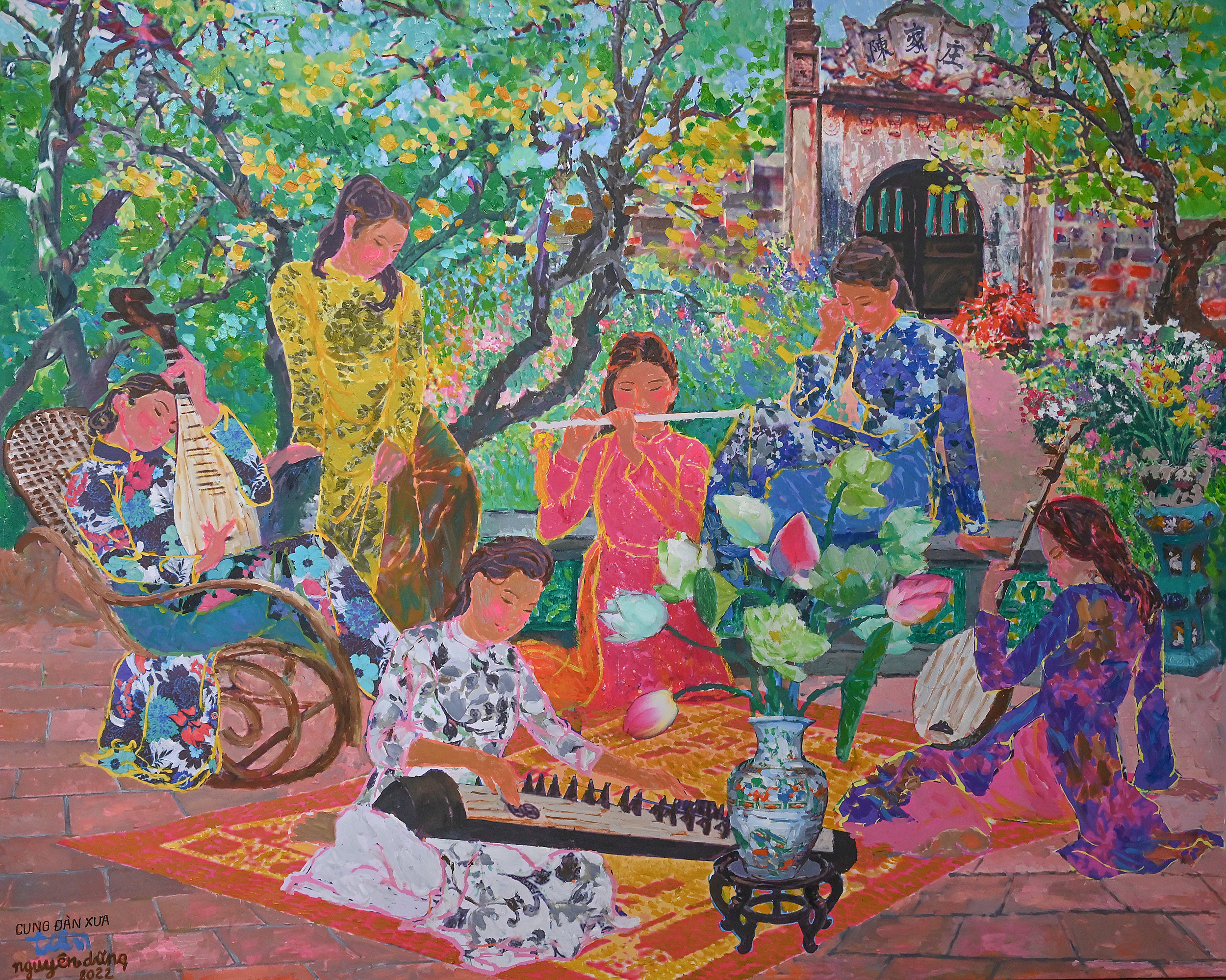 |
Artist Tran Nguyen Dung portrays girls playing flutes, ty ba (lute), and dan tranh (zither) in his work "Ancient Melody".
Women in his paintings often wear colorful ao dai, appearing naturally in their daily activities.
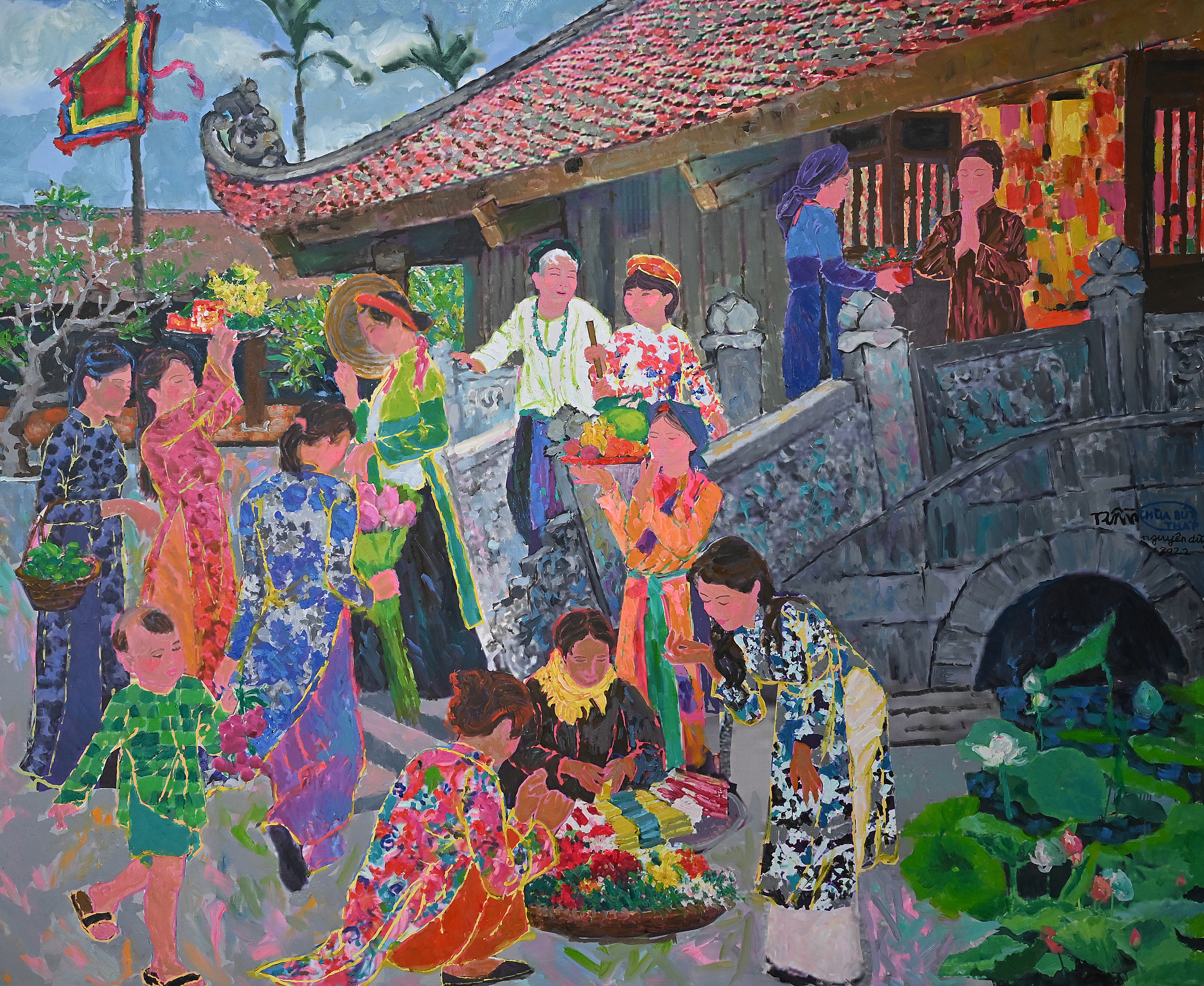 |
The work "But Thap Pagoda Full Moon Ceremony".
A representative of the organizing unit stated that the artist's valuable approach is not to seek beauty in pretense or grandeur, but to capture young women in their serene states of life.
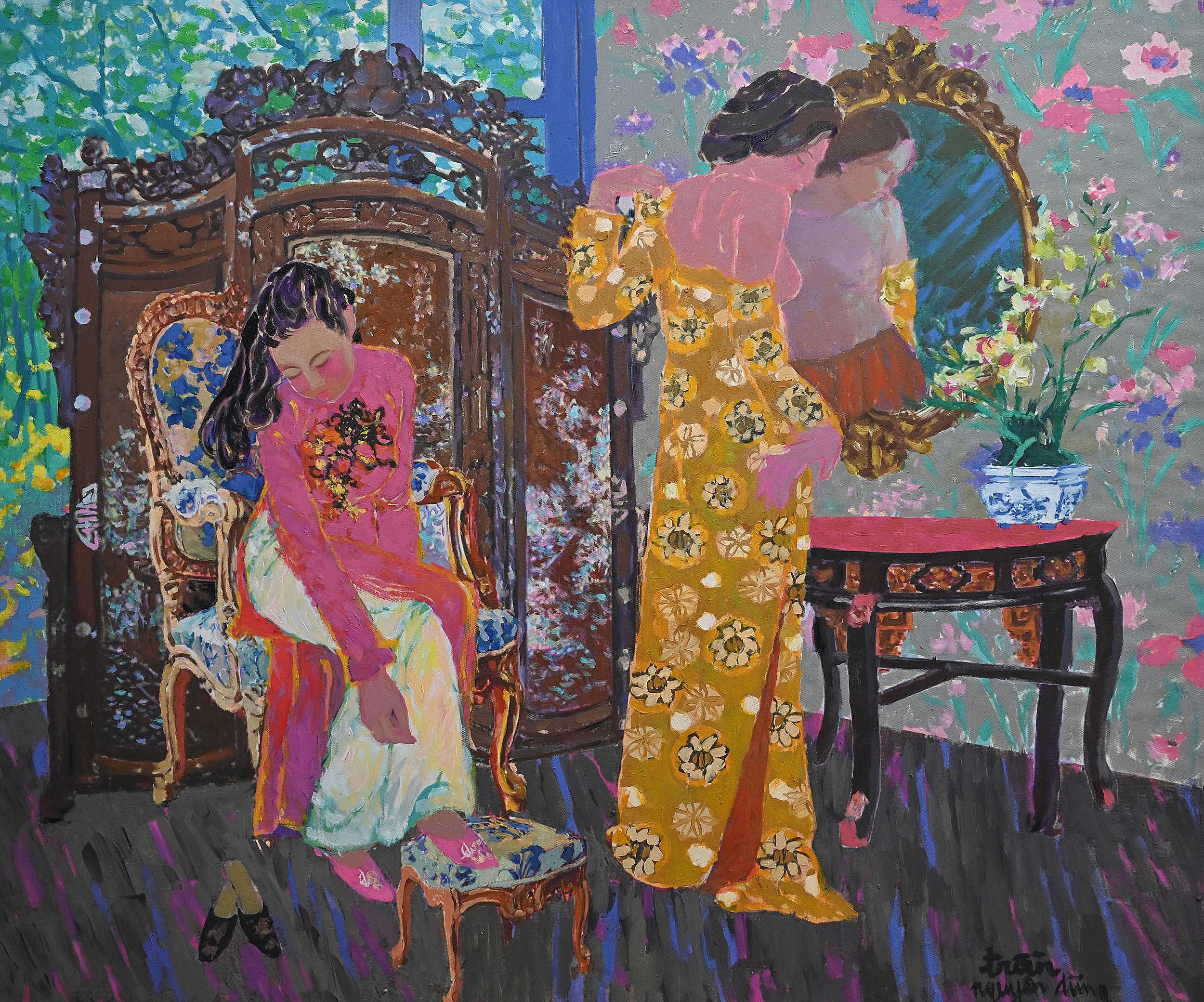 |
The painting "Preparing to Go Out".
Artist Trinh Sinh Nha observes that Tran Nguyen Dung is a profound individual who values privacy, yet his art is expansive and radiant.
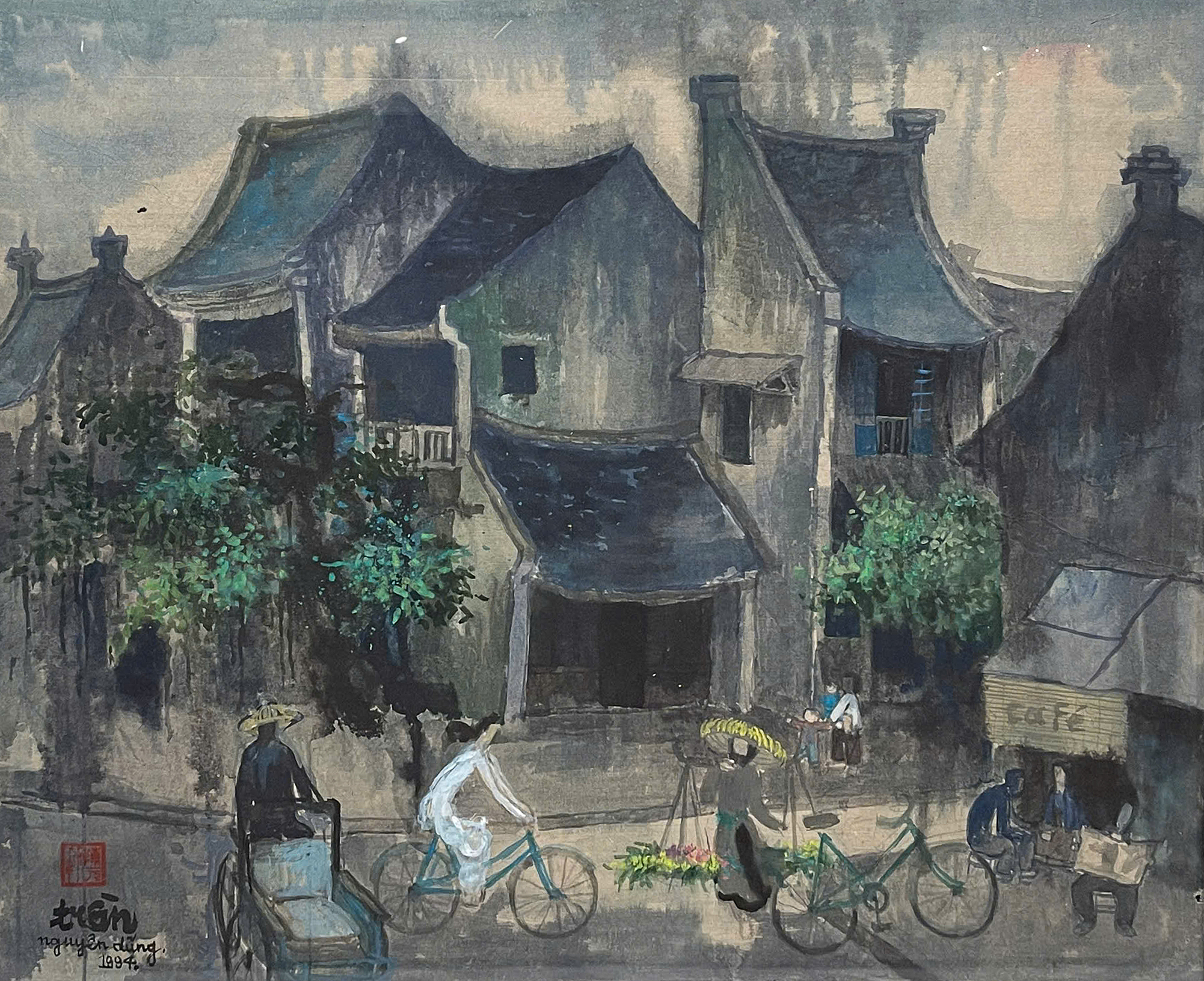 |
The final section of the exhibition, "Unrushed Streets", transports viewers to an old Ha Noi, with sloping tiled roofs in the rain, bicycles, and cafes in the old quarter.
In the gouache painting "Hang Be Street", artist Tran Nguyen Dung evokes a peaceful atmosphere through scenes of daily life.
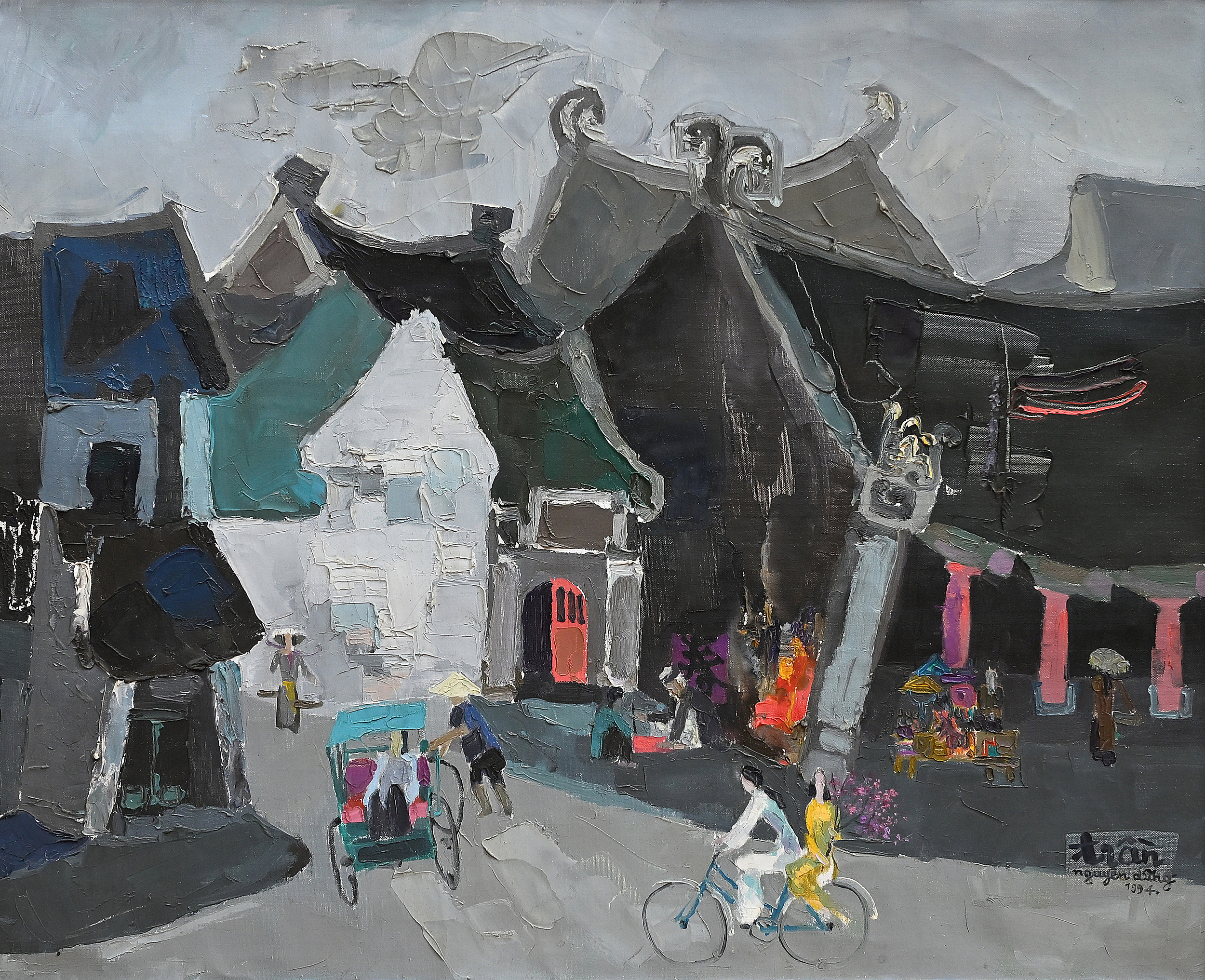 |
The oil painting "Bach Ma Temple, Hang Buom Street".
The color palettes in Tran Nguyen Dung's streetscape paintings often feature muted tones such as gray, brown, black, and dark blue. Despite the presence of people passing by, these street corners retain a quiet ambiance.
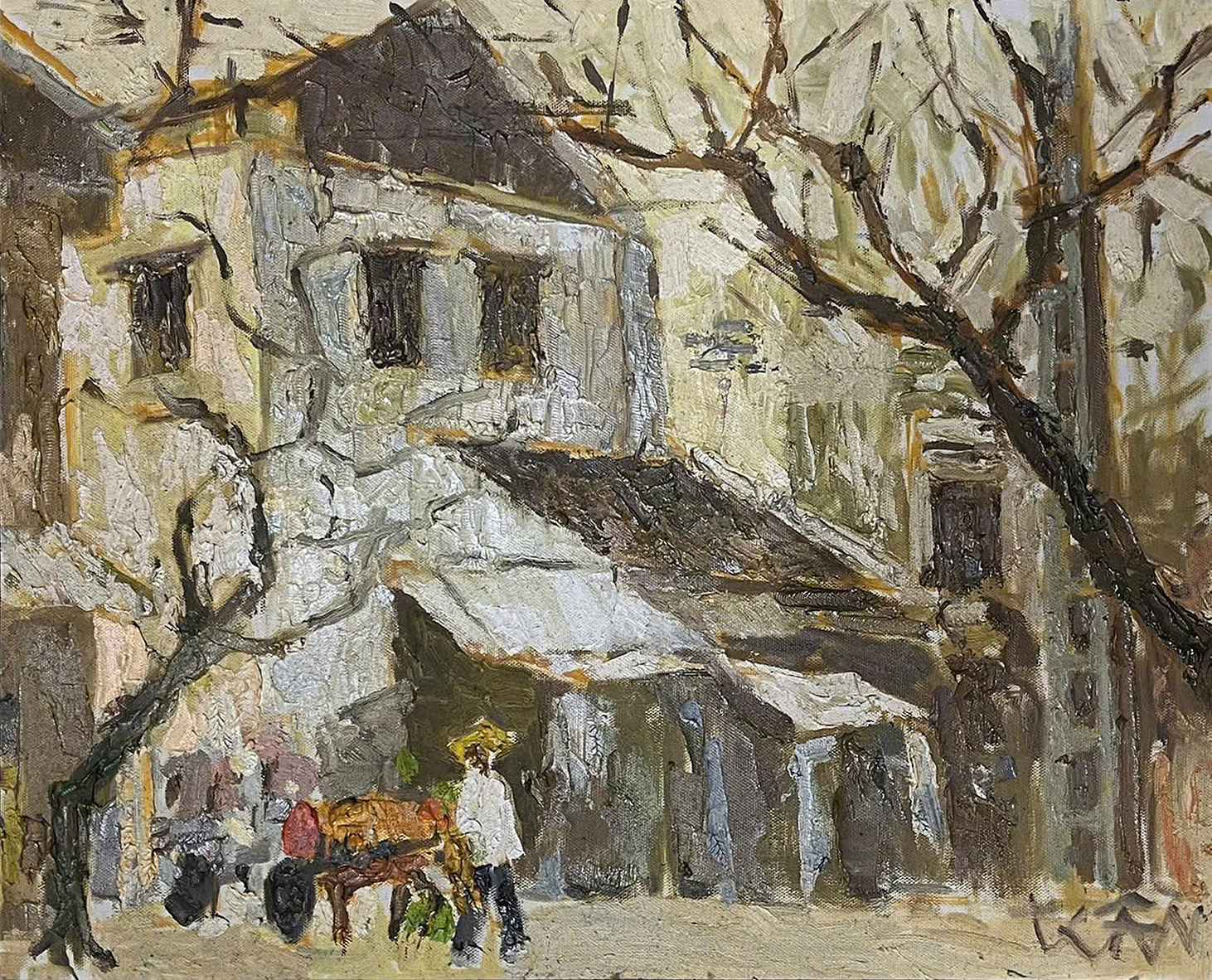 |
The painting "Old Hang Mam Street".
Artist Le Nhu Ha remarked that the exhibition helps the public better understand the beauty of Ha Noi, Vietnamese culture, and Tran Nguyen Dung's emotionally rich artistic world.
Artist Tran Nguyen Dung (1942-2023) studied painting at the studio of renowned artist Luong Xuan Nhi, then continued his studies with Pham Viet Song. He worked at the Ha Noi Department of Culture (now the Ha Noi Department of Culture and Sports), creating propaganda paintings. After retirement, his painting career gained significant recognition with a series of works that clearly revealed his inner world.
He participated in exhibitions in Ha Noi starting in the 1990s. From 1998-2000, the artist contributed to group exhibitions in South Korea, Norway, and Sweden.
 |
Phuong Linh