* This article contains some spoilers.
"See you on the day of the eclipse" has quickly become a box office leader, grossing over 5 billion dong after its opening day, according to Box Office Vietnam. The film, rated 16+, transports viewers to the early 1990s, telling a story of forbidden love and youthful dilemmas through a non-linear narrative. It centers on Thien An (Doan Thien An), a Catholic girl from Central Vietnam, and Thien (Khuong Le), a young electrician who is a non-believer.
The story begins with Thien An facing a significant life event: taking her final vows to serve God. Still grappling with a past relationship, she decides to seek out her former lover to return a keepsake. This quest takes the audience back a few years to the peaceful village of Tra May in the early 1990s, where Thien An grew up. She meets Thien, and the two develop feelings, leading to a secret romance. An's mother, Mrs. Hoa (artist Le Khanh), strongly opposes her daughter dating a non-believer, having already chosen Doctor Hai (Thanh Son) as a suitable son-in-law due to his stable profession and close family ties. The conflict escalates as An finds herself in a love triangle, forced to choose between filial piety and personal happiness.
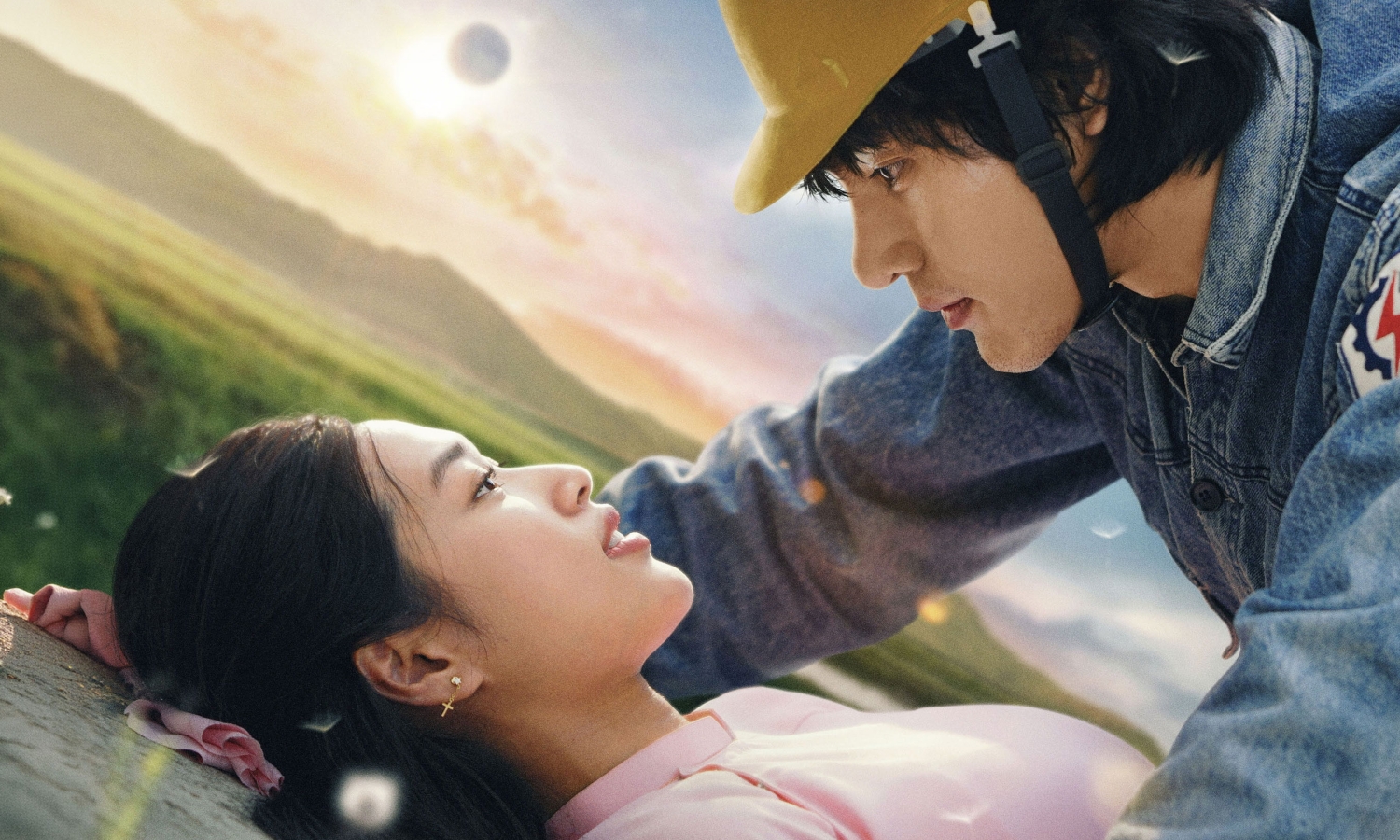 |
Poster for the film "See you on the day of the eclipse". Photo: Film crew provided |
Overall, the film has a gentle, romantic tone, with minimal drama or unexpected twists. Director Le Thien Vien, a former photographer known for films like "Vu Quy Dai Nao" and "Em La Cua Em", employs an aesthetic cinematography style characterized by warm colors and lyrical frames. The film evokes a hazy sense of nostalgia, recreating the atmosphere of the late 1980s and early 1990s, a time before the Internet, when televisions were a luxury. Panoramic shots capture the peaceful setting: red-tiled houses along village roads, surrounded by golden rice fields, and bus journeys traversing the regions are captured through overhead drone shots.
The production pays close attention to artistic details and set pieces, from sewing machines to hand-painted signs, evoking youth for audiences born in the 1970s and 1980s. Yellowed storybooks, such as "The Thorn Birds" by Colleen McCullough, were once popular. One character's house walls are covered with posters and images of Viet Trinh and other contemporary beauties, clipped from newspapers and magazines. Young couples often dated in tea shops at the end of alleys, where lights occasionally flickered due to an unstable electricity grid. Local cultural exchange events in the village became unforgettable celebrations.
Against this rustic backdrop, the love story unfolds at a slow, deliberate pace. The director explores a relatively new theme for domestic cinema – love forbidden by religious differences – without delving into tragic details. Thien and An fall in love at first sight but must meet secretly because Thien is an unwelcome presence to An's mother, leading to humorous situations. With the help of two friends acting as "advisors", Nguyen Thao and Huynh Phuong, they gradually achieve happiness before a storm approaches.
The performances of the two lead actors are a highlight, contributing to the film's emotional depth. In her two previous films, "Cong Tu Bac Lieu" and "Nu Hon Bac Ty", Thien An had not made a significant impression. With this new role, the actress surprises with her fitting and natural expression. An's shyness when receiving a handmade hairpin from Thien, or her tearful eyes and choked voice when facing a painful decision, evoke empathy from viewers. Similarly, Khuong Le delivers a solid performance as a sincere young man devoted to love. Thien's pain is sometimes conveyed not through dialogue, but through the way he watches his beloved from afar before quietly departing. After an early screening, actor Song Luan commented that both leads maintained consistent performances throughout the film, which made him believe in the characters' love story.
Among the supporting cast, Le Khanh demonstrates rich experience. Her role as Mrs. Hoa significantly contributes to the plot, being the main cause of the film's biggest conflict. The veteran artist's acting conveys the authoritarianism of a mother who experienced a failed marriage and does not want her daughter to repeat her mistakes. Huynh Phuong and Nguyen Thao play their comedic roles well, helping to lighten the film's tone.
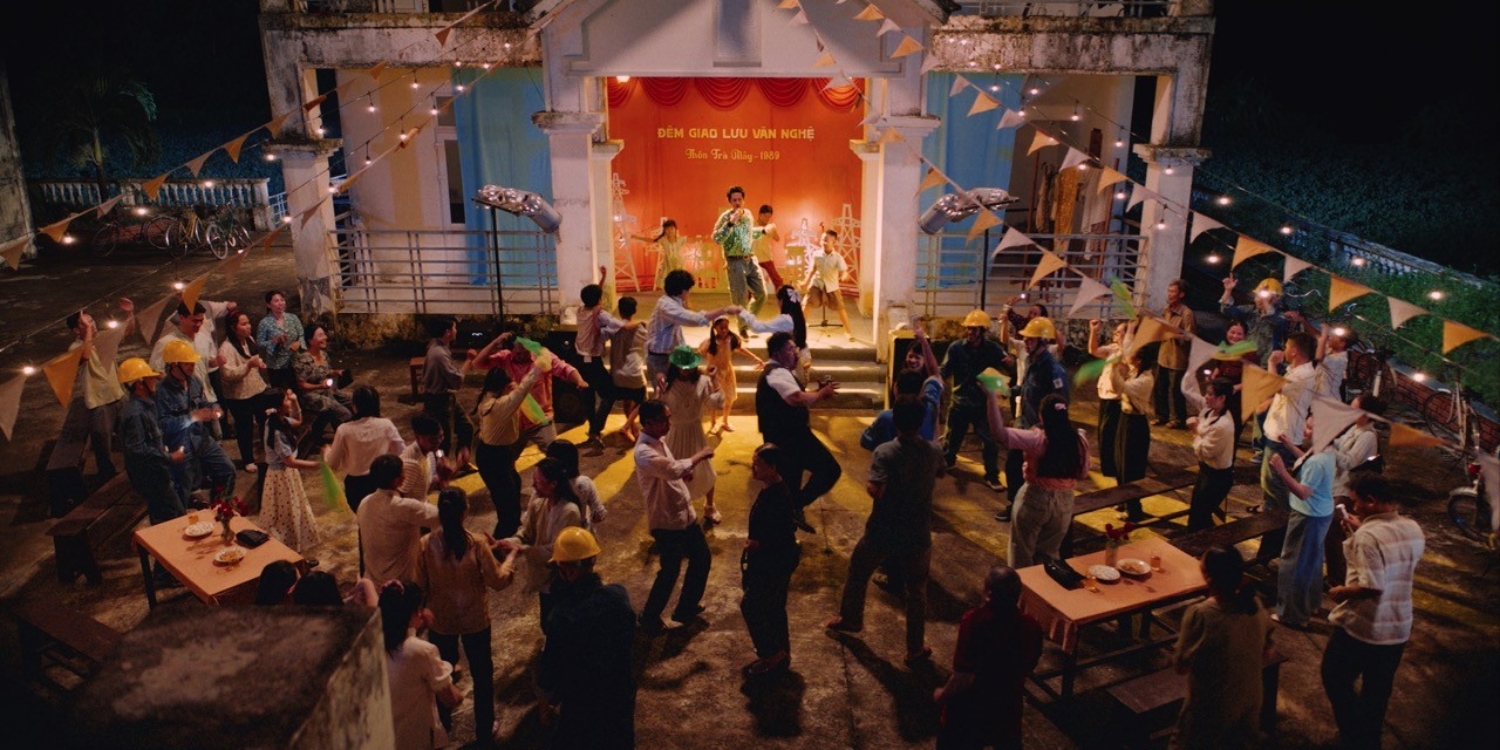 |
The 1990s setting evokes a nostalgic atmosphere throughout the film. Photo: Film crew provided |
Music plays a significant supporting role in the cinematic experience. Songs are subtly arranged, sometimes acting as narrators. "Cay Dan Bo Quen" by Pham Duy, sung by Khuong Le, conveys the protagonist's feelings to her lover. "Xuan Thi" by Phan Manh Quynh plays at the end of the film, evoking a sense of sorrow and regret. However, in some segments, the director overuses instrumental background music to heighten emotional effect.
The film's main drawback lies in the dialogue of some characters. Many viewers questioned why the story is set in the Central region, yet most roles in the film speak with a Southern accent. At an early screening, Le Thien Vien explained that the decision not to use regional dialects was carefully considered to ensure broader audience appeal. Addressing concerns that the film's theme might be controversial, he stated that the work does not focus on religion but rather uses the setting to tell a story about faith, love, and youthful dilemmas.
Mai Nhat