


* This article contains spoilers
Trailer for "Stranger Things 5", which consists of eight episodes. The season was released in three parts late last year. Video: Netflix
The highly anticipated final season of "Stranger Things" plunges viewers into the ultimate confrontation as the friends in Hawkins face their greatest threat. The town lies devastated by interdimensional rifts, with the monstrous Vecna banished to the Upside Down by Eleven. With his potential return looming, the characters must unite to avert impending doom.
From its opening episodes, the series sets a tense atmosphere, posing existential questions about loss and the resilience of friendship. Will Byers, the Upside Down's first victim, plays a pivotal role. His storyline explores his emerging powers and the resolution of past traumas. Initially feeling isolated and different, he learns to accept himself and protect others, highlighting the show's core message of friendship.
The remaining characters also undergo psychological transformations, defining their roles. Mike evolves from impulsive actions, learning patience and active listening. Eleven, despite her immense power, remains the most solitary figure, haunted by the fear of losing loved ones. Dustin, Lucas, and Max represent different facets of adolescence; some use humor to mask pain, others grapple with guilt from past events. Despite individual struggles, their collective bond creates a formidable strength that Vecna cannot match.
Friendships are depicted against a backdrop of impending separation, losing the innocent charm of earlier seasons. The narrative frequently hints at the possibility of characters making ultimate sacrifices to seal off the Upside Down. During poignant moments, such as the friends gathered amidst a ruined Hawkins, the series provides necessary pauses between intense climaxes, balancing the narrative flow.
The series intensifies drama through action. While previous seasons featured defensive or evasive combat, this installment sees the group on the offensive. Battles with Demogorgons and direct confrontations between Eleven, Will, and Vecna are frequent. Some clashes intertwine with character psychology; the internal conflicts experienced by Max and Will carry a horror aesthetic, while real-world battles emphasize the group's coordinated efforts.
Five-minute excerpt from "Stranger Things 5". Video: Netflix
Acting remains a crucial element captivating audiences. According to Variety, Noah Schnapp delivers a memorable performance, portraying internal conflict during moments of peril. He conveys psychological pressure through his eyes and expressions, transforming a previously less-noticed character into a narrative highlight.
Millie Bobby Brown shows maturity in her portrayal of Eleven, focusing on her dedication to friends and willingness to face danger, even sacrifice. Supporting actors like Sadie Sink, David Harbour, and Winona Ryder provide diverse perspectives, adding layers of family dynamics and intergenerational relationships.
With significant investment in visual effects, the Upside Down expands in both scale and detail, featuring its own structures, creatures, and rules. Hawkins and the Upside Down contrast in setting and lighting. Effects for storms, spatial portals, and the Mind Flayer's movements are smoothly rendered.
Despite its grand scale, the final season's plot has limitations. Slate Magazine suggests the show retains its old rhythm and storytelling approach, making the "kids saving the world" motif feel outdated. Some dangerous situations are introduced by placing characters in trouble without clear motivation or logical reason.
While billed as the darkest season, the consequences of events from season four are not fully explored. The instability in the town residents' lives is rarely shown directly. Instead of a decisive resolution for Eleven's fate, the directors' approach results in a safe ending, disappointing some viewers.
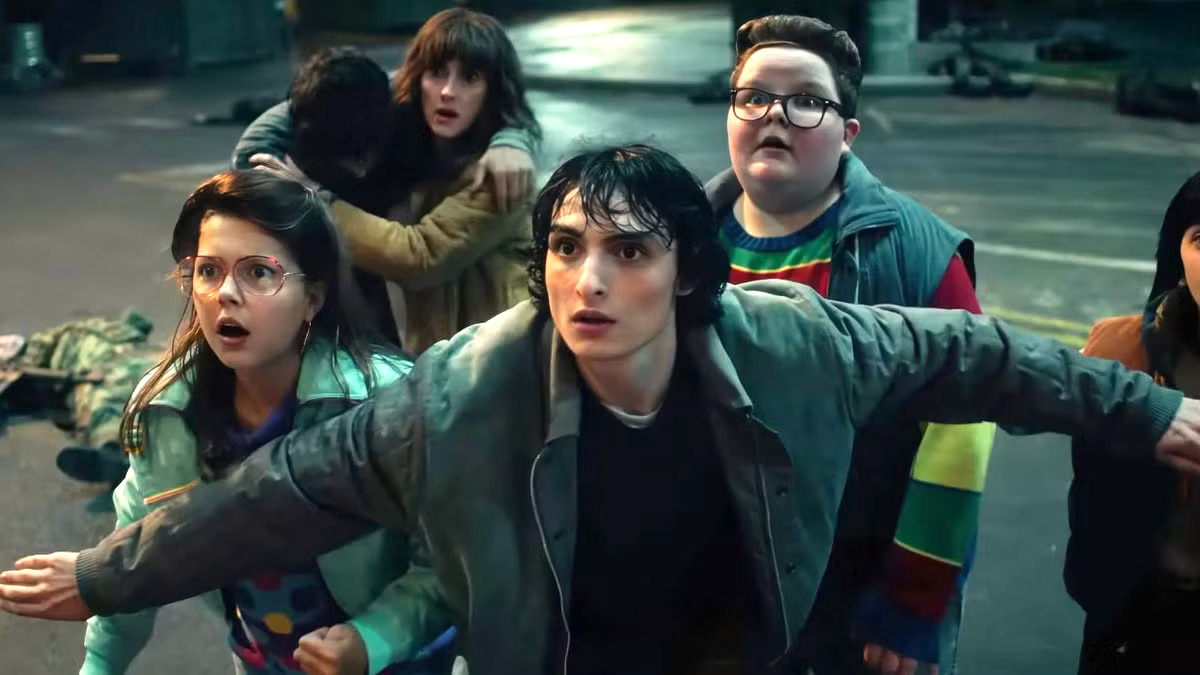 |
Scene from "Stranger Things 5". Photo: Netflix
In chapter two, the script relies too heavily on dialogue to resolve conflicts. Scenes between Will and Joyce largely revolve around crying and self-blame. Most characters engage in conversations for psychological release: Dustin and Steve argue, Joyce and Hopper converse, similarly with Mike and Eleven, and Jonathan and Nancy. Due to the large cast and unbalanced script, the pacing sometimes drags and lacks coherence.
Nevertheless, the symbolic return of Dungeons & Dragons at the conclusion brings the story full circle. The narrative begins and ends around the game table, emphasizing the enduring bond between the friends and hinting at future generations. Variety notes that season five leaves a lasting impression on the series' audience spanning nearly a decade. The story concludes, yet the emotional journey of the friends' coming-of-age continues to resonate with viewers.
Released in 2016, "Stranger Things" quickly became a global phenomenon and a flagship series for Netflix. The show received critical acclaim for its character development and homage to 1980s films, earning numerous awards including Golden Globes, Emmys, and SAG Awards. Following the conclusion of season five, a behind-the-scenes documentary, "One Last Adventure: The Making of Stranger Things 5", will premiere on Netflix on 12/1, alongside a new spin-off series.
Cat Tien


