* This article contains spoilers
Almost two decades after its initial release, "The Devil Wears Prada" returns with a sequel to the once-popular fashion film. Shifting its focus from the glamour of the fashion world, the movie now explores the magazine industry's crisis, facing pressure from digital media and budget cuts.
Runway magazine's editor-in-chief, Miranda Priestly, played by Meryl Streep, finds her powerful position diminished following a scandal involving a partnership with a controversial fast fashion brand. Concurrently, Andy Sachs (Anne Hathaway), her former assistant who left Runway to pursue a journalism career, has become a successful writer at a respected agency. However, with her newsroom dissolving, Andy is compelled to consider returning to her old workplace, setting the stage for a new dynamic.
Trailer for "The Devil Wears Prada 2", released domestically on 8/5. The film is rated 13+. *Video: 20th Century Studios Vietnam*
Unlike the first installment, which primarily centered on workplace power dynamics and the sacrifices made for success, the sequel shifts to the broader theme of the publishing industry's crisis. The script poses critical questions: How can a high-end fashion magazine survive amid financial pressures and the rise of digital content? What place does traditional journalism hold when readership declines? In this context, Miranda Priestly embodies the adaptation process of an older generation of leaders facing new changes.
Miranda's character retains her decisive nature but without the intimidating presence of the first film. When her work environment faces turmoil, she must adjust her conduct to the industry's evolving landscape. In one poignant scene, Miranda is seen in economy class on an airplane for the first time. The woman who once symbolized absolute power in the fashion world now appears in a cramped space, alongside her assistant and other passengers. This detail is amusing yet simultaneously highlights how the character is challenged by the changing times and her waning influence.
Additionally, Miranda must adapt to new human resources standards and the pressure from emerging billionaires who control the financial balance of the industry. Miranda's portrayal reveals that women at the pinnacle of power still need to change to maintain their positions within a system often controlled by men.
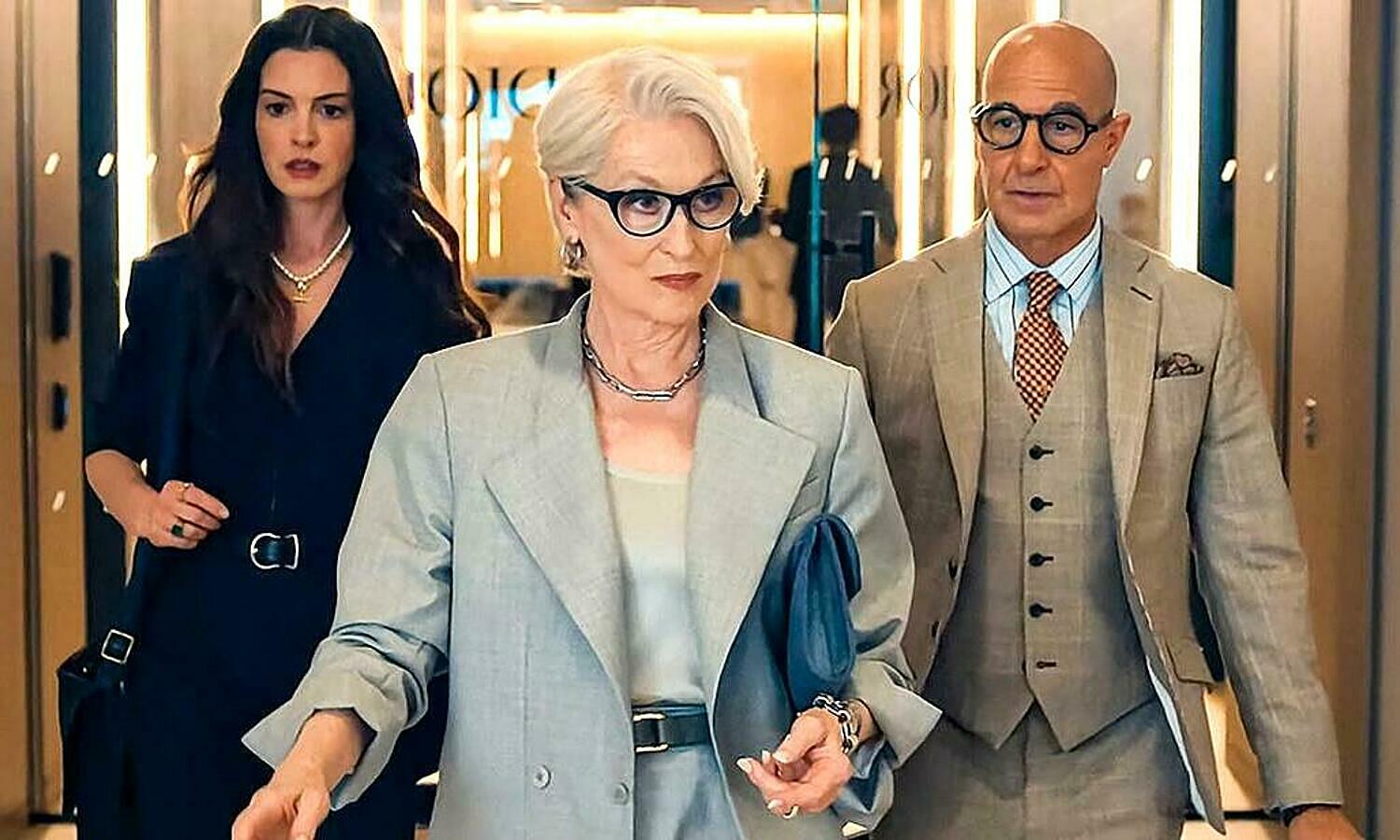 |
Meryl Streep (center) and Anne Hathaway (left) in "The Devil Wears Prada 2". *Photo: 20th Century Studios*
Through Miranda's evolving perspective, the film clarifies the sacrifices behind power and career success. Achievement brings not only fame but also trade-offs in terms of time, family, health, and personal relationships. Instead of seeking definitive solutions for the future of journalism, the film focuses on the perseverance of individuals dedicated to their work amidst numerous changes. The relationship between Andy and Miranda evolves from mentor and protege, becoming a mutual support system. Miranda needs her former assistant to maintain the magazine's value, while Andy views her boss as an icon of success, despite their complex history.
Actress Meryl Streep crafts Miranda Priestly's image with a composed demeanor, demonstrating control in various situations. She uses her gaze, gestures, and vocal rhythm to convey the character's emotions, asserting Miranda's central role in the narrative. Meanwhile, Anne Hathaway portrays Andy's growth compared to the first film. The character holds her ground, reacting rationally to decisions impacting her career, showcasing a newfound maturity.
The film retains elements that defined the original, featuring luxurious fashion scenes, a fast-paced editing style, sequences where Andy must fulfill her boss's ironic demands, and a series of sharp lines from Miranda. Audiences are treated to high-end settings in New York, the Hamptons (US), and Milan (Italy), along with expensive attire, maintaining the aesthetic appeal.
Critical reception for the sequel has been varied. The Chicago Tribune noted that the work has a sharper satirical tone than the first installment. "The Devil Wears Prada 2" expands into a story about the cultural value of aesthetics, quality journalism, and the role of those who shape public taste. "Even if traditional magazines might be seen as remnants of a bygone era, those values are still worth protecting," commented writer Katie Walsh. Independent praised the film for maintaining its aesthetic hallmark through a lavish fashion world, from Richard Quinn designs to Lady Gaga's runway appearance, reflecting the compromise between art and commerce.
However, according to IndieWire, the sequel is entertaining but struggles to create a lasting impact like the original. Some extended fashion show segments occasionally make the film's pacing feel disjointed. Beyond embedding its message, the script delves less into the psychology of supporting characters like Emily Charlton or Nigel, primarily placing them in roles that aid the plot, thereby reducing dramatic tension.
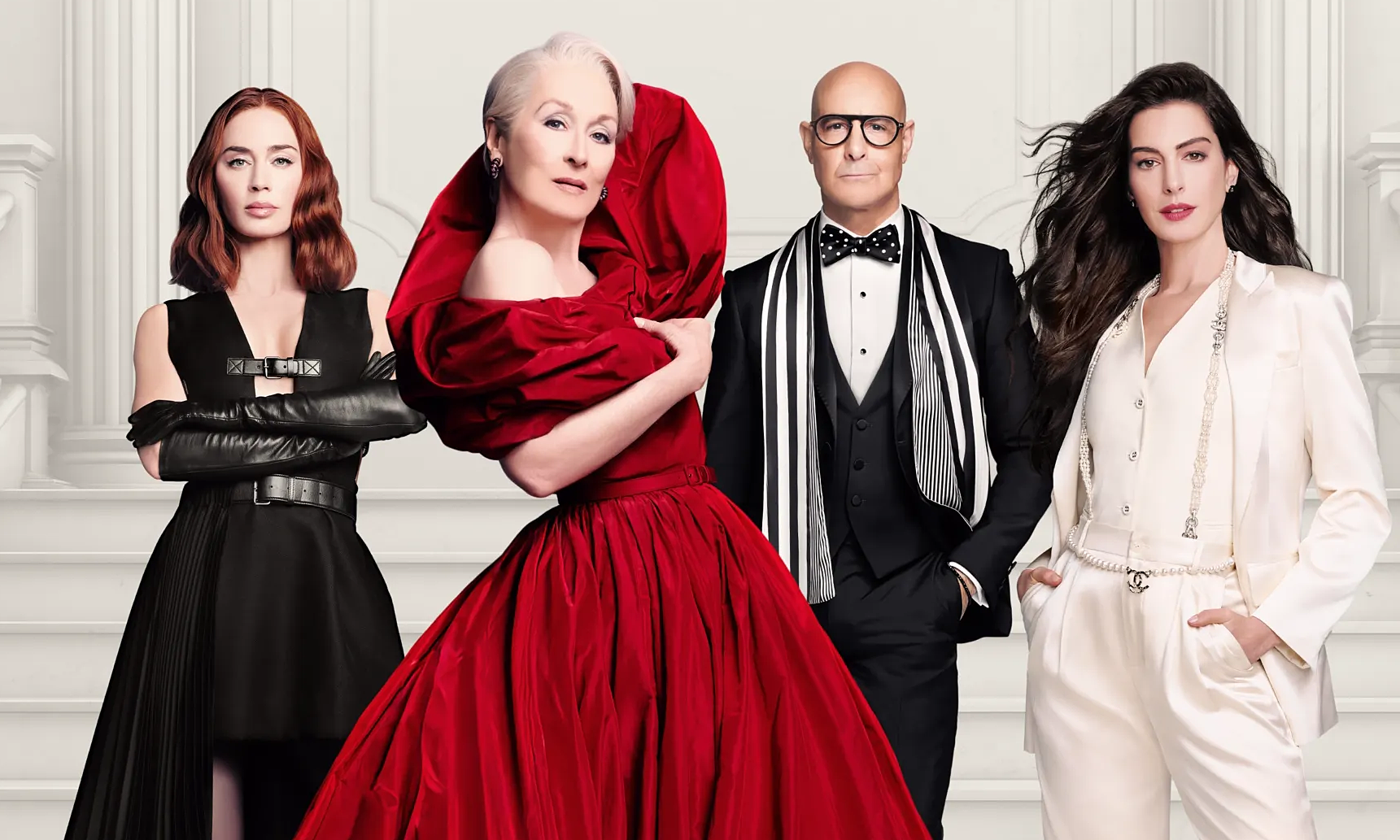 |
The cast of "The Devil Wears Prada 2", from left: Emily Blunt, Meryl Streep, Stanley Tucci, and Anne Hathaway. *Photo: 20th Century Studios*
The original "The Devil Wears Prada" is inspired by the novel of the same name by writer Lauren Weisberger and directed by David Frankel. The first installment revolved around Andy Sachs's life immediately after graduating from college. With her courage and intelligence, she gradually won over Miranda Priestly. However, Andy ultimately lost herself and her close relationships in the process. According to Box Office Mojo statistics, the original film grossed over 326 million USD, nine times its production budget. The work became one of Hollywood's most successful fashion films, receiving two Oscar nominations, one Golden Globe Award, and numerous other accolades.
Cat Tien