In 2018, when television featured many talent search programs, Dong Thap Radio and Television Station chose its own path: creating a game show dedicated to don ca tai tu (Southern Vietnamese amateur folk music), cai luong (reformed opera), and lovers of traditional music.
'Tai tu miet vuon' first aired on 15/7/2018. More than 1,000 people, ranging from eight to 80 years old, registered. They came from various provinces and cities, working in diverse professions, including visually impaired individuals or those with mobility challenges.
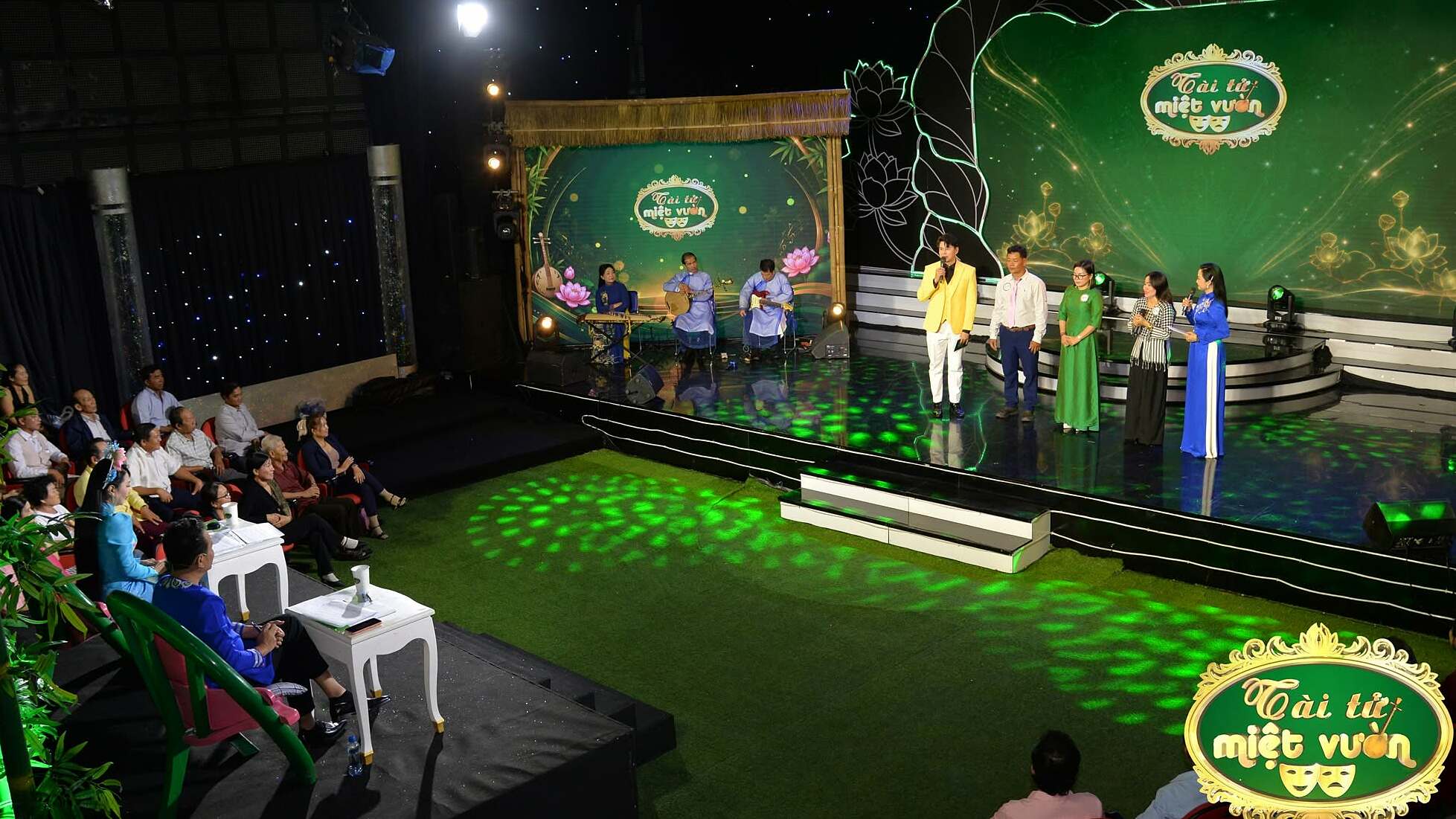 |
The 'Tai tu miet vuon' game show, season 6. Photo: THDT |
From the outset, the program targeted participants who were primarily don ca tai tu enthusiasts, not professional performers. The stage, therefore, did not emphasize formally trained voices but instead made room for natural singing styles, unique vocal qualities, and individual stories. Older participants sang alongside younger ones; an artist who had never appeared on television had the opportunity to be known by the audience through a vong co (a traditional Southern Vietnamese folk song genre) piece they had practiced for many years.
The winner of the first season was Vo Thi Tham, 21 years old, from Thanh Binh, Dong Thap. One year later, Nguyen Chi Tam, a hired duck herder from Long An, won the season two championship.
Chi Tam lived in a thatched hut on the duck farm owner's land, earning a living through animal husbandry but dedicating his love to vong co. Before a crucial round, he developed a high fever, lost his voice, and was advised by a doctor to be hospitalized, yet he still wanted to compete. The organizers prepared for an emergency transfer if his health deteriorated.
Chi Tam's story became a typical illustration of the program's spirit: many participants came to the stage not out of a desire for fame, but simply for their love of vong co.
Lives shaped by vong co
If 'Tai tu miet vuon' were viewed merely as a singing competition, it would be difficult to explain its sustained appeal over the years. Each season, the team seeks not only vocal talents but also the stories behind the contestants.
Some sing about their homeland and family, others find their way to the stage after life-changing events, and some overcome illness or difficult circumstances to participate. Thus, a vong co piece is sometimes linked to a teacher, a mother, a separation, or an unfinished dream.
Renowned artist Chi Tam, a judge for many seasons, believes that don ca tai tu is not just an art form but is also intertwined with the memories and spiritual life of Southern Vietnamese people. He appreciates that 'Tai tu miet vuon' provides an opportunity for traditional music lovers, even those who have never stood before a camera, to sing with passion, sincerity, and life experience.
What impresses him is that contestants, even if they do not achieve their desired results, still return, continuing to learn and practice. This persistence demonstrates that traditional music continues to attract young people, as they seek to hone their skills, meet senior artists, and find opportunities to shine.
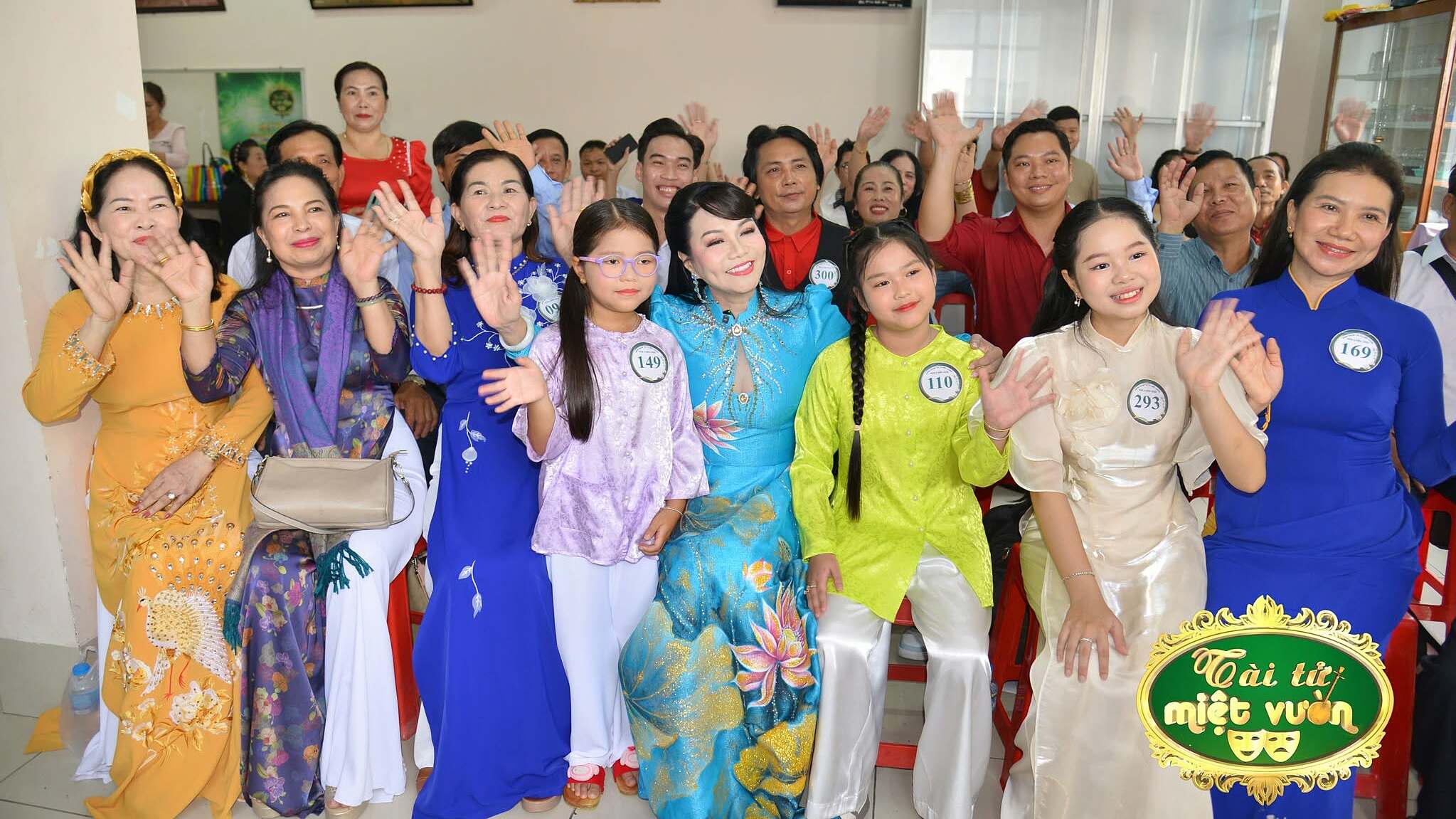 |
Meritorious Artist Ngoc Huyen takes a photo with contestants. Photo: THDT |
After the first two seasons, Covid-19 caused the program to pause for two years. In 2022, 'Tai tu miet vuon' returned with more than 800 contestants, the youngest being 9 years old and the oldest 78 years old.
For season four, the program transitioned to a duet format with the message "Reaching far with Southern melodies". Instead of simply finding one outstanding voice, artists were paired to perform together, whether they were relatives, friends, or individuals meeting for the first time but finding harmony through song.
In season five, Pham My Huyen and Vuong Quan Tri, both born in 2009, became the champions. Quan Tri had participated before but did not reach the end; My Huyen also tried several times. They returned, continued to train, and together achieved the highest position.
According to Meritorious Artist Ngoc Huyen, the program's vitality stems primarily from the participants' love for vong co. "The passion of all our contestants has been a tremendous motivation for us to discover talents season after season", Ngoc Huyen shared.
Season 6 combines tradition and modernity
In 2026, 'Tai tu miet vuon' enters its sixth season with more than 600 artists registered, ranging from a 7-year-old child to the oldest contestant, nearly 80 years old.
Ngo Thi Ngoc Hanh, Director of Dong Thap Radio and Television, stated that the team's concern is not just maintaining the program but ensuring that the love for don ca tai tu is continued, especially among the younger generation.
Consequently, season six was developed to combine tradition with modernity, allowing contestants to interact with young artists. According to her, this connection does not aim to alter the core values of don ca tai tu but to open up new approaches for an art form that has "entered the blood and heart of Southern Vietnamese people" to continue spreading.
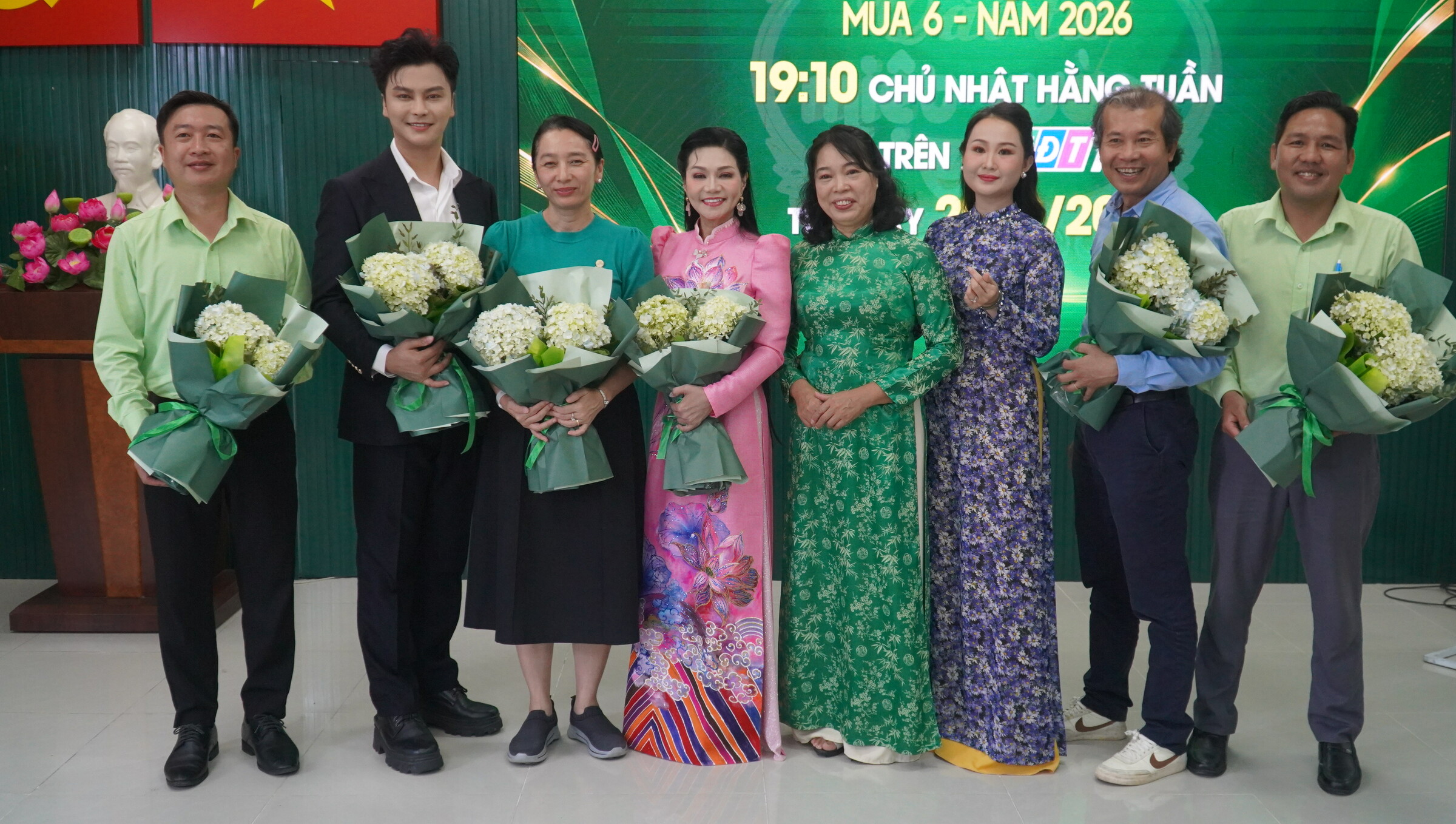 |
The program team takes a photo with artists and sponsors. Photo: Ngoc Tai |
Phan Van Tam, Deputy General Director of Binh Dien Fertilizer Joint Stock Company, shared that 'Tai tu miet vuon' is not merely a television program but also contributes to reviving the culture, character, and spiritual life of Southern Vietnamese people. He hopes this widespread influence will continue to reach the younger generation, even bringing basic Southern melodies and folk songs into schools so students have the opportunity to access and practice them. For Binh Dien, continuing to accompany the program is not just about supporting a show, but also helping to preserve a cultural value deeply ingrained in Southern Vietnamese life.
Over the past eight years, 'Tai tu miet vuon' has evolved in its selection methods, competition formats, and contestant connections. Yet, behind these changes are still individuals who come to the stage out of love for the folk song, new voices discovered, and the desire to bring the love of don ca tai tu, a cultural essence, and the soul of the nation to the next generation.
Tran Thanh