 |
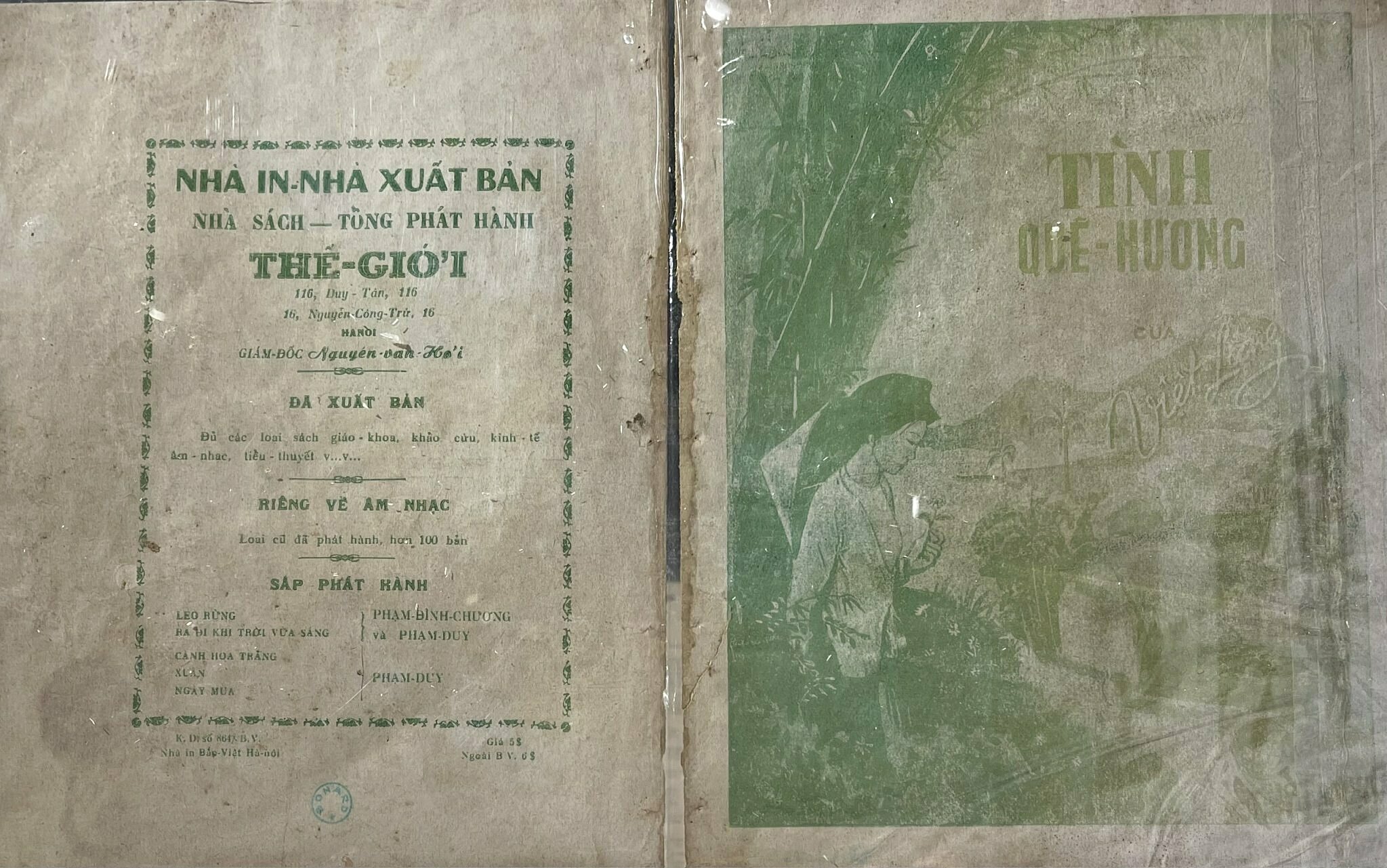
The song "Tinh Que Huong" (Love for the Homeland) by musician Viet Lang was created in 1946, inspired by the southern-bound troops after the resistance in the South. The work, featuring Vietnamese pentatonic melodies, was popular in temporarily occupied zones during the resistance and significantly influenced composers writing about homeland themes. The Gioi Publishing House in Hanoi printed the sheet music in 1950. |
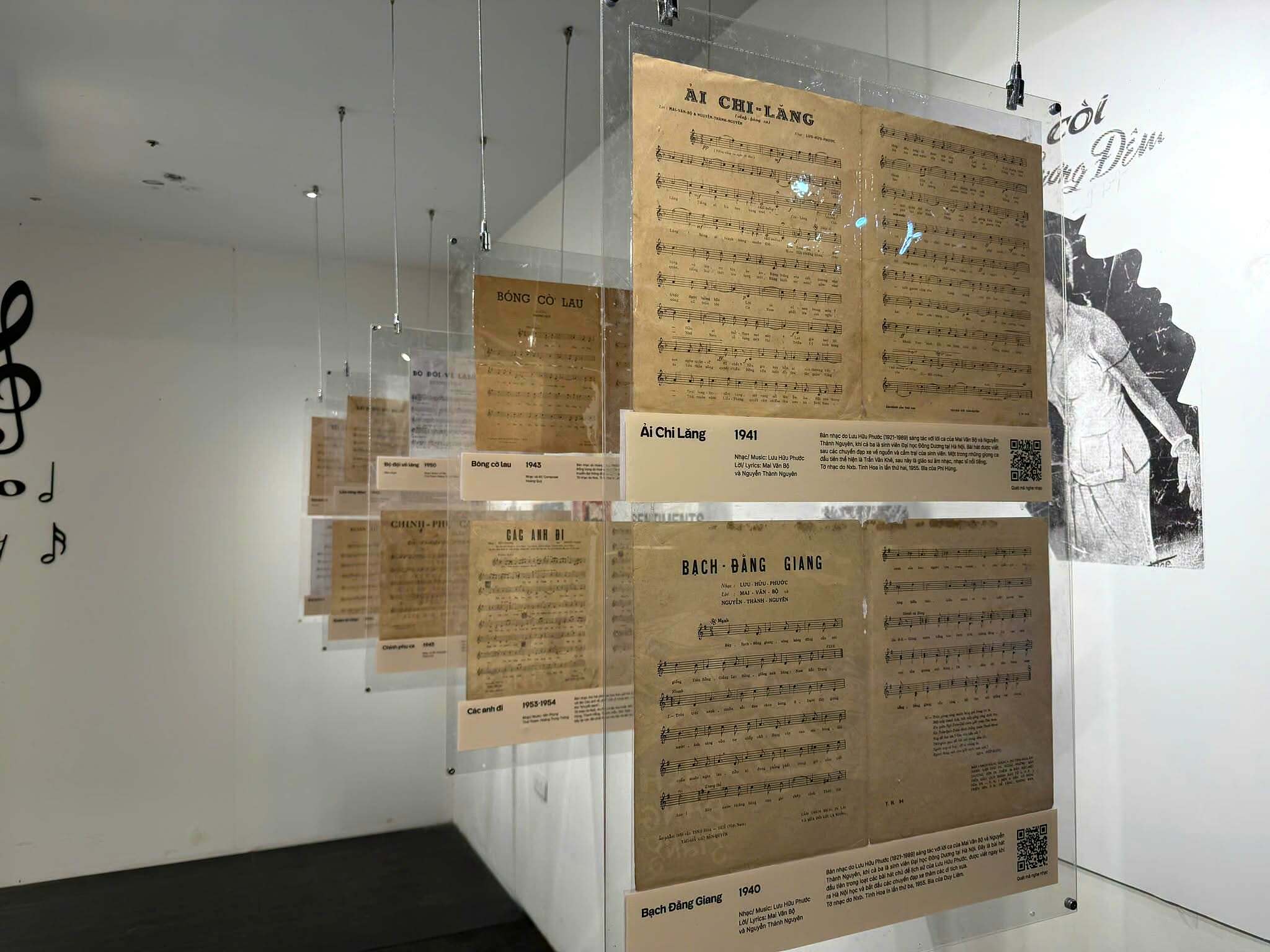
An exhibition titled "Towards the Ancient City: Two Decades of Hanoi's New Music (1934-1954)" is on display from 12/9 to 30/9 at the Hanoi Museum, as part of this year's Thang Long - Hanoi Festival. Photo: Hanoi Museum provided.
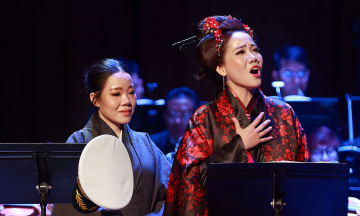
The event's opening ceremony was attended by "red music star" Tuyet Thanh, musician Mai Trung Kien, son of pioneering Vietnamese new music composer Van Chung, and singer Quynh Hoa. The program also attracted many young people eager to learn about Hanoi's musical life during that era.
 |
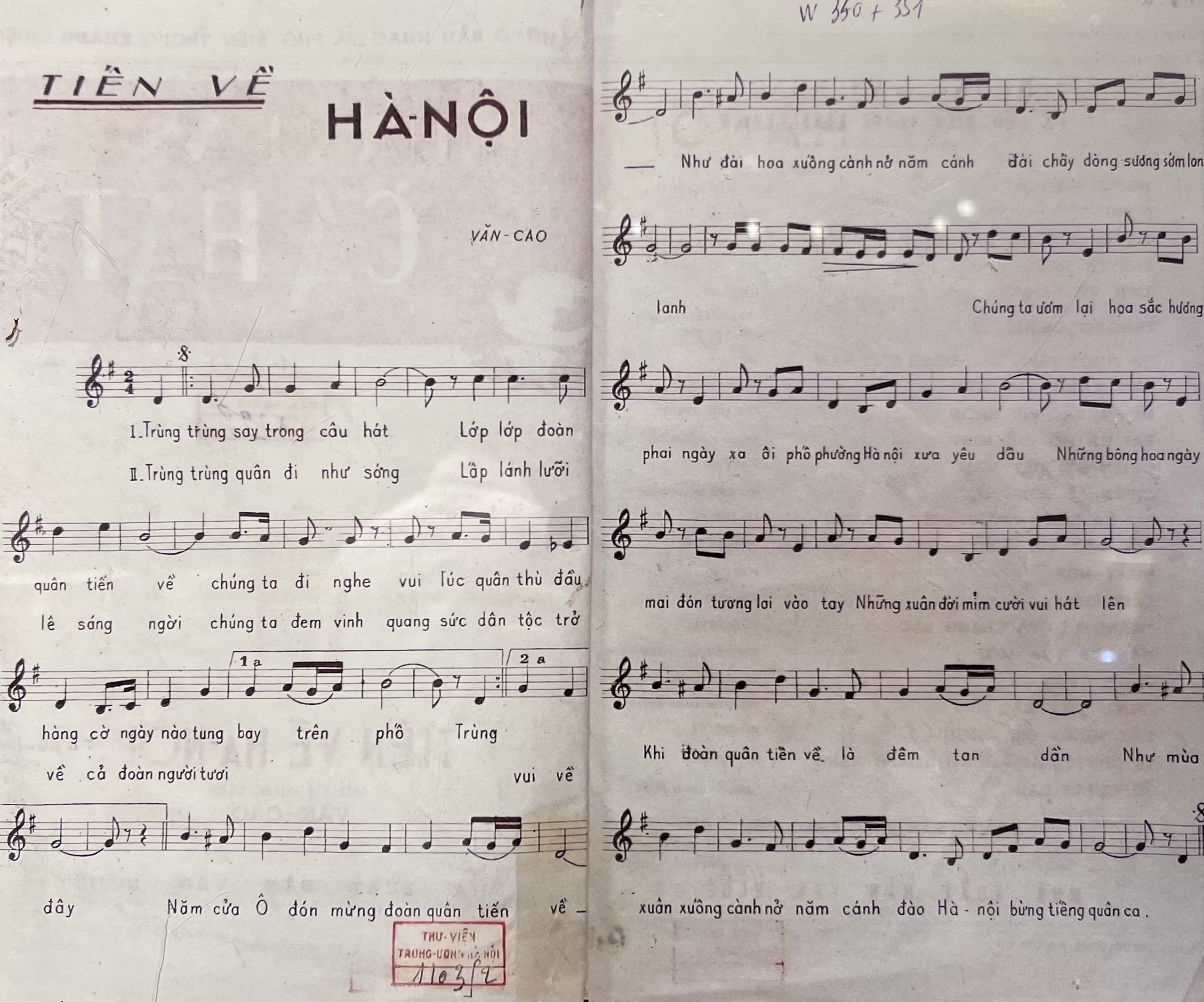
"Tien Ve Hanoi" (Advance to Hanoi, 1949) by Van Cao. In the progression of new music, he, along with composers like Doan Chuan - Tu Linh, Duong Thieu Tuoc, and Tham Oanh, left distinct aesthetic imprints on the sound of Hanoi. |
The exhibition showcases 102 original sheet music pieces, along with artifacts and photographs of musicians and singers, recreating the development of Hanoi's new music during a significant period.
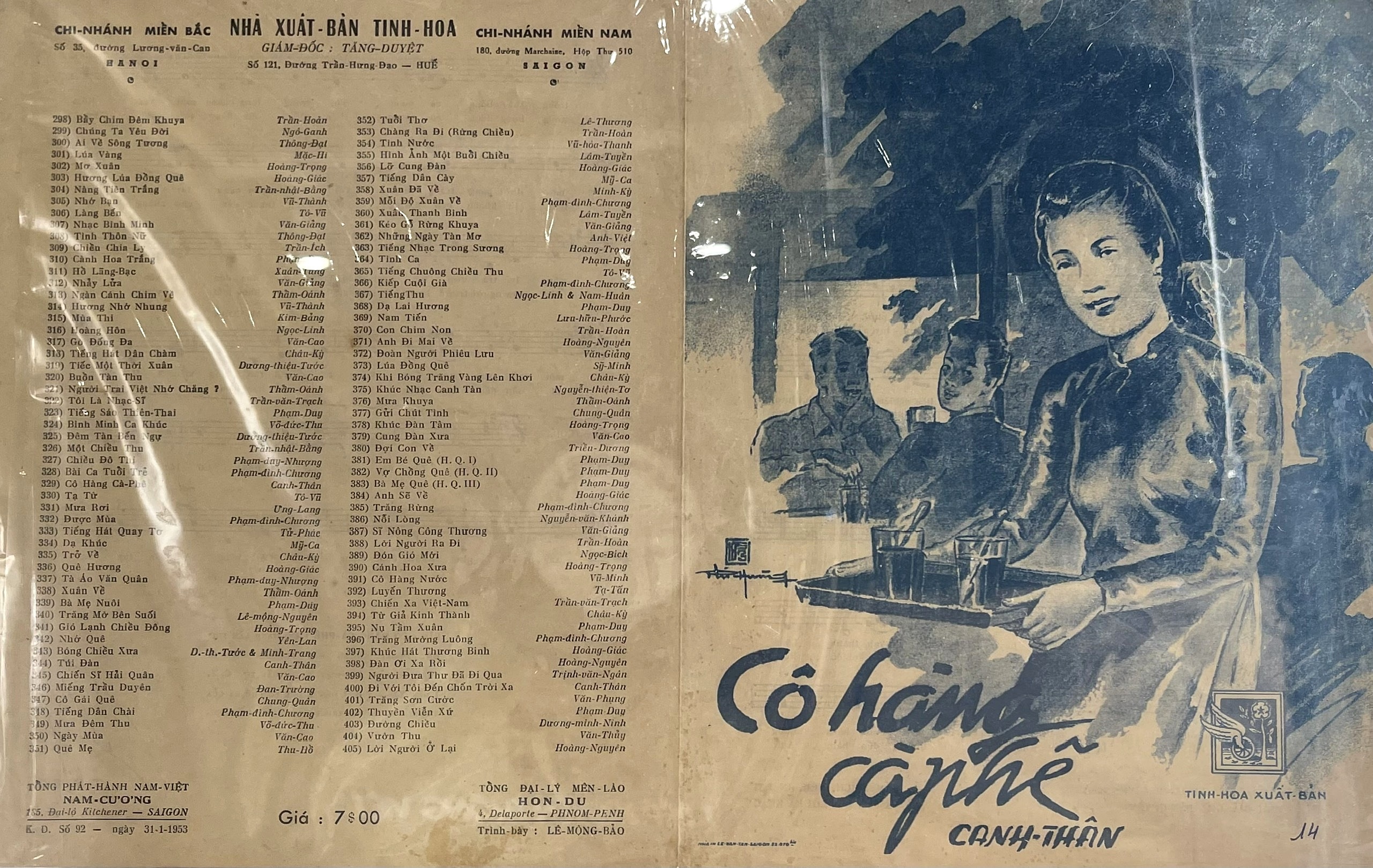
Featured here is the cover of "Co Hang Ca Phe" (The Coffee Shop Girl) sheet music, printed for the third time in 1954 by Tinh Hoa Publishing House in Hue, with illustrations by Phi Hung. Musician Canh Than composed this song in 1948 in the Thanh Hoa resistance zone, part of Inter-zone III.
 |
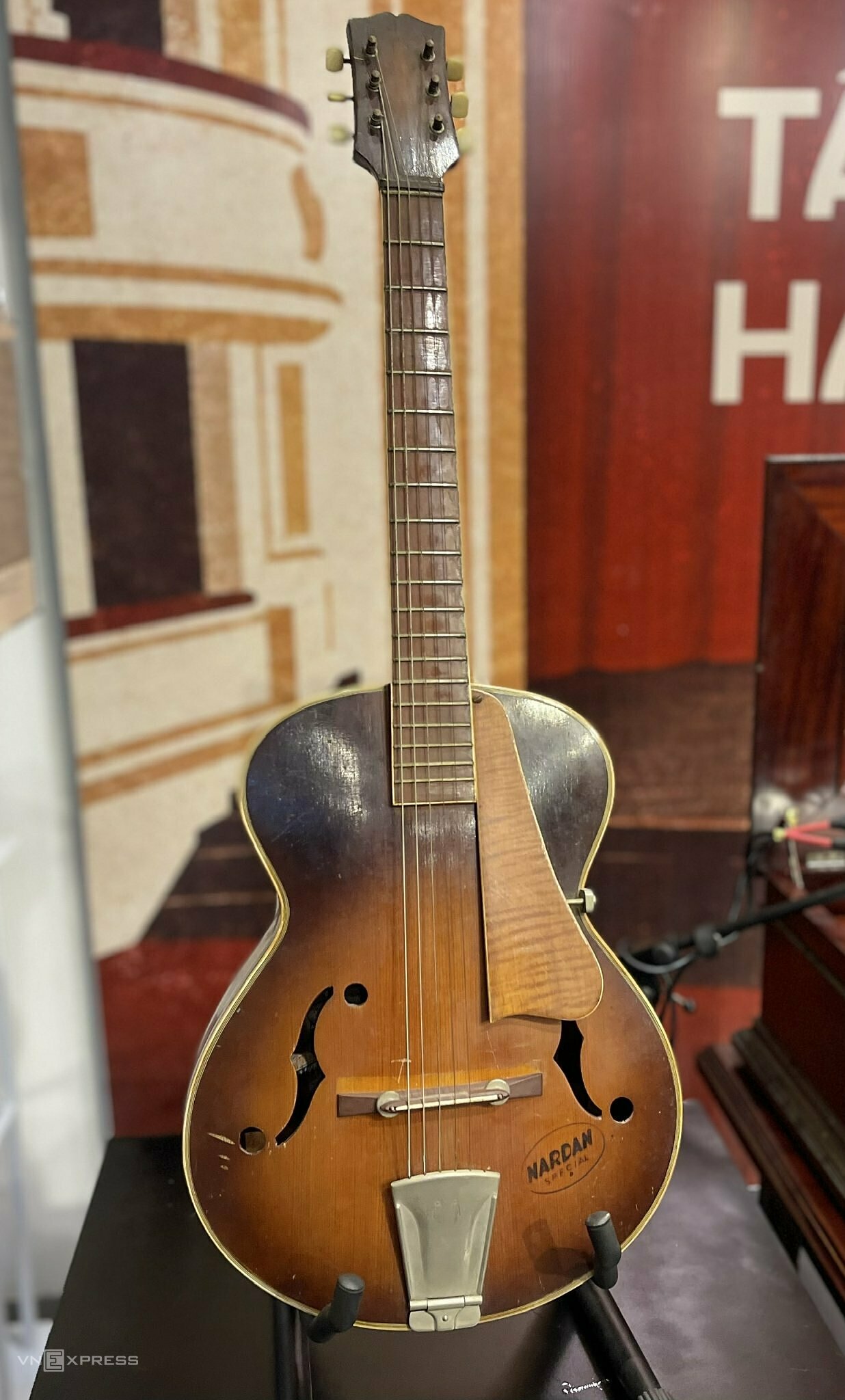
The exhibition also features several artifacts, such as a Nardan No. 50 guitar belonging to Nguyen Dinh Tiep's family in Hanoi. The guitar, produced in Japan between 1950 and 1960, is an example of the Western musical instruments used in Vietnam at the time. |
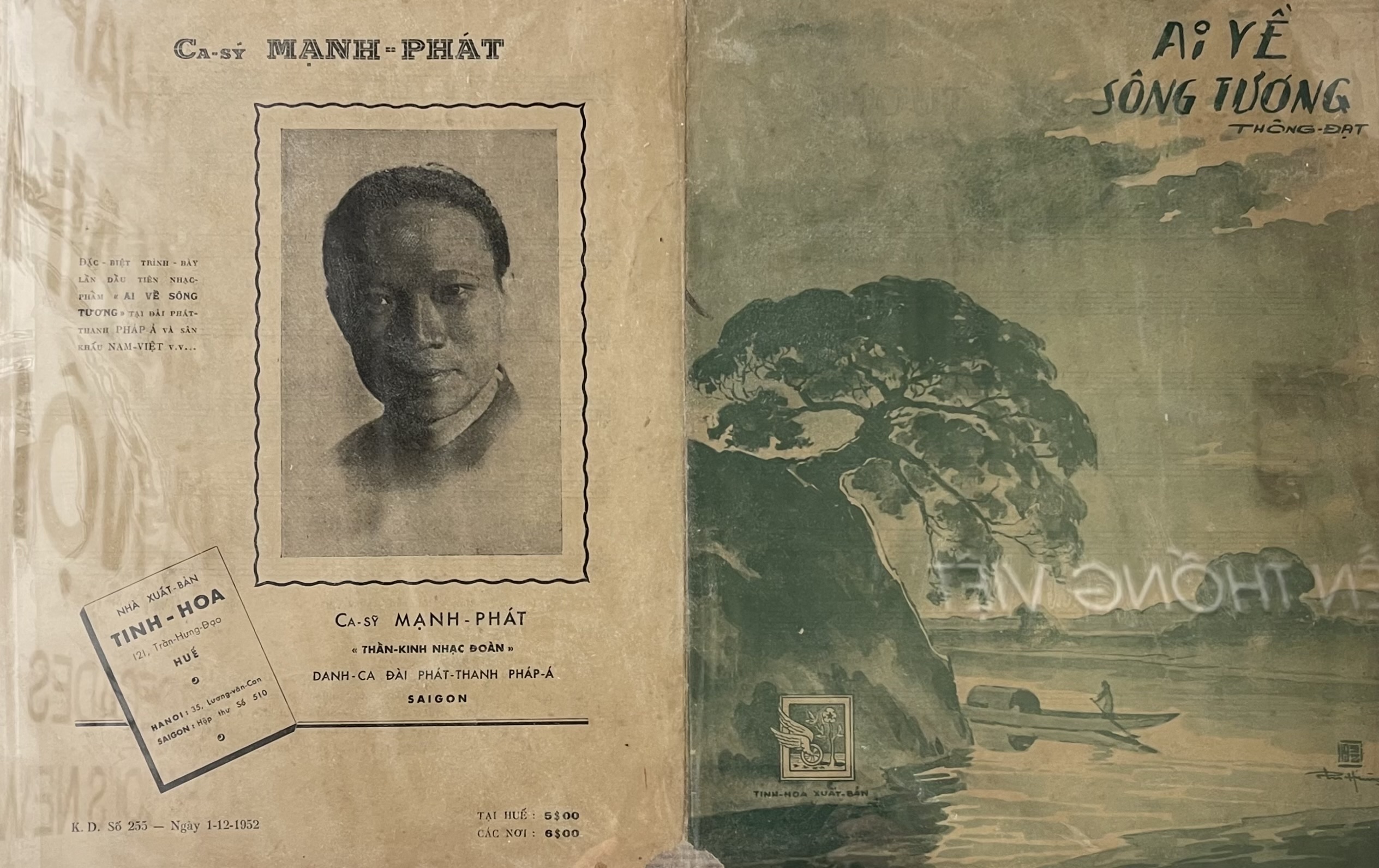
The sheet music for "Ai Ve Song Tuong" (Who Returns to the Tuong River), with a cover by Phi Hung, was printed by Tinh Hoa Publishing House in 1953. This was the first romantic song by musician Van Giang, who was primarily known for his marches.
Emerging in the mid-1930s, "tan nhac" or reform music, based on Western musical language, quickly captivated the youth of the time. In Hanoi, musician Nguyen Van Tuyen's reform music performances in 1938 are considered the starting point for Vietnamese new music.
 |
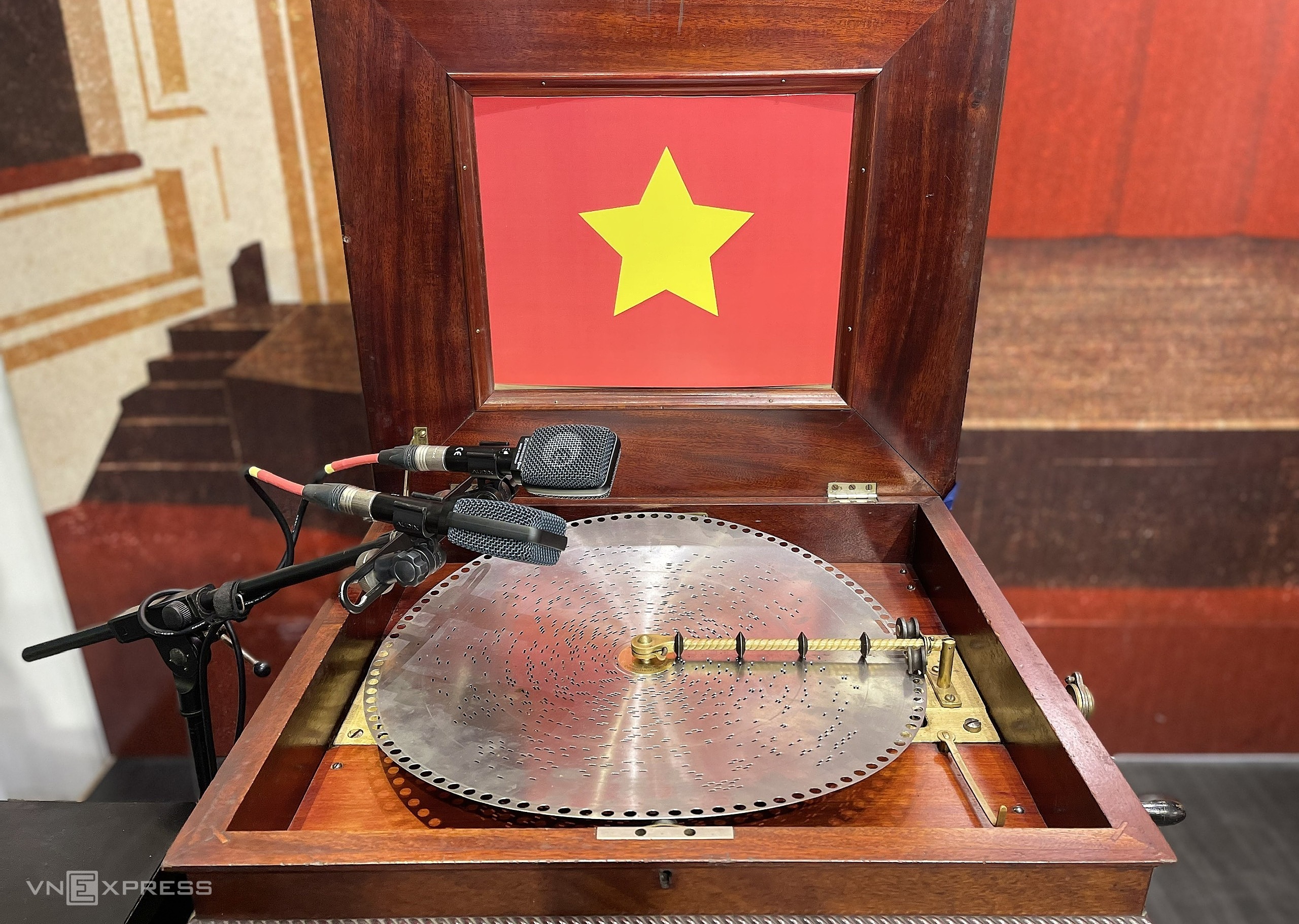
A Regina mechanical music box, with a 15-inch disc and one comb, manufactured in Rahway, New Jersey, USA, around 1895-1900, made of wood and metal. It comes with a custom-made music disc from the US, designed to play Van Cao's "Tien Quan Ca" (Marching Song). This artifact is owned by a private collector in Hanoi. |
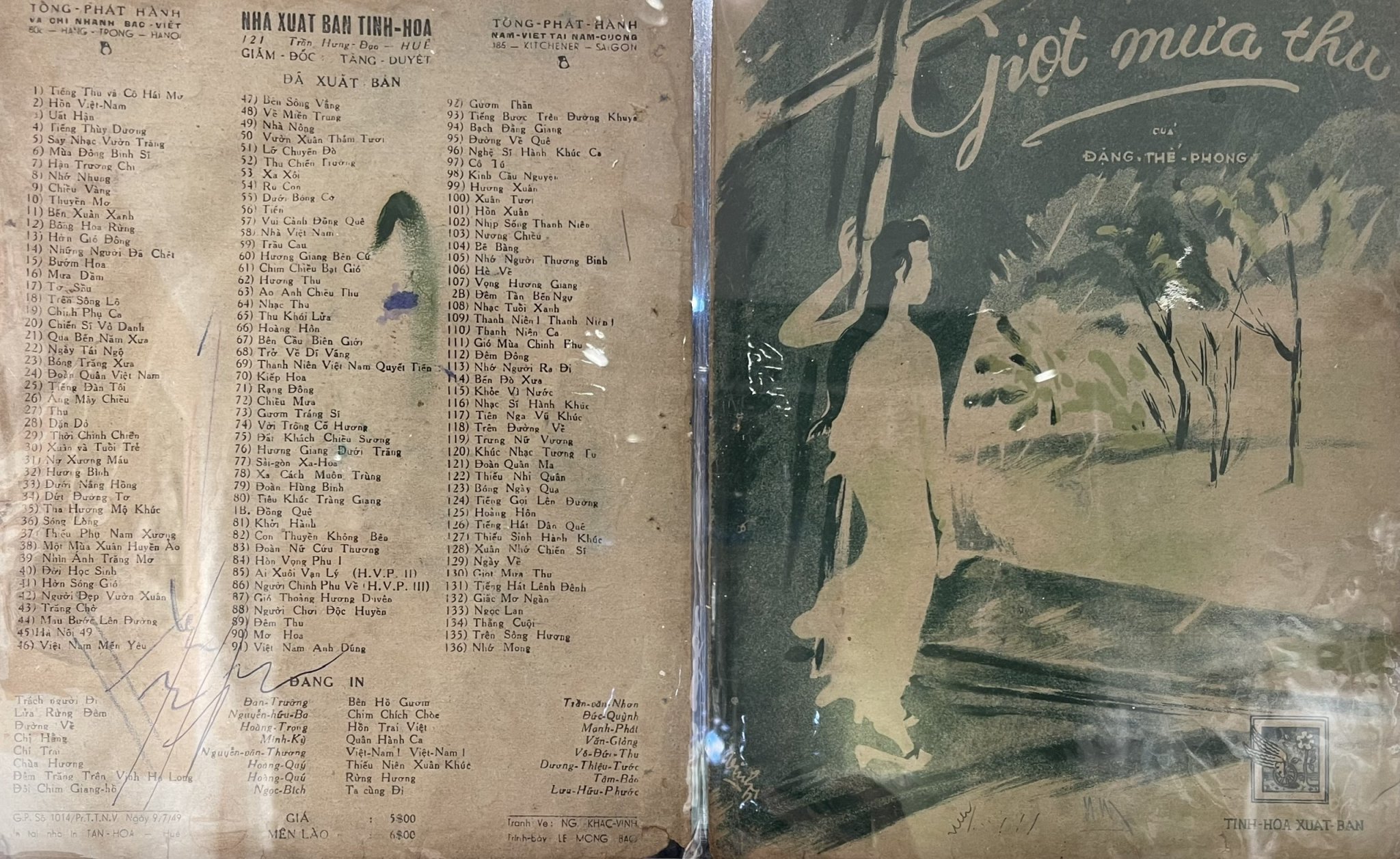
"Giot Mua Thu" (Autumn Raindrop, 1942) stands as one of the most iconic new music songs, composed by musician Dang The Phong before his death at age 24, with lyrics by Bui Cong Ky. Tinh Hoa Publishing House printed the sheet music for the fifth time in 1951, featuring a cover by Nguyen Khac Vinh.
Researcher Nguyen Truong Quy noted that the practice of combining artistic presentation with printing songs as sheet music became popular in the early 1940s. A standard publication measured 44x28 cm, folded in half, with the music printed inside and graphic designs by artists on the outside, depicting the content or images of singers. Approximately 2,000 sheet music pieces were printed during the two decades from 1934 to 1954.
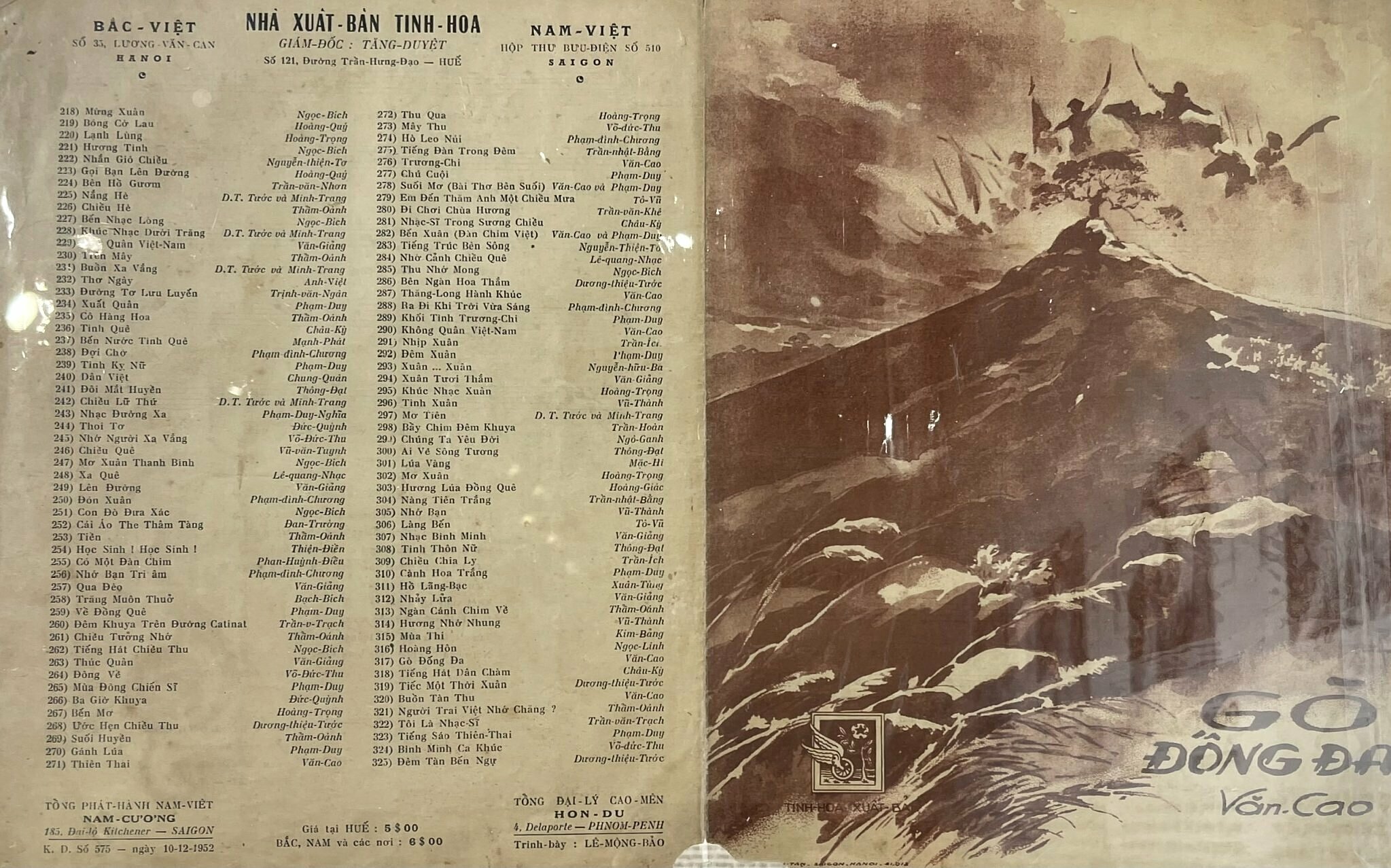 |
Musician Van Cao composed "Go Dong Da" as part of a series of historical marches while a member of the Dong Vong group. Tinh Hoa Publishing House printed the sheet music for the second time in 1953, with a cover by Phi Hung.
According to musician Giang Son, compositions by Van Cao, Le Thuong, and Doan Chuan conveyed the sorrow of their era without being overly sentimental, always embedding hope for the future. This greatly influenced later generations of musicians, including herself.
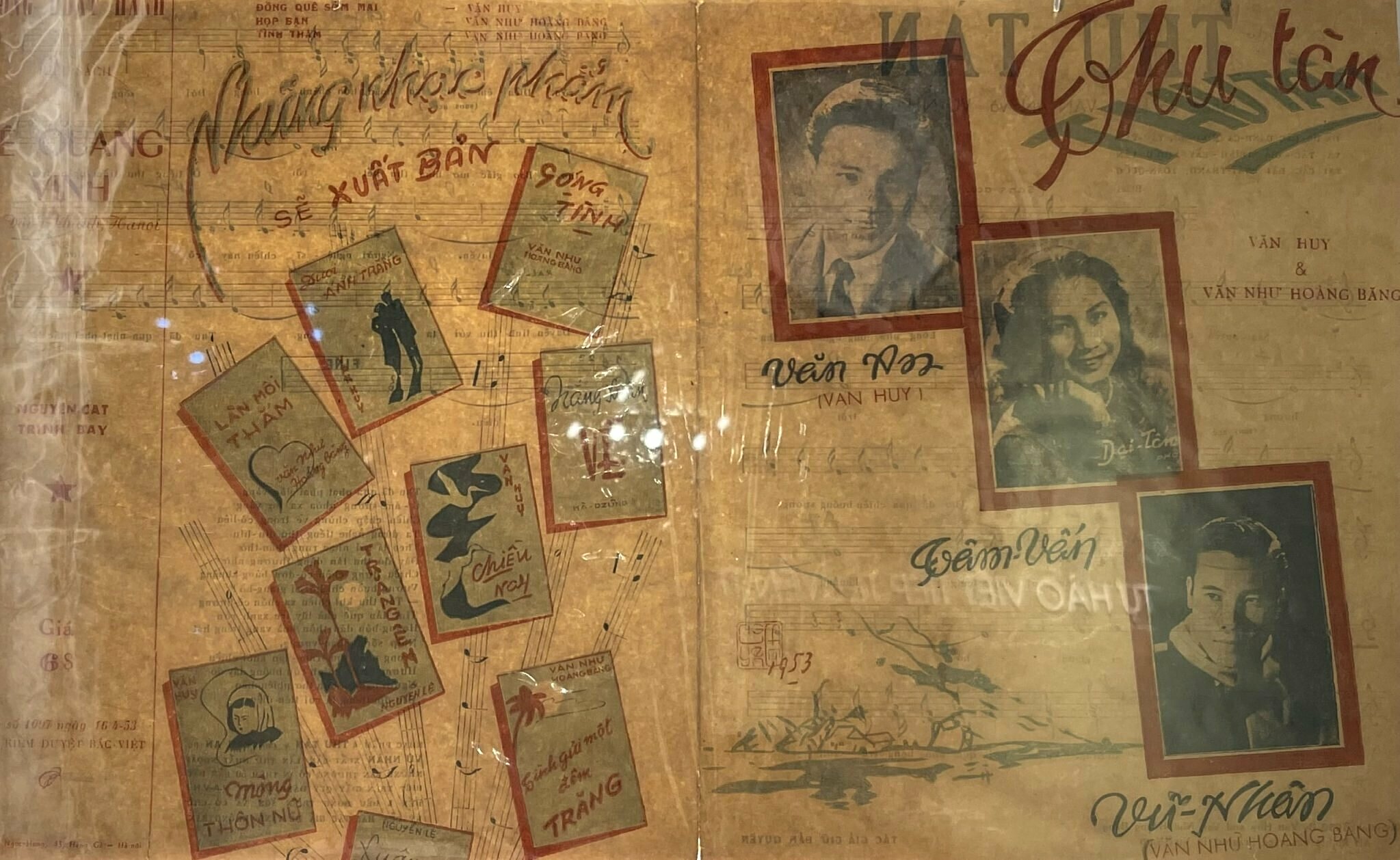 |
"Thu Tan" (Late Autumn) was composed by musicians Van An and Vu Nhan while they were both in the Thanh Binh band in Hanoi during the 1950-1953 period. Le Quang Vinh Publishing House printed the sheet music in 1953, with a layout by Nguyen Cat. The cover features photos of the two composers and singer Tam Van, a renowned vocalist of the time.
Musician Giang Son expressed deep respect for many early new music figures. They were self-taught through recordings, transitioning to writing music on the five-line staff system instead of solely using the pentatonic scale.
 |
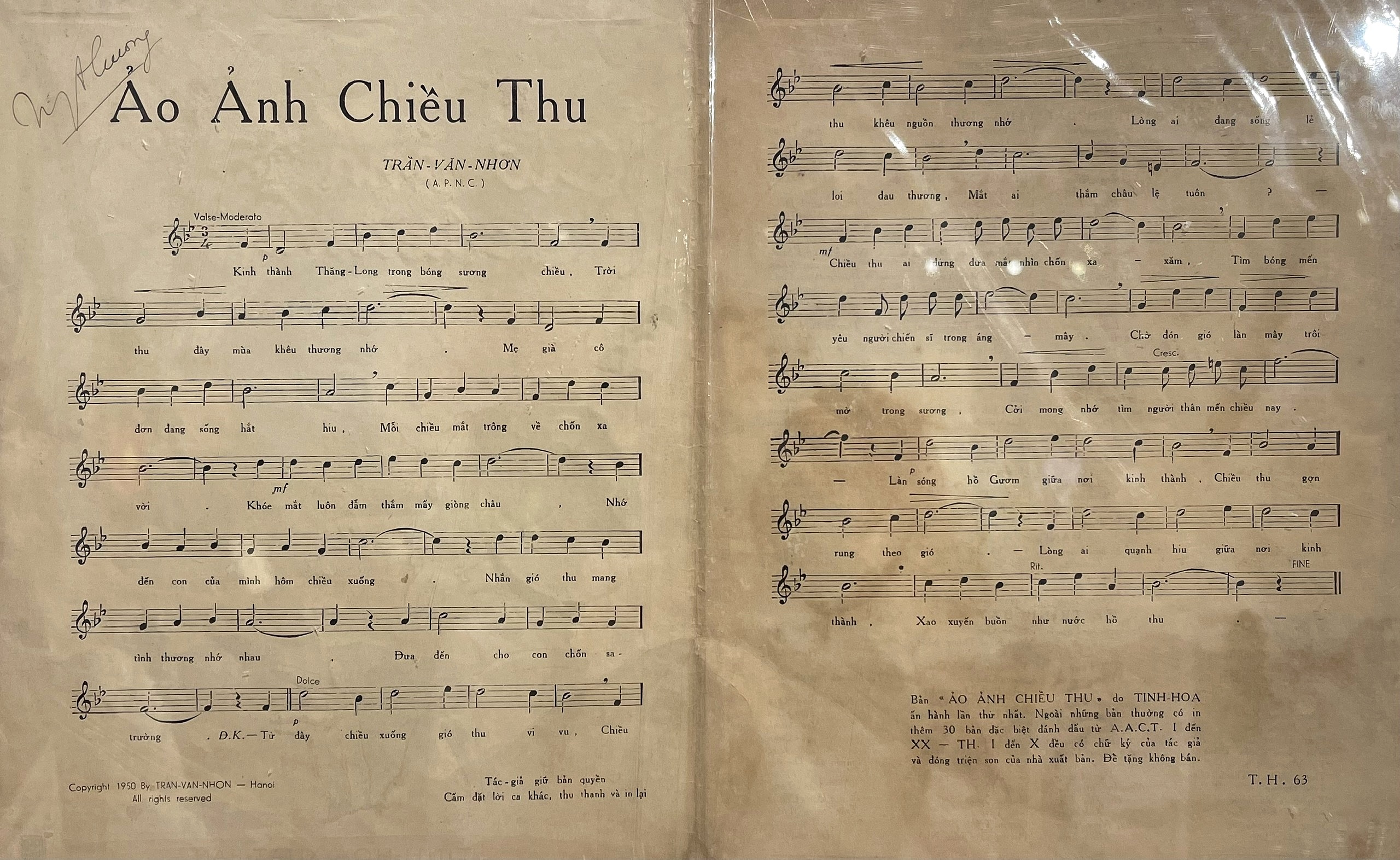 |
Tran Van Nhon composed "Ao Anh Chieu Thu" (Autumn Afternoon Illusion) in 1949, while serving as conductor of the Viet Nhac Band at Radio Hanoi. Tinh Hoa Publishing House printed the first edition of the sheet music, with a cover by Phi Hung.
Researcher Truong Quy observed that early new music songs often had fewer rising or dipping tones (dau hoi, dau nga). Consequently, musical phrases tended to flow smoothly, with melodies rarely needing to be "forced" to fit these tones.
 |
 |
 |
Phuong Linh