*This article contains spoilers.
In Korean history, Danjong (birth name Yi Hong Hwi) was the eldest son of King Munjong, destined to be the sixth king of the Joseon dynasty. However, he ascended the throne at just 12 years old before his uncle, Grand Prince Suyang, overthrew him. Danjong's remaining life ended tragically, leading him to be remembered as an unfortunate monarch, a victim of power struggles.
Directed by Jang Hang Jun, the film is the first to center on Danjong, focusing on the period after his dethronement. The story revolves around the relationship between the young king, now demoted to Prince Nosan, and Eom Heung Do, a village chief who voluntarily takes him in and cares for him in the mountainous region of Cheongnyeongpo.
The film does not delve into power struggles but explores human fate. Danjong and village chief Eom Heung Do represent two perspectives: one who once held supreme power and a commoner swept up by the times. From these seemingly opposing characters, the film broadens the portrayal of ordinary people rich in emotion. Their bond, loyalty, and humanity amidst adversity become the ties that connect them.
Much of the film depicts the bond between Danjong and the villagers, who treat him with sincerity through simple yet thoughtful meals. Initially, he refused to eat, then reluctantly tried, gradually accepted, integrated into their lives, and shared his knowledge. The villagers shifted from curiosity and caution to empathy for the protagonist's fate. These details create a warm tone, softening the tragic undertones of the story. However, as Danjong regained his resolve, court forces tightened their grip, pushing everyone towards their historically predetermined end.
According to Nate, a highlight of the screenplay is its portrayal of Danjong as a resolute and principled individual. His image confronting a tiger in the forest or acting for justice despite knowing failure demonstrates his strong character, prioritizing his people over himself. The film does not merely recount history but poses a question about the perception of justice: Do we choose the path of righteousness, even at great cost, or conform to the currents of the times to survive?
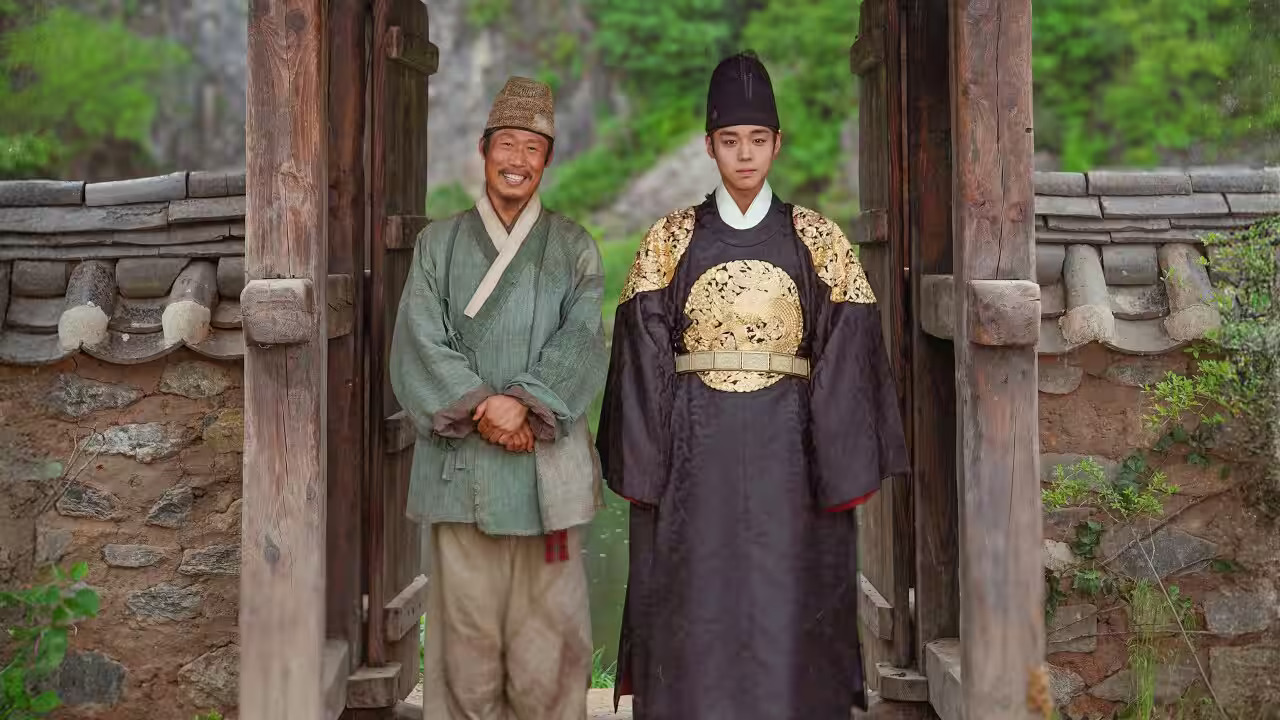 |
Actors Yoo Hae Jin (left) and Park Ji Hoon in "Under the King's Shadow". Photo: Showbox |
Director Jang Hang Jun stated he did not want to depict a pathetic king but rather to build a character of integrity. The film is based on some historical records, such as Eom Heung Do risking his life to retrieve Danjong's body, despite King Sejo's decree that anyone who recovered the body would face extermination of their three generations. As this period is not fully documented, the work combines historical material and fictional elements to complete the storyline.
The performances of the two main characters contribute depth to the story. Yoo Hae Jin portrays an approachable village chief, providing moments of humor. He developed a character with various traits, such as being gruff and pragmatic. His somewhat exaggerated acting style makes the character relatable. Later, the character changes after enduring many hardships with Nosan. From focusing on personal gain, Heung Do learns to care for others.
Park Ji Hoon impresses by revealing Danjong's transformation, from empty eyes to resolute will. According to News1, the actor lost 15 kg in two months to convey the character's emaciation, recreating the feeling of helplessness and isolation of someone who has lost everything. Their chemistry is striking in the film's final scene when Danjong chooses to depart. This sequence uses minimal dialogue, with the climax built through their acting. Ji Hoon internalizes his emotions, while Hae Jin evokes conflict and helplessness.
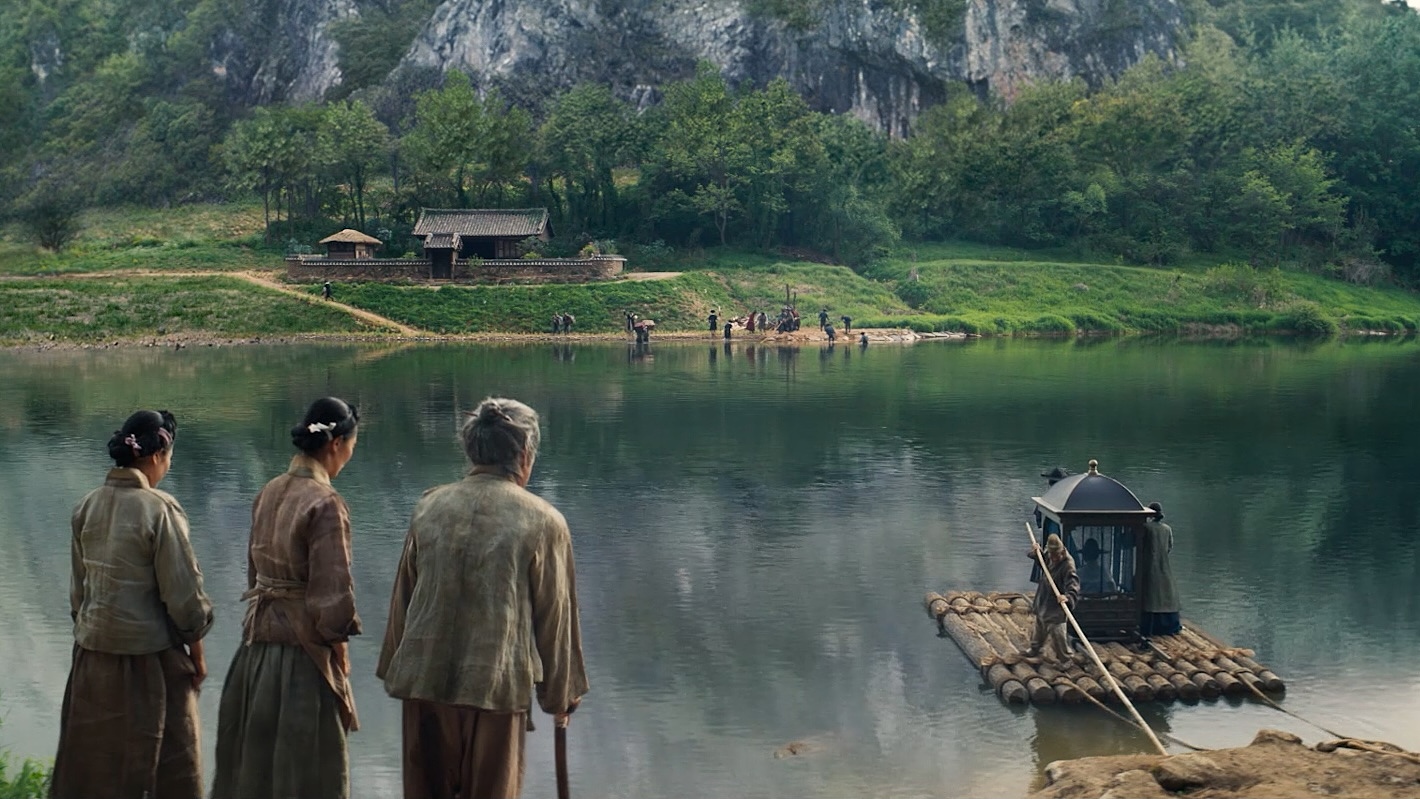 |
Setting of "Under the King's Shadow". Photo: Showbox |
The crew filmed on location in Yeongwol District, Gangwon Province. Since Cheongnyeongpo, King Danjong's place of exile, has become a tourist area and coincided with local festival times, the team built an outdoor set along the Donggang River to ensure authenticity.
However, the film has some drawbacks. King Danjong's psychological development progresses quickly, lacking detail to convince the audience. The rebellion at the end of the film also unfolds hastily, without enough build-up, thus failing to be emotionally impactful. The CGI in the scene where villagers confront a tiger appears unnatural.
According to statistics from the Korean Film Council on 17/4, the project attracted nearly 16,5 million viewers after over 70 days of release in Korea. This achievement allowed the film to surpass Extreme Job (2019) with 16,26 million admissions, ranking second among films with the highest ticket sales in the country, trailing only The Admiral: Roaring Currents (2014). In terms of revenue, the film earned 159 billion won (107,4 million USD), the highest in Korean box office history to date.
Additionally, "Under the King's Shadow" led the film nominations at the 62nd Baeksang Arts Awards, with seven categories, including Best Film, Best Actor, and Best New Actor.
Cat Tien