Past midnight, Minh Anh, 26, in Ho Chi Minh City, was still engrossed in *The Tycoon's Substitute Bride*, a vertical-screen series of 50 episodes, each over two minutes long, created using AI on the Drama Box app. After binge-watching the first nine free episodes, the plot intensified as protagonist Lily was forced to replace her sister at the altar with Dominic Castellano, a mafia boss rumored to have murdered his former wife.
As the wedding progressed and Lily's identity as a substitute faced exposure, the screen abruptly froze, displaying a message to pay for the next episode. A mix of frustration and curiosity led Minh Anh to use her fingerprint to purchase a weekly membership package costing over 131,000 VND.
Minh Anh's experience is typical of millions of viewers caught in the "dopamine trap" of the AI micro-drama wave. Unlike traditional cinema, which requires time to establish context, technology film studios rigorously apply a "3-second start - 10-second end" formula to secure viewer attention.
 |
The interface of a payment page for a short video app. Photo: Bao Lam
According to research by the academic journal *Frontiers in Psychology*, social media users spend an average of 1,7 to 2,5 seconds before deciding to scroll past content. Therefore, these productions feature rapid camera angle changes, use sharp contrasting colors, and inject extreme conflicts like infidelity, inheritance disputes, or humiliating the poor right from the start.
AI studios analyze user preferences, mass-producing content based on popular formulas such as a rich CEO pretending to be poor to test loyalty, mother-in-law versus daughter-in-law confrontations, or an underdog seeking revenge. Scripts often omit psychological depth, pushing protagonists to their limits before a dramatic counterattack. This reversal of fortunes triggers the brain's release of dopamine, a neurotransmitter that creates feelings of excitement and drives behavior, providing immediate gratification after a period of intense suppression.
The element that retains viewers is concentrated in the final ten seconds of each episode, employing a cliffhanger technique. This includes details like a bedroom door about to open, DNA test results pending publication, or a hand poised to deliver a slap. This technique leverages the Zeigarnik effect—the brain's tendency to persistently remember unfinished tasks. The film stopping at a climax, combined with an auto-play feature, heightens curiosity and prompts viewers to open the next episode.
Psychological experts suggest that immersion in these films reflects a need for escapism. The appeal of vertical-screen short films is not limited to young people but extends to all ages, from office workers to retirees. Pressure from modern life and readily available smartphones transforms this format into a quick "remedy" to fill idle time during lunch breaks, while waiting for a bus, or before bedtime.
Everyday conflicts such as workplace injustice, economic pressure, or family disputes are depicted on screen and quickly resolved through revenge plots or sudden wealth. Viewers find short-term comfort in following the protagonist's journey, where all real-life frustrations lead to a happy ending.
Over time, consuming micro-content reshapes the brain's reception habits. Viewers gradually lose patience with slow-paced content that requires reflection and develop a reflex for seeking stimulation. What seems like harmless short-segment entertainment gradually becomes a dependency, unconsciously tethering users to their phone screens.
AI recreates scenes from Jin Yong's "The Return of the Condor Heroes". Video: Weibo
Platforms capitalize on user behavioral psychology to optimize revenue. Instead of traditional fixed monthly subscriptions, most apps offer the first 10-15 episodes for free. Precisely at the most dramatic point of the storyline, the system locks content and requires payment to continue watching.
A behavioral economics study by George Mason University (US) indicates that breaking down costs into per-episode payments significantly reduces viewers' perceived "money pain". In practice, apps like Drama Box and Reel Short flexibly combine this mechanism with various payment forms, from selling coins to unlock individual episodes to weekly or monthly subscription packages. By having users spend small amounts initially, platforms guide them to upgrade to recurring subscription plans, optimizing revenue streams.
However, the AI short film format reveals several artistic quality limitations. Critics note that most productions suffer from script logic errors and cliche dialogue due to reliance on automated text generation algorithms. The overuse of sensationalism transforms many videos into clickbait rather than complete works.
Despite ongoing content debates, AI technology helps producers optimize costs and expand filmmaking scale. However, the market also exhibits a self-correction mechanism from viewers. A report from the media tracking platform DataEye recorded increasing audience "saturation" with formulaic scripts, leading to a sharp rise in dropout rates for low-quality works. To retain the public, many film studios must upgrade visuals and invest in scripts.
Given the appeal of this format, experts recommend users actively control both their behavior and finances. According to psychology professor Adam Alter (New York University, author of *Irresistible*), effective solutions to escape the dopamine psychological trap include disabling auto-play and limiting app usage time on phones. Additionally, turning off biometric fast payment features helps viewers avoid impulsive purchases for subscription packages.
Many countries are actively establishing regulatory boundaries to balance technological promotion with preventing social consequences. China, the birthplace of the micro-drama model, is one of the earliest markets to implement strict controls.
The National Radio and Television Administration of China requires all short films released on digital platforms to be registered and undergo content review. It also prohibits scripts that promote harmful ideologies, extreme rich-poor discrimination, or cheap sensationalism. From 1/9, new regulations mandate that films created or produced with AI must include identification marks on each episode to limit misinformation and fake content.
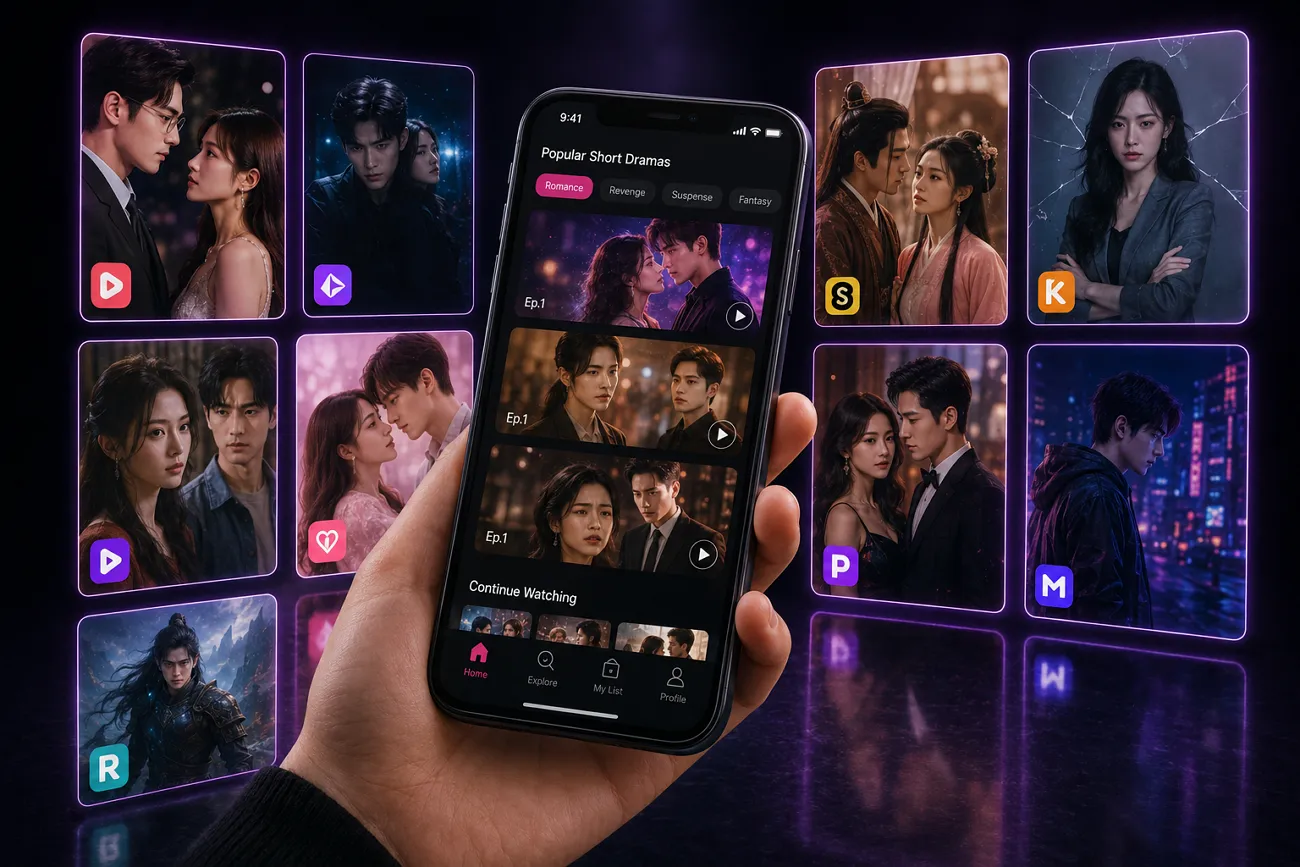 |
The global market currently has over 700 short film apps (excluding China's domestic ecosystem), according to Sensor Tower data from 5/. Photo: MagicLight AI
In European Union countries, regulatory focus centers on copyright and data transparency. The EU AI Act mandates that providers of general-purpose AI models publish sufficiently detailed summaries of the content used for training and label machine-generated content for user recognition.
In Vietnam, the vertical-screen short film market and AI-assisted content operate largely unregulated on cross-border platforms. On 25/9, the Cinema Department requested digital platforms, intermediary platforms, and app stores in Vietnam to urgently review all films and short films currently being distributed. Units must strictly comply with age classification regulations, display results, and be responsible for content before providing it to viewers. If unable to self-classify, businesses must request assessment from regulatory bodies.
The Cinema Department collaborates with functional agencies for post-inspection and rigorously handles violations. According to Decree 87/2026, fines can reach up to 100 million VND, along with measures requiring film removal. In cases of distributing prohibited films, violating entities face forced content deletion, forfeiture of illegal profits, or temporary suspension of film distribution activities.
Cat Tien (according to Frontiers, European Commission, Xinhua)