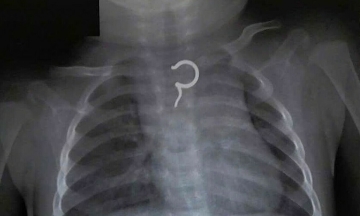
The boy's family reported he developed painful urination. Local hospital tests, including ultrasound, initially diagnosed bladder inflammation and prescribed home treatment. However, his symptoms did not improve. A follow-up examination and X-ray revealed a foreign object in his abdomen, leading to his transfer to National Children's Hospital in Hanoi for further monitoring and treatment.
Typically, foreign objects in the digestive tract are naturally expelled by intestinal peristalsis. In this case, however, doctors observed that the foreign object was not moving. After determining the object was magnetic and could not be passed naturally, doctors proceeded with surgery.
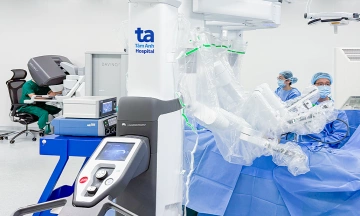
During surgery, doctors discovered multiple small magnets linked together in a chain, which had perforated the intestine. The surgical team removed the foreign objects, sutured the perforation, and placed a drain. After 4 days, the patient was able to resume normal activities, began eating again, and is expected to be discharged in the next few days.
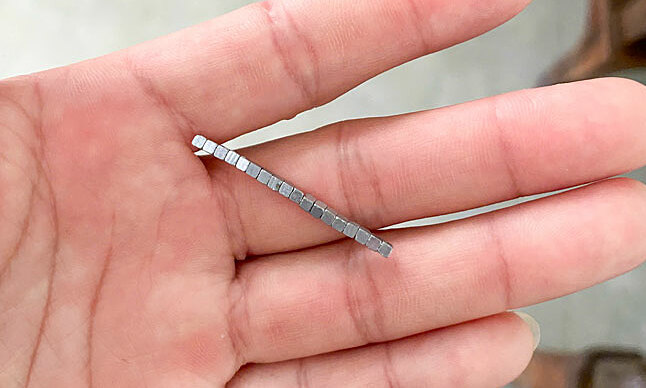 |
The magnets from the building block toy set the boy played with at home. *Photo: Family provided*
According to Dr. Vu Thanh Tu, from the General Surgery Center, ingesting foreign objects is a common accident among young children. Each year, National Children's Hospital admits numerous cases due to swallowed items such as buttons, coins, toothpicks, or small toy parts. Magnetic foreign objects, in particular, pose a significant risk of digestive tract damage.
Magnets are materials with strong magnetic properties. If a child swallows two or more magnets at different times, they can lodge in separate sections of the intestine but still attract each other through the intestinal wall. This magnetic force creates prolonged pressure on the intestinal wall, causing localized ischemia, which can lead to necrosis and perforation. If not detected promptly, this can result in peritonitis, intestinal obstruction, septic shock, and be life-threatening.
Doctors advise that young children are often very active, especially those under three years old, who tend to explore their surroundings with their hands and mouths. Therefore, parents must be cautious when selecting toys for young children, avoiding small, sharp objects that could cause injury or small magnetic toys that are easily swallowed. Additionally, parents should monitor their child's environment to minimize the risk of foreign object ingestion.
If a child is suspected of swallowing a foreign object or exhibits unusual symptoms such as abdominal pain, vomiting, digestive upset, or changes in daily habits, families should take the child to a medical facility for prompt examination and treatment.
By Le Nga