During an abdominal ultrasound at Tam Anh General Hospital, Ho Chi Minh City, Hanh, 70, was found to have an enlarged prostate, despite showing no obvious symptoms. Subsequent tests revealed a total prostate-specific antigen (PSA) level of 6,5 ng/ml, which is above the normal threshold of 4 ng/ml, indicating a risk of malignancy. Further magnetic resonance imaging (MRI) showed a lesion in the left lobe, categorized as a very high cancer risk. A biopsy confirmed localized prostate cancer, with a tumor approximately 2 cm in size, confined to the left lobe, and no signs of capsular invasion or metastasis to nearby organs.
Master of Science, Doctor, Level I Specialist Nguyen Tan Cuong, Deputy Head of Urology Department and Head of Urological Oncology Unit at the Center for Urology - Nephrology - Andrology, recommended radical tumor removal surgery. Hanh, who has a cardiovascular condition and takes daily anticoagulant medication, underwent laparoscopic surgery assisted by the Da Vinci Xi robot. This approach was chosen to control bleeding risk and minimize invasiveness.
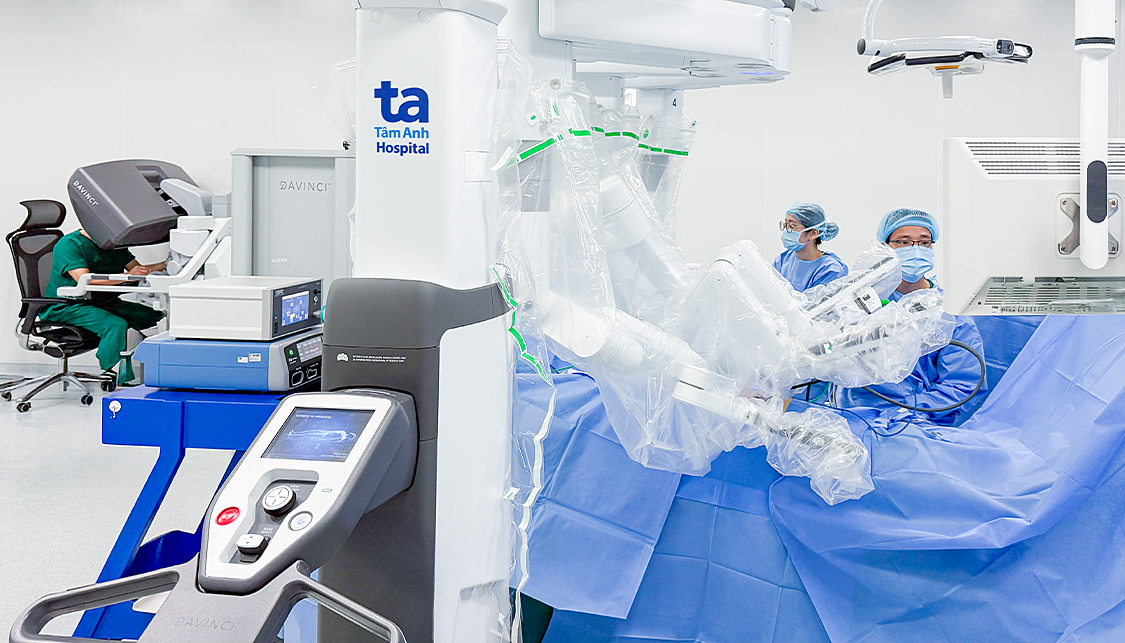 |
Doctor Cuong (left) operates the Da Vinci Xi robot for radical prostate cancer surgery on the patient. *Photo: Tam Anh General Hospital*
The patient's prostate was quite large, exceeding 40 ml, making the dissection of the gland from the bladder neck and the reattachment of the urethra after removal more complex. With the assistance of flexible robotic arms and a 3D camera system, the surgical team precisely dissected the tumor, minimizing damage to healthy tissue. The doctor performed the dissection from the posterior aspect, a deviation from traditional anterior methods, to maximally preserve the puboprostatic ligaments and the sphincters around the urethra. This technique significantly reduces postoperative complications, especially urinary incontinence and erectile dysfunction.
Post-surgery, Hanh recovered quickly, experienced minimal incision pain, walked normally, and was discharged after two days. According to Doctor Cuong, early detection and complete surgical removal of malignant cells resulted in a good prognosis for recovery, eliminating the need for additional treatment. Hanh was advised to monitor his PSA levels regularly to prevent recurrence and to perform pelvic floor exercises to strengthen the pelvic floor muscles, supporting proper urination.
According to Globocan 2022 data, prostate cancer is among the top 5 common cancers in Vietnamese men, with approximately 5,875 new cases annually. Age, genetics, and family history are factors that increase the risk of developing the disease. The disease often progresses silently in its early stages, so Doctor Cuong recommends that men over 50 actively undergo regular screenings. When detected early, radical treatment with minimally invasive robotic surgery offers high effectiveness, allowing patients to recover quickly and maintain a long-term quality of life.
Bao Anh
*Patient's name has been changed