


The patient is now fully conscious, with improved muscle strength, and is undergoing physical rehabilitation. He is expected to be discharged in a few days. This positive outcome followed five days of doctors maintaining extracorporeal membrane oxygenation (ECMO), also known as an artificial heart-lung machine, and one week after the patient's endotracheal tube was removed.
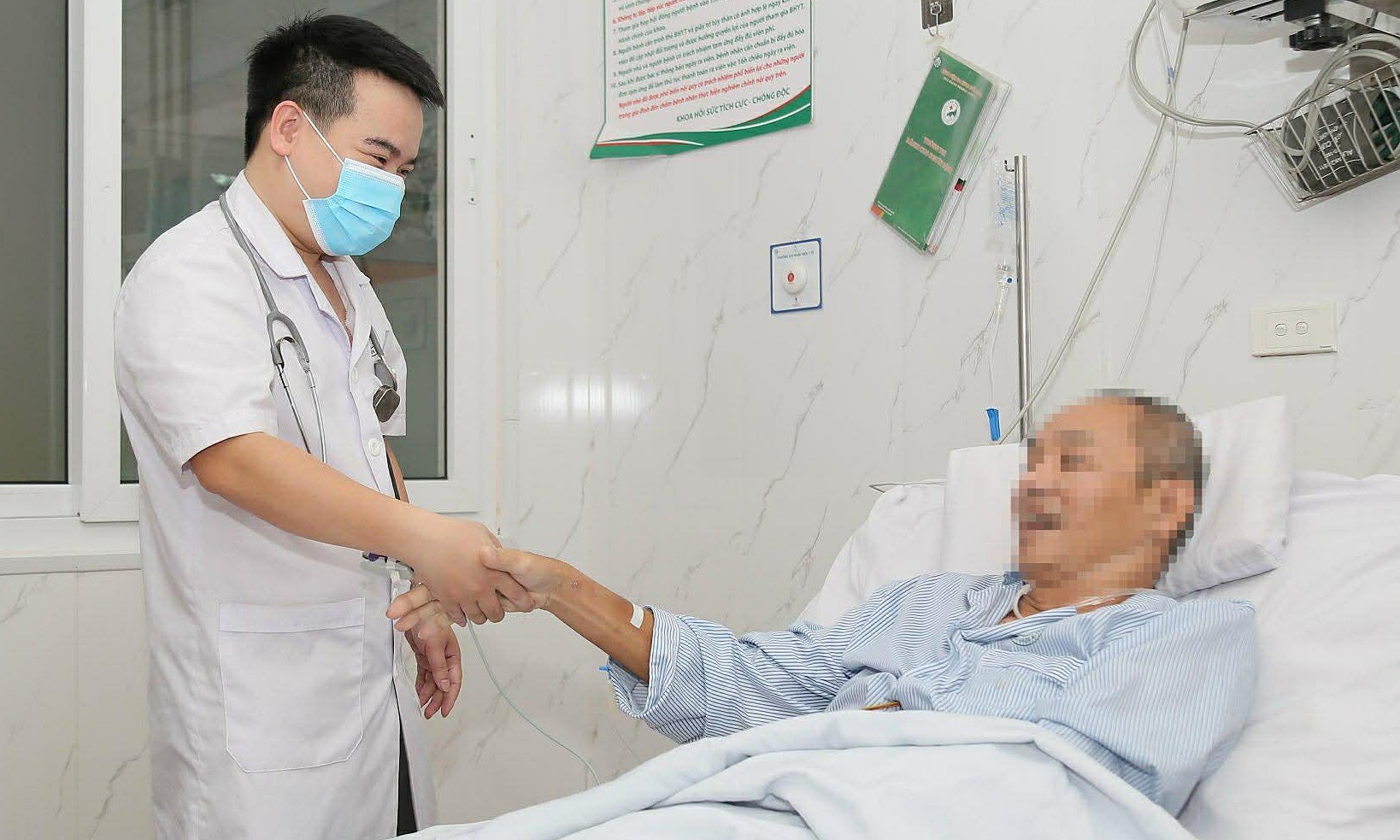 |
The patient survived after vascular intervention. *Photo: Hospital provided*
The man was rushed to the emergency room approximately 10 minutes after collapsing while playing sports. Despite the quick transport, he arrived in a deep coma with circulatory arrest and had not received initial first aid. The on-duty team immediately activated the "red alert" protocol. An electrocardiogram revealed persistent ventricular fibrillation, and the heart did not respond despite repeated defibrillation attempts by doctors.
Faced with this critical situation, the treatment team decided to implement veno-arterial extracorporeal membrane oxygenation (VA-ECMO) to maintain circulation and blood oxygenation. Doctors identified VA-ECMO as a "bridge to life" to protect the brain and utilize the critical "golden hour" to address the root cause. After about one hour on the machine, the patient was transferred to the cardiac intervention room. Angiography images showed that both the left anterior descending artery and the circumflex artery were 99% narrowed. Doctors successfully implanted three stents, restoring blood flow and myocardial perfusion.
Doctor Do Anh Son, from the Intensive Care and Anti-poisoning Department, stated that timely intervention significantly minimized brain damage and saved the patient's life. He advised the public to undergo regular cardiovascular screenings for early detection of abnormalities. During physical exercise, individuals should avoid overexertion. If symptoms such as dizziness, shortness of breath, or chest pain occur, they should stop exercising and rest immediately.
Le Nga


