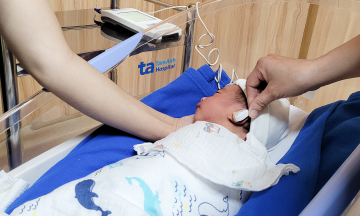
On 14/3, doctor Nguyen Bien Thuy, a specialist at Hanoi Obstetrics and Gynecology Hospital, described the birth as one of the hospital's rare cases of a large baby. The mother, in her second pregnancy at 38 weeks, had a history of C-section and gestational diabetes with uncontrolled blood sugar levels.
Upon admission, the patient experienced pain at her old C-section scar, posing a risk of uterine rupture and complications. Doctors opted for a C-section to ensure the safety of both the mother and the baby. The baby boy was born weighing 5,86 kg, far exceeding the average weight of full-term newborns, which typically ranges from 2,8 to 3,5 kg.
Currently, both mother and baby are in stable condition, and the baby is under observation and care at the hospital.
 |
A baby boy weighing 5,86 kg was born at Hanoi Obstetrics and Gynecology Hospital. Photo: Hospital provided |
A baby boy weighing 5,86 kg was born at Hanoi Obstetrics and Gynecology Hospital. Photo: Hospital provided
Medical professionals classify babies weighing over 4 kg as large for gestational age; those weighing 5 kg or more are exceptionally rare. These cases demand close prenatal monitoring, especially for mothers with gestational diabetes or prior C-section scars, to ensure appropriate delivery planning and prevent dangerous complications.
Vietnam's record for the heaviest baby born belongs to a baby weighing 7,1 kg in Vinh Phuc in 2017. Another baby girl in Gia Lai was born in 2008 weighing nearly 7 kg. In 2014, a mother in Quang Nam weighing 102 kg delivered a baby weighing 6,5 kg.
Doctors recommend regular prenatal check-ups for pregnant women. Parents of large newborns should monitor them closely; any unusual signs warrant a medical examination. If a fetus is projected to exceed 3,5 kg, doctors counsel the mother on an appropriate diet. Monitoring fetal weight and assessing the mother's pelvis after 37 weeks of pregnancy are crucial to mitigate potential childbirth risks.
Thuy An