Mr. Tinh, who manages hypertension and dyslipidemia with medication, was diagnosed with an abdominal aortic aneurysm at another hospital in early november. He subsequently sought specialized care at Tam Anh General Clinic, District 7.
An abdominal aortic aneurysm occurs when the arterial wall, weakened by atherosclerosis and calcification, loses its elasticity and bulges outwards, forming a blood-filled sac. While a normal aortic diameter ranges from 16-20 mm, an aneurysm is defined by a diameter exceeding 30 mm.
Dr. Le Chi Hieu, a specialist in thoracic and vascular surgery, reported that Mr. Tinh's aneurysm measured 50 mm, nearly three times the average diameter, indicating a significant risk of rupture. Two primary intervention methods exist: open surgery and stent graft placement. Open surgery involves general anesthesia, requires at least one month for full recovery, and carries risks such as bleeding and infection. To minimize these risks and ensure a quicker recovery, especially for an elderly patient, the medical team opted for a stent graft procedure, known for its high efficacy and faster recuperation time.
The procedure was performed under local anesthesia, allowing the patient to remain conscious. Doctors threaded a catheter from an artery in the groin to the affected section of the aorta. A stent graft was then delivered to this site, where it expanded to conform to the arterial wall. This action alleviates pressure on the aneurysm and redirects blood flow within the stent, effectively preventing rupture.
The minimally invasive procedure concluded in under two hours. Mr. Tinh recovered quickly and was discharged after two days.
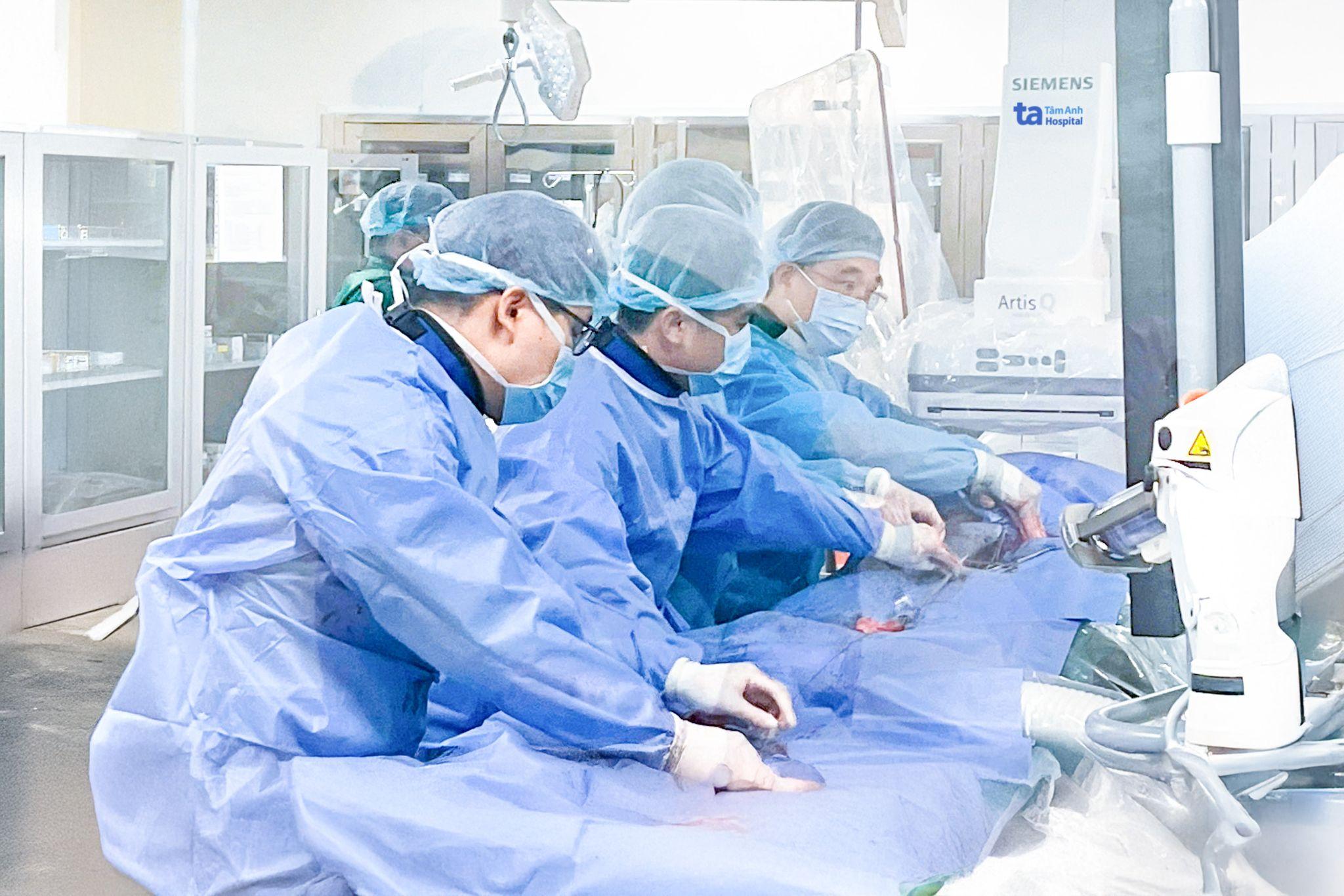 |
Doctors perform a stent graft procedure to eliminate an abdominal aortic aneurysm for a patient. Photo: Tam Anh Hospital
According to Doctor Nguyen Anh Dung, Head of Thoracic and Vascular Surgery at Tam Anh General Hospital, Ho Chi Minh City, most abdominal aortic aneurysms are asymptomatic in their early stages, making them challenging to detect. Potential signs include a dull, persistent pain in the abdomen or one side, back pain, or a strong pulsating sensation around the navel, similar to heart palpitations.
Some aortic aneurysms never rupture and remain small. However, if an aneurysm progresses rapidly, it poses a risk of dissection, rupture, or the formation of blood clots that can obstruct blood vessels elsewhere in the body.
The primary cause of abdominal aortic aneurysms is the weakening of the arterial wall, typically due to atherosclerosis. This condition often results from poorly controlled underlying medical issues such as hypertension, diabetes, and dyslipidemia. Other contributing factors include trauma, cystic medial necrosis (degeneration of the aortic middle layer), post-surgical anastomotic dissection, and vasculitis. High-risk individuals include long-term smokers, males over 65, and those with a family history of the disease.
Preventing abdominal aortic aneurysms or slowing their progression involves lifestyle modifications: avoiding smoking, adhering to a healthy diet, and maintaining blood pressure and cholesterol levels within recommended ranges. Regular moderate exercise, totaling at least 150 minutes per week, is also beneficial.
Individuals experiencing symptoms indicative of a ruptured aneurysm—such as pale skin, cold extremities, sweating, dizziness, fainting, rapid heartbeat, nausea, vomiting, shortness of breath, or sudden, intensifying pain in the abdomen, lower back, or legs—should seek immediate hospital care.
Thu Ha
* Patient's name has been changed
| Readers can submit questions about cardiovascular diseases here for doctors to answer |