Mr. Lap's electrocardiogram (ECG) and 24-hour Holter electrocardiogram results at Tam Anh General Hospital Ho Chi Minh City revealed a high frequency of ventricular premature contractions, a condition where the heart produces abnormal early beats from the ventricles. An echocardiogram also showed a thickened heart wall and arrhythmia, beginning to affect the heart's contractile function.
According to Master, Doctor Phung Van Thao from the Cardiology Department at Tam Anh General Hospital Hanoi, when ventricular premature contractions account for 10-15% or more of total heartbeats, there is a risk of developing arrhythmia-induced cardiomyopathy, which impairs the heart's contractile function. At such a high frequency, as in Mr. Lap's case, if not detected and treated promptly, this condition can progress to heart failure, ventricular tachycardia, or ventricular fibrillation.
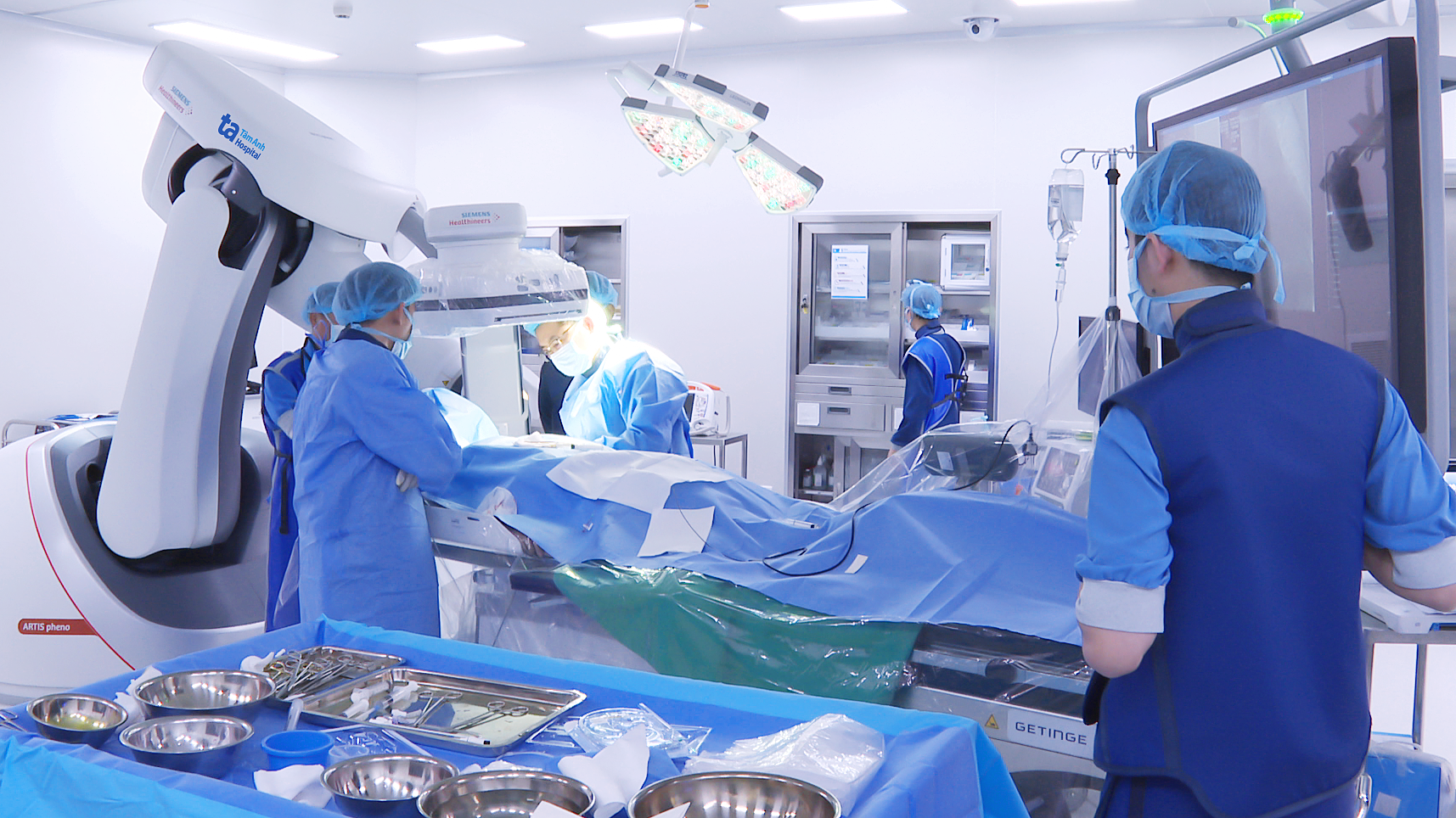 |
The team performs radiofrequency (RF) ablation for a patient. *Photo: Tam Anh General Hospital* |
Doctors performed radiofrequency (RF) ablation to eliminate the abnormal pacing focus. The team utilized a 3D electrophysiological mapping system combined with an angiography machine to precisely locate the source of the abnormal rhythm, allowing for effective catheter access and ablation.
Following the intervention, Mr. Lap's heart rate stabilized, and his risk of heart failure was brought under control. He was able to engage in light activity and was discharged from the hospital.
 |
Mr. Lap (right) recovers quickly after the intervention, being assisted by his wife to walk in the hospital corridor. *Photo: Tam Anh General Hospital* |
Ventricular premature contractions are a common type of arrhythmia. Most cases are low-frequency and benign, requiring only monitoring. However, some cases occur with high frequency or persist, posing a risk of dangerous arrhythmias. In such situations, doctors may consider treatment with medication or ablation.
Radiofrequency ablation can definitively treat many arrhythmias, helping patients reduce or eliminate the need for long-term medication. However, its effectiveness largely depends on the location of the arrhythmia focus and the experience of the intervention team.
Doctor Thao noted that arrhythmias, particularly ventricular premature contractions, can progress silently with unclear symptoms, making them easy to overlook. Regular health check-ups play a crucial role in early detection. Individuals experiencing symptoms such as palpitations, rapid or irregular heartbeat, unusual fatigue, dizziness, or reduced exercise capacity should seek medical attention.
Ly Nguyen
| Readers can submit questions about cardiovascular health here for doctors to answer |