This finding was announced at a workshop on the "Status of violations of regulations prohibiting the sale, advertising, and promotion of e-cigarettes and heated tobacco products at retail points and exposure to new tobacco product advertising and promotion among adults in 2025." The University of Public Health organized the event on 9/4 in Ha Noi.
The research also indicates that approximately 14% of students have tried e-cigarettes, with 3% currently using them. For heated tobacco products, these figures are 6% and 0.8%, respectively. Furthermore, over 62% of students believe that e-cigarettes and heated tobacco products help them quit traditional cigarettes.
The survey also found that many young people believe these products do not contain nicotine or are harmless to health. Dr. Tran Thi Phuong Thao, a representative of the research team, stated that 37% of students believe e-cigarettes contain no nicotine, and 15% think the vapor is merely "harmless water vapor." According to the study, 43% of surveyed students believe e-cigarette use aids in quitting traditional tobacco, and 32% consider passive vapor exposure safe.
"Many young people associate e-cigarettes with positive images, believing that using them looks cool, makes them feel more confident, or helps them feel calmer and happier," Dr. Thao noted.
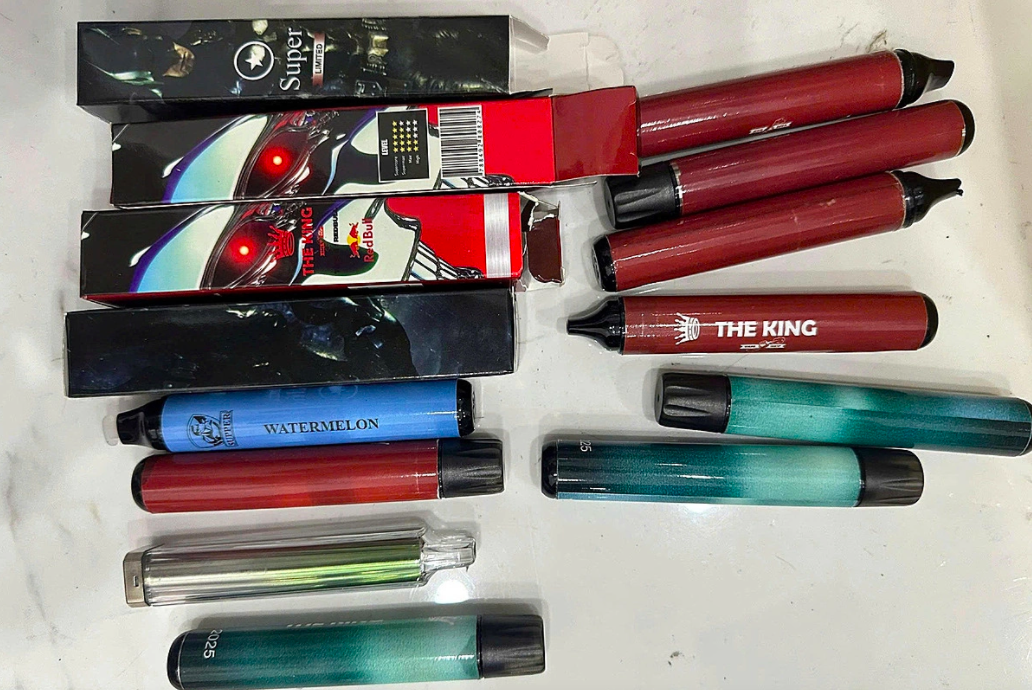 |
E-cigarettes disguised as drugs were confiscated. Photo: Cong an cung cap |
Assoc. Prof. Dr. Le Thi Thanh Huong, Vice Rector of the University of Public Health, reported that following the implementation of stricter regulations on the sale and use of e-cigarettes, a survey of 126 retail outlets showed that 64.3% had closed. However, instead of disappearing, business activities have shifted to more sophisticated forms.
Among the surveyed outlets, nearly 35% transitioned to online sales. Sellers employ various deceptive methods to circumvent censorship on e-commerce platforms. Products are often labeled as "electric razors," "room spray essential oils," or "electric toothbrush heads" but are, in fact, e-cigarettes.
39% of students reported being exposed to e-cigarette or heated tobacco product advertisements within the past 30 days. The primary purchasing channels were Facebook (65%), TikTok (nearly 49%), Google (48%), and YouTube (35%).
"These results show that after direct sales activities were restricted, businesses and sellers are adapting by strengthening their online presence, leveraging social media, search platforms, and other online promotional methods to maintain user access," Assoc. Prof. Huong explained.
Ms. Bui Thi Thu Giang, Program Manager for the Campaign for Tobacco-Free Kids, US, stated that international research indicates global tobacco corporations are using platforms like Facebook, Instagram, and TikTok to promote new tobacco products.
Between 2018 and 2025, there were 3.4 billion views of promotional content for three typical products across over 60 countries. This content reached approximately 385 million accounts, primarily on Instagram. Of these viewers, 40% were under 25 years old, including about 150 million adolescents, with 16 million under 18 years old.
The research team emphasized that the evidence reflects the current situation, highlighting new challenges in prohibiting online tobacco advertising, promotion, and marketing. Therefore, it is necessary to continue improving policies, strengthening supervision, and enforcing laws. Simultaneously, public health communication is crucial to change perceptions and behaviors regarding tobacco use, especially to protect adolescents and children.
Le Nga