Born prematurely at 33 weeks and weighing over 2,3 kg, the infant initially received blue light therapy (phototherapy) for jaundice. After three days, his condition stabilized, and he was discharged with a follow-up appointment. However, his family brought him for a check-up later than scheduled, at which point he presented with severe jaundice and weight loss.
Test results at Tam Anh General Hospital TP HCM revealed his total bilirubin index had increased to 23 mg/dL (normally below 15-20 mg/dL, depending on age in hours). His direct bilirubin was also high, exceeding 1 mg/dL, which is five times the normal level. Bilirubin is an orange-yellow pigment produced from the breakdown of old red blood cells, which the liver then processes and eliminates from the body. Doctor Nguyen Thi Anh Thu, from the Neonatal Center, explained that high bilirubin levels cause jaundice and can affect a child's nervous system, with effects ranging from mild to severe.
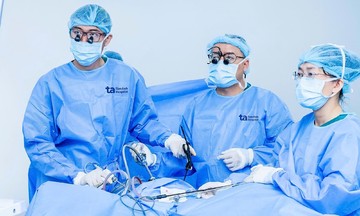
Doctors ordered a blood exchange via the umbilical vein. They selected new blood, less than seven days old, compatible with both the mother's and baby's blood types, ensuring optimal red blood cell quality and stable electrolyte levels. The blood exchange procedure involved a double-volume exchange method, meaning 160 ml of new blood was transfused per kilogram of the baby's body weight. Throughout the procedure, the baby's heart rate, breathing rate, oxygen saturation (SpO2), and body temperature were continuously monitored.
Following the blood exchange, the baby's total bilirubin index decreased by more than 50%, and he continued to receive blue light therapy. The medical team performed blood tests every 4-6 hours to check bilirubin levels and monitor for potential risks such as infection, electrolyte imbalance, or hypoglycemia, managing any issues promptly. The baby exhibited symptoms of shrill crying and increased extensor muscle tone (stiffly extended arms), which are sequelae of acute bilirubin encephalopathy. This condition was not continuous, so anticonvulsant medication was not yet indicated.
A week later, the baby's health improved, and he was discharged. However, there remained a risk of neurological sequelae. Therefore, doctors advised parents to bring the baby for follow-up appointments as scheduled.
 |
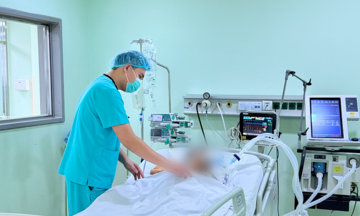
The baby receiving phototherapy for jaundice at the Neonatal Center, Tam Anh General Hospital TP HCM. *Photo: Huyen Vu* |
According to Doctor Thu, high bilirubin levels are very dangerous in newborns. Babies born moderately premature (32-33 weeks and six days) or late premature (34-36 weeks and six days) are at high risk of severe jaundice due to various factors. They require timely monitoring and follow-up appointments. Delayed follow-up can hinder the early detection of severe jaundice, potentially leading to severe sequelae for the child. Depending on the degree of hyperbilirubinemia and the timing of treatment, the effects can be mild or severe. Symptoms of this disorder are divided into three stages:
In the early (acute) stage, infants are lethargic, sleep excessively, are difficult to wake, feed poorly, refuse to feed, vomit, cry shrilly, and have decreased muscle tone (flaccid muscles). In the middle stage, children may become irritable, restless, cry frequently, experience muscle rigidity, arching (arching back, head tilted backward, heels bent backward), strabismus (crossed eyes), upward gaze, and seizures. In the late stage, children develop fever, temporary cessation of breathing, and generalized seizures. Without timely emergency treatment, there is a risk of permanent brain damage (kernicterus), such as cerebral palsy, deafness, visual impairment, yellow teeth, and intellectual developmental delay.
If an infant develops jaundice one to three days after birth, with yellowing of the face that rapidly spreads to the abdomen, arms, and legs, or accompanied by signs of poor feeding and lethargy, especially in late premature babies, parents should seek immediate medical attention.
Ngoc Chau
| Readers can send questions about neonatology here for doctors to answer. |