Initially, the boy experienced pain around the navel that later spread to the right iliac fossa, accompanied by loose stools, painful urination, fatigue, and loss of appetite. Two days later, his pain intensified. Blood tests revealed elevated infection markers. An abdominal ultrasound showed a thickened appendix with increased blood flow in the right iliac fossa, confirming a diagnosis of acute appendicitis that required immediate surgery.
With the aid of a high-resolution endoscopic system, Dr. Nguyen Do Trong, Specialist Level II, from the Department of Pediatric Surgery at Tam Anh General Hospital, TP HCM, successfully removed the inflamed appendix and cleaned the patient's abdominal cavity in 60 minutes.
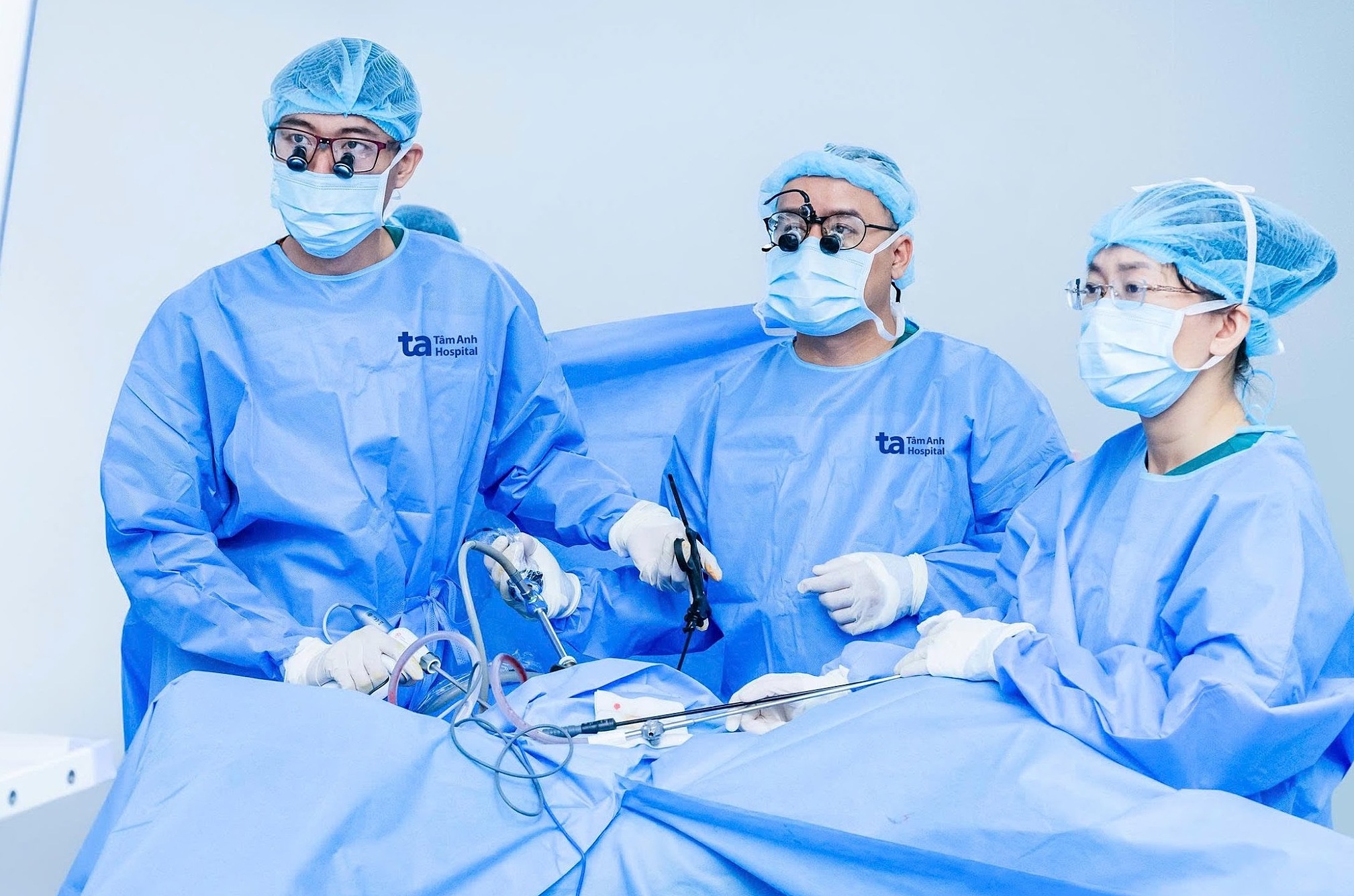 |
Dr. Trong (center) and the surgical team performing a laparoscopic appendectomy on Tony. Photo: Tam Anh General Hospital. |
Dr. Trong (center) and the surgical team performing a laparoscopic appendectomy on Tony. Photo: Tam Anh General Hospital.
The minimally invasive surgery facilitated the boy's rapid recovery; he was able to eat porridge, drink milk, engage in light activity, and was discharged after two days.
According to Dr. Lam Thien Kim, Master of Medicine, from the Department of Pediatric Surgery, acute appendicitis in children was previously treated mainly by open surgery. Currently, laparoscopic surgery is widely adopted due to its advantages: it is minimally invasive, involves smaller incisions, causes less pain for pediatric patients, reduces the risk of infection, and allows for quicker recovery. With this method, endoscopic instruments are inserted into the abdominal cavity through small incisions, approximately 0,5-1 cm in size, enabling surgeons to identify and remove the inflamed appendix while minimizing post-operative scarring.
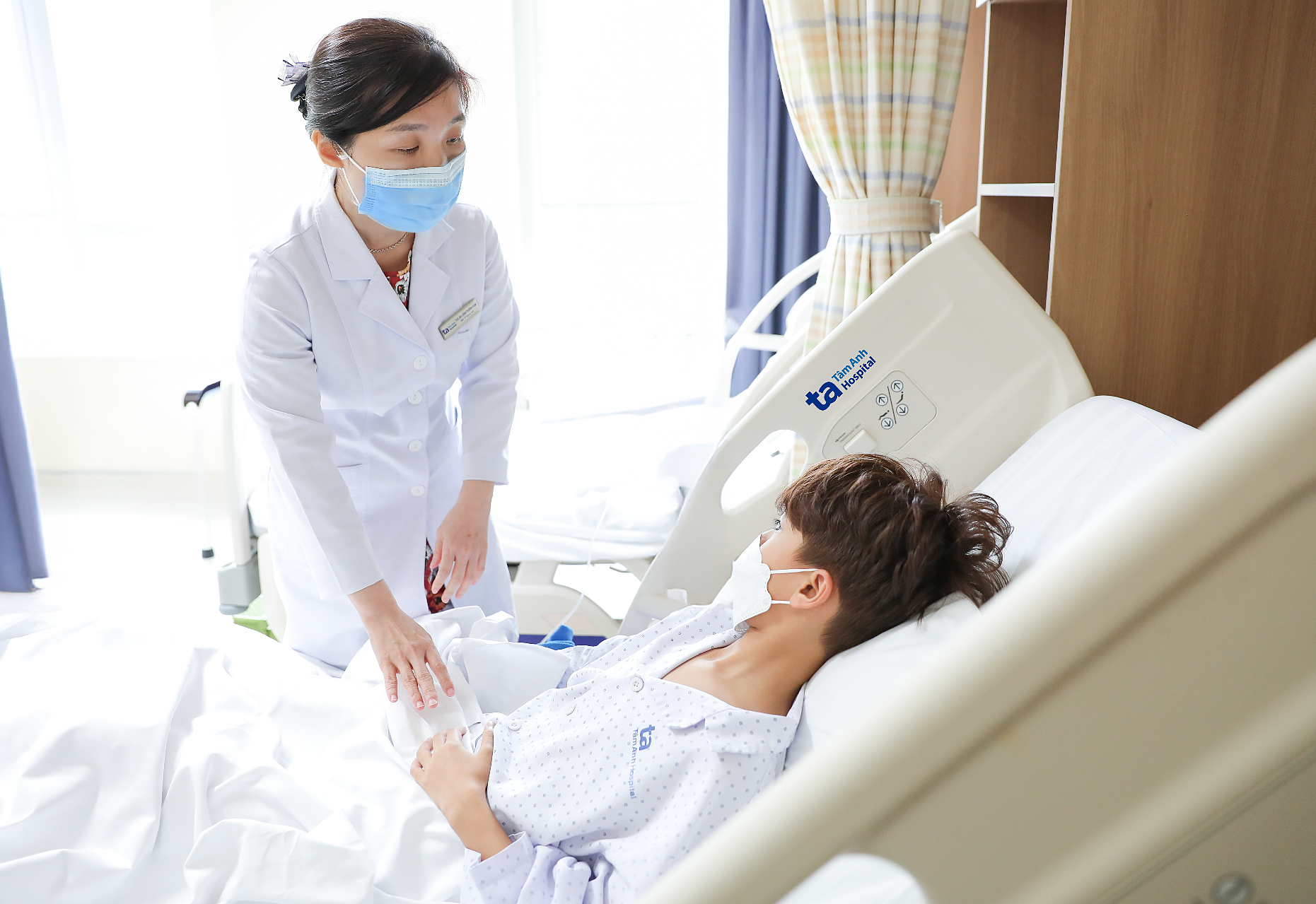 |
Dr. Thien Kim examining Tony before his discharge. Photo: Tam Anh General Hospital. |
Dr. Thien Kim examining Tony before his discharge. Photo: Tam Anh General Hospital.
Appendicitis in children can present with atypical symptoms such as abdominal pain, frequent urination, and digestive disorders, which are easily confused with urinary tract or other digestive conditions. Dr. Trong advises parents to bring their children to a medical facility promptly if they experience worsening abdominal pain, fever, vomiting, or abdominal distension.
Minh Tam
*Patient's name has been changed.
| Readers can submit questions about neonates here for doctors to answer. |