An ultrasound of the patient's left breast revealed a lesion approximately 6x8 cm, possibly a superinfected galactocele, classified as BI-RADS 4A. According to the BI-RADS classification system, this group of lesions has a low malignancy risk (approximately 2-10%) but still requires a biopsy to determine its nature. Blood tests showed elevated inflammation markers. The 30-week fetus was developing normally with a stable heart rate.
Doctor, First Degree Specialist Ung Quoc Thuong, from the Obstetrics and Gynecology Center at Tam Anh General Hospital, TP HCM, stated that breast abscesses during pregnancy are rare but more dangerous than postpartum cases. This is due to severe infection, which can trigger uterine contractions, increasing the risk of threatened preterm birth or preterm birth. The medical team actively treated the pregnant woman with intravenous antibiotics combined with pain relief, while monitoring the health of both mother and fetus.
After two days of medical treatment, once the inflammation had fully formed pus, the affected area softened and showed signs of fluctuation, indicating an internal pus collection. Doctors performed an ultrasound-guided aspiration to drain the pus, minimizing damage to breast gland tissue. The team extracted nearly 150 ml of thick, yellowish pus. The fluid sample was cultured, tested for antibiotic susceptibility, and screened for tuberculosis bacteria to identify the causative agent.
Results identified Staphylococcus aureus as the causative agent, which was sensitive to the antibiotics being used, leading to effective treatment. Breast gland tissue showed numerous inflammatory cells but no cancerous cells, confirming the breast abscess was benign and caused by infection.
After 9 days of treatment, Ms. Hong's breast gradually subsided, and infection signs were controlled. Throughout the treatment period, the fetus developed steadily, had a normal heart rate, and the pregnant woman experienced no uterine contractions, vaginal bleeding, or amniotic fluid leakage.
 |
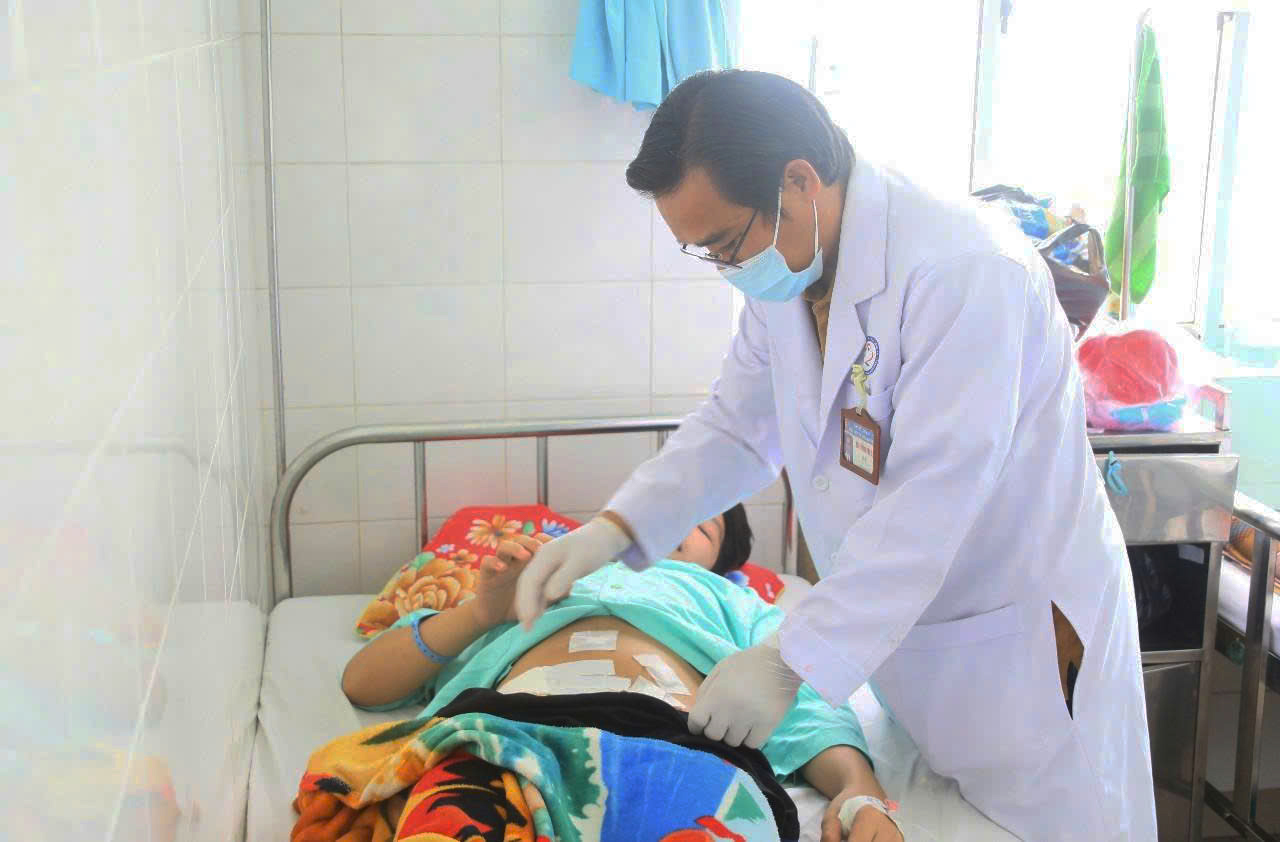
Ms. Hong receiving care at the Obstetrics and Gynecology Center, Tam Anh General Hospital, TP HCM. *Photo: Trung Vu*.
According to Dr. Thuong, breast abscesses are common in breastfeeding women. Hormonal changes during pregnancy cause breast glands to develop significantly in preparation for milk production. In some cases, fluid can accumulate in the ducts, forming a galactocele. When bacteria enter through small cracks in the nipple, skin of the breast area, or via the bloodstream, the galactocele can become superinfected and develop into an abscess. Staphylococcus aureus is the most common bacterial agent causing breast abscesses.
Dr. Thuong advises pregnant women to seek early medical attention if they notice persistent breast swelling, warmth, redness, pain, an unusual lump, fever, or nipple discharge. Treating the condition promptly, either during the inflammation stage or when a galactocele becomes superinfected, helps prevent the formation of large abscesses and reduces the risk of surgical intervention.
Minh Tam
* Patient's name has been changed.
| Readers can submit questions about pregnancy and childbirth here for doctors to answer |