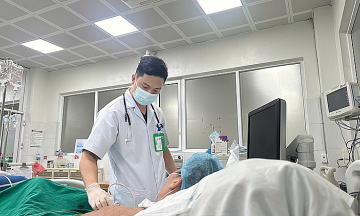
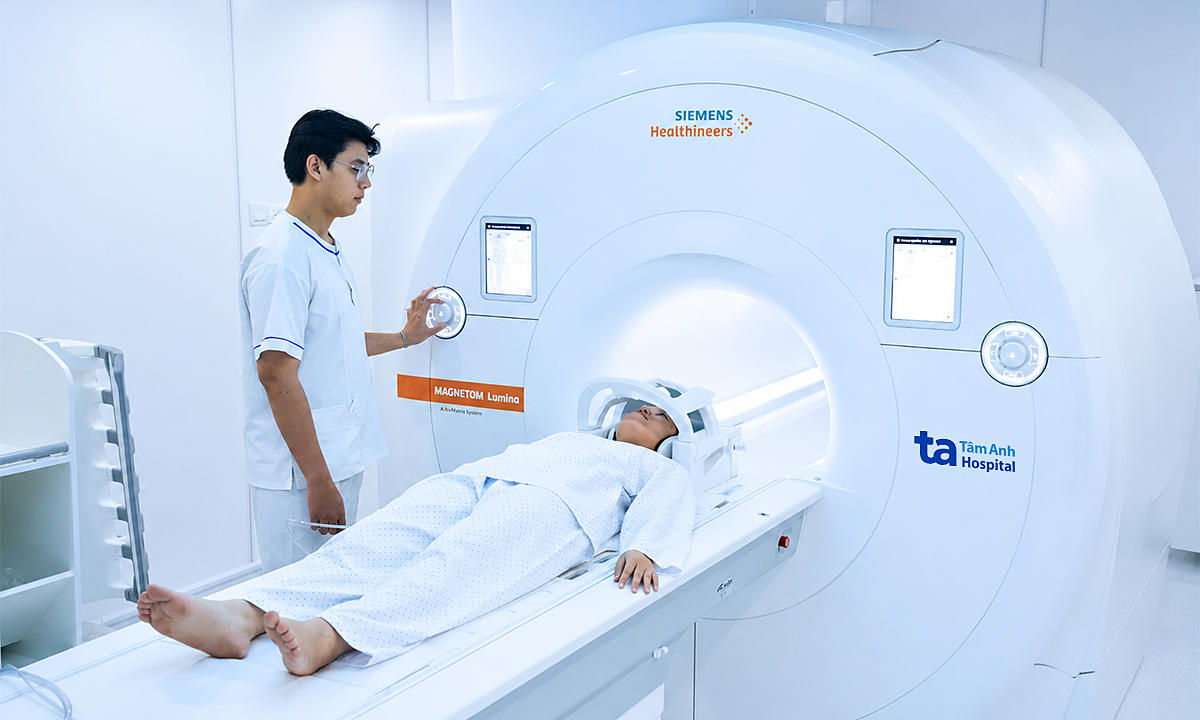
An ultrasound scan of Mr. Phan at Tam Anh General Hospital Ho Chi Minh City revealed an aneurysm nearly 2 cm long in the left internal carotid artery segment supplying blood to the brain. The aneurysm measured 7 mm in diameter, whereas a normal internal carotid artery is about 4 mm in diameter.
Master of Science, Doctor, Level I Specialist Nguyen Duc Nghia, from the Thoracic and Vascular Surgery Center, stated that the incidence of all types of aneurysms is about 1-2%, but carotid artery aneurysms account for less than 1% of these cases. If not detected and treated promptly, blood clots can form within the aneurysm, blocking blood flow to the brain and leading to ischemic stroke. Large aneurysms are prone to rupture, causing blood loss.
Doctor of Science, Doctor Nguyen Anh Dung, Head of the Department of Thoracic and Vascular Surgery at the Thoracic and Vascular Surgery Center, noted that for aneurysms shorter than 2 cm, surgical removal and rejoining of the two ends of the vessel are sufficient. If the aneurysm extends over 2 cm, doctors use a section of the patient's own blood vessel to create a new one, known as a graft. Doctors can also remove the damaged part of the carotid artery and then create a bypass to supply blood to the brain, a procedure called bypass surgery.
The surgical team completely removed the damaged segment of the vessel, then performed reconstructive surgery to restore the carotid artery. According to Doctor Dung, one of the major challenges is ensuring the brain receives sufficient blood supply throughout the surgery. The team closely monitored hemodynamic parameters, maintaining them at 130-140 mmHg, and observed the brain's reperfusion status for appropriate adjustments.
Following surgery, Mr. Phan resumed normal activities and was discharged after 4 days.
 |
Doctor of Science, Doctor Nguyen Anh Dung and the surgical team operate to remove a carotid artery aneurysm for a patient. *Photo: Tam Anh General Hospital* |
A common cause of carotid artery aneurysms is atherosclerosis. Atherosclerotic plaques, along with inflammatory mechanisms, cause blood vessel walls to lose elasticity, weaken, and form aneurysms. Factors increasing the risk of arterial wall weakening include: hypertension, smoking, a family history of aneurysms, fibromuscular dysplasia, connective tissue disease, and arterial trauma.
Mr. Phan suffered from hypertension for many years, and his blood vessels were also hardened due to age. These factors contributed to the carotid artery aneurysm, according to Doctor Dung.
Some people with carotid artery aneurysms experience no symptoms. Others show signs of a transient ischemic attack (TIA) or stroke, such as: vision loss, loss of balance, dizziness, lightheadedness, numbness or weakness in the face, arm, or leg, weakness or paralysis on one side of the body, or severe headache.
Doctors recommend that everyone maintain a healthy diet, exercise regularly, avoid smoking, and control blood pressure to keep their vascular system healthy and reduce the risk of aneurysms. Individuals with risk factors for the condition should undergo regular screenings every 6-12 months for early detection of abnormalities and timely intervention.
Thu Ha
*Patient's name has been changed
| Readers can submit questions about cardiovascular disease here for doctors to answer. |