Sleep disorders such as insomnia, difficulty falling asleep, or waking too early can lead to fatigue, reduced concentration, and a diminished quality of life. Long-term sleep deprivation also increases the risk of heart disease, diabetes, obesity, and depression. To improve sleep, it is essential to consider various factors, including a healthy diet, lifestyle, and proper sleep hygiene. Evening relaxation through meditation, stretching, or yoga helps loosen muscles and promotes better sleep.
Shoulder stretching exercises
After a long day of working on a computer, using a phone, or driving, the shoulder, chest, and back muscles often become stiff, causing neck pain. A simple exercise involves standing, turning your shoulders forward to stretch the muscles. Place both palms on a door frame, straighten your arms, and move your feet back and forth while keeping your hands in place.
Hip stretching exercises
Prolonged sitting can easily lead to tight hip flexors. Hip stretching exercises can help alleviate tension by releasing emotional muscle tightness and improving sleep, thereby preventing lower back pain.
To perform a hip stretch, step one foot forward into a lunge position, keeping both the front and back knees slightly bent. Your front foot should be firmly on the mat, with your weight focused on the heel, while the heel of your back foot is lifted, with weight on the forefoot. Slowly lower your back knee to the floor and relax your foot to stretch the hip flexors, simultaneously shifting your body weight slightly onto your front leg to deepen the stretch. Hold the pose for about 2 minutes, breathing evenly, then switch sides.
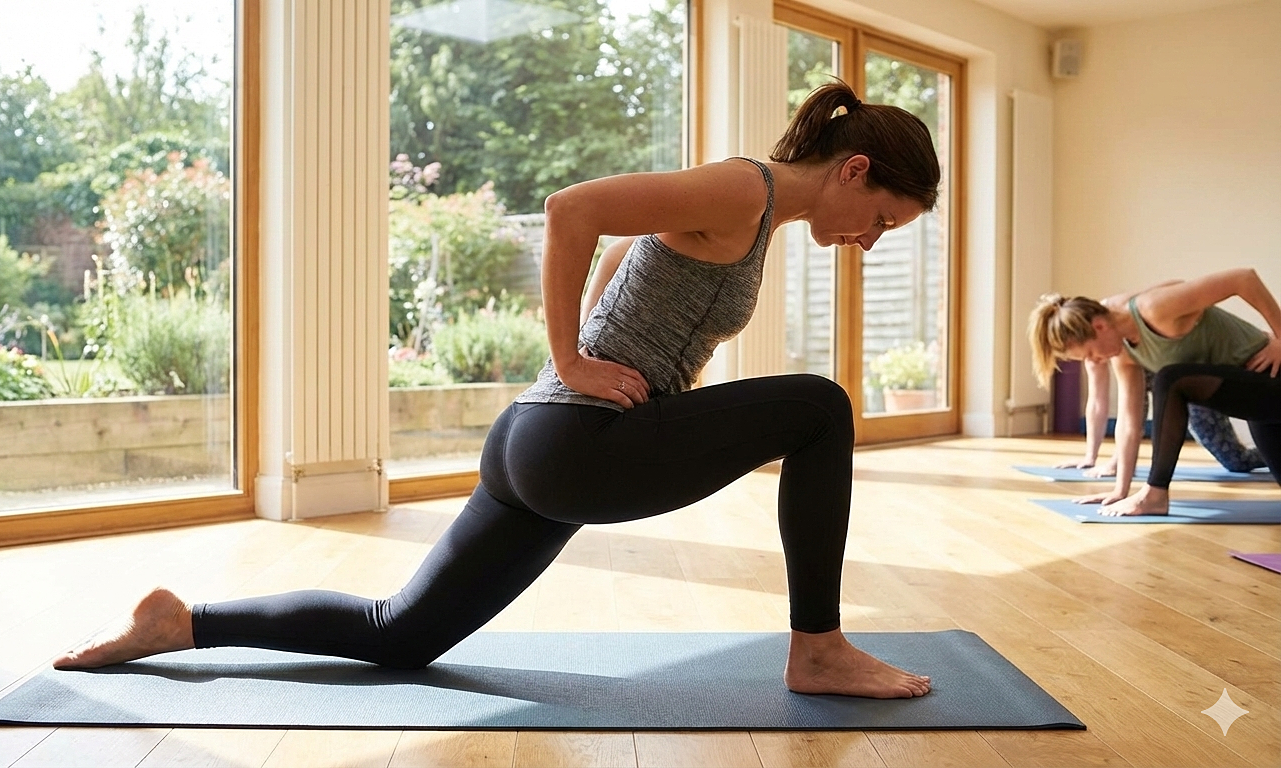 |
Hip stretching exercise. *Image created by AI*
Calf stretching exercises
The calves are a common area for cramps, which can cause discomfort and pain. In addition to staying hydrated, performing calf stretching exercises before bed can help prevent cramps and improve sleep.
To perform this stretch, step one foot forward, with your feet closer together than in the hip stretch. Firmly press your back foot down, lowering your heel until it fully touches the ground; you should feel a clear stretch in your calf muscles. Hold the pose for a few seconds, then switch to the other leg.
Lying down stretching exercises
Lie down on the floor, a mat, or your bed and try a hamstring stretch to reduce stiffness and limit nighttime cramps. Begin by lying on your back. As you exhale, pull one knee towards your chest. Then, extend your heel towards the ceiling and loop your hands behind your knee or calf to support the weight of the raised leg.
Try to reach your heel towards the sky and flex your foot, bringing your toes closer to your body. This exercise deeply stretches the hamstring and calf muscles. Switch to the other leg after 2 minutes.
Cat, cow, and cobra poses
The cat, cow, and cobra poses should be performed in a sequence, supporting the stretching of the back and abdominal muscles, which form the body's core. This gentle sequence also helps reduce back pain, promotes deep breathing, and improves sleep quality.
Begin the cat pose by getting on your hands and knees, with your knees aligned with your hips and your shins relaxed. As you exhale, lower your head between your arms while pulling your abdomen in, tucking your hips, and arching your back towards the ceiling. As you inhale, lift the crown of your head, allowing your back to gently arch and your chest to open – this is the cow pose. Repeat this movement as often as desired.
To perform the cobra pose, return to the hands and knees position, then relax your entire body onto the mat, lying face down. Place your hands under your shoulders, with your elbows tucked close to your sides. Keep both legs relaxed on the mat, then begin to press firmly into your palms to gently lift your chest off the mat and stretch your abdominal muscles.
If consistent and correct exercises do not improve sleep quality, patients should seek medical consultation for appropriate diagnosis and treatment.
Anh Chi (According to EatingWell)
| Readers can send questions about neurological diseases here for doctors to answer. |