A digestive endoscopy is a method used to directly observe the lining of the esophagus, stomach, duodenum, and colorectum. Through endoscopic images, doctors can detect and diagnose various conditions, ranging from benign to malignant, such as peptic ulcers, colitis, Helicobacter pylori (HP) infection, and gastroesophageal reflux.
According to doctor Nguyen Ngoc Lai, a specialist level one from the Endoscopy Unit at Tam Anh General Clinic District 7, endoscopy combined with biopsy is the "gold standard" for early detection of gastrointestinal cancer. This group of diseases is dangerous and has a high mortality rate, yet it often progresses silently with few symptoms in its early stages.
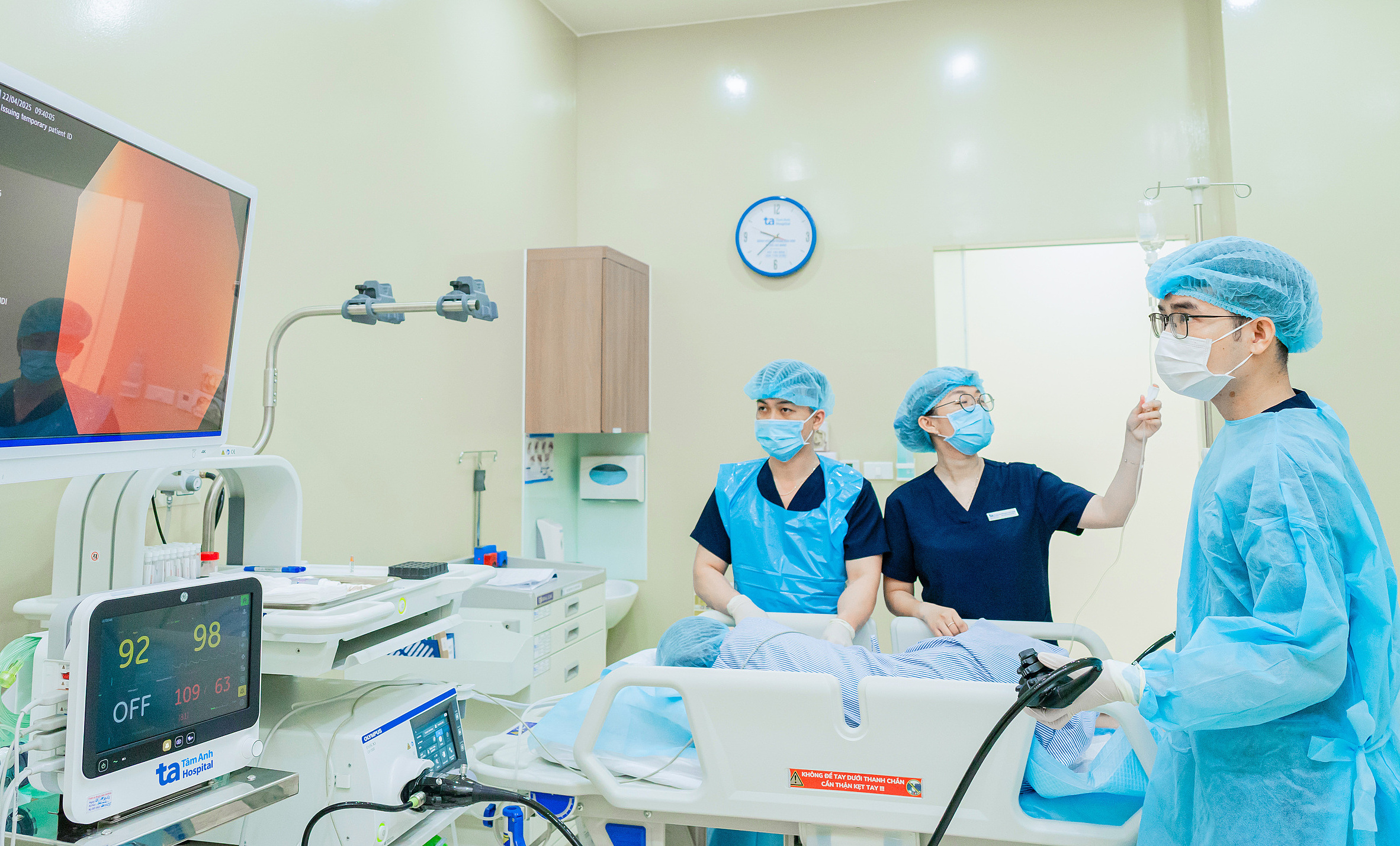 |
Doctor Lai performs a colonoscopy for a patient. Photo: Tam Anh General Hospital
Doctor Lai highlights several signs that may indicate a patient should consider a digestive endoscopy:
**Persistent digestive disorders**
Unexplained chronic diarrhea or constipation, along with changes in stool shape (abnormally small, flat, or loose stools), may result from a growing tumor narrowing the intestinal lumen, making stool passage difficult. In some cases, blood in the stool may occur due to injury to the tumor's surface as stool passes, also requiring examination.
**Unexplained lower abdominal pain**
Pain in the lower abdomen (below the navel) can occur when a tumor obstructs stool flow, forcing the colon to contract more intensely than usual. The accumulation of stool and gas causes intestinal distension, irritating nerve endings and leading to pain.
In advanced stages, a tumor can invade nearby organs such as the bladder, uterus, or peritoneum, causing widespread pain. In severe cases, a weakened intestinal wall can perforate, leading to digestive fluid leaking into the abdominal cavity and causing peritonitis, characterized by severe pain and a rigid abdomen, requiring emergency care.
**Unexplained weight loss**
Rapid weight loss without dieting can be a sign of gastrointestinal cancer. Cancer development disrupts metabolism and reduces nutrient absorption, leading to loss of appetite and fatigue. Gastrointestinal tumors can also bleed over time, causing anemia, exhaustion, and weight loss.
Doctors recommend that individuals over 45 years old, those with a family history of stomach or colorectal cancer, or those with precancerous lesions such as chronic gastritis, HP infection, or colon polyps, should undergo regular health check-ups. Depending on their condition, a doctor may recommend an endoscopy.
When detected and treated early, lesions in their initial stages (cancer cells localized to the mucosa, not deeply invasive, and without metastasis) often respond to simple treatments, with a 5-year survival rate potentially reaching 90%. At this stage, doctors can intervene with minimally invasive procedures like endoscopic mucosal resection (EMR) or endoscopic submucosal dissection (ESD), which shorten patient recovery time. Conversely, if lesions are deeply invasive or widespread, treatment becomes more challenging and costly, significantly impacting quality of life.
Thao Nhi
| Readers can submit questions about digestive diseases here for doctors to answer |