Ms. Minh, who returned from the US, sought examination at Tam Anh General Hospital, Ho Chi Minh City. Doctor Nguyen Ba My Nhi, Head of the Obstetrics and Gynecology Center, stated that Ms. Minh had multiple uterine fibroids, which are benign growths of smooth muscle cells in the uterus. This condition is most common in women aged 30-40. Ms. Minh was in the late menopause group, a phase characterized by unpredictable hormonal fluctuations that can stimulate fibroid growth and cause bleeding.
Ms. Minh received medical treatment to control the bleeding, but it was ineffective, and prolonged menstrual bleeding recurred. Her uterus was deformed, putting her at risk of persistent bleeding, anemia, pelvic pain, and compression of the bladder and rectum.
Ms. Minh's uterus was riddled with fibroids, making complete laparoscopic removal difficult and posing a high risk of acute blood loss. Therefore, doctors performed a total hysterectomy using robotic surgery. Ms. Minh recovered, was discharged 3 days after surgery, and returned to the US as scheduled.
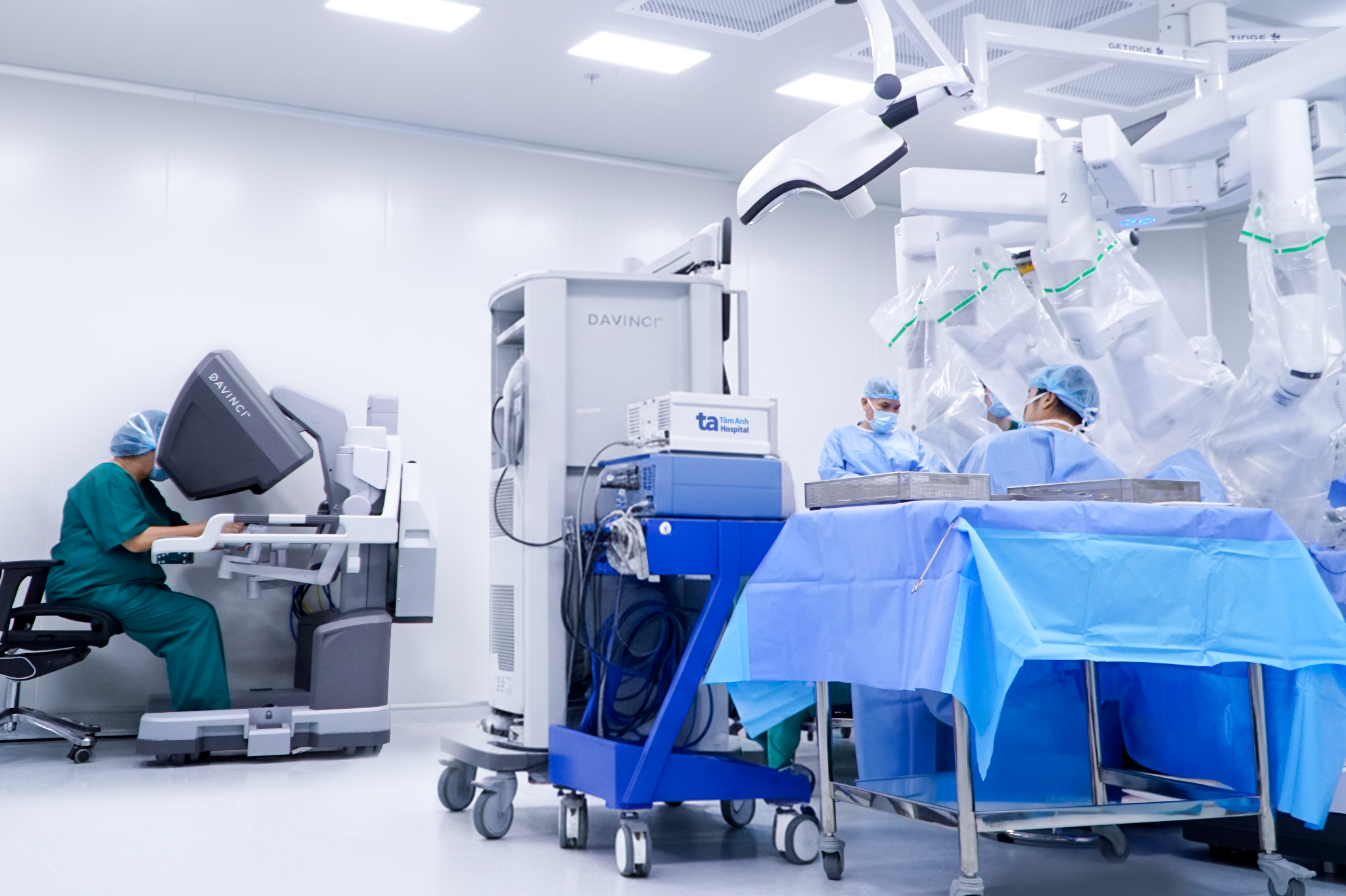 |
Doctor My Nhi operating the robotic console during Ms. Minh's hysterectomy. *Photo: Tam Anh General Hospital*
Studies indicate that approximately 20-30% of post-menopausal women still have uterine fibroids. A significant portion of these fibroids existed previously but did not regress, and some even continued to grow.
During menopause, declining estrogen levels typically cause fibroids to shrink. However, in women with late menopause or prolonged perimenopause, hormonal imbalances, obesity, metabolic disorders, or exogenous hormone use can cause fibroids to continue growing. Unlike in younger women, uterine fibroids in perimenopausal and post-menopausal women often progress silently and are easily overlooked, as patients may mistake symptoms for hormonal imbalances. By the time they are detected, the condition may have caused complications such as prolonged bleeding leading to chronic anemia, and compression of the bladder and kidneys. In post-menopausal women, vaginal bleeding is a warning sign.
According to Doctor My Nhi, regular gynecological check-ups every 6-12 months are crucial for early detection of uterine fibroids. If abnormal bleeding occurs, patients should seek medical attention promptly.
Tue Diem
*Patient's name has been changed
| Readers can submit questions about obstetrics and gynecology here for doctors to answer |