The patient received first aid at a local clinic with a high fever of 40°C before being transferred to the Intensive Care and Anti-Poisoning Department at Phu Tho Provincial General Hospital. She arrived in a deep coma, with a persistent high fever, blood pressure dependent on vasopressors, and low urine output.
Doctors diagnosed her with heat stroke and multi-organ failure. The intensive care team initiated controlled hypothermia, mechanical ventilation, vasopressor administration, and electrolyte rehydration. Her condition remains critical, requiring ongoing monitoring and aggressive treatment.
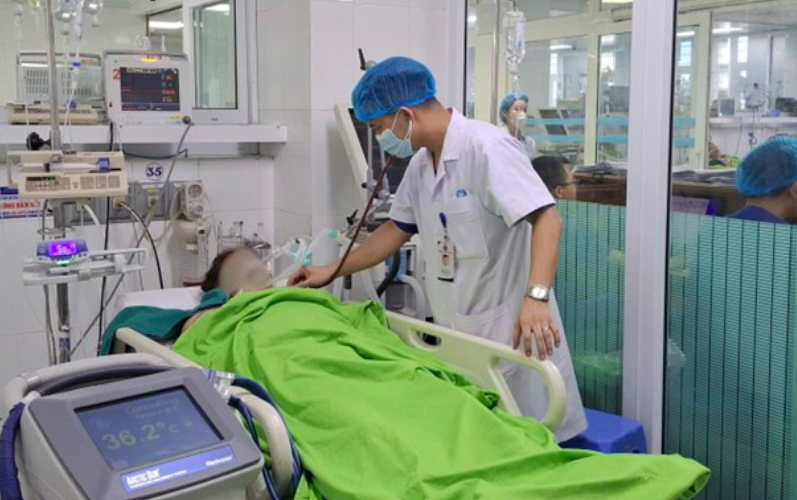 |
Patient in coma, multi-organ failure due to heat stroke. Photo: Ha Nguyet
Master of Science, Doctor Bui Tat Luat from the Intensive Care and Anti-Poisoning Department, explained that heat stroke is a particularly dangerous medical emergency. It occurs when the body is exposed to high temperatures for too long or performs strenuous labor under the scorching sun, disrupting the body's thermoregulation. When body temperature rises excessively, it can quickly lead to multi-organ failure, brain damage, cardiovascular and respiratory complications, and even death if not treated promptly.
Individuals experiencing sunstroke, heat exhaustion, or heat stroke often exhibit the following symptoms: severe fatigue, headache, dizziness; intense thirst, hot and red skin; muscle cramps in limbs; rapid breathing, fast heartbeat; nausea, altered consciousness; high fever, confusion, and coma.
For the past week, severe heat has gripped Northern and Central Vietnam. Outdoor temperatures have reached 40°C, resulting in sparse traffic, deserted tourist destinations, and disrupted daily life for residents. This extreme hot weather not only causes fatigue but also poses risks of sunstroke, heat exhaustion, and heat stroke, which can be life-threatening.
To prevent these conditions, residents should limit outdoor work between 10h and 16h. It is essential to drink sufficient water and replenish electrolytes when working in hot environments. Wearing cool, loose clothing, wide-brimmed hats, and using sun protection are also recommended. Avoid continuous overexertion under the intense sun.
Elderly individuals and those with underlying conditions like cardiovascular disease or hypertension must exercise particular caution during hot weather. If unusual signs appear, such as severe fatigue, dizziness, muscle cramps, high fever, or altered consciousness, it is crucial to transport the affected person to the nearest medical facility for immediate emergency care.
Le Nga