Northern and Central Vietnam are currently experiencing peak heatwaves, with temperatures exceeding 40 degrees Celsius in many areas today and tomorrow, making air conditioners indispensable. Doctors highlight common mistakes in air conditioner use during hot weather that can lead to serious health issues.
According to Doctor Tran Dinh Thang, from the Stroke Emergency Department at the National Geriatric Hospital (Hanoi), the most common mistake is transitioning abruptly from a hot outdoor environment directly into a cold air-conditioned room, or vice versa.
When this happens, the body cannot adapt quickly, causing blood vessels to constrict suddenly and leading to dizziness. The elderly, young children, and outdoor workers are the most vulnerable groups. Doctor Thang stated, "The body needs a transition period to gradually cool down; it cannot jump immediately from hot to cold or vice versa."
Outdoor workers, who often sweat profusely, should dry themselves before entering an air-conditioned room to prevent sudden cooling. When preparing to go outside, it is advisable to open the door and stand for a few minutes to acclimate to the ambient temperature before stepping out.
Another often overlooked risk involves indoor air quality in bedrooms. Doctor Nguyen Huy Hoang, a member of the Vietnam Undersea and Hyperbaric Medicine Association, pointed out that many families keep room doors completely closed to retain coolness. However, continuous human respiration throughout the night gradually increases CO2 levels, leading to fatigue and poor sleep quality.
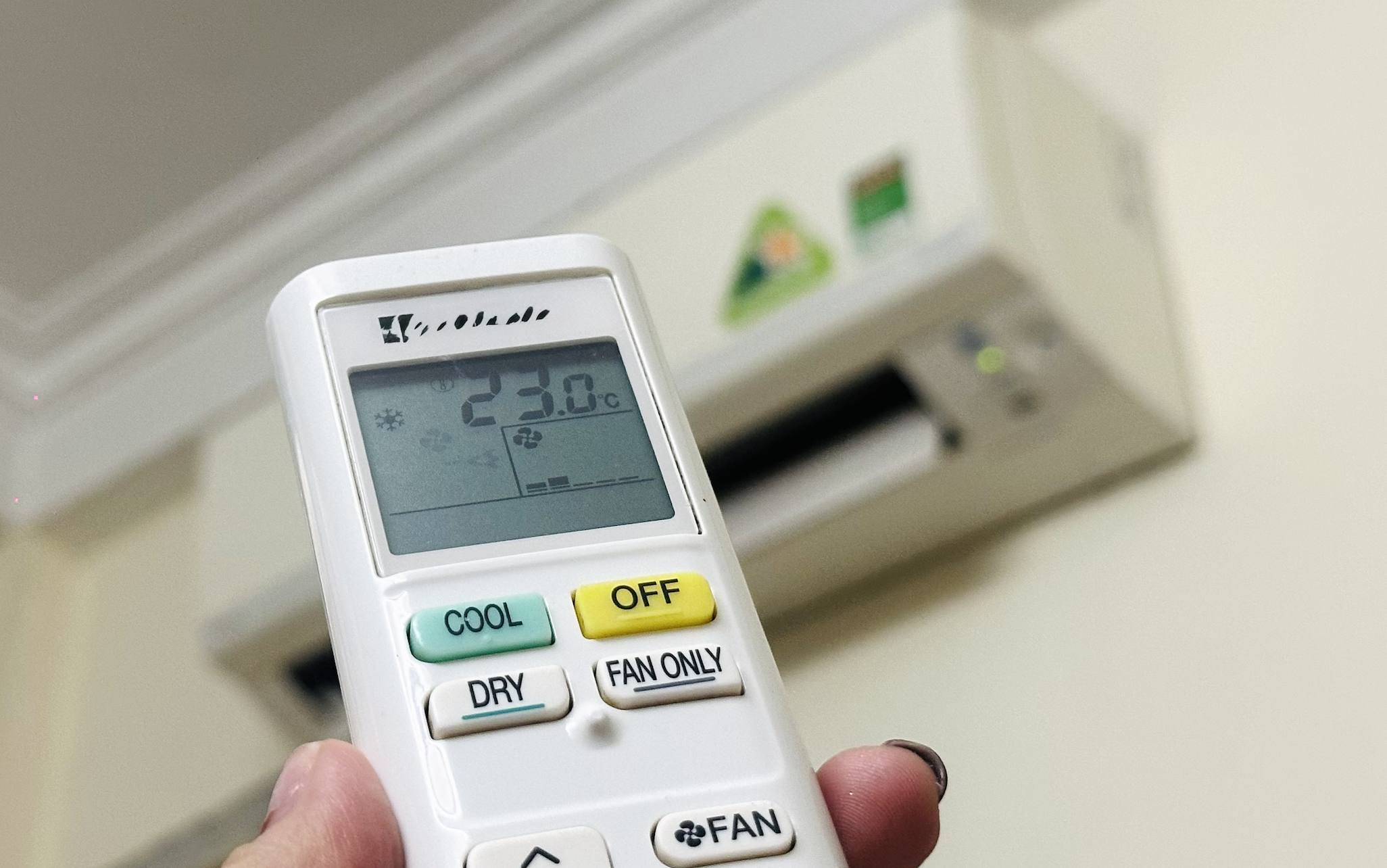 |
Everyone should be cautious when using air conditioners, especially those with cardiovascular issues and high blood pressure. *Thuy Linh* |
Prolonged closure of rooms also allows for the accumulation of moisture, fine dust, body odors, and volatile organic compounds from furniture, bedding, and wall paint, further degrading air quality. The elderly, young children, and individuals with chronic respiratory diseases, cardiovascular conditions, or asthma are particularly susceptible to poorly ventilated environments.
To address this issue, simply opening the room door or window a few centimeters allows for continuous air exchange while maintaining coolness. Families can also add ceiling fans, evaporative coolers, or air coolers to circulate airflow.
Regarding temperature settings, doctors recommend not setting the air conditioner below 26–28 degrees Celsius and maintaining a difference of no more than 7 degrees Celsius between indoor and outdoor temperatures. Once the room is sufficiently cool, raise the temperature to at least 27–28 degrees Celsius.
The elderly and individuals with underlying conditions such as cardiovascular disease, high blood pressure, diabetes, or dyslipidemia should limit outdoor exposure during peak sun hours. They should prioritize moving around in the early morning or late afternoon when the weather is milder.
Adequate daily hydration increases body fluid volume, prevents blood thickening, and limits clot formation. Maintaining a healthy diet, stable weight management, and avoiding alcohol and tobacco are crucial supportive measures during this prolonged heatwave.
Thuy An