A detailed microscopic examination revealed numerous tiny, grayish-white spots on Ms. Oanh's cornea. Her condition stemmed from a prior diagnosis of left peripheral facial paralysis, or cranial nerve seven palsy, caused by shingles. This paralysis significantly reduced her ability to fully close her eye.
Dr. Duong Minh Phuc, from the High-Tech Eye Center at Tam Anh General Hospital in TP HCM, explained that the inability to close the eye is a symptom of cranial nerve seven palsy. The herpes zoster virus weakens the muscles around the eye, causing lagophthalmos (incomplete eyelid closure). Prolonged exposure of the eye to air leads to severe dryness, which over time damages the cornea and results in superficial punctate keratitis.
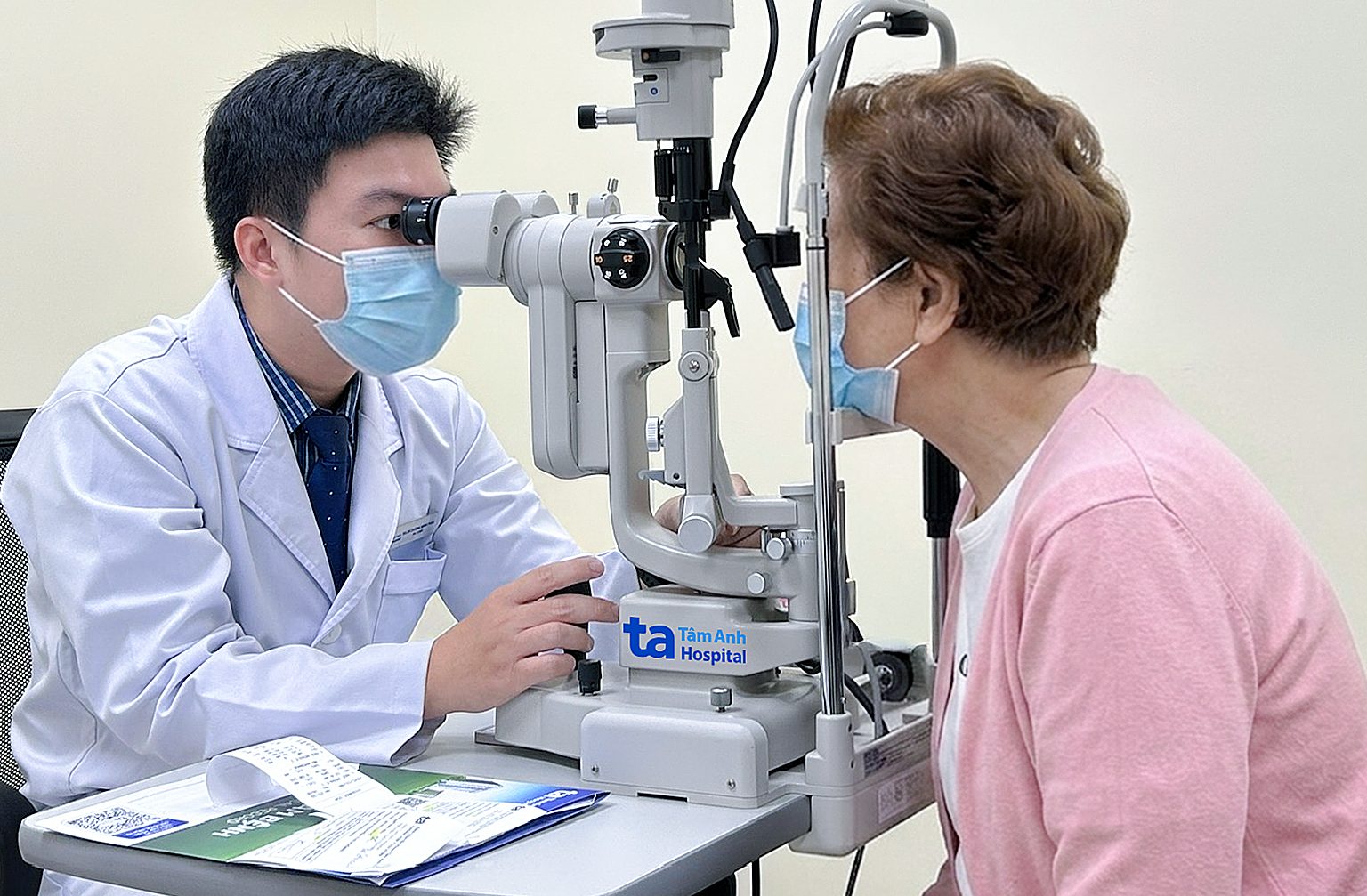 |
Dr. Phuc examines Ms. Oanh's eye. Photo: Tam Anh General Hospital
Superficial punctate keratitis (SPK) occurs when the corneal surface is damaged by various factors such as bacteria, blepharitis, dry eye, trachoma, chemical burns, or UV exposure. This damage to corneal epithelial cells forms tiny, grayish-white spots on the cornea, leading to watery eyes, a gritty sensation, or blurred vision. Without timely treatment, SPK can impair vision or even cause blindness.
Doctors prescribed antibiotic eye drops to prevent infection, along with artificial tears and lubricating gel for nighttime protection. Patients also received instructions to avoid direct airflow from air conditioners and wind, and to wear protective glasses outdoors.
During a follow-up appointment one week later, Ms. Oanh's superficial punctate keratitis was under control, and her dry eye symptoms significantly improved. She no longer experienced pain, redness, or tearing. Dr. Phuc advised patients to continue protecting their eyes to minimize recurrence risk and to actively pursue interventions for peripheral facial paralysis recovery, aiming to restore normal eye function.
Treatment for superficial punctate keratitis varies depending on the cause and severity. Doctors may prescribe eye drops, artificial tears, or oral pain relievers. Surgical intervention might be necessary for conditions such as trichiasis, ptosis, or prolonged lagophthalmos.
Dr. Phuc emphasized that individuals with cranial nerve seven palsy should seek medical attention for any eye abnormalities and take precautions to prevent corneal abrasions and infections. He also recommended that patients with existing eye conditions, chronic diseases, those on prolonged corticosteroid therapy, or individuals over 60 years old undergo regular eye examinations every 6 to 12 months for early detection and treatment.
Ngoc Kim Tham
*Character's name has been changed
| Readers can submit ophthalmology questions here for doctors to answer |