On the sidelines of the international workshop "Digital Transformation in Healthcare and Smart Hospital Development: International Experience and Application in Vietnam," co-organized by the Vietnam Medical Informatics Association, TPP Healthcare Technology Company (United Kingdom), and Suc khoe & Doi song Newspaper on 18/6, associate professor doctor Tran Quy Tuong, chairman of the Vietnam Medical Informatics Association, shared insights into the realities and challenges of digital transformation in healthcare.
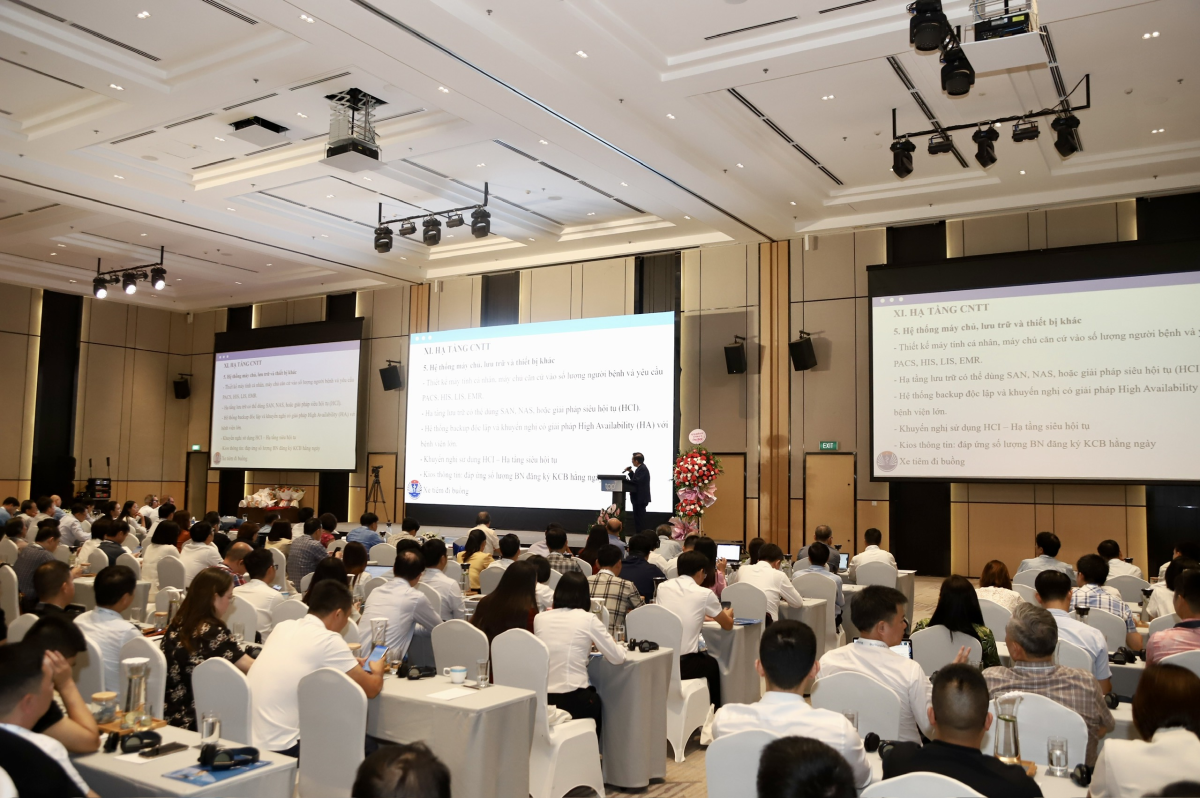 |
Overview of the international workshop on digital healthcare transformation. *Photo: TPP*
Mr. Tuong stated that digital transformation in healthcare has achieved positive results, with over 1,200 medical examination and treatment facilities nationwide implementing electronic health records. This forms a crucial foundation for building smart hospitals.
However, digital transformation is more than just replacing paper records with electronic ones. The broader goal is to create a connected digital healthcare ecosystem where data can be efficiently shared and utilized to serve patients.
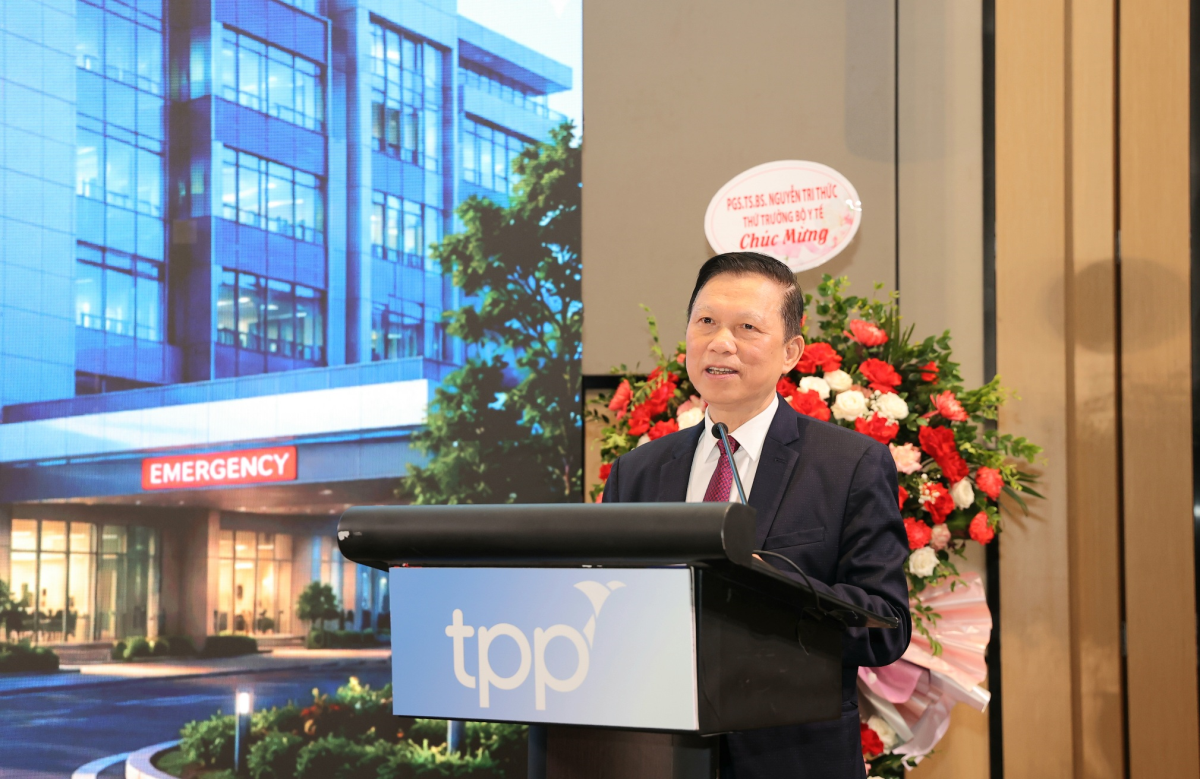 |
Associate Professor Doctor Tran Quy Tuong speaking at the workshop. *Photo: TPP*
According to him, the biggest "bottleneck" currently is data interoperability. Many healthcare facilities have their own management systems, but data remains fragmented. A patient might visit various hospitals, yet doctors cannot easily access their complete medical history. "If we cannot solve the problem of data connectivity, we will only have digitized individual units, not built a national digital healthcare ecosystem," he asserted.
The chairman of the Vietnam Medical Informatics Association considers electronic health records the foundation of smart hospitals. They create structured data that is continuously updated and shareable across treatment levels. When data is connected, doctors can make faster, more accurate decisions, while also reducing unnecessary administrative procedures.
To build smart hospitals or effectively apply AI, complete, standardized, and interoperable data is essential. Furthermore, with connected data, patients receive more convenient and continuous care. People will not need to carry numerous documents or repeat unnecessary tests. Doctors can access medical history to make more appropriate treatment decisions. At the same time, digital healthcare also helps enhance the capacity of grassroots healthcare, reduce overload at higher-level hospitals, and enable people in remote areas to access high-quality medical services.
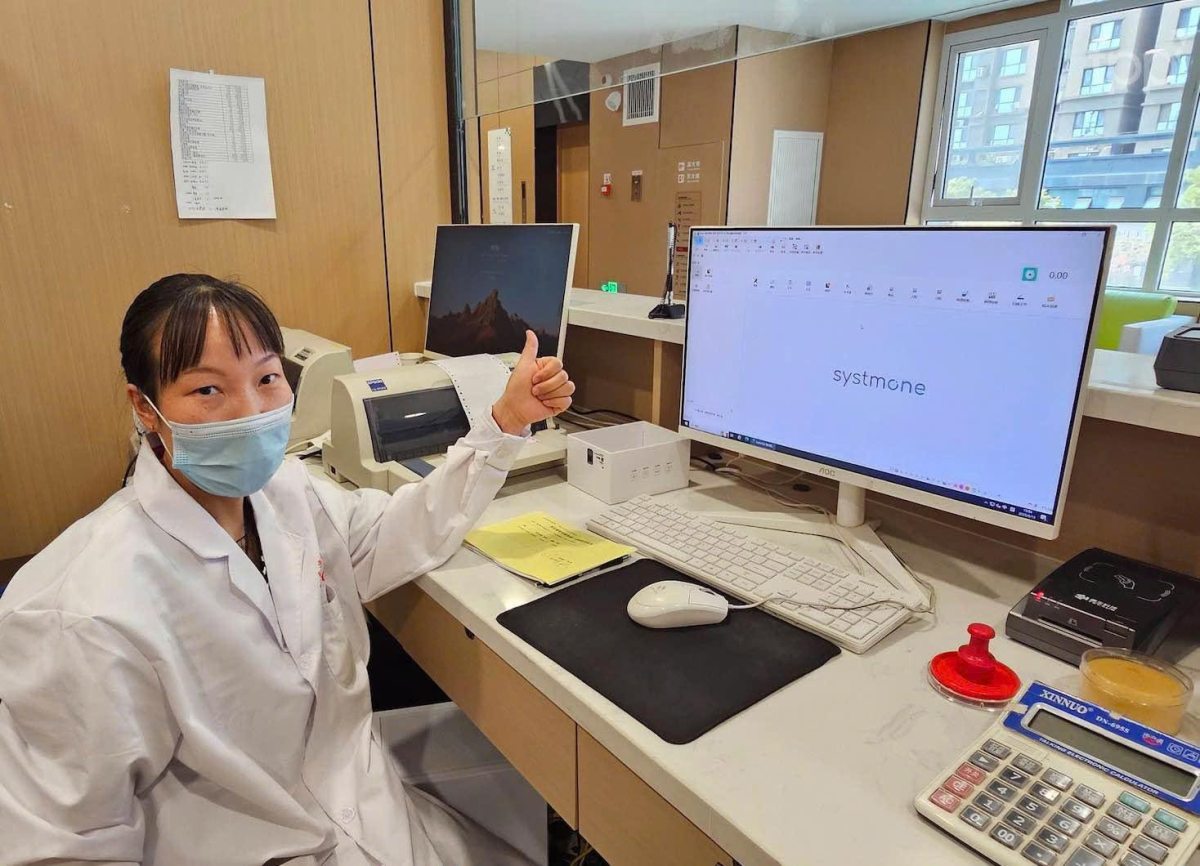 |
The SystmOne platform developed by TPP is applied in some hospitals. *Photo: TPP*
Associate Professor Doctor Tran Quy Tuong suggested that Vietnam needs to prioritize three key areas in the coming period: First, continue standardizing health data. Second, promote data interoperability among medical examination and treatment facilities. Third, boost the application of data in management, research, and the development of AI solutions for healthcare.
The ultimate goal of digital transformation is to help people receive better healthcare. When data is effectively connected, Vietnam will move closer to building a modern, smart, and patient-centric digital healthcare ecosystem.
He added that Vietnam should learn from successful international models. For example, TPP has been implementing its SystmOne electronic health record platform for 30 years. This system is currently widely used in the United Kingdom's public health system and has been deployed in many countries, including Trung Quoc, the Middle East, and the Caribbean region.
TPP, a company in the digital healthcare sector, has implemented its centralized cloud platform SystmOne based on the philosophy of "One patient, one lifelong medical record." The system comprises over 25 flexible modules, seamlessly connecting data between grassroots health stations and higher-level hospitals. In Vietnam, TPP has localized the software, organized digital training, and integrated AI to support treatment, while also piloting it in commune health stations (such as in Bac Ninh, Lai Chau, Ha Giang) to help people actively manage their personal health data.
"What is worth learning is not just the technology but how to build a unified data environment that allows healthcare facilities to share information securely, helps doctors access comprehensive patient records, and enhances treatment effectiveness. This is also the direction Vietnam is pursuing," said the chairman of the Vietnam Medical Informatics Association.
Yen Chi