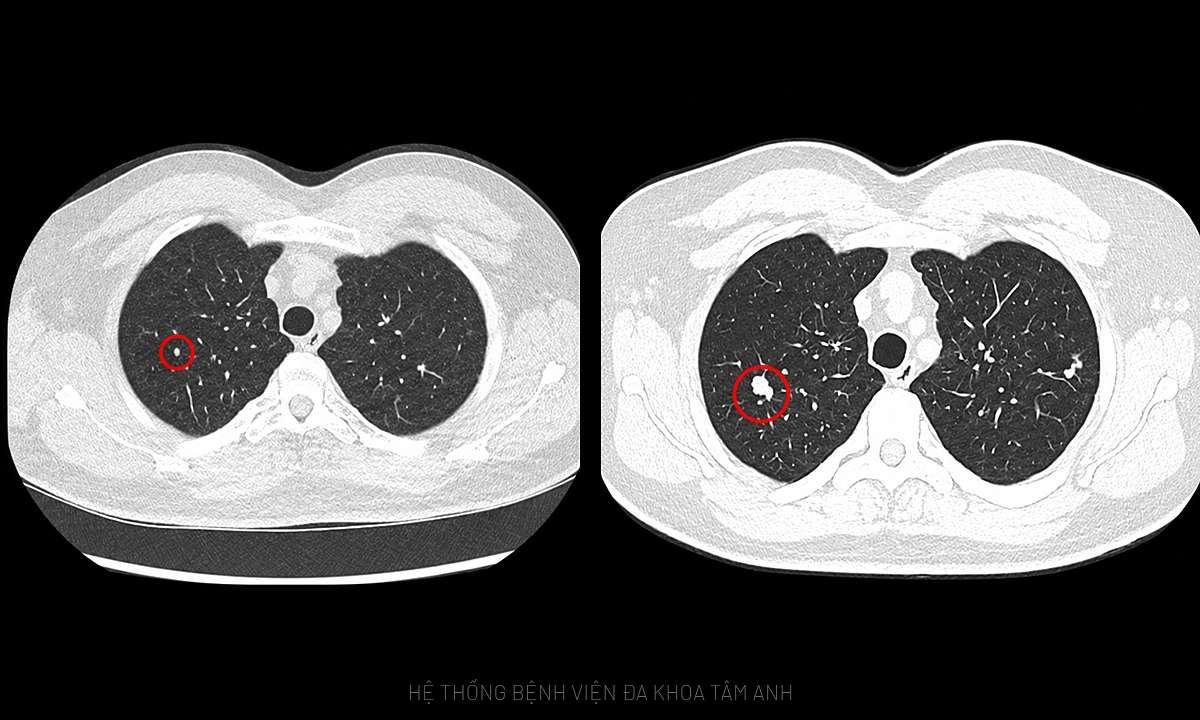
Dr. Le Thi Thanh Hai, from the High-Tech Eye Center at Tam Anh General Hospital, Ho Chi Minh City, reported that Ms. Tuyet's right eye vision was 6/10 and her left eye vision was 7/10. Specialized eye exam results indicated signs of inflammation and grade 2 optic disc edema in both eyes. Ultrasound revealed thickening of the posterior eyeball wall and protrusion of the optic nerve head. Ms. Tuyet had been diagnosed with diffuse scleritis one month prior, and this recurrence affected both eyes.
Diffuse scleritis is an inflammation of the sclera, the white, protective outer fibrous layer of the eyeball. This condition leads to diffuse dilation of blood vessels on the scleral surface, severe pain, and can pose a threat to vision if not treated promptly.
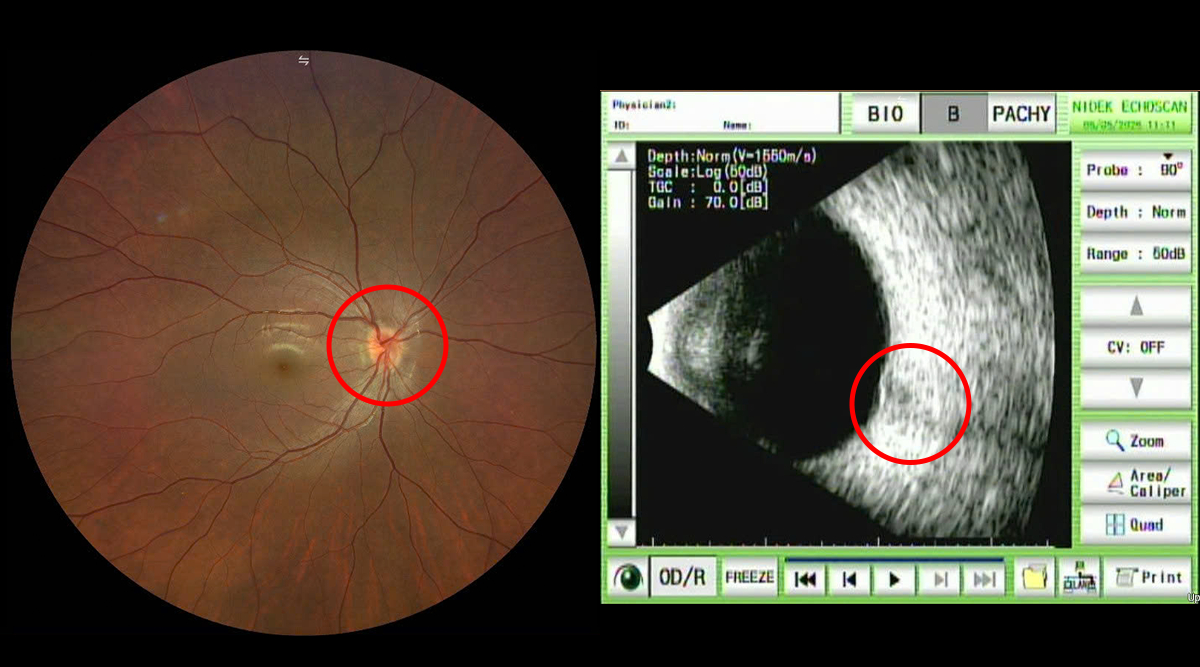 |
Fundus photography (left) and ultrasound (right) showing optic disc edema and fluid accumulation in the posterior sclera. Photo: Tam Anh General Hospital |
According to Dr. Hai, 30-50% of scleritis cases are linked to systemic diseases or immune disorders, including autoimmune diseases, vascular conditions, eye infections, trauma, or post-surgical complications. However, Ms. Tuyet had no underlying medical conditions, prior surgeries, or eye injuries, leading to a specialized examination at the Clinical Immunology department to determine the cause.
Ms. Tuyet received anti-inflammatory and pain-relieving medications to manage the inflammation in her eyes. She was also advised to rest, protect her eyes, and wear glasses outdoors to reduce glare. After two weeks, her scleritis was controlled, pain subsided, and vision in both eyes recovered to 10/10.
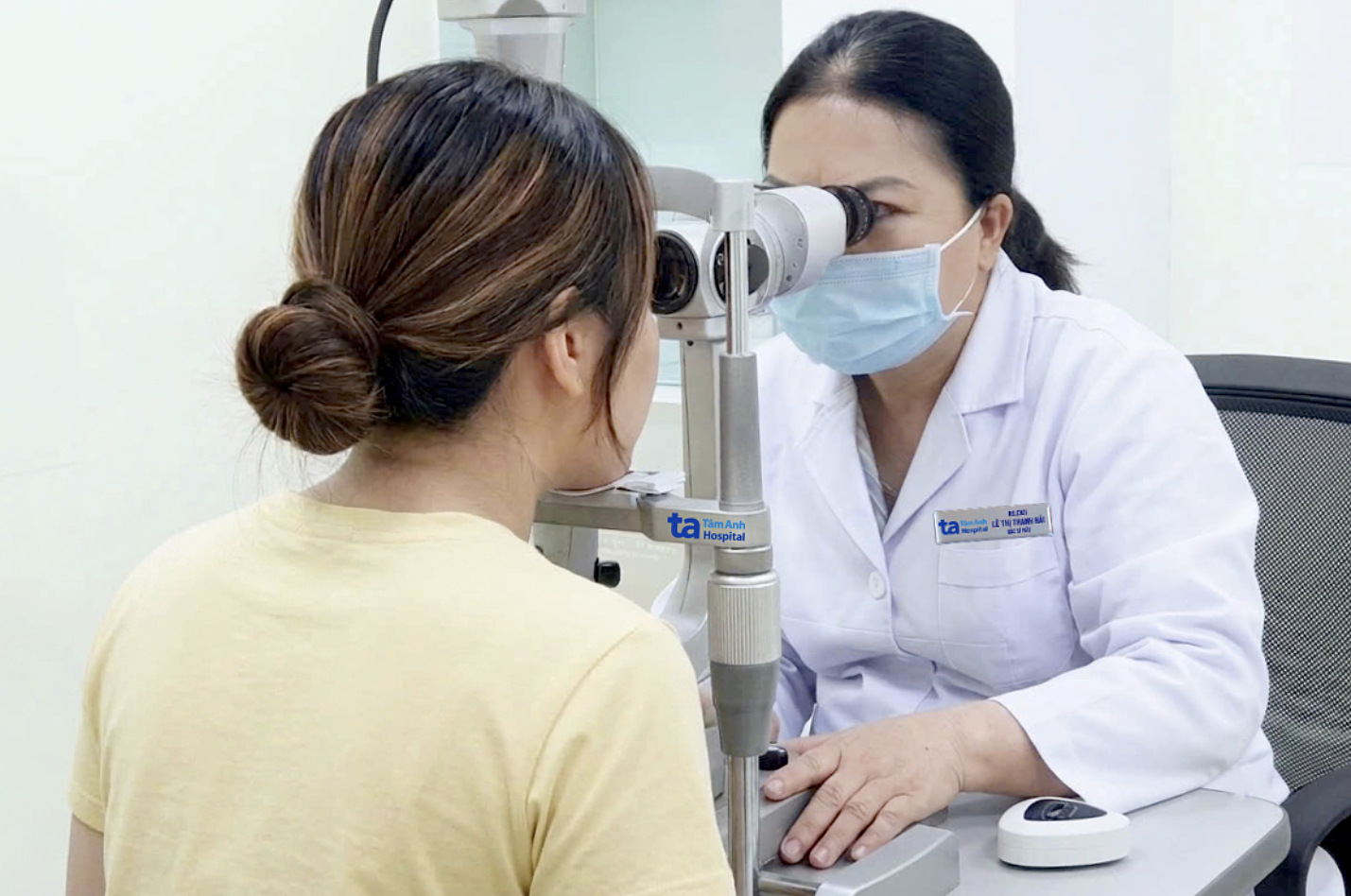 |
Dr. Hai examines Ms. Tuyet's eyes. Photo: Tam Anh General Hospital |
After two months of treatment, the patient's anti-inflammatory medication was discontinued as prescribed. However, the doctor emphasized that medication reduction must be gradual, as the condition could recur if the underlying cause remains unidentified.
Patients must attend scheduled follow-up appointments to monitor their eye condition and track potential autoimmune diseases. If symptoms such as joint pain, skin rashes, or prolonged fever appear, patients should seek hospital evaluation and treatment adjustment to limit the risk of multi-organ damage.
Dr. Hai advised that scleritis can affect individuals of all ages, appearing in one or two eyes, causing redness and pain, and is often mistaken for conjunctivitis. Patients undergoing treatment for autoimmune diseases should have regular eye check-ups to prevent eye complications. Anyone noticing unusual eye symptoms should visit an ophthalmology department for timely examination and treatment.
Ngoc Kim Tham
*The patient's name has been changed
| Readers can submit questions about ophthalmic diseases here for doctor's answers. |