Fatty liver disease occurs when fat accumulates excessively in liver cells, exceeding 5% of the liver's weight. Initially, this fat accumulation may not cause noticeable symptoms. However, if the condition persists, Kupffer cells – the liver's resident macrophages – can become overactive, promoting inflammation and increasing the risk of liver cell damage.
Master, Doctor Doan Vinh Binh, from the Medical Information Center, Tam Anh General Hospital Ho Chi Minh City, states that the level of fat accumulation can progress over time, leading to increased damage. The disease is categorized into three stages to assess its impact and guide monitoring and treatment.
Stage one fatty liver is the mildest stage, with liver fat accounting for approximately 5-10% of the liver's weight. At this stage, fat has just begun to accumulate, so most patients show no clear symptoms and often discover it incidentally during health check-ups or ultrasounds.
According to doctor Binh, this is the "golden stage" for intervention. If dietary adjustments are made, physical activity is increased, and risk factors are well-controlled, the liver has a full capacity for recovery.
Stage two fatty liver is a condition where fat accounts for 10-25% of the liver's weight. More fat has accumulated, causing symptoms such as bloating, indigestion, reduced appetite, fatigue, or a mild ache in the right upper abdomen. However, these symptoms are often subtle and easily overlooked, allowing the disease to progress.
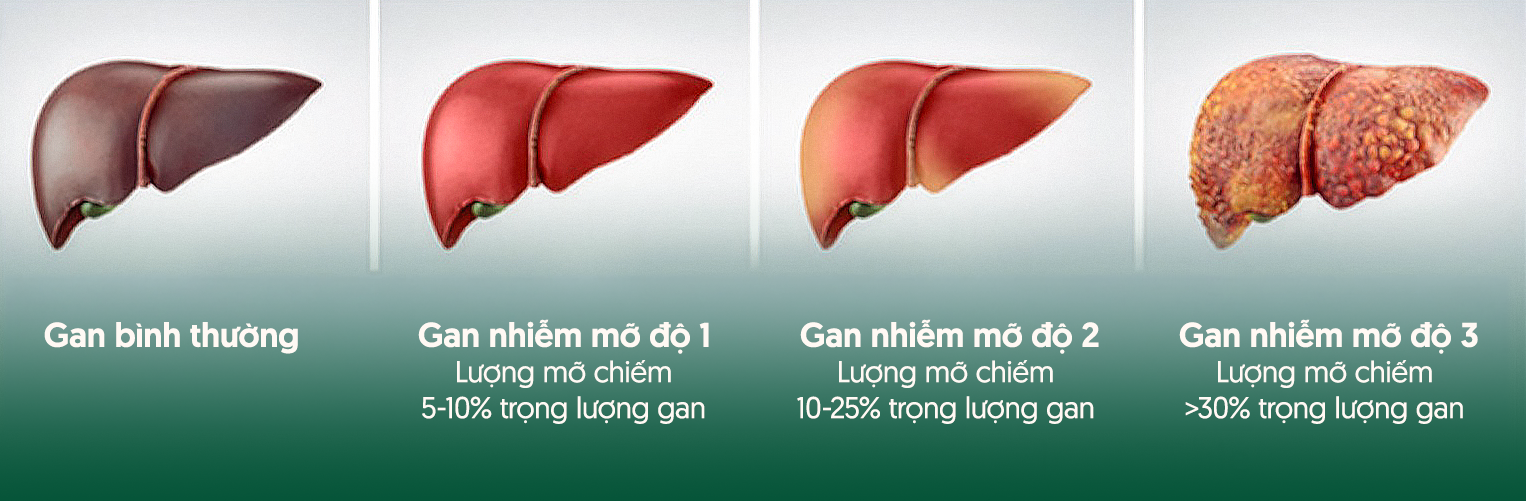 |
Normal liver and three stages of fatty liver. Photo: Eco Pharmaceutical Joint Stock Company |
Stage three fatty liver is the most severe and dangerous stage, with fat exceeding 30% of the liver's weight. The liver struggles to perform its normal functions, leading to clear symptoms like chronic fatigue, loss of appetite, nausea, liver pain, and an enlarged liver. Patients may also experience jaundice (yellowing of the skin and eyes).
If left uncontrolled, stage three fatty liver can increase the risk of hepatitis, cirrhosis, and other severe complications.
To diagnose fatty liver disease, doctors may order an ultrasound or combine several methods, including liver enzyme tests and liver elastography.
Individuals can protect their liver by maintaining a healthy lifestyle, managing weight, limiting alcohol, eating a balanced diet, and increasing physical activity. Effective control of metabolic diseases also reduces the risk of fatty liver disease. Supplementing with natural essences such as Wasabia and S. Marianum can support liver function and protect liver cells.
Those with fatty liver disease should undergo regular check-ups and adhere to their doctor's treatment plan to help control the disease and prevent its progression to hepatitis, cirrhosis, and liver cancer.
Dinh Dieu
| Readers can ask questions about liver disease here for doctor answers |