


A 65-year-old woman, Ms. Hong, was diagnosed with a severe case of pulmonary embolism at Tam Anh General Hospital in TP HCM after experiencing shortness of breath and a high fever. The diagnosis followed more than two weeks of immobility due to a broken leg. A CT scan revealed a blood clot completely blocking her right pulmonary artery and several small branches of her left lower lobe pulmonary artery.
Doctor Tran Vu Minh Thu, Head of Cardiology Department 2 at the Heart Center, explained that this condition obstructs blood flow to the lungs, damaging lung tissue, reducing oxygen exchange, and increasing pressure in the pulmonary arteries. Doctors believe Ms. Hong's prolonged immobility likely caused a blood clot in her femoral vein to travel to her lungs, leading to the embolism. Doctor Thu emphasized the seriousness of the condition: "The mortality rate for pulmonary embolism is about 25-30%." If left untreated, patients risk complications such as respiratory failure, acute heart failure, and arrhythmias.
Adding to her critical state, Ms. Hong also developed pneumonia, which further damaged her lungs and resulted in a high fever, extreme fatigue, and disorientation. She exhibited labored breathing and critically low blood oxygen levels. She was immediately placed on intensive treatment, receiving anticoagulants, combined antibiotics, and supportive care.
One week into treatment, Ms. Hong's condition improved significantly: her fever subsided, she became alert, her shortness of breath eased, and her appetite and sleep normalized. Following her discharge, she continued a prescribed course of anticoagulants to prevent recurrence.
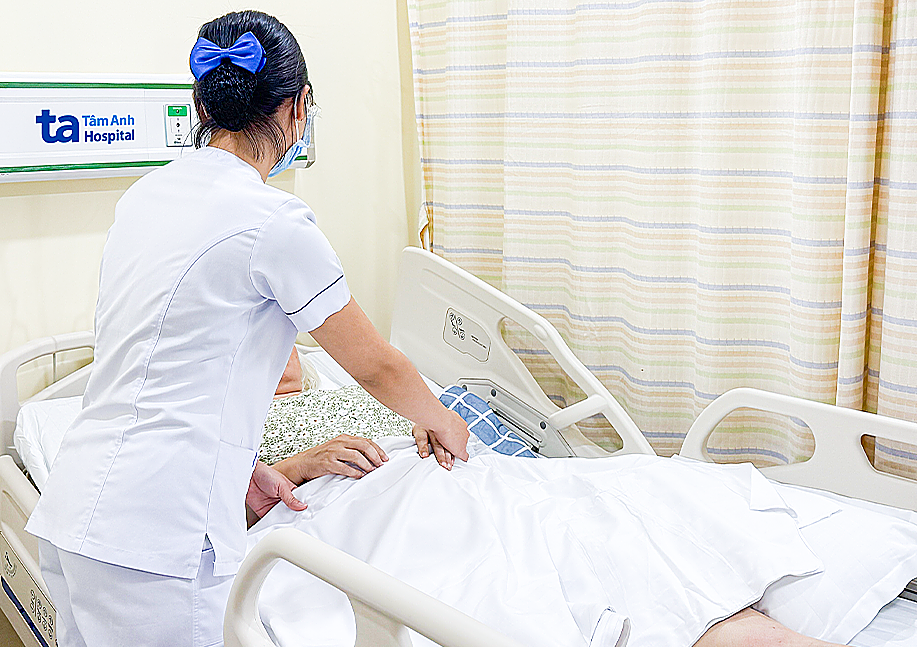 |
The patient received intensive care and guidance on in-situ movement to prevent blood clots. *Photo: Tam Anh General Hospital* |
Master, Doctor Tran Huu Danh, also from Cardiology Department 2 at the Heart Center, further elaborated on pulmonary embolism, explaining that it causes uneven blood flow to the left heart, forcing the heart to pump harder and faster. While severe cases can result in sudden death, milder forms can lead to pulmonary hypertension and, over time, right heart failure.
This condition commonly affects individuals with prolonged immobility after surgery, injury, or due to conditions limiting movement. Others at high risk include those with heart and vascular diseases, cancer, blood clotting disorders, smokers, overweight or obese individuals, those with a family history of venous thrombosis, and people with autoimmune diseases.
Symptoms of pulmonary embolism can range from mild to severe, including: prolonged mild fatigue, chest pain when breathing deeply, coughing up blood, rapid heartbeat, dizziness, sudden shortness of breath, fainting, and critical deterioration within minutes. Without correct treatment, patients face a high risk of sudden death during the acute phase.
To mitigate these risks, Doctor Danh strongly advises everyone to engage in regular physical activity and avoid prolonged periods of sitting or lying down. Post-surgery or injury, early mobilization should be initiated under medical guidance. For patients who must remain immobile for extended periods, prophylactic anticoagulants are crucial to prevent deep vein thrombosis, a precursor to pulmonary embolism. Additionally, maintaining a healthy weight, adopting a balanced diet, refraining from smoking, limiting alcohol consumption, and undergoing regular health check-ups are essential preventive measures.
By Thu Ha
*Patient's name has been changed
| Readers can submit questions about cardiovascular health here for doctors to answer. |


