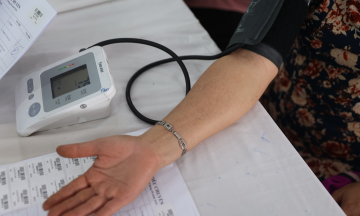
A landmark 2025 study, tracking over 4,300 adults for 37 years, revealed that individuals who exercised regularly reduced their risk of dementia (including Alzheimer's) by 45%. Previously, a 2023 scientific analysis published in JAMA Network Open also showed that people walking 8,800 to 10,000 steps daily lowered their all-cause mortality risk by 36%. Doctors consider this an ideal level of activity for a breakthrough in longevity, although health benefits begin to appear from just 2,600 steps, equivalent to 20 minutes of walking.
 |
Regular walking is a moderately vigorous form of exercise that helps extend lifespan. Nguyen Dong |
Regular walking is a moderately vigorous form of exercise that helps extend lifespan. Nguyen Dong
Doctor Dawn Mussallem, medical director at Fountain Life and a consultant at Mayo Clinic, states that physical activity fundamentally alters human biology. Regular exercise not only burns calories but also directly strengthens the cardiovascular system, lowers blood pressure, and maintains vascular endothelial function. It signals the body to adapt continuously and increase its resilience against chronic diseases.
At the cellular level, exercise boosts mitochondrial efficiency, ensuring energy production as the body ages. Internist Natalia Sadowski and Doctor Jennifer Timmons further explain that the habit of walking actively stimulates the telomerase enzyme. This enzyme protects and maintains the length of telomeres (chromosome end caps), directly preventing DNA damage and aging.
To make exercise a sustainable habit for decades, experts recommend integrating gentle workouts into busy lives. Doctor Timmons suggests "fitness snacking", such as performing 10 squats after every hour of desk work. Furthermore, maintaining the habit of walking after meals helps the body quickly lower blood sugar, effectively manage glucose levels, and creates a positive domino effect, encouraging healthier lifestyle choices daily.
My Y (According to Parade)