Mr. Dien arrived at Tam Anh General Hospital TP HCM, where doctor Nguyen Hoang Anh, from the Internal Medicine Department, noted significant facial swelling, taut skin, and numerous ruptured and ulcerated chickenpox lesions covered in thick scabs, indicating a widespread infection. On the patient's back, some lesions had progressed into deep ulcers with dark centers and inflamed red surroundings, typical of a secondary skin infection.
Having never had chickenpox nor received the vaccine, doctors suspected a community-acquired infection. A wound culture confirmed the causative agent as methicillin-resistant Staphylococcus aureus (MRSA).
 |
Doctor Hoang Anh examining the patient. Photo: Tam Anh General Hospital
According to doctor Hoang Anh, MRSA is a strain of Staphylococcus aureus that has developed resistance to many commonly used antibiotics. Consequently, MRSA poses a greater threat than regular Staphylococcus aureus, with treatment proving difficult, prolonged, and ineffective if detected late. Without timely and appropriate treatment, MRSA can lead to severe complications such as sepsis, severe pneumonia, endocarditis, osteomyelitis, deep multi-organ abscesses, multi-organ failure, and death. The infection tends to progress rapidly and unpredictably, especially in the elderly, young children, and individuals with underlying health conditions or compromised immune systems.
The doctor further explained that MRSA skin infection is a dangerous complication in chickenpox patients. The blisters and scratches caused by itching compromise the skin's protective barrier, creating entry points for bacteria through open wounds. This complication is common in individuals who scratch excessively, practice improper skin hygiene, or attempt to treat lesions at home.
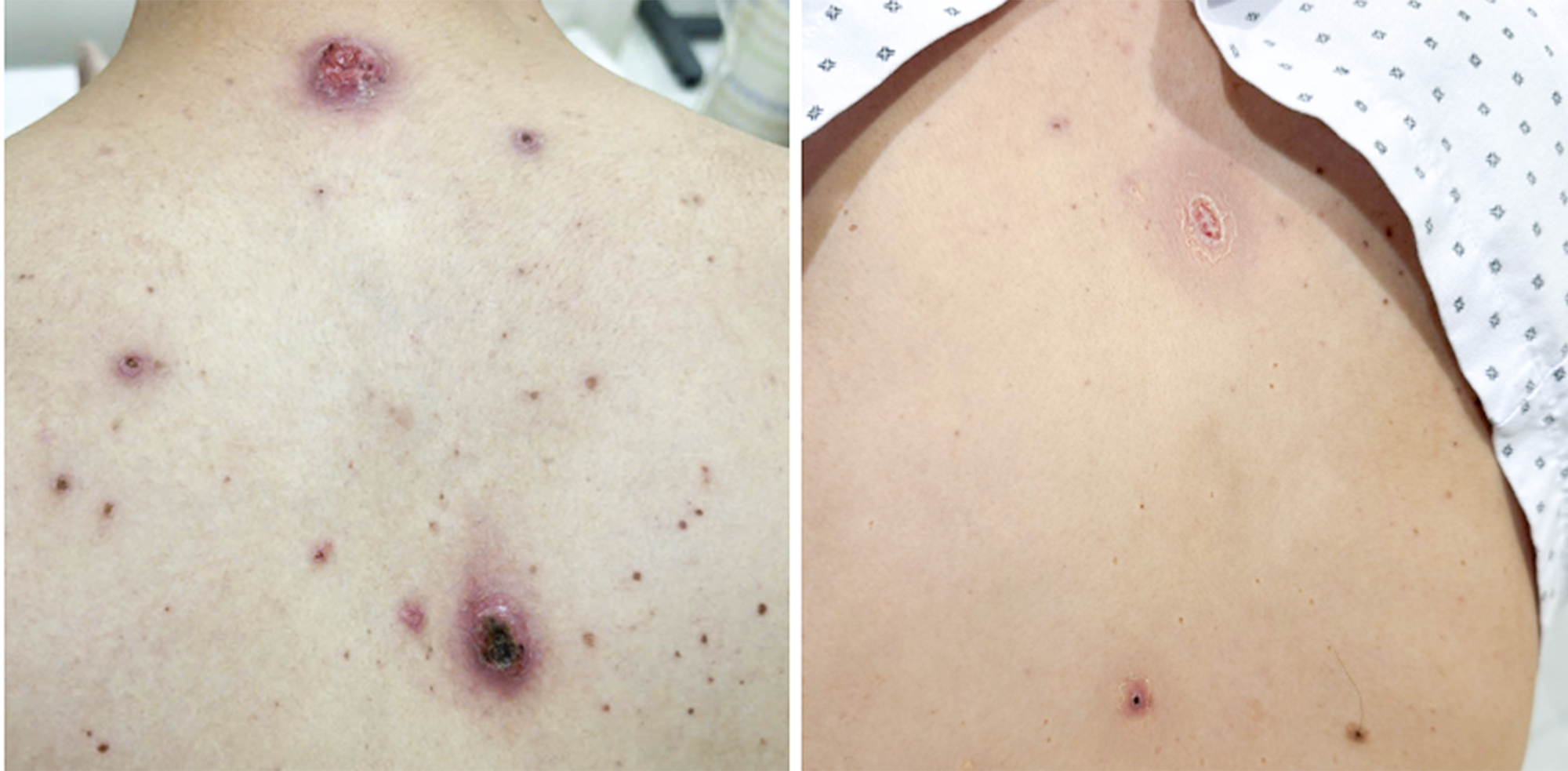 |
The patient's condition before (left) and after treatment. Photo: Tam Anh General Hospital
Mr. Dien received intravenous broad-spectrum antibiotics, later adjusted according to antibiogram results. His treatment also included daily wound care, hygiene, and symptomatic relief. After approximately 10 days, the swelling and inflammation significantly reduced, the lesions dried, and pus discharge ceased, leading to his discharge from the hospital. The lesions on his back had shrunk and were clean, with no new lesions appearing.
Individuals with chickenpox should keep their skin clean and dry, avoid scratching to prevent blisters from rupturing, and refrain from self-medicating or using folk remedies. If unusual signs such as redness, increased pain, pus discharge, or a return of fever appear, early medical consultation is advised. Vaccination against chickenpox is an effective measure to reduce the risk of contracting the disease and limit severe complications.
Nhat Thanh
*Patient's name has been changed