


The World Health Organization (WHO) declared the Ebola outbreak in the Democratic Republic of Congo and Uganda a "public health emergency of international concern" on 17/5. This declaration followed the African Centers for Disease Control and Prevention (Africa CDC) confirmation of a new Ebola outbreak in Congo's Ituri province. As of 17/5, there were 246 suspected cases and 88 deaths, according to The Guardian. The majority of cases are concentrated in Congo, with two reported in neighboring Uganda.
The current outbreak is caused by the Bundibugyo virus, as confirmed by WHO. Among the 4 Ebola strains that infect humans—Zaire, Sudan, Bundibugyo, and Tai Forest—Bundibugyo is rare. It has only caused two previous outbreaks, in 2007 and 2012. The epidemiological characteristics of this strain are not yet fully understood by scientists.
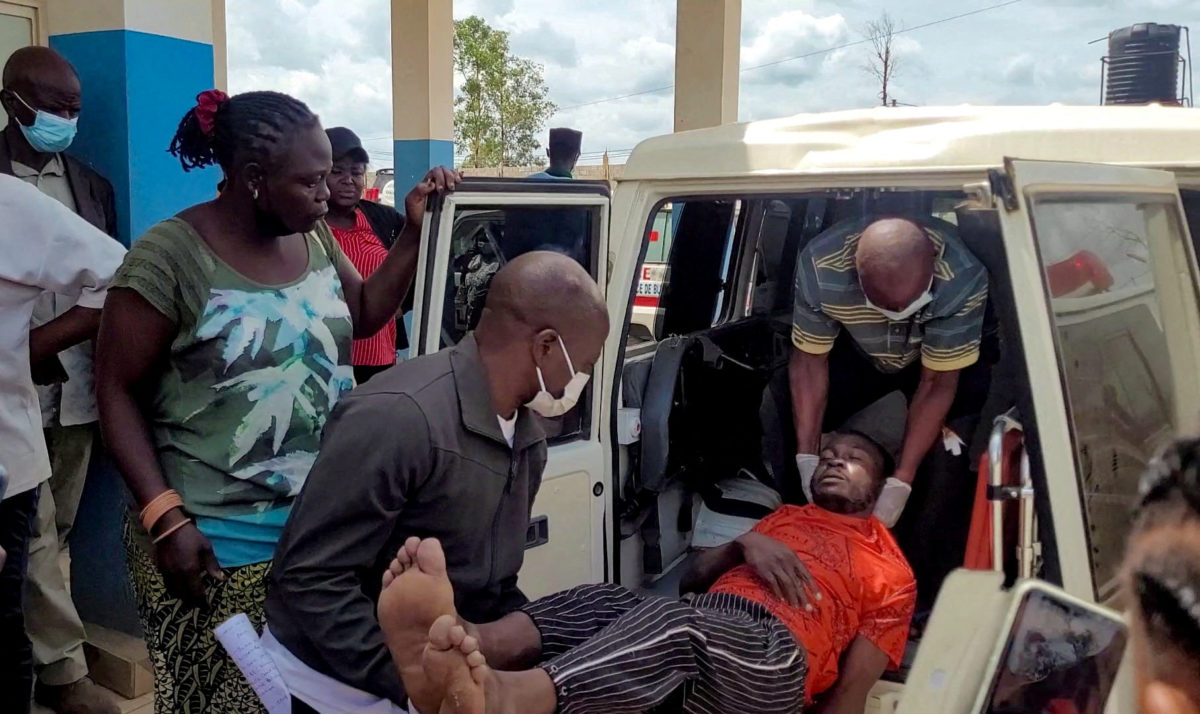 |
A man is helped from an ambulance upon arrival at Bunia General Hospital, after the Bundibugyo Ebola outbreak was confirmed in Bunia, Ituri province, Congo, on 16/5. *Photo: Reuters*
Imperial College London estimates the fatality rate for the Bundibugyo strain to be between 30% and 40%. A major challenge in controlling this outbreak is the absence of specific antiviral drugs or targeted therapies for this strain. The two monoclonal antibody drugs currently licensed are effective only against the Zaire strain.
Due to the lack of specific treatment, patient care for Ebola Bundibugyo relies entirely on supportive measures. These include fluid administration, electrolyte balance, oxygen stabilization, and blood pressure maintenance.
The Ebola virus is believed to transmit from its natural hosts, fruit bats, to humans. After an incubation period of 2-21 days, patients experience a sudden onset of symptoms: fever, fatigue, and muscle pain. These symptoms rapidly progress to vomiting, diarrhea, liver failure, and kidney failure. The virus spreads widely within communities through direct contact (broken skin, mucous membranes) with the blood and bodily fluids of infected individuals, or via burial rituals involving direct contact with corpses.
Given the complex situation, WHO has dispatched a mission and emergency aid to Ituri, the outbreak's epicenter. The agency urged countries to activate disaster management mechanisms, implement health screenings at border crossings, and immediately isolate cases. However, WHO advised against closing borders or restricting trade, as this could lead to illegal border crossings through informal routes, making the outbreak harder to control.
Yesterday, the Ministry of Health of Vietnam also advised the public not to panic about the Ebola outbreak. However, individuals returning from affected areas should self-monitor their health for 21 days.
Binh Minh (According to WHO, CDC, Imperial College London)


