


Dr. Nguyen Thi Thach Thao, a specialist level one doctor at the Center for Reproductive Assistance, Tam Anh General Hospital TP HCM (IVF Tam Anh TP HCM), stated that Phuong's anti-Müllerian hormone (AMH) – a marker of ovarian reserve – had prematurely declined to 0,9 ng/mL. For women under 38, the average AMH ranges from 2-6 ng/mL. An ultrasound of her two ovaries revealed only a few follicles.
Dr. Thao recommended in vitro fertilization (IVF) for Phuong and her husband. While an IVF cycle typically requires 10-15 eggs, IVF Tam Anh can proceed with fertilization and embryo culture even if a patient has only 5-7 eggs.
To obtain more eggs, create good quality embryos, and increase the pregnancy rate, Dr. Thao developed a multi-cycle egg accumulation protocol for Phuong. After two egg retrieval cycles, Phuong had a total of 6 mature eggs.
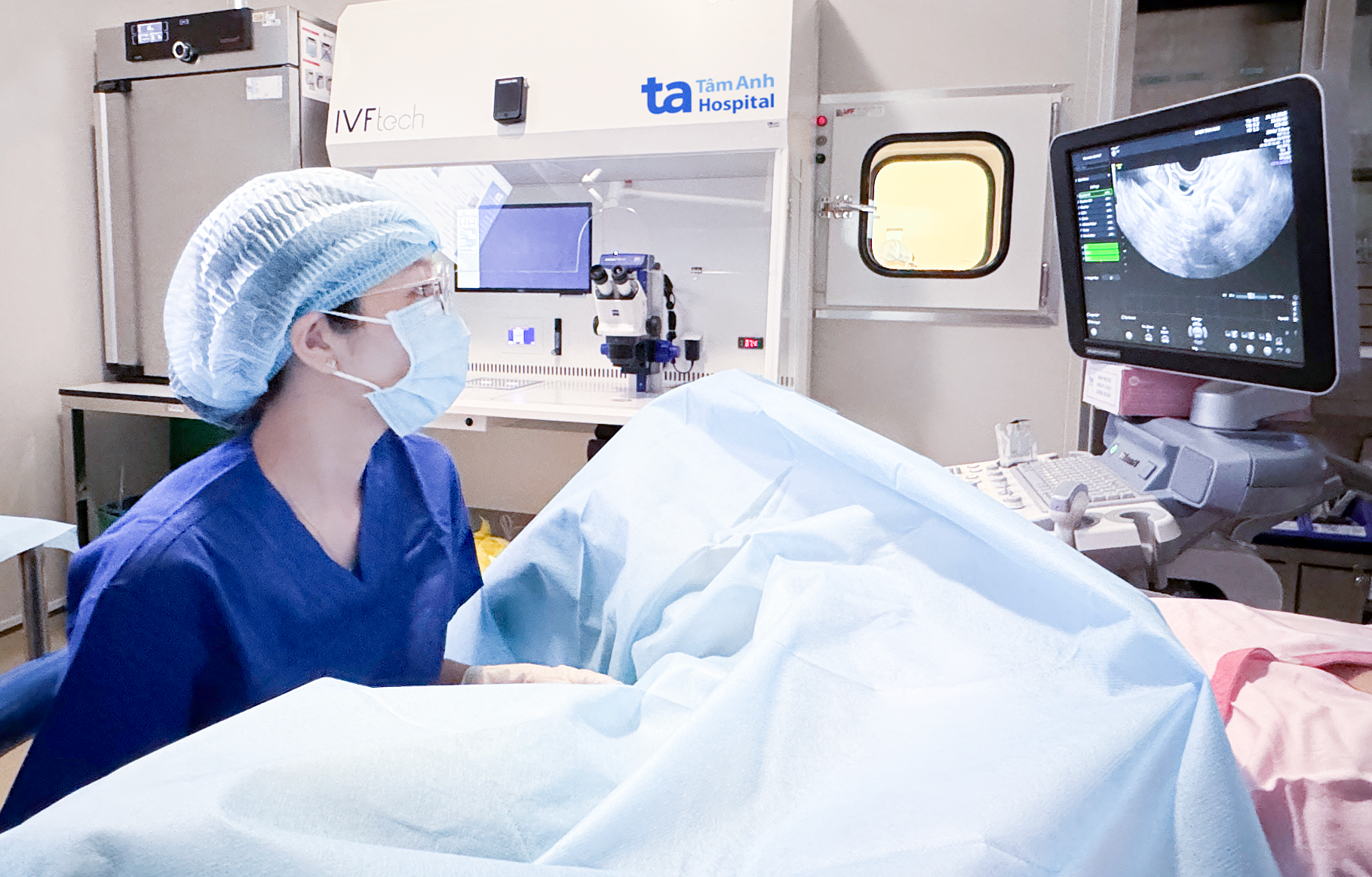 |
Dr. Nguyen Thi Thach Thao performs egg retrieval for a patient undergoing in vitro fertilization. *Photo: Hoai Thuong |
Embryologists thawed the eggs from the first cycle and processed fresh eggs from the second cycle. They selected viable sperm for injection into the ooplasm. The embryos were cultured in a time-lapse dynamic incubator system, optimizing all conditions, resulting in three day-5 embryos. Artificial intelligence (AI) software and embryologists scored all good quality embryos, selecting the optimal time for embryo transfer into the uterus.
Phuong conceived during her first embryo transfer. Her pregnancy is currently 17 weeks and developing well. The remaining two embryos were cryopreserved by Phuong and her husband for future pregnancies.
According to statistics from the World Health Organization (WHO), secondary infertility accounts for over 50% of infertility cases in Vietnam, increasing by 15%-20% annually. At IVF Tam Anh TP HCM, couples with secondary infertility make up about 68% of patients seeking treatment, primarily those aged 35-45. Many delay early examination, missing the "golden" window for treatment, which increases difficulties and financial burdens.
Causes of secondary infertility in women can include: endocrine disorders, ovarian insufficiency, blocked fallopian tubes, and uterine pathologies. Unhealthy lifestyles, prolonged stress, frequent late nights, excessive weight loss, and exposure to toxic chemicals can also reduce egg quantity and quality, making natural conception difficult.
Dr. Thao advises couples who have previously had children to seek early examination and treatment if they do not conceive again after one year (or six months if the wife is over 35). Women should be particularly aware of irregular menstrual cycles, severe menstrual pain, amenorrhea, decreased libido, vaginal dryness, or mood changes. Multi-cycle egg or embryo accumulation protocols, a "lab-in-lab" system, and modern embryo culture technologies help increase the success rate of IVF treatment, enabling patients to have their own children sooner. Additionally, unmarried women experiencing ovarian insufficiency should consider freezing their eggs to preserve future fertility.
Hoai Thuong
* Patient's name has been changed


