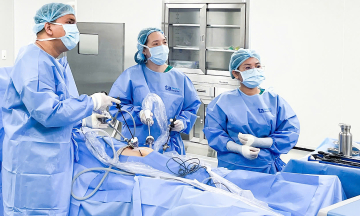
For months, Thu slept only five hours a day, with fragmented sleep, easily startled. Her once thick hair began to thin and fall out. Four distinct bald spots were visible on her scalp, including one on the right side of her crown measuring about 6 cm in diameter. Thu tried various vitamins, hair growth supplements, oral medications, and topical treatments, but her hair did not regrow, and the affected areas remained smooth.
At Tam Anh General Hospital in Ho Chi Minh City, doctor Dang Thi Ngoc Bich, head of dermatology and aesthetic dermatology, diagnosed Thu with alopecia areata. This condition is most commonly caused by the immune system mistakenly attacking hair follicles, leading to sudden, patchy hair loss.
 |
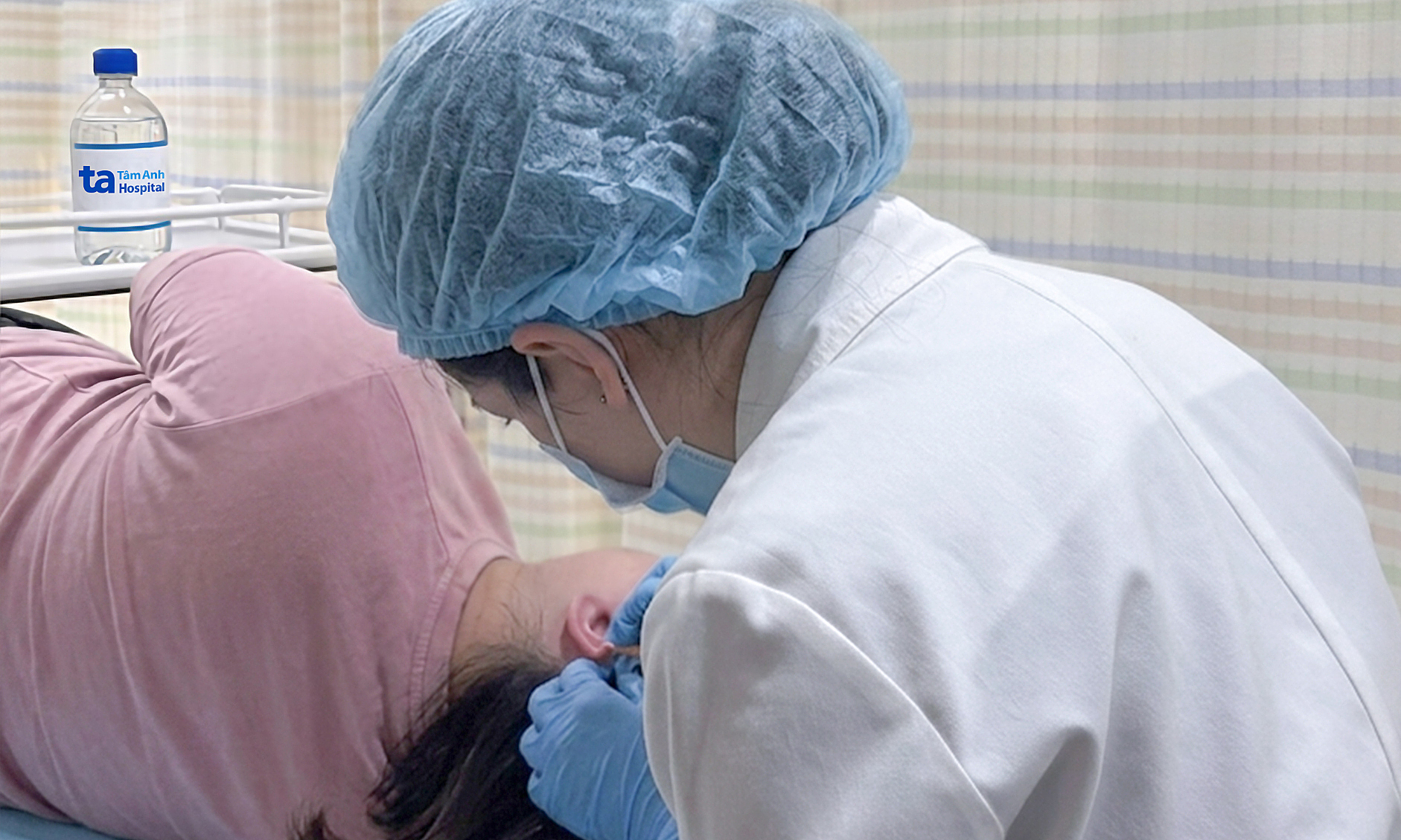
The doctor injects triamcinolone directly into Thu's bald spot. Photo: Tam Anh General Hospital |
Doctor Bich noted that abnormal hair loss and baldness due to autoimmune disease are common in individuals under 40, most prevalent in the 30-35 age group. Cases as severe as Thu's, occurring in a teenager, are less common. In adolescents, the condition typically causes only a small, localized area of hair loss. Thu's case, with four simultaneous bald spots, indicates significant immune system dysregulation, attacking hair follicles over a wider area than usual. When stress and insomnia are prolonged, the body releases various hormones and mediators, disrupting immune regulation. This leads to multiple hair follicles being attacked simultaneously, resulting in rapid hair loss across several scalp areas in a short period.
Thu was prescribed intralesional triamcinolone injections as part of a treatment regimen of four to six sessions, one month apart. This was combined with topical immunosuppressants or minoxidil, a medication known to stimulate hair growth. Thu responded well to the treatment; after only the first injection, fine new hairs began to appear on the previously smooth skin, signaling the recovery of her hair follicles.
 |
Thu's new hair growth after one injection (right). Photo: Tam Anh General Hospital |
Doctor Bich clarified that many people mistakenly believe hair loss in teenagers is primarily due to nutrient deficiencies or hormonal imbalances. However, alopecia areata has a different mechanism, mainly involving immune dysregulation. In contrast, hair loss and baldness often seen in middle-aged and older individuals are mostly due to genetics and aging.
Alopecia areata can also be linked to genetics, infections, thyroid conditions, and other autoimmune diseases. Early detection and correct treatment protocols can lead to significant improvement. Patients must adhere to their treatment plan, adjust their lifestyle, get enough sleep, and reduce stress to minimize the risk of recurrence.
Individuals experiencing abnormal hair loss, losing dozens to hundreds of strands daily, especially in patches with a smooth scalp, should not self-medicate with hair growth stimulants or solely rely on vitamin supplements. Early examination at a hospital with a dermatology and aesthetic dermatology specialist helps determine the exact cause and ensures timely treatment.
Minh Huong
*Character's name has been changed