Mr. Thanh, 75, presented at Tam Anh General Hospital, Ho Chi Minh City, with severe fatigue and shortness of breath. His extensive cardiac history included multiple coronary stent placements, heart valve replacement surgery, and atrial fibrillation. Giao su, Tien si, Bac si Vo Thanh Nhan, Director of the Interventional Cardiology Center, diagnosed Mr. Thanh with untreated hypertrophic cardiomyopathy, which had severely impaired his heart function, reducing his ejection fraction (EF) to just 16%. The high pressure gradient between his left ventricle and outflow tract indicated a critical condition, posing a significant risk of arrhythmias and sudden cardiac death without immediate intervention.
Giao su Nhan and his team performed a minimally invasive procedure, making a small incision on the patient's left chest. They precisely threaded leads from the subclavian vein to the heart under ultrasound guidance, successfully implanting an implantable cardioverter-defibrillator (ICD). This device delivers electrical impulses to restart the heart if it suddenly stops and provides electric shocks to synchronize heart rhythm when it detects ventricular tachycardia or ventricular fibrillation.
The two-hour intervention proved successful. Post-procedure ultrasound confirmed a significant reduction in the pressure gradient, decreasing from 70 to 30 and negating the need for alcohol septal ablation. Mr. Thanh received intensive treatment with anticoagulants, diuretics, beta-blockers, and SGLT2 inhibitors. Within one week, his shortness of breath resolved, and his heart's ejection fraction increased to 40%, allowing him to be discharged from the hospital.
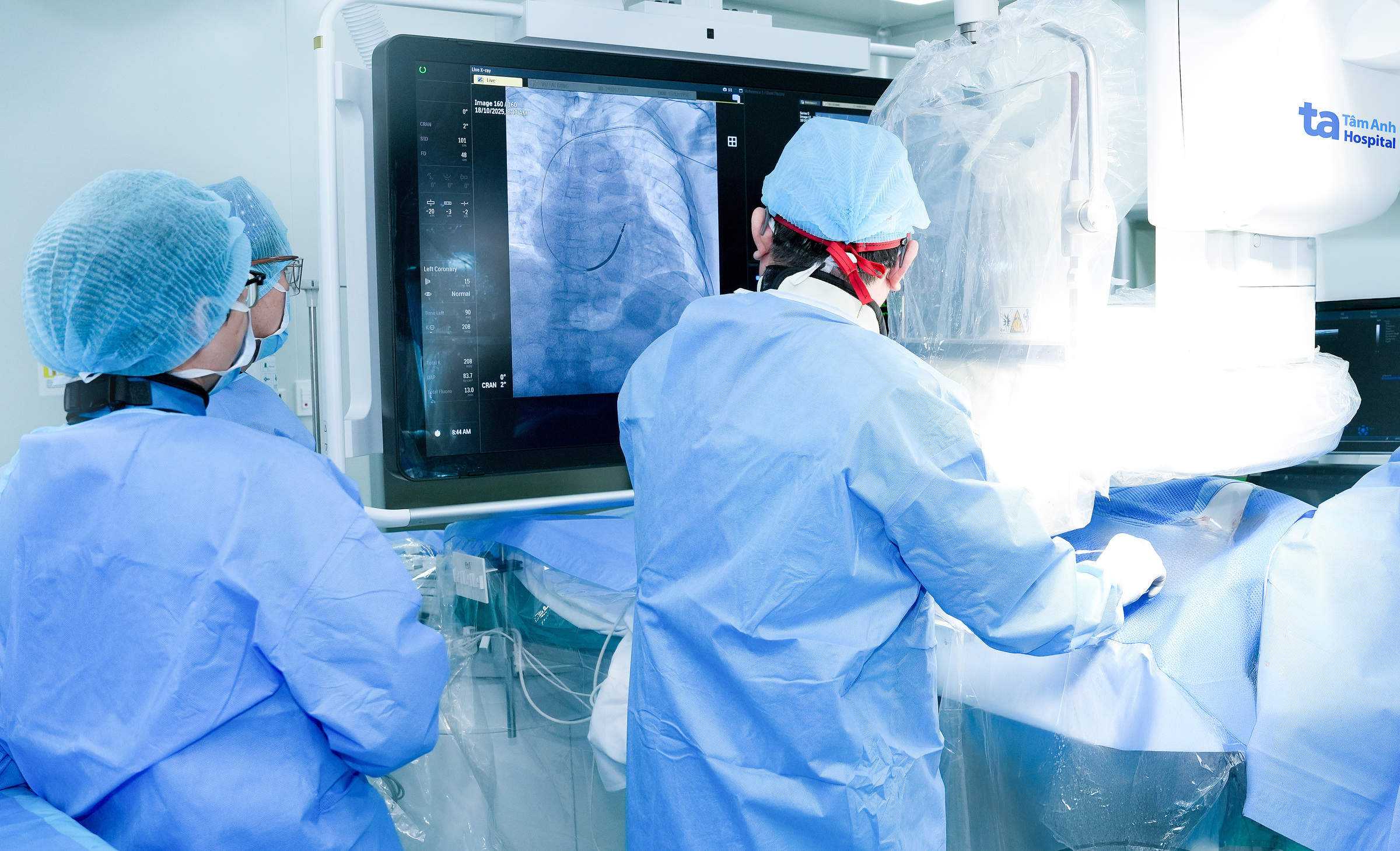 |
Doctors implanting a defibrillator for the patient. Photo: Thanh Luan |
Hypertrophic cardiomyopathy is a genetic condition caused by gene mutations, leading to abnormal heart muscle growth and thickened heart walls. This prevents the heart from effectively pumping blood, resulting in myocardial ischemia, heart failure, and arrhythmias. Patients often experience symptoms like fatigue, chest pain, pulmonary edema, and paroxysmal nocturnal dyspnea. Standard treatments for this condition include surgical septal myectomy, alcohol septal ablation, and ICD implantation. Given Mr. Thanh's severe heart failure and pressure gradient, surgical options carried a high risk of hypotension and cardiac arrest. Thus, doctors chose the less invasive ICD implantation as the primary intervention, with alcohol septal ablation as a secondary option if the pressure gradient did not adequately improve.
Giao su Nhan emphasized that hypertrophic cardiomyopathy is a dangerous condition, capable of causing sudden death, particularly when complicated by heart failure. The disease often presents with subtle or no clear symptoms, such as chest pain, lightheadedness, dizziness with postural changes, shortness of breath, and fainting. These can be easily confused with other ailments. Mr. Thanh's case highlighted this challenge, as he had long experienced warning signs but attributed them to old age, only pursuing medical treatment. The disease progressed to a severe pressure gradient and heart failure, though fortunately, it had not yet resulted in arrhythmias, ventricular fibrillation, or cardiac arrest.
Besides genetic factors, several causes can lead to hypertrophic cardiomyopathy, including hypertension, abnormalities in the mitral valve apparatus, aortic valve stenosis, aortic coarctation, Noonan syndrome, glycogen storage disease, and Friedreich's ataxia. The most common group affected are young individuals (under 35 years old) or athletes. However, the disease can also occur in older adults and is rare in children.
There are no effective preventive measures for hypertrophic cardiomyopathy. If one person in a family is diagnosed with the condition, doctors recommend that other family members undergo regular cardiovascular check-ups for early detection.
Thu Ha
* Patient's name has been changed
| Readers can submit questions about cardiovascular diseases here for doctors to answer. |