Associate Professor, Doctor Vu Le Chuyen, Director of the Urology - Nephrology - Andrology Center at Tam Anh General Hospital, TP HCM, highlighted Mr. Minh's unique situation. The 80-year-old patient suffered from both kidney cancer and end-stage kidney failure, necessitating dialysis three times per week. His kidneys had atrophied due to long-term dialysis, yet a cancerous tumor persisted in his left kidney. The 4 cm tumor was centrally located, close to major blood vessels, making partial nephrectomy (tumor removal while preserving the kidney) unfeasible due to high risks of severe bleeding, platelet reduction, and complications during dialysis.
Mr. Minh's advanced age and multiple underlying conditions, including chronic obstructive pulmonary disease, coronary artery stenosis with stent placement, diabetes, and hypertension, presented significant surgical challenges. Traditional open or laparoscopic surgery would have carried a high risk of serious complications. To achieve a radical cure for the cancer, Associate Professor Chuyen opted for robotic-assisted surgery using the Da Vinci Xi system.
"This technology is considered the gold standard for complex cancer cases requiring high precision, especially in high-risk patients," Associate Professor Chuyen explained. He noted that the Da Vinci Xi robot features a 3D camera system magnifying 10-15 times and instruments capable of rotating 540 degrees. This advanced capability allows surgeons to operate precisely in difficult-to-reach areas, which are often challenging for conventional open or laparoscopic techniques.
Before surgery, a multidisciplinary team from Urology, Nephrology - Dialysis, Intensive Care and Anti-Poisoning (ICU), Cardiology, and Respiratory departments collaborated. They developed an optimal treatment plan to prevent post-operative complications such as respiratory failure, lung infection, collapsed lung, or difficulty weaning from the ventilator. Given Mr. Minh's cardiovascular condition, doctors prepared him for a pre-operative blood transfusion to ensure circulatory stability. Doctor K'Bus from the Intensive Care and Anti-Poisoning Department initiated aggressive medical resuscitation, treated pneumonia, provided supportive dialysis, corrected abnormal lab results, and supplemented the patient's nutrition prior to the operation.
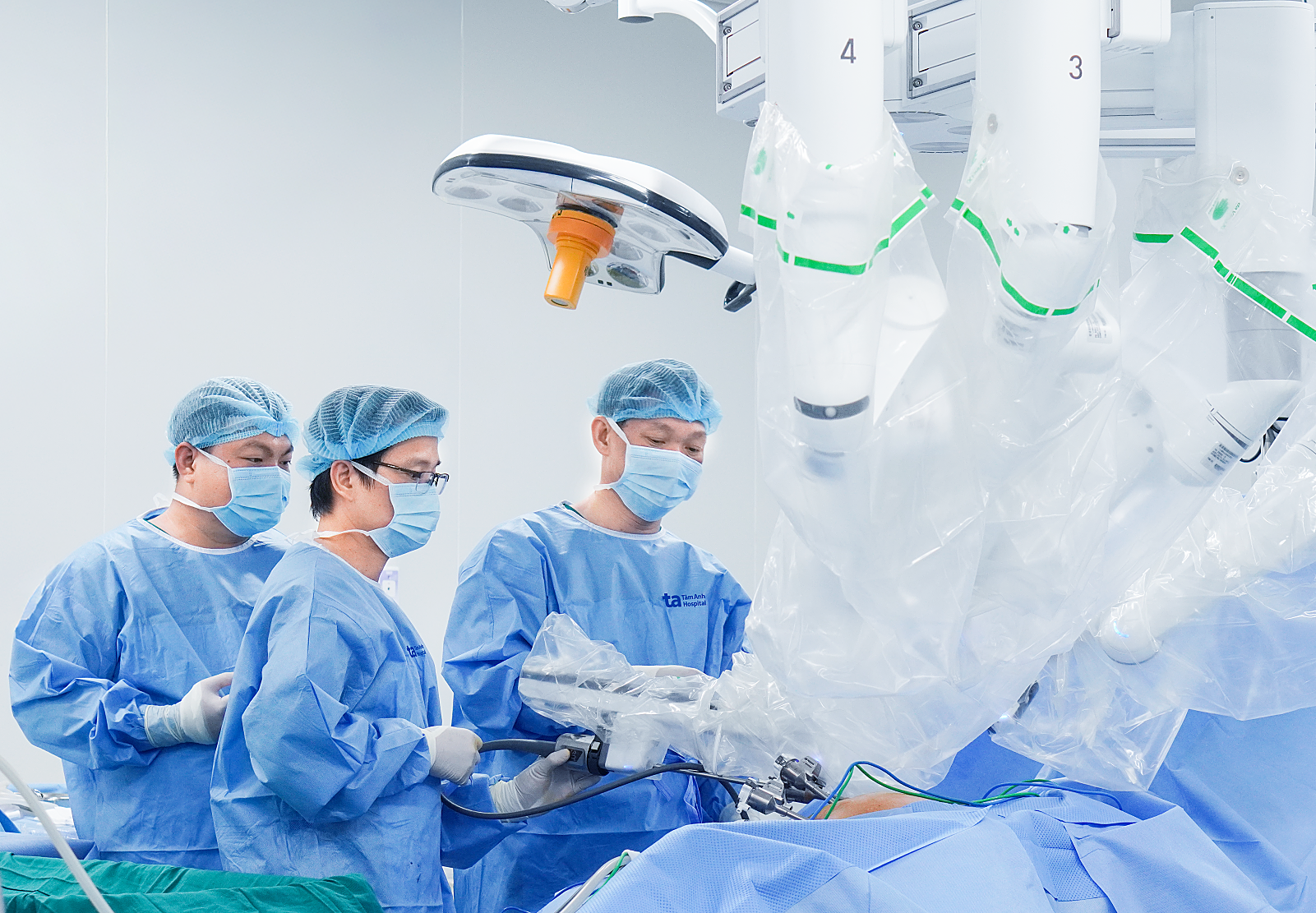 |
The surgical team performing a robotic-assisted kidney tumor removal for Mr. Minh using the Da Vinci Xi robot. *Photo: Tam Anh General Hospital* |
Associate Professor Chuyen skillfully controlled the Da Vinci Xi robot to access and radically remove the left kidney, eradicating the cancer and surrounding fatty tissues. The robotic assistance shortened operative time, minimized bleeding, and reduced complications, contributing to a better recovery for the patient. Post-surgery, Mr. Minh remained under observation in the ICU.
During his initial days in the ICU, Mr. Minh received mechanical ventilation via an endotracheal tube, coupled with his regular dialysis three times per week. Doctors conducted comprehensive post-operative assessments, including electrolyte and blood count tests. Following intensive medical resuscitation, Mr. Minh's condition improved, leading to his discharge.
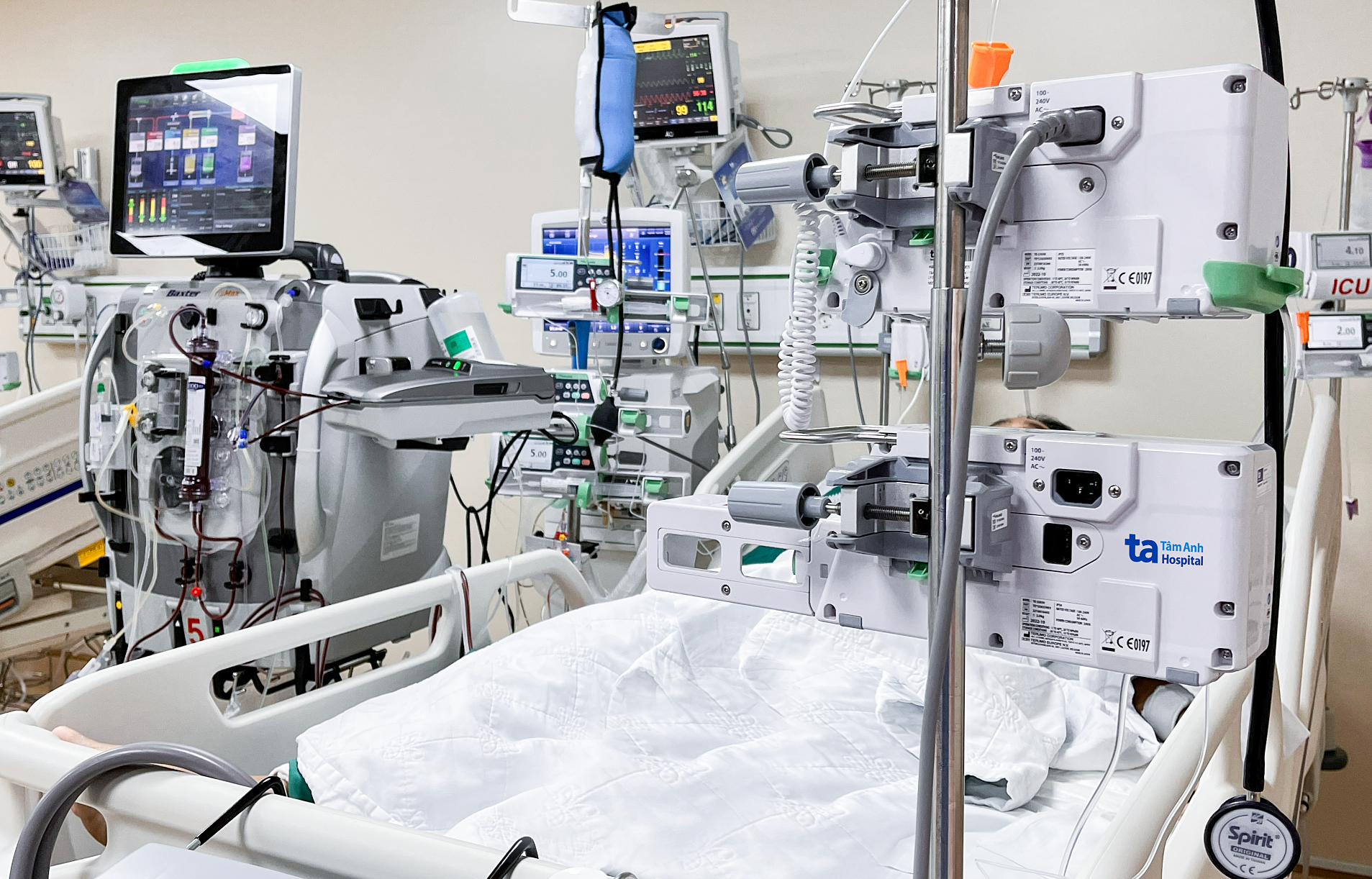 |
The patient receiving dialysis in the ICU. *Photo: Tam Anh General Hospital* |
While the exact cause of kidney cancer remains unknown, studies indicate that end-stage kidney disease requiring dialysis is a significant risk factor. Other contributing factors include smoking, exposure to toxic chemicals, obesity, prolonged use of painkillers, and genetics.
Doctor Ta Phuong Dung, Deputy Director of the Urology - Nephrology - Andrology Center and Head of the Nephrology - Dialysis Department, emphasized that patients with end-stage chronic kidney failure face a 2-4 times higher risk of developing kidney cancer compared to the general population. Kidney failure increases this risk by accumulating toxins in the blood, leading to oxidative stress and chronic inflammation. It also suppresses the immune system, facilitating cancer cell development. Additionally, certain long-term medications for kidney disease, such as immunosuppressants after kidney transplant, can elevate cancer risk.
Surgery is currently the optimal treatment for radically curing kidney cancer if the tumor is in an early stage. Surgical options include radical nephrectomy (complete kidney removal) or partial nephrectomy, performed via open surgery, laparoscopy, or robotic-assisted laparoscopy. For cases where surgery is not indicated or the cancer is advanced, treatment involves immunotherapy, targeted therapy, radiation therapy, or chemotherapy.
Doctor Dung advised that end-stage kidney failure patients who undergo kidney cancer surgery require regular health monitoring to prevent cancer recurrence in the remaining kidney. As these patients are on dialysis, they must adhere to a doctor-prescribed diet, limiting salt and sweets, and avoiding over-the-counter medications and traditional herbal remedies of unknown origin.
Ha Thanh - Nhat Thanh
*Patient's name has been changed*