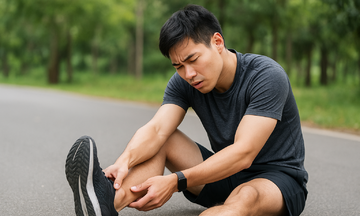
On 18/11, Doctor Mai Van Luc from the Department of Urology and Andrology at E Hospital stated that a patient was admitted at 2 AM with a pale face, profuse sweating, and writhing in back pain. The young man, who had previously experienced kidney stone pain, recognized similar symptoms and took four No-spa pills, but his condition did not improve.
Examinations confirmed the patient was suffering from renal colic. "The patient was treated with specific medications, and his pain rapidly subsided; he is currently stable", Doctor Luc said.
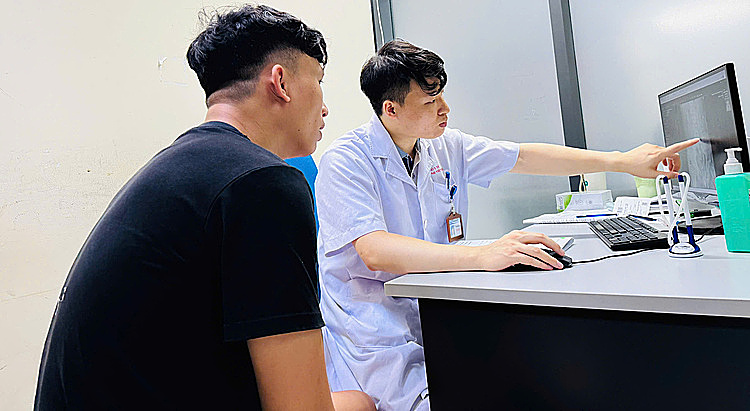 |
A doctor examines the patient. Photo: Courtesy of the doctor |
Explaining the case, Doctor Luc noted that the primary cause of the pain was a kidney stone falling into and obstructing the ureter. The body reacts by releasing prostaglandin, which causes severe spasms. Many believe that taking muscle relaxants like No-spa will relax the ureter and alleviate pain, but this approach only addresses the symptom.
"Muscle relaxants only affect the spasms, while the root of the problem—the inflammation and edema caused by the stone—remains. Therefore, the pain cannot truly cease", Doctor Luc stressed.
Renal colic is considered one of the most agonizing experiences, often likened to "a medical nightmare". Some medical pain scales even rank its intensity higher than that of a gunshot wound. This is because when the ureter is obstructed, urine builds up, causing a sudden increase in pressure on the kidney. This leads to kidney distension and severe pain, radiating from the lower back to the lower abdomen and groin. In some cases, sudden obstruction can even cause rupture of the renal pelvis-ureter. Notably, the degree of pain does not depend on the size of the stone.
Doctor Luc noted that over 80% of renal colic cases can be effectively treated medically, with a high stone expulsion rate. "Many patients experiencing severe pain often want immediate surgery, but this is usually unnecessary if medication is administered correctly and the patient responds well", he said.
Vietnam is part of the global kidney stone belt, with nearly 15% of its population expected to develop the condition in their lifetime. Doctors advise the public to be alert to signs such as: lower back pain on one or both sides, potentially radiating forward to the lower abdomen; painful or frequent urination; abnormal urine color (cloudy, pink, or red); accompanied by fever and chills.
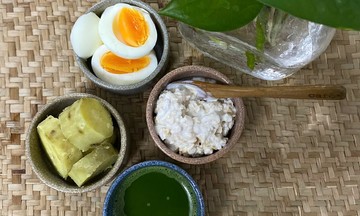
For prevention, the simplest way is to drink two to 2.5 liters of water daily, reduce salt intake, limit animal protein, balance calcium, and restrict oxalate-rich foods: spinach, water spinach, beetroot, sweet potatoes, cashews, strong tea, and chocolate. Maintaining a healthy weight, increasing physical activity, and undergoing health check-ups every six months are the best measures for early detection and timely treatment of kidney stones and many other conditions.
Thuy Quynh