Doctor Luong Thi Anh Thu, from the High-Tech Eye Center at Tam Anh General Hospital, stated that Mr. Tung's eyes suffered from diffuse punctate inflammation and conjunctival hemorrhage. Previously, his son had red eyes with symptoms of conjunctivitis. Two days later, Mr. Tung also experienced itching, irritation, and redness in his eyes. By the third day, his eyes were bleeding heavily, and the medication he purchased did not improve his condition.
Doctor Thu prescribed antibiotic eye drops combined with anti-inflammatory medication, advising him to frequently rinse his eyes with saline solution to clean secretions and reduce irritation. Due to the large hemorrhagic patch and punctate keratitis, the patient was instructed not to rub his eyes or self-medicate with other drugs to avoid corneal damage.
Acute conjunctivitis, commonly known as pink eye, is primarily caused by adenovirus and spreads rapidly through hands, towels, pillows, or shared items. However, it rarely leads to conjunctival hemorrhage. Doctor Thu suggested that Mr. Tung's eyes might have been attacked by the coxsackie virus (enterovirus). This virus is less common but causes a more severe form, typically acute hemorrhagic conjunctivitis, which often has a sudden onset and rapidly progressing symptoms within 24-48 hours.
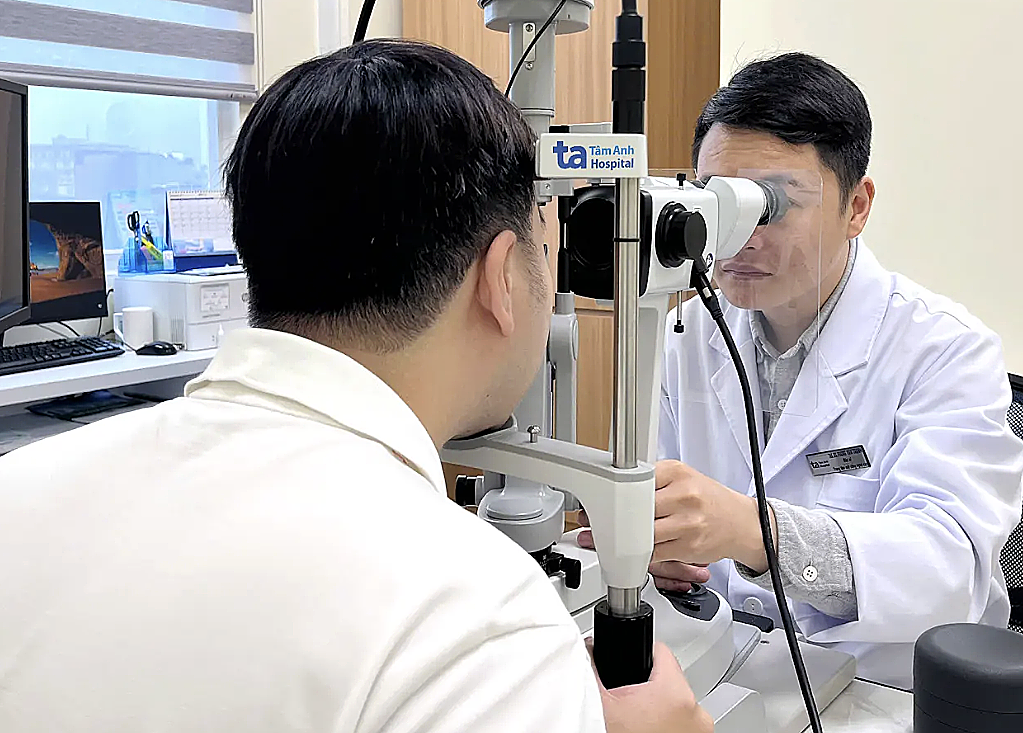 |
A doctor examines Mr. Tung's eyes. Photo: Tam Anh General Hospital |
Currently, the cold season, dry air, and many people staying in enclosed rooms create favorable conditions for viruses and bacteria to spread, leading to disease outbreaks. The High-Tech Eye Center at Tam Anh General Hospital recorded a 30% increase in conjunctivitis cases since the beginning of the cold season, affecting both children and adults. The cold season also makes eyes prone to dryness, reducing the protective tear film and forming micro-lesions where microorganisms can enter. Habits like rubbing eyes, sharing towels, or improper self-medication further increase the risk of superinfection, worsening conjunctivitis. Children are more susceptible due to weaker immune systems and poor hygiene habits.
To prevent the disease, Doctor Thu recommends that everyone wash their hands frequently, maintain personal hygiene and a clean living space, and adjust their environment with humidifiers and regular ventilation. Keep eyes moisturized with artificial tears and limit prolonged computer exposure. Children or adults with red eyes should stay home from school or work to prevent spreading the infection to others.
While conjunctivitis is often benign and can self-resolve, patients should seek immediate medical attention if they experience severe eye pain, photophobia, blurred vision, white streaks or ulcers on the cornea, or severe eye redness accompanied by hemorrhage.
Khue Lam
| Readers can submit questions about ophthalmic diseases here for doctors to answer. |