Ho Chi Minh City Cancer Hospital expects to record over 1.08 million patient visits in 2025, an increase of more than 200,000 from 880,000 visits last year. This information was shared by Dr. Diep Bao Tuan, Director of Ho Chi Minh City Cancer Hospital, at the 28th Ho Chi Minh City Cancer Prevention Conference on 4/12. The hospital noted over 42,000 new cancer cases, with thyroid cancer accounting for the largest proportion (23.2%), followed by breast cancer (18.1%).
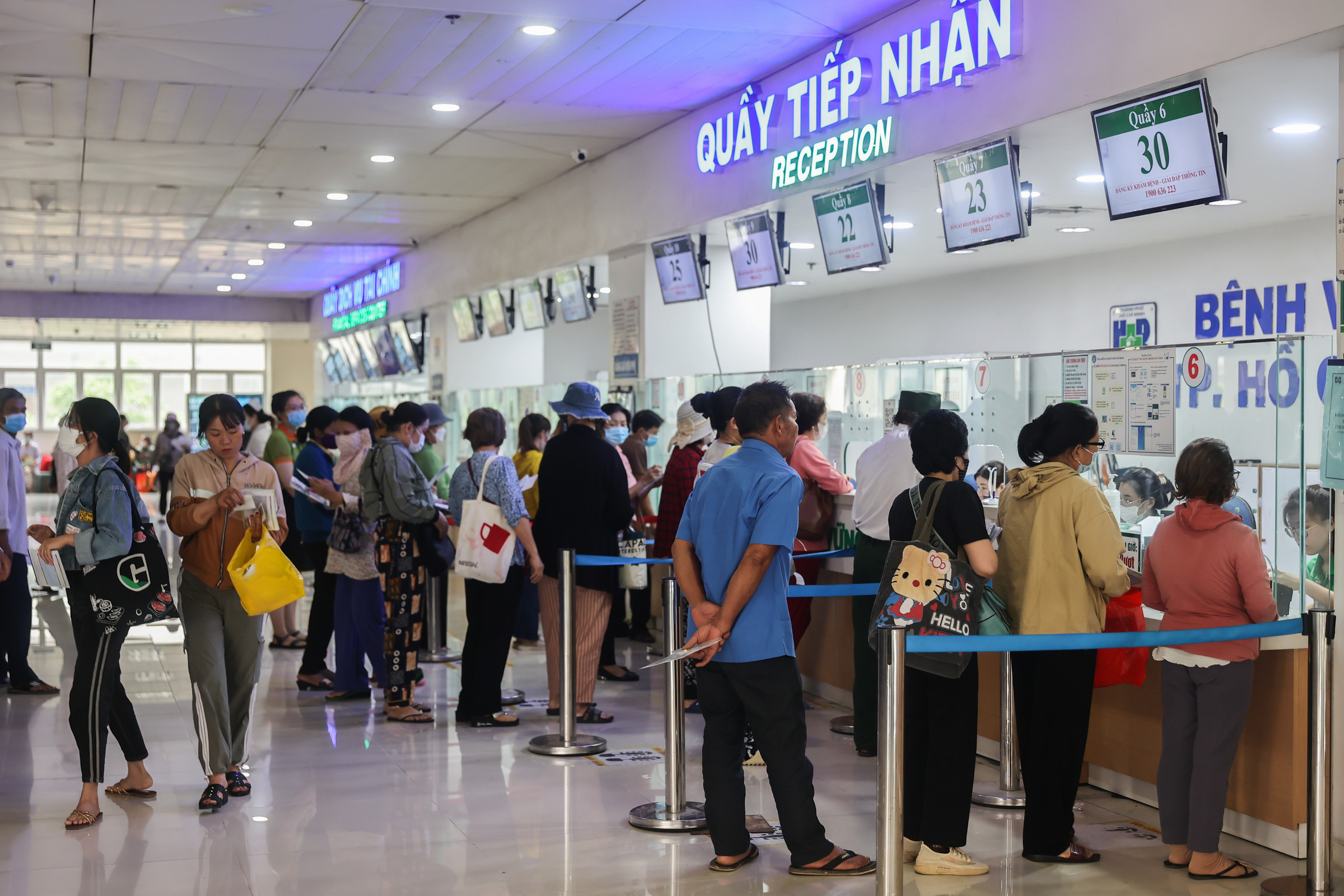 |
Patients await examination at Ho Chi Minh City Cancer Hospital's facility two. Photo: Quynh Tran |
The rise in cancer cases aligns with global trends, where incidence rates increased from 141 to 151 cases per 100,000 population between 2020 and 2022. Dr. Tuan attributed the growing number of patients seeking care at Ho Chi Minh City’s (HCMC) leading cancer hospital to several factors: public trust in the institution, improved living standards leading to greater healthcare demand, and convenient transportation allowing easier access for residents from other provinces.
However, the most significant challenge remains the common habit of only seeking treatment once symptoms appear. Dr. Tuan highlighted data showing that 50-80% of patients are admitted when their cancer has already progressed to stage 3 or 4. He emphasized that skipping regular screenings and waiting for clear symptoms deprives patients of the crucial window for early intervention, leading to higher mortality rates and substantial treatment costs.
To enhance early detection, the hospital plans to convert its facility one into a health check-up and screening center. Additionally, two specialized screening clinics for asymptomatic individuals will open in December. Regarding treatment, the hospital has mastered many advanced techniques, including: intensity-modulated radiation therapy, stereotactic body radiation therapy, endoscopic surgery, reconstructive and microsurgery, new chemotherapy regimens, targeted therapy, and immunotherapy. In 2025, the unit will begin implementing autologous bone marrow transplant for hematologic cancers and interventional radiology for liver tumors.
Regarding the National Assembly's recent discussion on a proposal for free early cancer screening, Dr. Tuan acknowledged it as a practical policy. Nevertheless, he stressed the need for a carefully planned roadmap, including adequate human resources and infrastructure, to enable provincial healthcare facilities to implement the policy effectively and reduce the burden on central hospitals.
Assoc. Prof. Dr. Bui Dieu, Chairman of the Vietnam Cancer Association, stated that cancer represents a significant burden on the healthcare sector. Experts recommend that individuals proactively prevent cancer through healthy lifestyles, limiting alcohol, tobacco, and processed foods. Crucially, people should receive vaccines against cancer-causing diseases and undergo age-appropriate screenings, even when feeling healthy. Detecting the disease in its early stages simplifies treatment and significantly increases the chances of a complete cure.
The Ho Chi Minh City Department of Health is proposing that the People's Committee allow the Ho Chi Minh City Cancer Hospital to open a second facility at the former Ba Ria Hospital site (13 Pham Ngoc Thach, Ba Ria ward). This expansion aims to ease travel burdens for patients and alleviate overcrowding at central hospitals.
Le Phuong