Doctor Le Thi Truc Phuong, a medical specialist at VNVC Vaccination System, shared this information as the facility frequently receives patients who have been repeatedly bitten by dogs and have received dozens of rabies vaccine doses. For example, Hoang Trong Hung, 69, residing in TP HCM, has received approximately 30 to 40 vaccine doses since he was 14. On 8/12, he received further rabies vaccination after being bitten by a dog; doctors prescribed two vaccine doses as he had completed the full protocol previously. Earlier, a 49-year-old woman in Ha Noi received 33 rabies doses over four years due to dog bites.
According to Doctor Phuong, rabies vaccines and anti-rabies serum are the two available preventive treatments for the disease. Individuals bitten or scratched by dogs or cats must receive the vaccine to prevent the rabies virus from attacking the body.
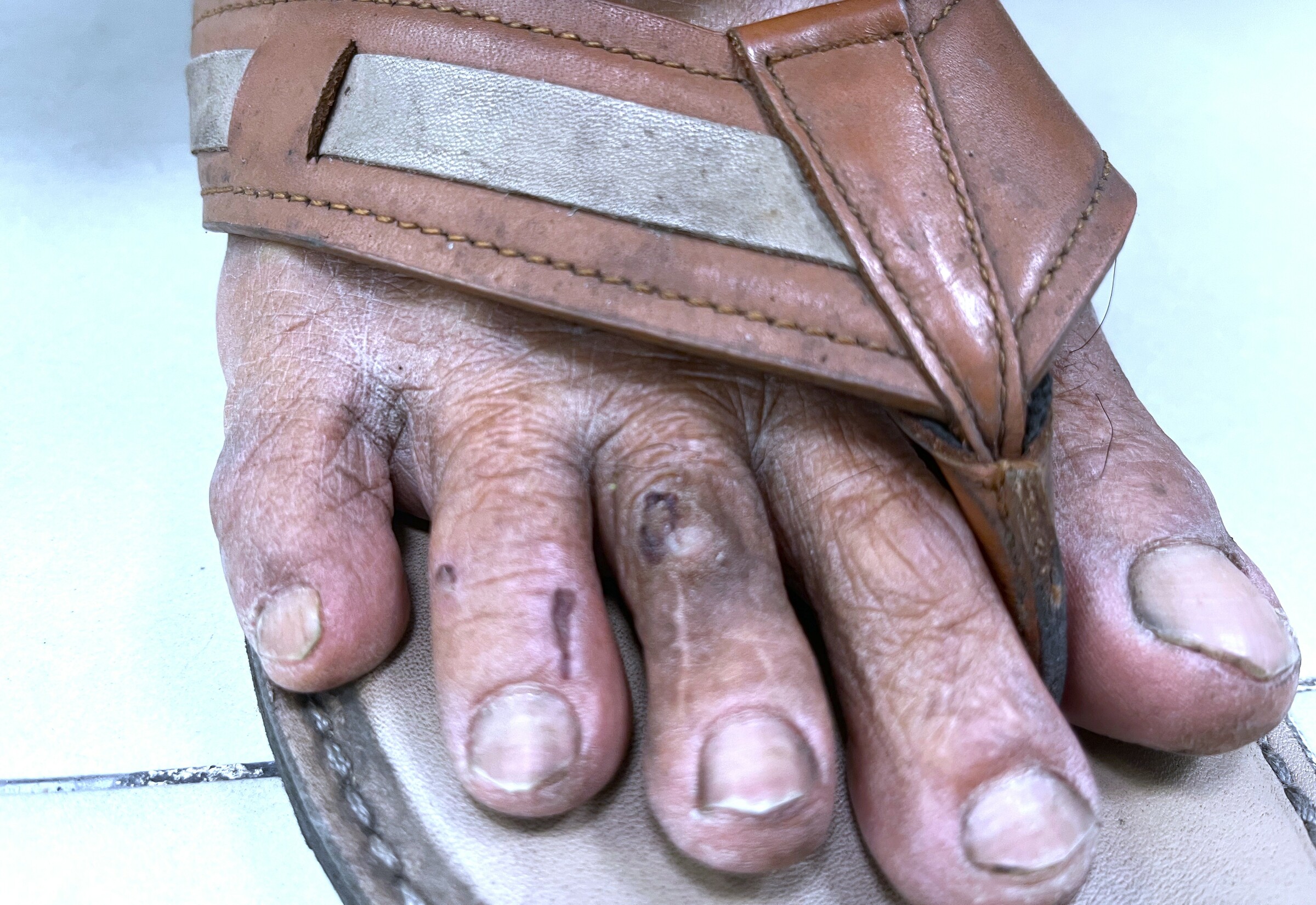 |
The bleeding wound on Hung's two right toes from a neighbor's dog bite on 8/12. *Photo: Dieu Thuan* |
When is rabies vaccination necessary?
If bitten, scratched, or licked on broken skin or mucous membranes by an animal, and it is the first vaccination or the vaccination history is unknown, the vaccine should be administered according to the standard protocol: 5 intramuscular doses on days 0, 3, 7, 14, 28, or 8 intradermal doses on days 0, 3, 7, 28 (two doses each time). For severe wounds, especially those near the central nervous system, or if the animal shows signs of rabies or cannot be observed, doctors will prescribe additional anti-rabies serum along with the vaccine.
If a full rabies vaccination protocol has been completed previously or full pre-exposure prophylaxis has been administered, two booster doses are required on days 0 and 3 via intramuscular or intradermal injection when bitten by a dog or cat, without the need for serum.
Individuals who did not complete the previous vaccination course, received only one dose, or have an unclear vaccination history, or those with compromised immune systems despite having completed the course, must restart the entire protocol and receive anti-rabies serum if advised by a doctor when bitten by a dog or cat.
If the previous vaccination used older, brain-tissue-derived vaccines and the current one uses a new-generation vaccine, the full course must still be repeated.
Rabies pre-exposure prophylaxis
Rabies vaccine can be administered as pre-exposure prophylaxis for individuals who have not been bitten by dogs or cats but are at high risk of virus exposure. These include: veterinarians, laboratory personnel, slaughterhouse workers, animal rescuers, people living or traveling in rabies-endemic areas, pet owners, and young children in households with dogs or cats.
The pre-exposure prophylaxis schedule consists of three intramuscular or intradermal doses on days 0, 7, 21, or 28. If bitten, scratched, or licked after completing the full pre-exposure protocol, only two booster doses are needed on days 0 and 3, without serum.
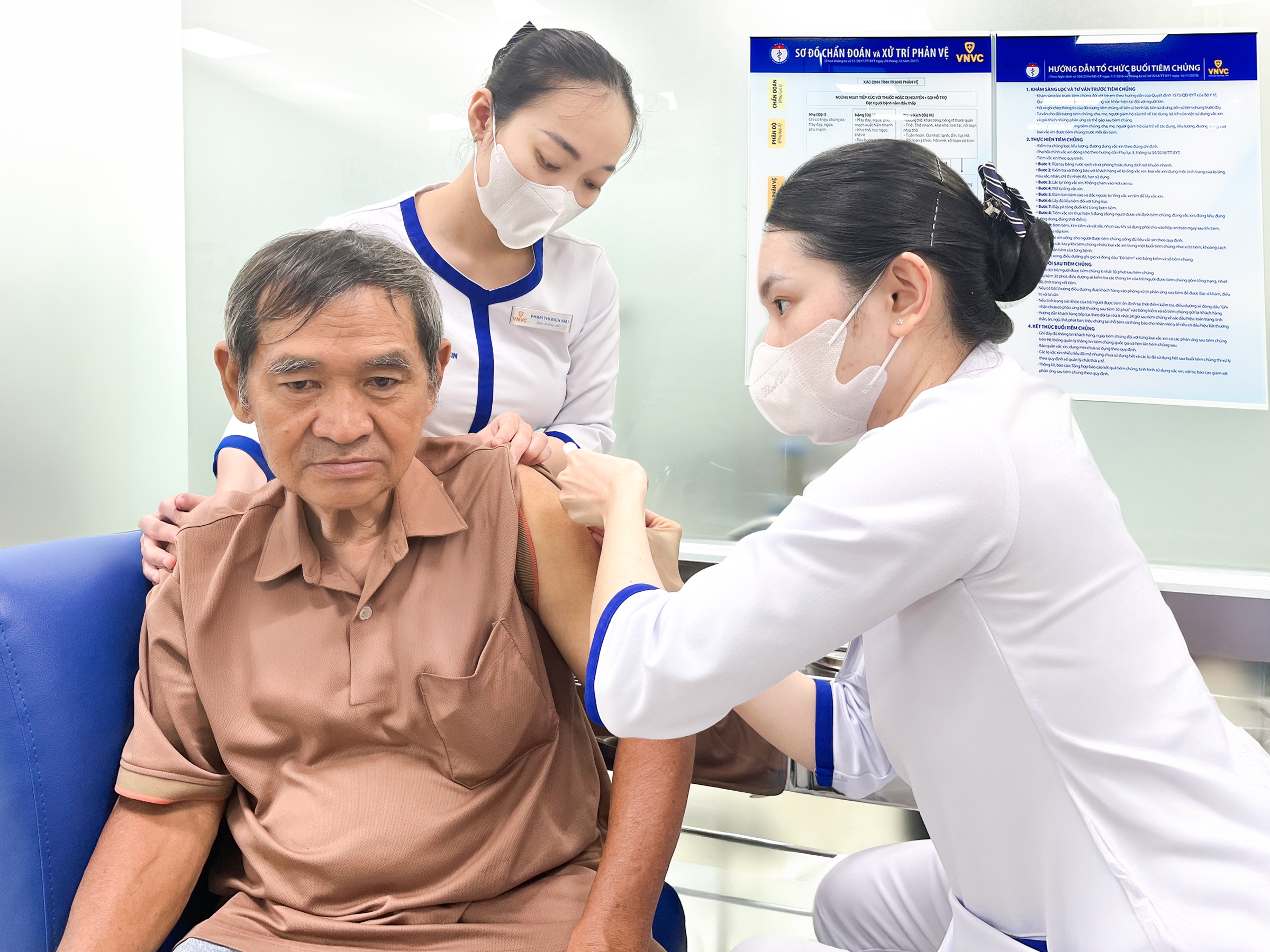 |
Hoang Trong Hung receiving a rabies vaccine after being bitten by a dog on 8/12 at VNVC Vaccination System. *Photo: Dieu Thuan* |
High-risk groups should undergo antibody testing every 6 months. If levels are below 0,5 IU/ml, a booster shot is necessary. If testing is not performed, boosters can be given one year after completing the primary course, and then every 5 years thereafter.
Besides vaccination, Doctor Phuong emphasized treating wounds according to standard procedures, avoiding folk remedies or traditional herbal medicine. The steps include: washing the wound thoroughly under running water for 15 minutes, disinfecting with 45-70% alcohol or iodine alcohol to minimize the amount of rabies virus at the bite site, and getting vaccinated as soon as possible without aggravating the wound.
Rabies, a viral disease, carries a nearly 100% fatality rate once symptoms appear. The virus is present in the saliva of infected animals such as dogs, cats, rats, foxes, and monkeys. The pathogen transmits to humans through bites, scratches, or licks on open wounds or mucous membranes of the eyes, nose, and mouth. After entry, the virus replicates locally before attacking the nervous system, traveling to the brain and spinal cord, causing hydrophobia, aerophobia, convulsions, altered consciousness, paralysis, and ultimately death.
The incubation period can range from 7-10 days to several years, depending on the wound's location and severity, the amount of rabies virus at the bite site, and the patient's immune system. More severe bites, such as deep or multiple wounds, and those closer to the central nervous system (e.g., head, face, neck, fingers, toes), lead to faster disease progression.
The Department of Livestock Production and Animal Health, under the Ministry of Agriculture and Environment, reported 58 rabies deaths in 18 provinces and cities during the first 9 months of the year. On average, Vietnam records 75 rabies deaths annually, with approximately 400.000 people requiring prophylactic treatment with vaccines and anti-rabies serum, at an estimated cost exceeding 300 billion VND.
Dieu Minh