On 24/12, Associate Professor, Doctor Pham Ngoc Thach reported that the baby, the second of a twin pair, was delivered by C-section at over 31 weeks due to fetal distress. Just two days after birth, the infant's condition became critical with rapid abdominal distension, worsening respiratory function, and X-rays revealing a severely dilated bowel, suspected of obstruction. He required an urgent transfer from the maternity hospital to a pediatric facility. Upon emergency admission, the baby was on a ventilator, with a gastric tube draining green fluid, necessitating immediate surgery to prevent bowel perforation, sepsis, and death.
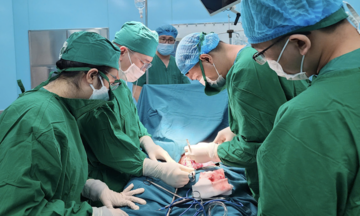
Doctor Nguyen Hien, Specialist Level one, from the General Surgery Department, along with the surgical team, identified approximately 15 cm of the small intestine as inflamed, necrotic, and dilated, lacking peristalsis due to insufficient blood supply. The team performed a resection of the necrotic segment and reconnected the two healthy ends of the bowel.
According to Doctor Hien, this was a particularly challenging operation because the patient weighed less than one kg and also suffered from a blood clotting disorder. The infant's intestines were extremely small, thin, and fragile, demanding fast, precise, and meticulous surgical techniques. Following surgery, the baby's condition gradually stabilized; he has begun feeding with milk and resumed bowel movements. His vital signs have shown good improvement, and he is expected to be discharged soon if his progress continues favorably.
 |
Doctors at Children's Hospital 2 operating on the patient. *Photo: Quynh Tran* |
Associate Professor Thach explained that necrotizing enterocolitis is a severe condition often seen in premature, low-birth-weight infants, especially in monochorionic twins affected by twin-to-twin transfusion syndrome. In this specific case, the baby was the "donor twin," suffering from chronic anemia, oligohydramnios, and fetal malnutrition, while his twin brother, the "recipient twin," weighed 1,5 kg. The circulatory imbalance prioritized blood flow to the brain and heart, resulting in prolonged reduced blood supply to the intestinal tract from within the womb. This is a significant mechanism leading to necrotizing enterocolitis after birth.
Each year, Children's Hospital 2 treats 40-50 cases of necrotizing enterocolitis, with 20-30 of these requiring surgical intervention. However, necrotizing enterocolitis in infants with twin-to-twin transfusion syndrome is a rare occurrence.
Doctors advise parents against complacency regarding abnormal digestive signs in premature infants. Early detection and timely multidisciplinary coordination are crucial factors determining survival rates.
Le Phuong